.png)
-p-800.jpg)

3 parts


About us
Stay in touch

It's so complicated that people are ascribing otherness to it. But it's still a computer running it, guys.
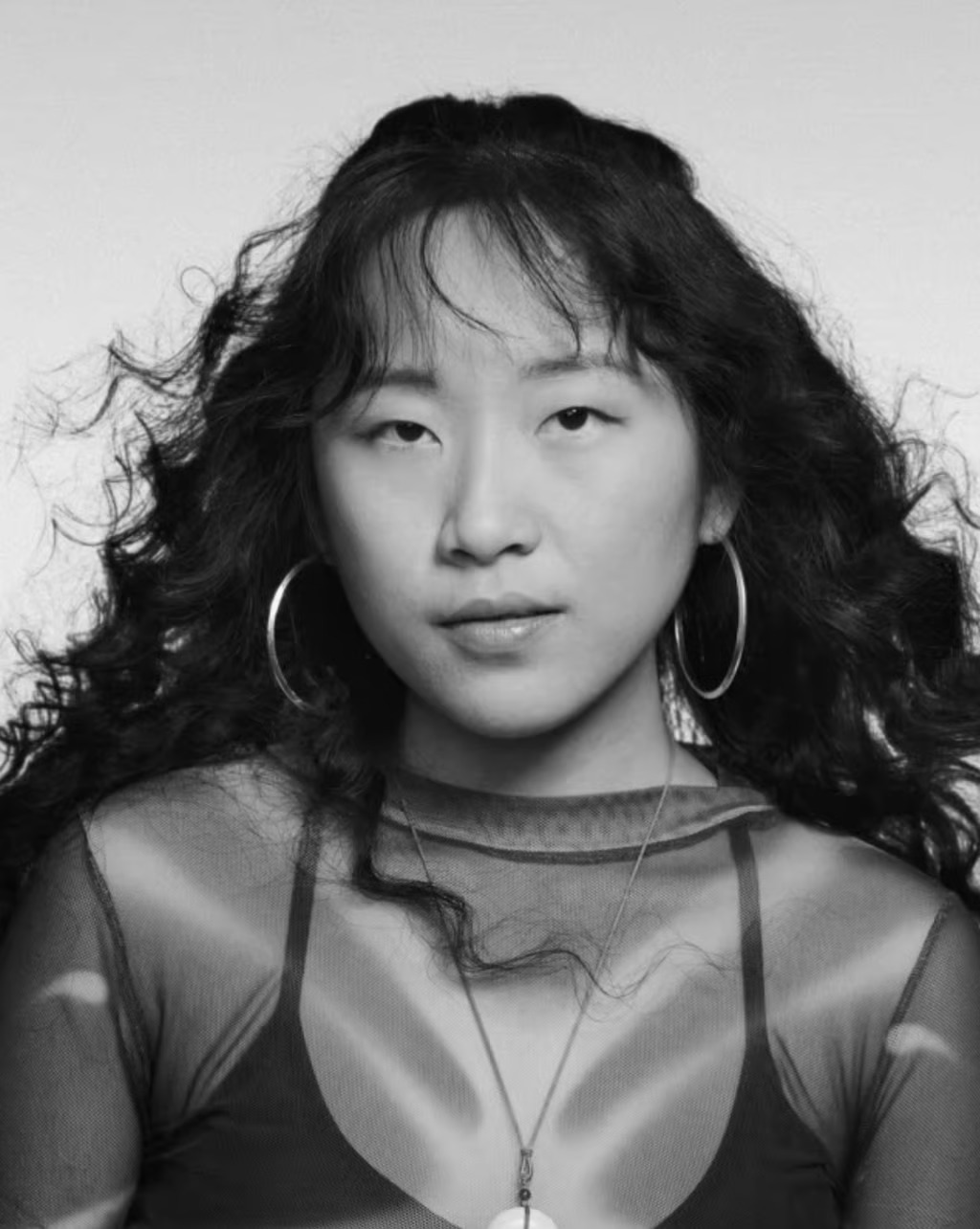
Matt Hall · Larva Labs on Computation’s StrangenessPodcast · Episode 21“There are some of them whose motors are really held together with rubber bands and hope.
Val Ravaglia · Digital Curators Series 03—Val Ravaglia on Displaying the DigitalTimeline · 1933“This important development in the twentieth-century attempt to measure aesthetics described aesthetic effectiveness by its degree of complexity and order.
George David Birkhoff Proposes the “Aesthetic Measure”Famed investors and art collectors Micky Malka and Becky Kleiner speak with Peter Bauman (Monk Antony), sharing the story of their love for art. They also discuss how an attempt to showcase their own digital collection led to the founding of NODE, a Palo Alto hub designed for living, code-based art through dynamic exhibitions, artist-led presentation and hands-on education that brings new audiences into digital culture. NODE opens January 23, with 10,000, an exhibition by Matt Hall and John Watkinson curated by Amanda Schmitt and produced by Natalie Stone.
 Peter BaumanLe Random’s editor in chief, writing as Monk Antony.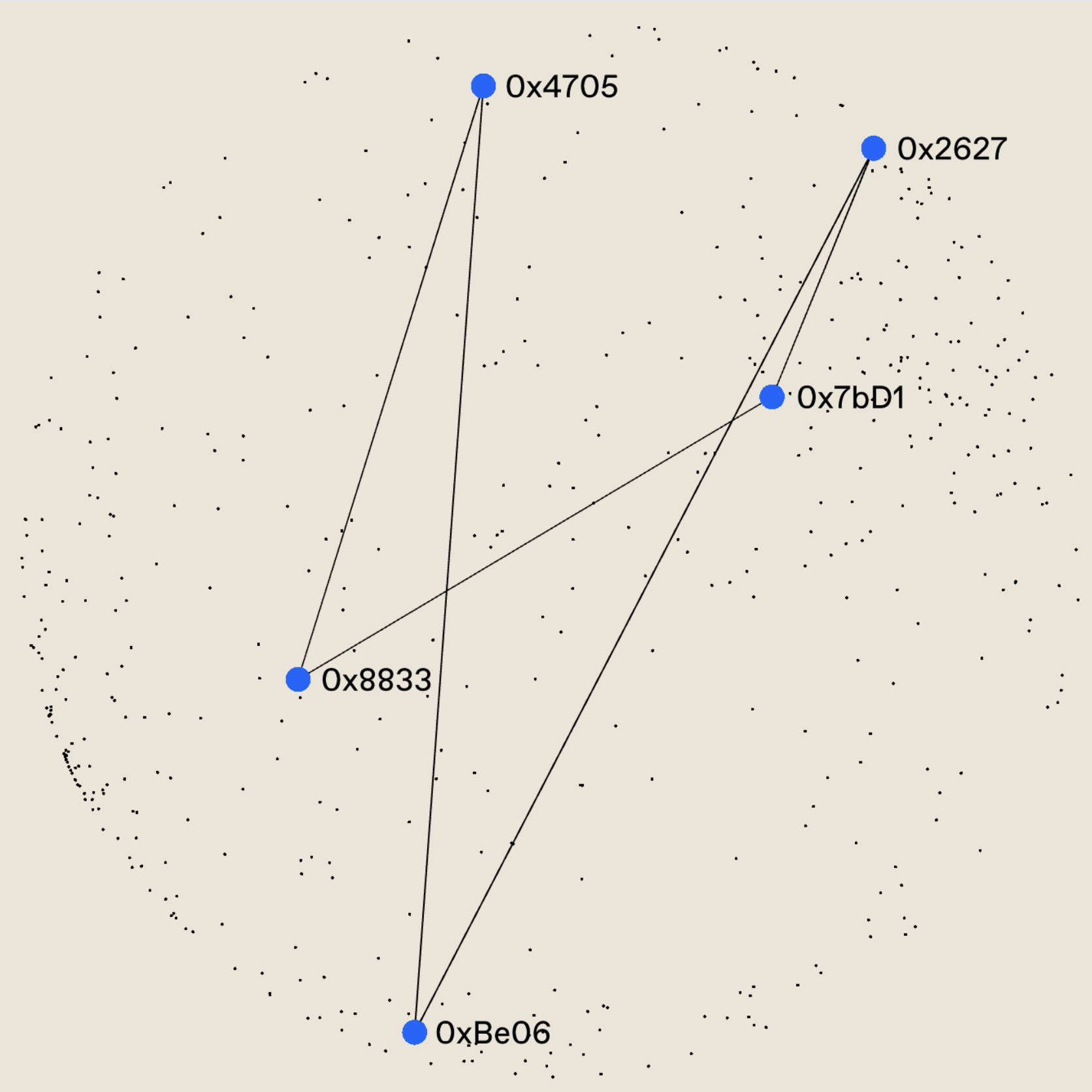
Artist duo Holly Herndon and Mat Dryhurst spoke with Peter Bauman (Monk Antony) about their major new work Starmirror at KW Institute for Contemporary Art, Berlin, on view until January 18, 2026. They discuss the work within the larger context of protocols as worlds, AI’s impact on public space, and the blurring line between artists and scientists.
Peter BaumanLe Random’s editor in chief, writing as Monk Antony.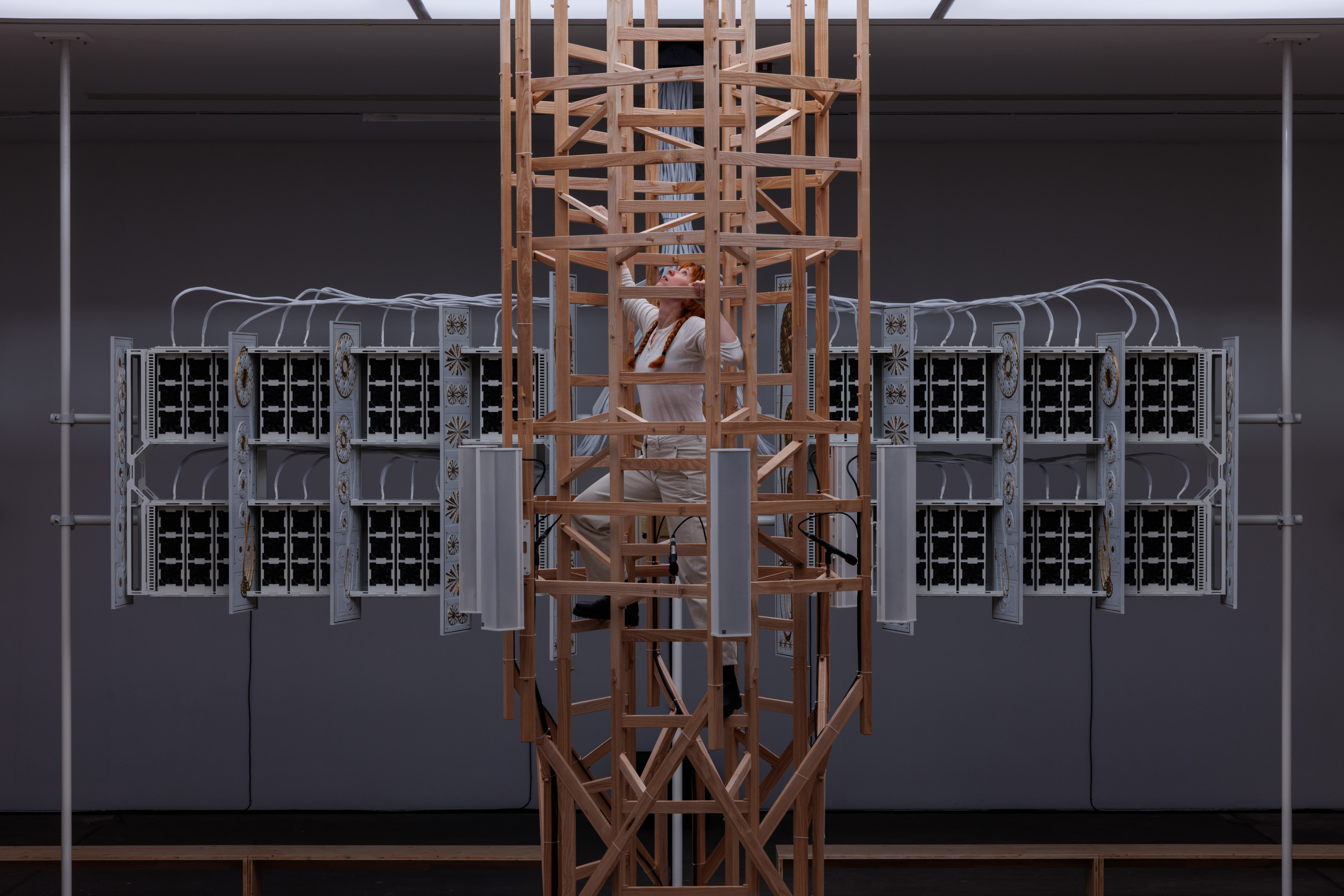
Artists and engineers Karl Sims and Alexander Mordvintsev speak about the potential of artificial life (A-Life) and creativity with Peter Bauman (Monk Antony). They discuss A-Life as a bridge between technology and biology, from Sims’s early work with the legendary Connection Machine and Evolved Virtual Creatures to Mordvintsev’s seminal DeepDream.
Peter BaumanLe Random’s editor in chief, writing as Monk Antony.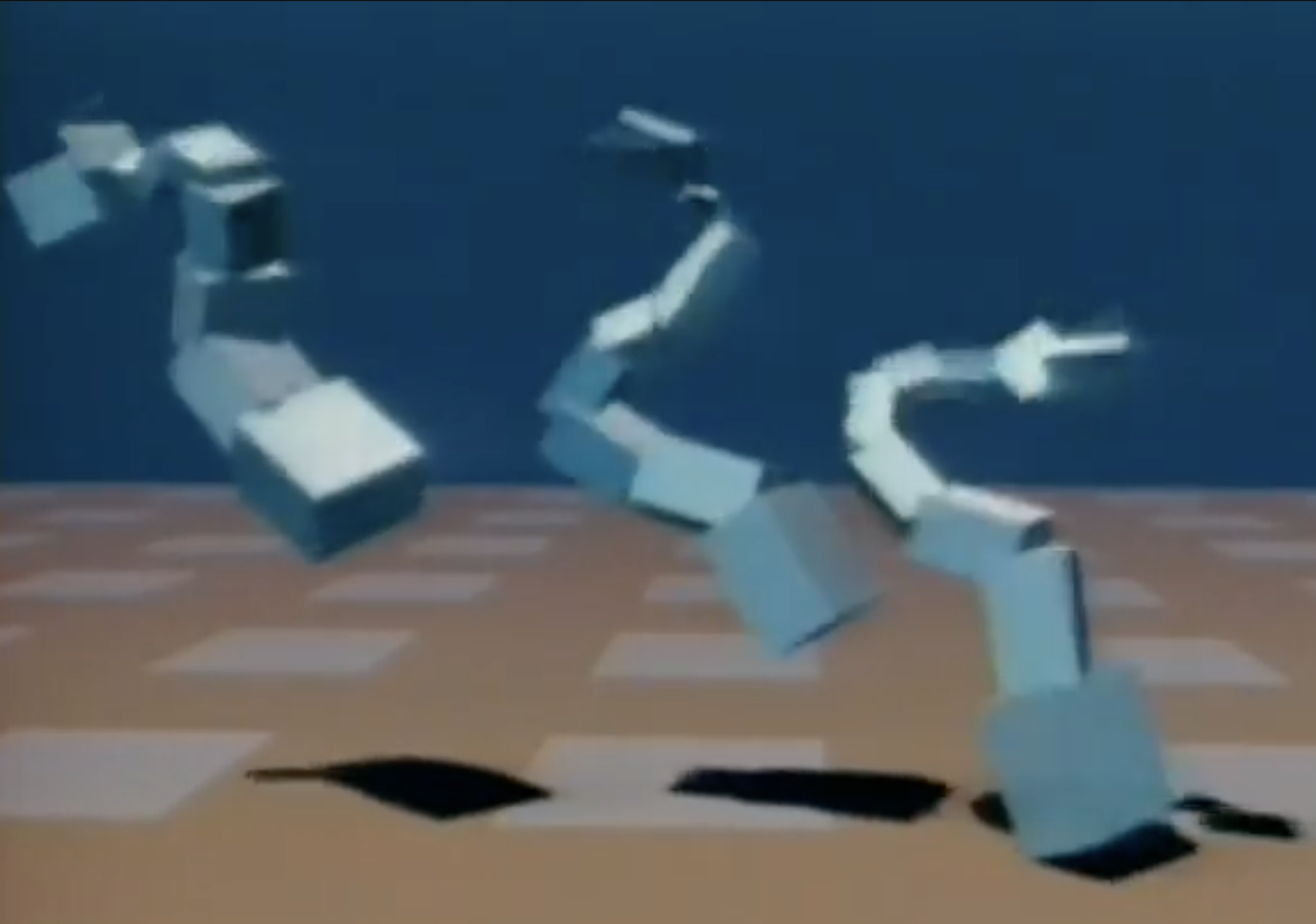
In this written form of the conversation, deep learning engineer and generative adversarial network (GAN) inventor Ian Goodfellow speaks with Peter Bauman (Monk Antony) in depth about the legendary origins of GANs, their unexpected success and indelible impact on both twenty-first-century image making and AI research. The full audio of the conversation is also available.
Peter BaumanLe Random’s editor in chief, writing as Monk Antony.Jasia Reichardt considers the little-known impact of Gaberbocchus Common Room, London’s first club for artists and scientists, on the development of artificial intelligence (AI). Opening in 1957, the club served as a meeting point for some of the earliest discussions on art, AI and philosophy. The legendary Cybernetic Serendipity (1968) curator muses on its implications for today.
 Jasia Reichardt
Hans Ulrich Obrist spoke with Peter Bauman (Monk Antony) about the link between generative art, cybernetics and his do it exhibitions. They discuss how these ideas shaped the famed curator’s more open, evolving approach to his craft.
Peter BaumanLe Random’s editor in chief, writing as Monk Antony..jpg)
Artist and theorist Hito Steyerl discusses the material and geopolitical stakes of AI-generated imagery with Peter Bauman (Monk Antony). They explore the structural power of machine learning industries, the automation of creative labor and how art is both implicated in and resistant to these transformations.
Peter BaumanLe Random’s editor in chief, writing as Monk Antony.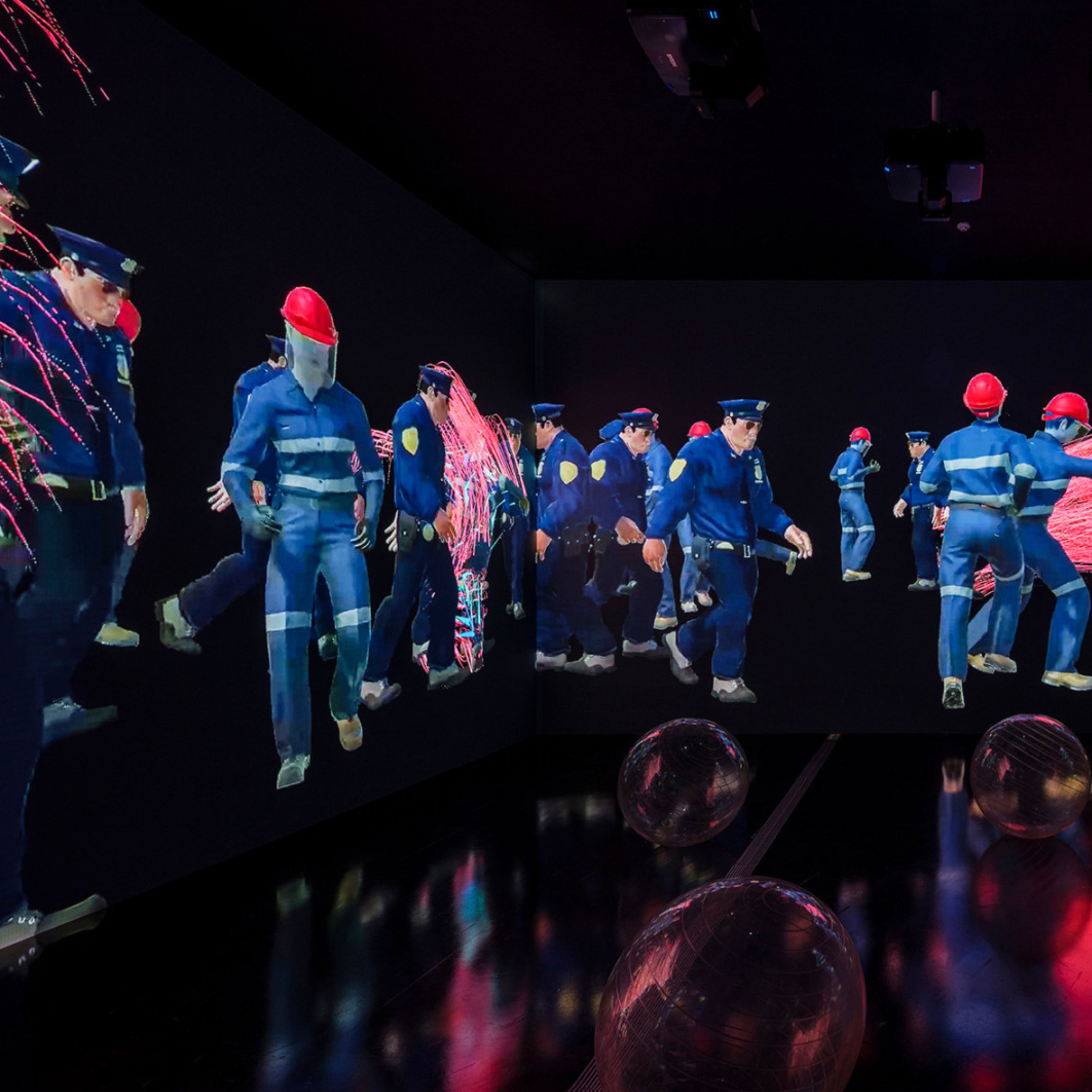
Mike Winkelmann (Beeple) speaks with Peter Bauman (Monk Antony) about what motivates the artist—known for his manual Everydays—to engage with generativity and modern AI’s deep learning tools.
Peter BaumanLe Random’s editor in chief, writing as Monk Antony.
Marina Abramović’s prolific career spans over six decades of experimentation with performance and audience participation. The storied artist brings these concepts to the blockchain, which offers a medium to comprehensively survey her journey and practice, using a digital avatar to explore ideas previously limited by physical reality.
Peter BaumanLe Random’s editor in chief, writing as Monk Antony..jpg)
Christiane Paul curated the Whitney Museum of American Art's Marina Zurkow: Parting Worlds / Hyundai Terrace Commission: Marina Zurkow. Peter Bauman (Monk Antony) spoke with her about the exhibition and how Zurkow’s ecologically attuned practice engages with site specificity. Paul also gives a definition of AI art before covering broader questions of art’s pace, technological criticality and the cyclical relationship between institutions and the art market.
Peter BaumanLe Random’s editor in chief, writing as Monk Antony.
Mario Klingemann, subversive systems artist, and A.I.C.C.A. (Artificially Intelligent Critical Canine), his AI-driven art critic, converse with Peter Bauman (Monk Antony). They cover AI's role in art criticism, how algorithmic perception can reshape discourse and cultural authority but also perpetuate historical biases. The conversation explores A.I.C.C.A.’s cybernetic lineage, its performative critique and its playful yet serious challenge to traditional notions of artistic interpretation and reception.
Peter BaumanLe Random’s editor in chief, writing as Monk Antony.
Cherished icon Jasia Reichardt met with Peter Bauman (Monk Antony) before the Foundation Herbert W. Franke's Generative Art Summit Berlin. The Cybernetic Serendipity curator wrote this text as one of the few people who anticipated our digital future along with Franke in the 1960s. This piece extends the earliest thought on art and AI to the present, as only a singular voice like Reichardt's could.
Jasia Reichardt
Resonance can refer to qualities of sound and acoustics as well as the power to evoke deep emotions. Peter Bauman (Monk Antony) speaks with Zach Lieberman, artist, MIT professor and co-founder of openFrameworks, about generative art's relationship to music as well as its ability to make us feel something.
Peter BaumanLe Random’s editor in chief, writing as Monk Antony.
In Part 2 of this two-part conversation, the Le Random team speaks with Casey Reas, artist, UCLA professor and co-founder of Processing and Feral File. We touch on a variety of subjects, including historical generations, the most overlooked decades and the location of artistic intent in generative work.
Peter BaumanLe Random’s editor in chief, writing as Monk Antony.
In Part 1 of this two-part conversation, the Le Random team speaks with Casey Reas: artist, UCLA professor and co-founder of Processing and Feral File. We discuss the history of generative art: the overlooked importance of experimental video art, unexpected catalysts of the movement and more.
Peter BaumanLe Random’s editor in chief, writing as Monk Antony. Ryan Murdock on Hacking AI157September 28, 2026
 Agnieszka Kurant on Alien Thoughts155September 7, 2026
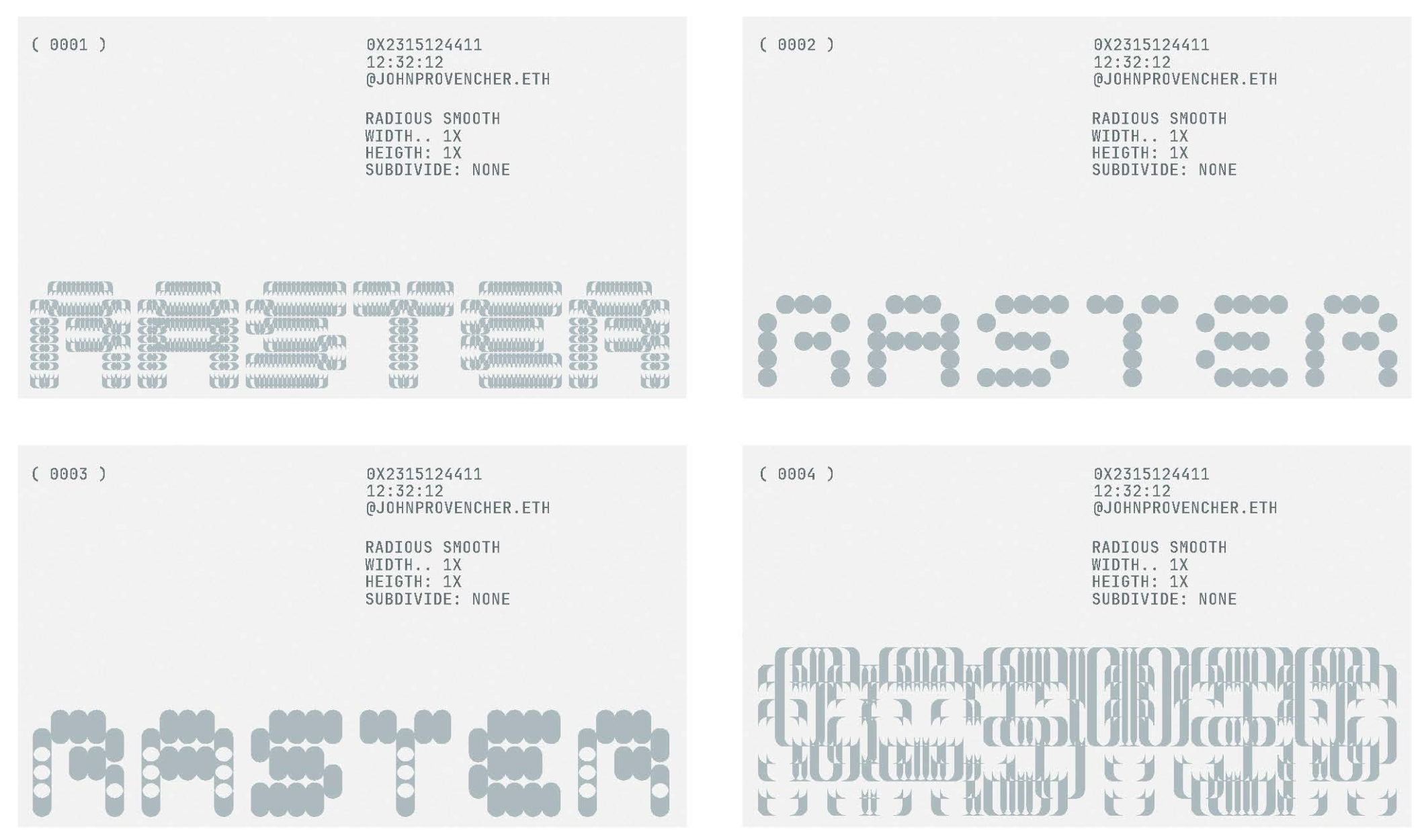 John Provencher and Raster on Generative Identity154September 3, 2026
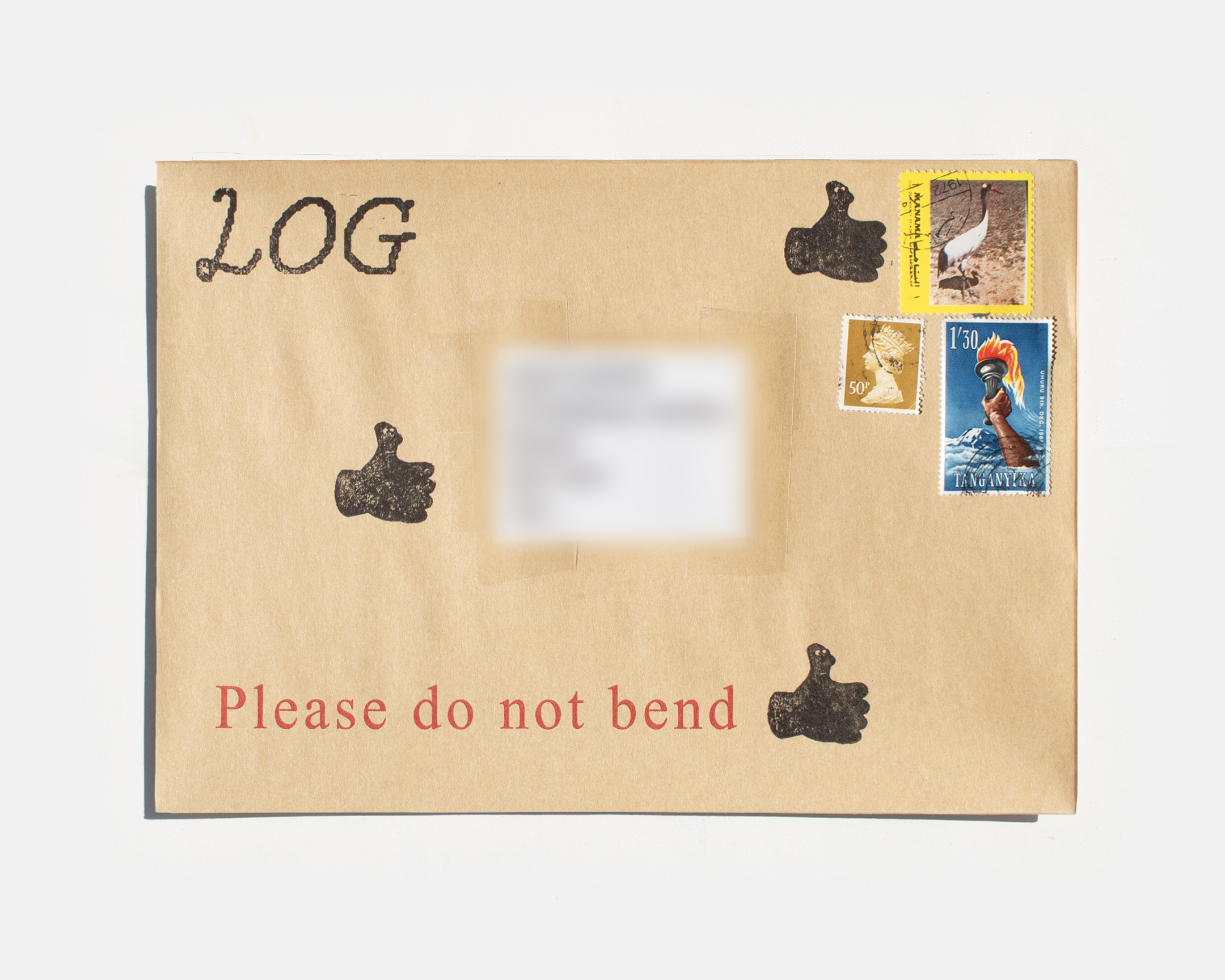 Lowbie and Duc de Berry on LOG and the NFT-to-Zine Pipeline153September 1, 2026
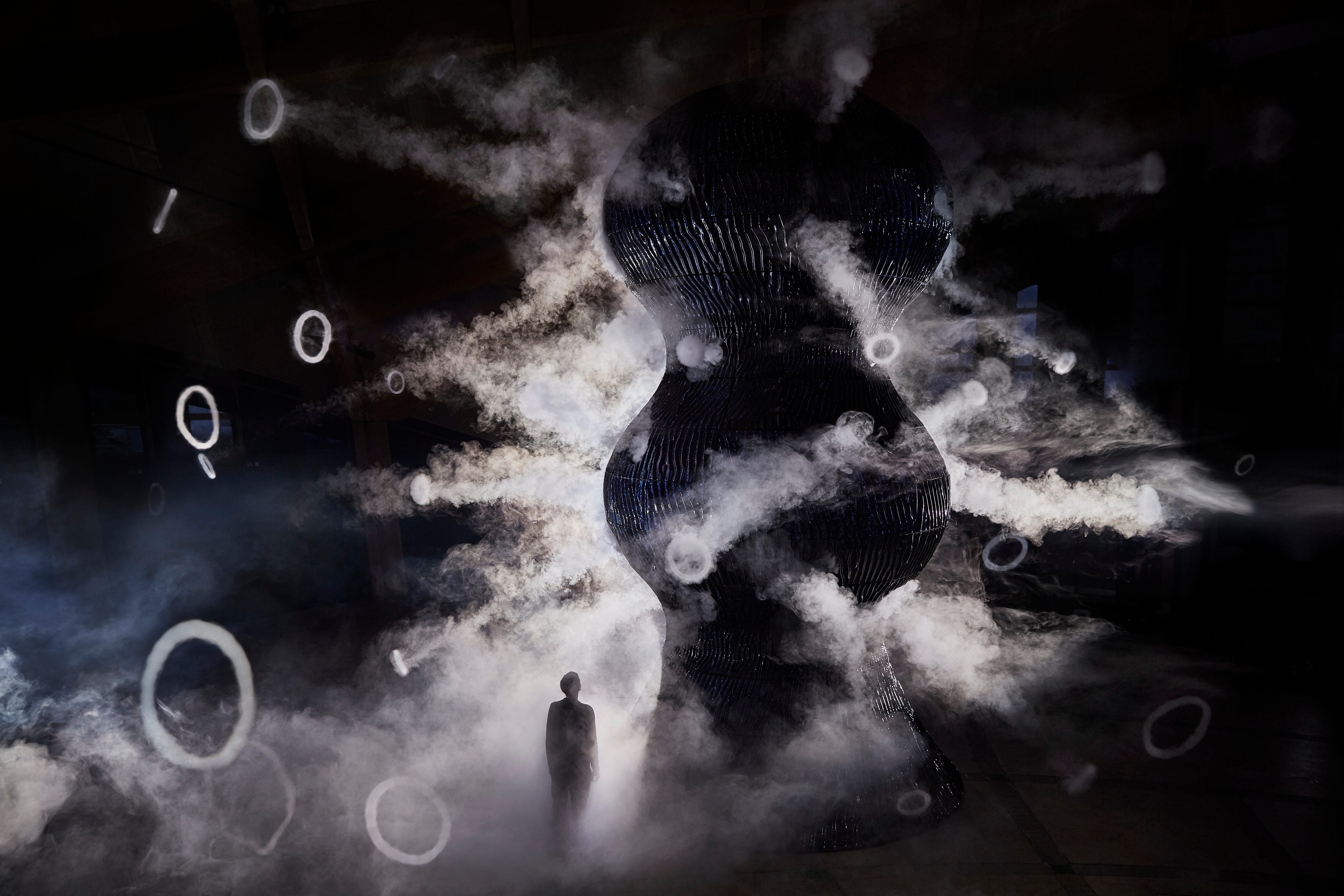 A.A.Murakami on Existence as Medium152August 31, 2026
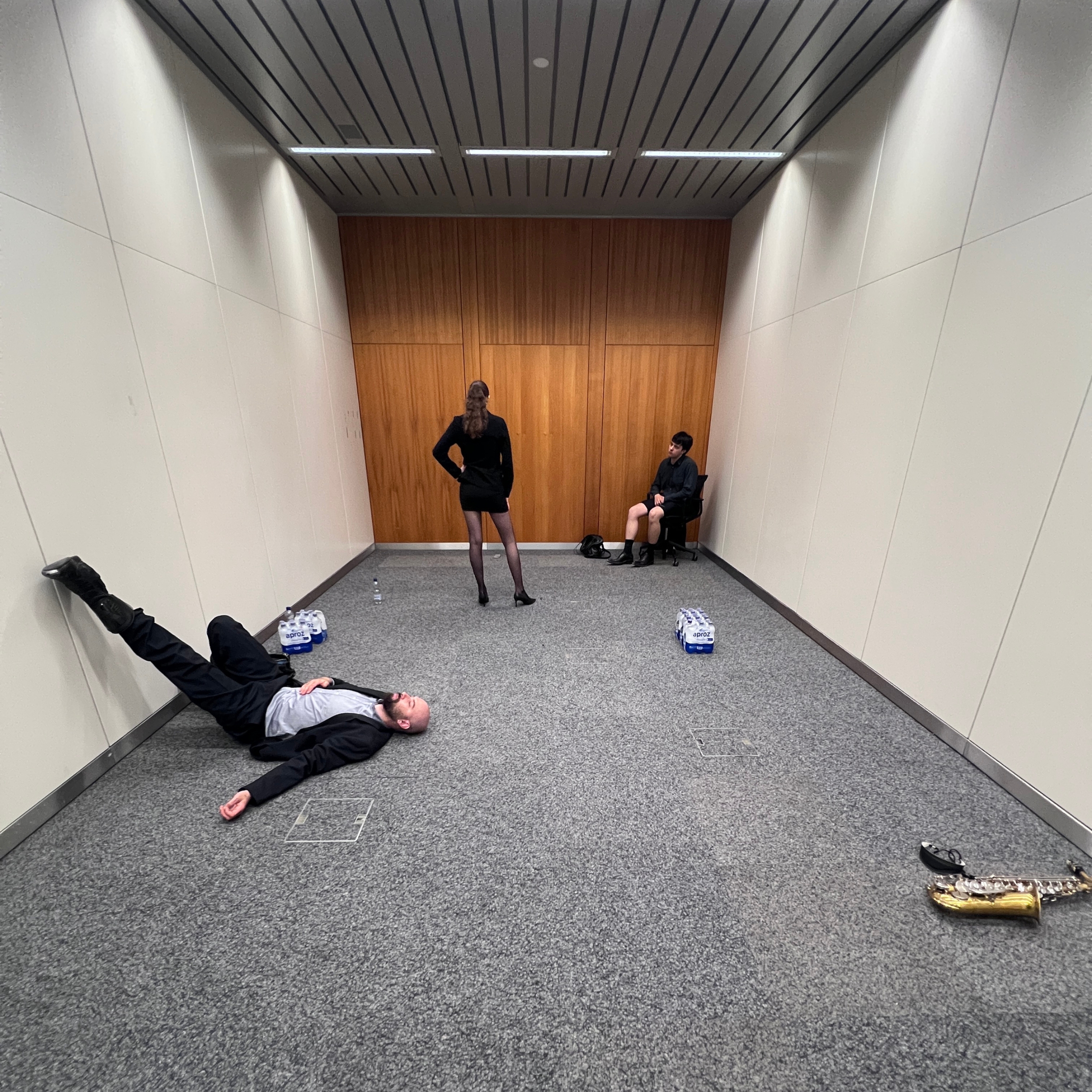 Robbie Fitzpatrick on Basel Social Club and Welcoming the Barbarians150August 17, 2026
 Jared Madere and fairybaby on VVV and the World as Material149August 10, 2026
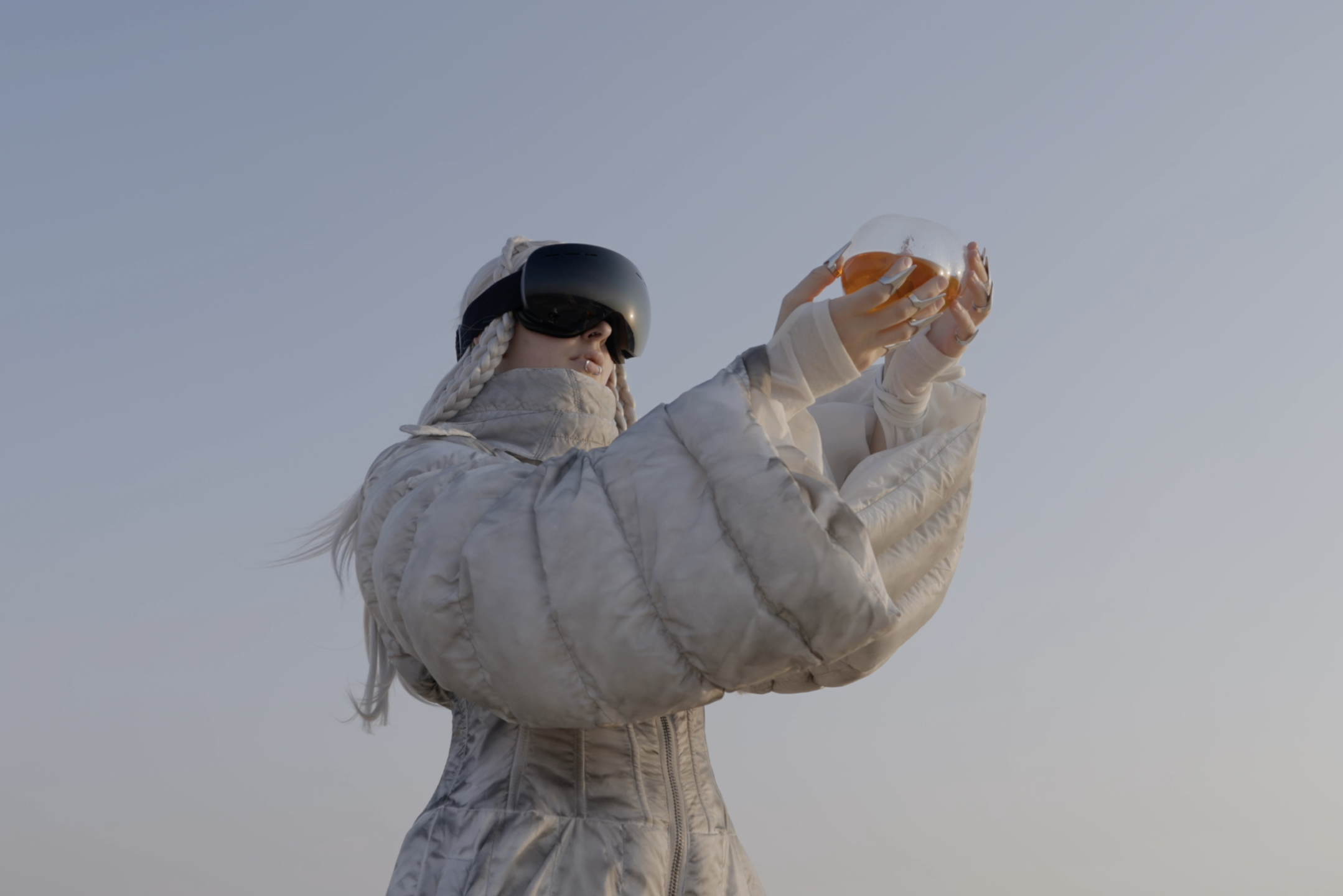 Marlene Wenger on Bringing Magic Back148August 3, 2026
 Eva and Franco Mattes on Mega Eliza146July 20, 2026
 Memo Akten on Rituals as Algorithms145July 13, 2026
 Justin Aversano on Heart and Light144July 6, 2026
 Thoma Foundation on Collecting, Curiosity and Conversation141June 22, 2026
 john gerrard on Ecology, Technology & Power140June 15, 2026
.jpg) Evil Biscuit on card nft 2, Destruction & Rebirth139June 8, 2026
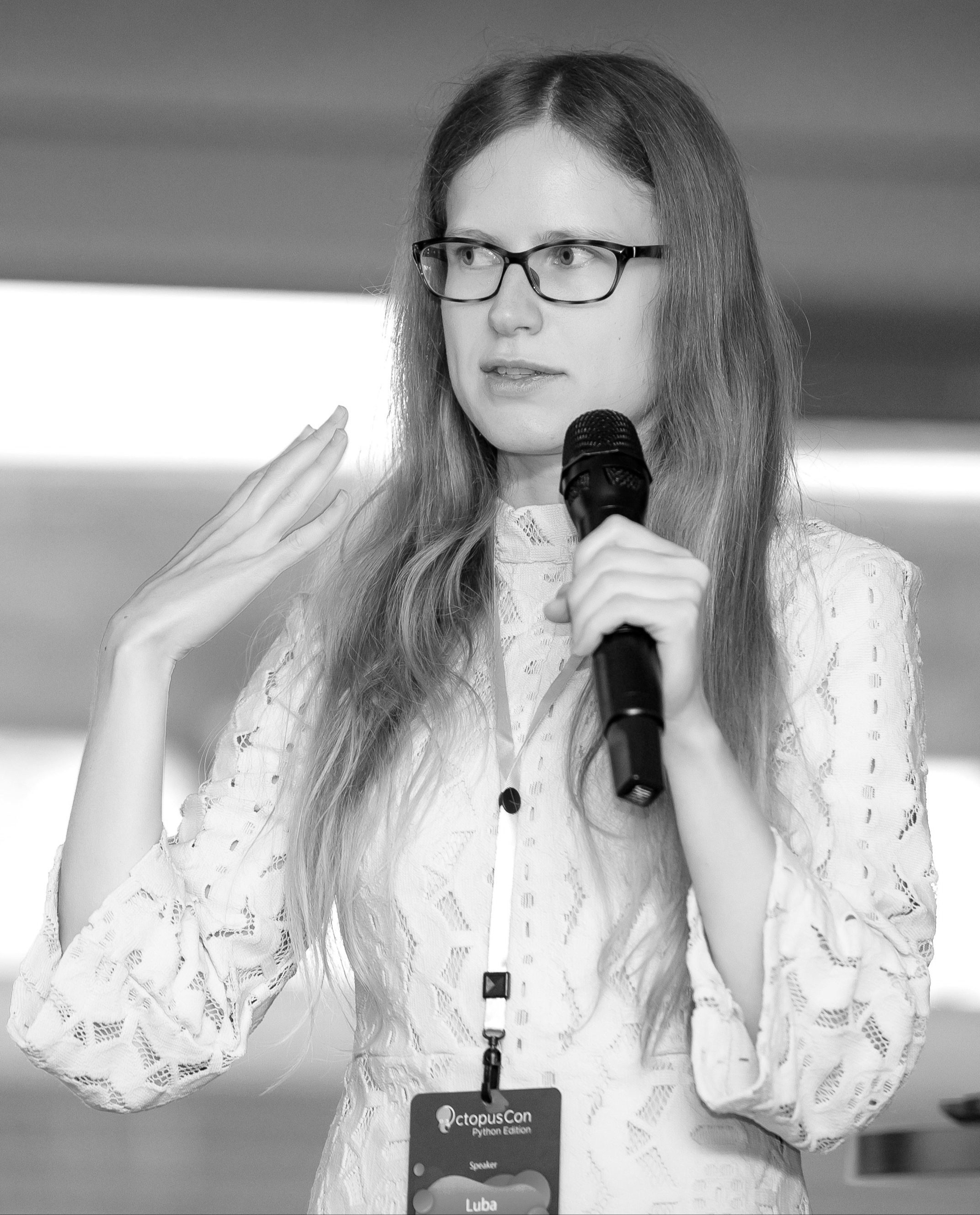
Evil Biscuit on card nft 2, Destruction & Rebirth139June 8, 2026.jpg) Seeing Machines: Luba Elliott on the 2026 CVPR Art Gallery138June 1, 2026
Seeing Machines: Luba Elliott on the 2026 CVPR Art Gallery138June 1, 2026 Jakob Kudsk Steensen on Non-Human Pathways137May 25, 2026
 Avery Singer on the Dopamine Blowout136May 18, 2026
 Shohei Fujimoto on Remembering Space134May 4, 2026
.jpg) Jane Veeder on Loving Change133April 27, 2026
Jane Veeder on Loving Change133April 27, 2026 Ed Fornieles on Art as Human Sacrifice132April 20, 2026
 Aaron Hertzmann on Caring about People131April 13, 2026
 Keiken on the Worldbuilding Lens130April 6, 2026
 Kyle McDonald on Computer Softness129March 30, 2026
%20(1).jpg) Sougwen Chung on Aggregated Abandon128March 23, 2026
Sougwen Chung on Aggregated Abandon128March 23, 2026 Wendi Yan & Karyn Nakamura on the Artifice of Knowledge127March 16, 2026
.png) Kim Asendorf on Breaking His Own Rules126March 9, 2026
Kim Asendorf on Breaking His Own Rules126March 9, 2026 Gottfried Jäger on a New Kind of Being125March 2, 2026
 DX Research Group on the Agent Arena124February 23, 2026
 Lu Yang on Art as the Perfect Cloak121January 28, 2026Micky Malka & Becky Kleiner on the Birth of NODE119January 19, 2026
 Ian Cheng on Composing with Systems118January 12, 2026
.jpg) Embodying AI at NeurIPS 2025: Creative AI Track117January 6, 2026
Embodying AI at NeurIPS 2025: Creative AI Track117January 6, 2026 Mika Ben Amar & Brennan Wojtyla on Life Online113December 12, 2025
 Beeple on Robot Dogs as Canvas112December 8, 2025
 Eli Scheinman on Amplifying the Digital111December 3, 2025Holly Herndon & Mat Dryhurst on Artificial Psychedelia110November 24, 2025Karl Sims & Alexander Mordvintsev on Merging Technology and Biology109November 17, 2025
.jpg) Jess Tucker on Longing for a Face108November 11, 2025
Jess Tucker on Longing for a Face108November 11, 2025 Ian Goodfellow on Inventing GANs107November 4, 2025
 Parker Ito and Evil Biscuit on Possessed Spirits106October 31, 2025
 Claudia Hart on Land of the Dead105October 27, 2025
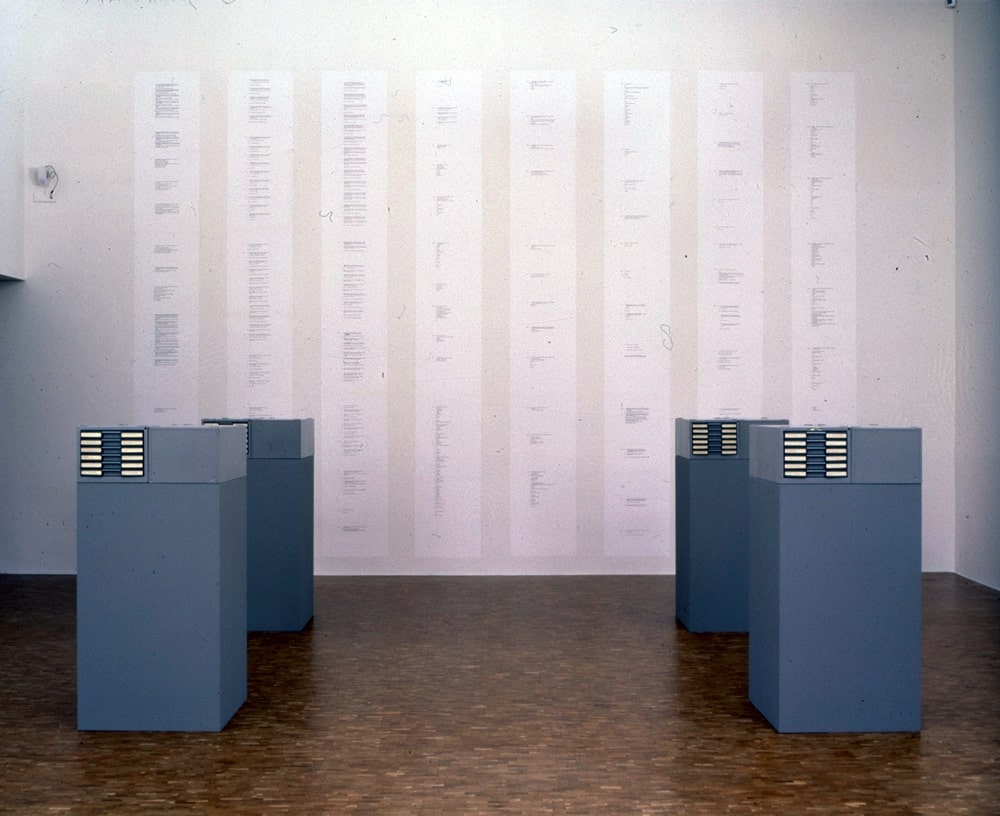 AA Cavia on Summoning Worlds104October 20, 2025
.jpg) Larva Labs on Computation’s Strangeness101October 6, 2025
Larva Labs on Computation’s Strangeness101October 6, 2025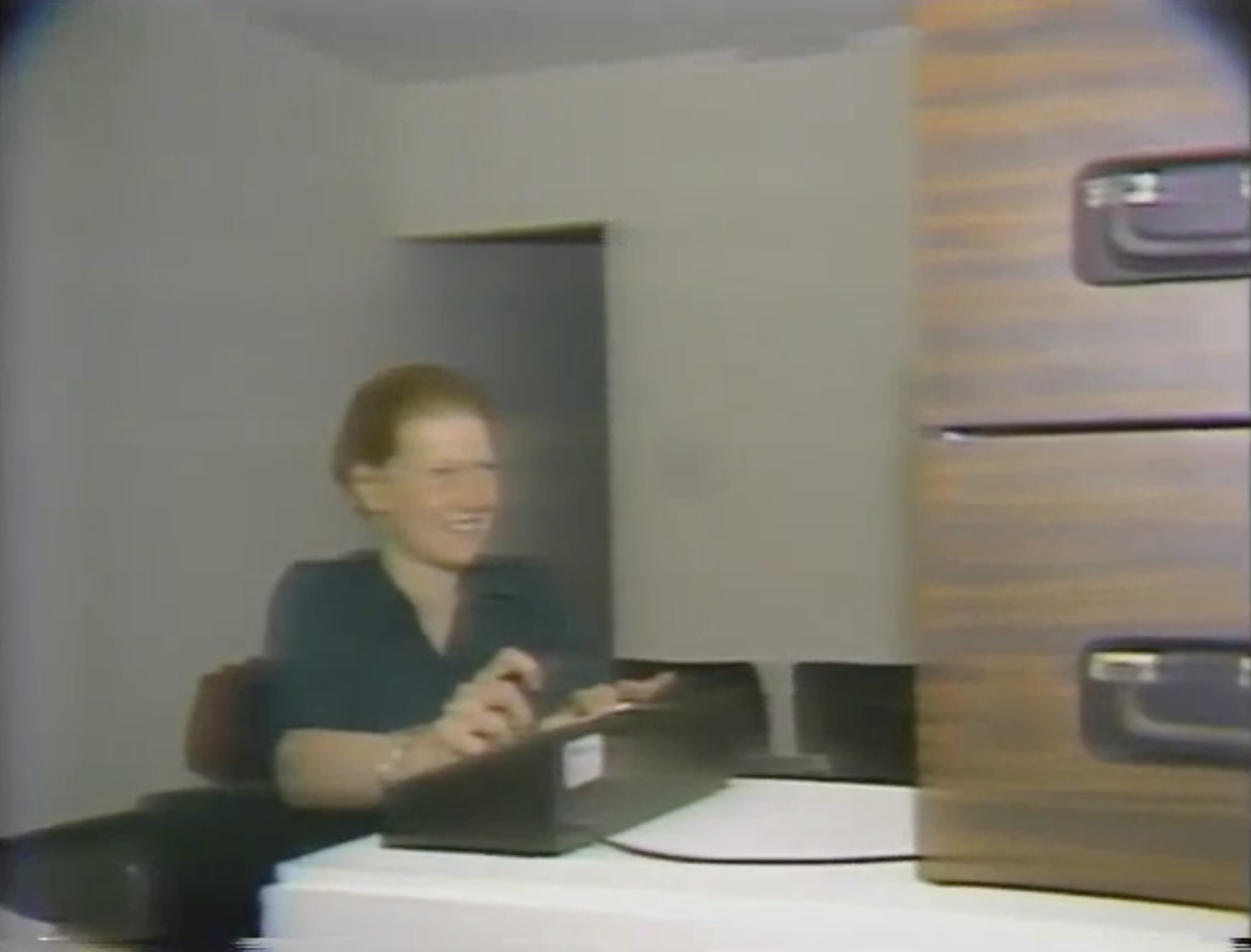 Copper Giloth on Video Games to Video Art100September 22, 2025
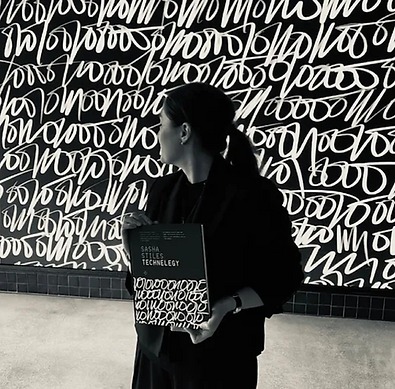
 Sasha Stiles and Martha Joseph on Language as Technology98September 10, 2025Hans Ulrich Obrist on Exhibitions as Living Organisms97September 1, 2025
 Juan Rodríguez García on Inhabiting the Moment96August 25, 2025
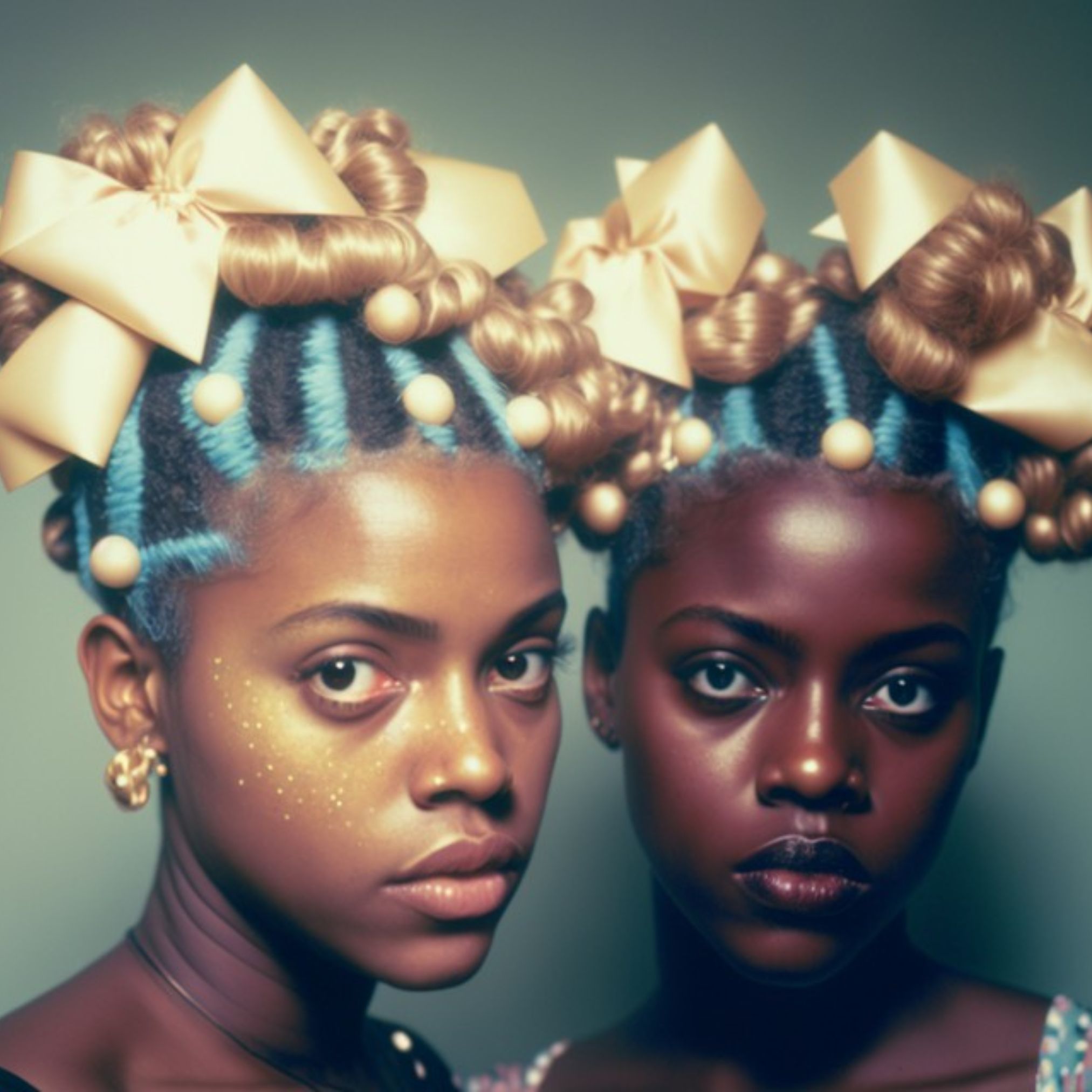 Minne Atairu on Shaping Our Own Image95August 18, 2025Hito Steyerl on How It Uses Us91July 21, 2025
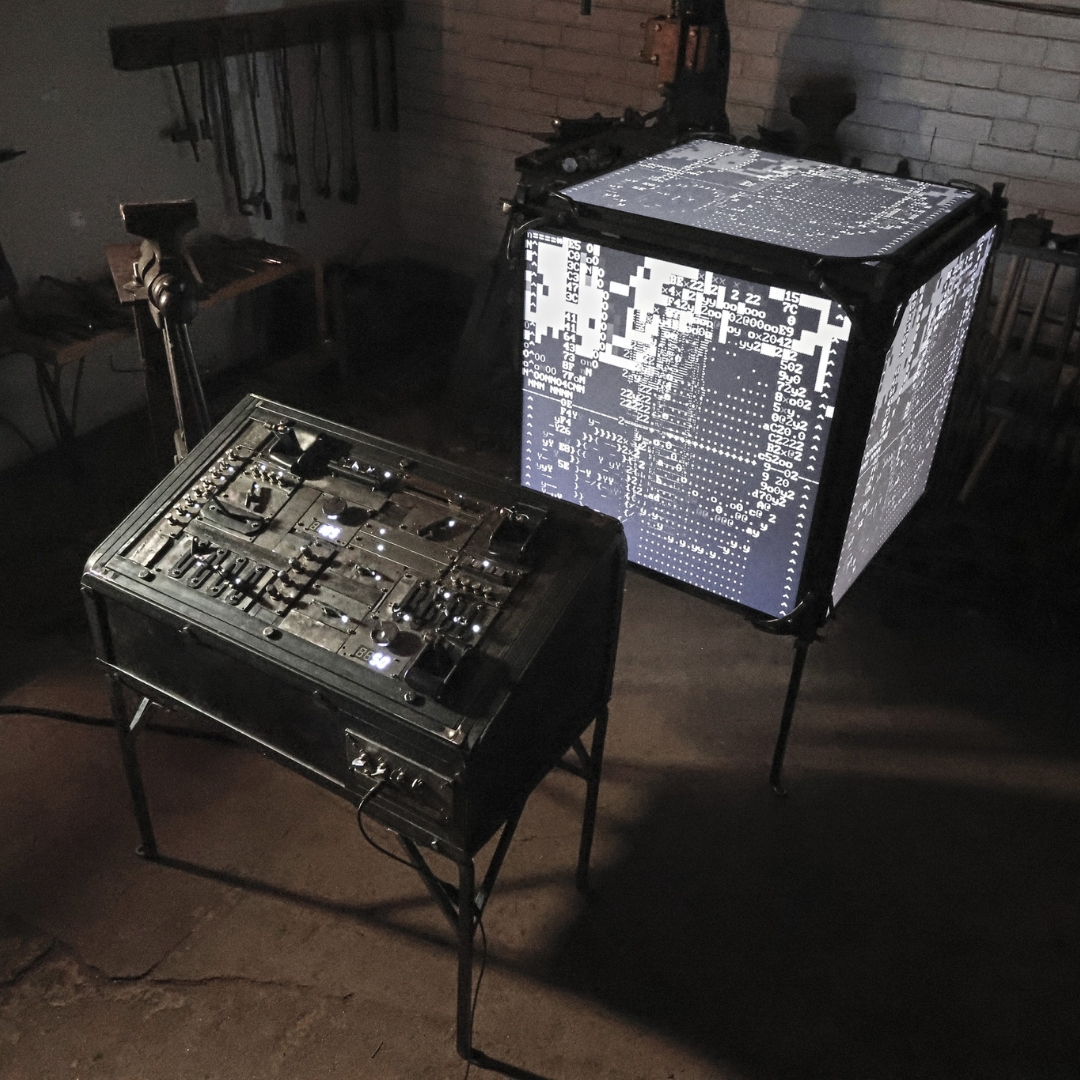 DEAFBEEF on Vernacular in a Standardized Age90July 14, 2025
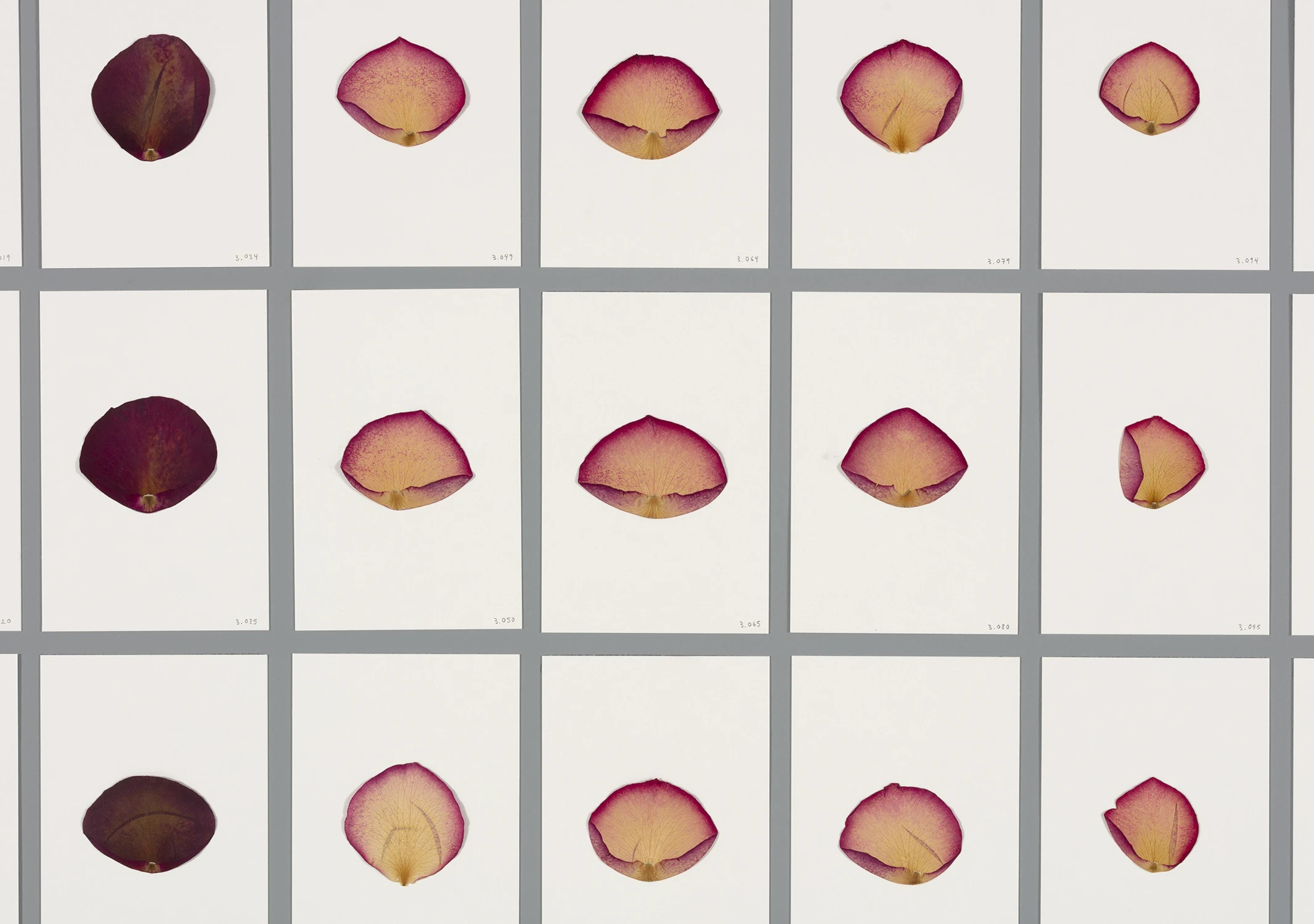 Sarah Meyohas on Irreducibly Human89July 14, 2025
 Julia Kaganskiy on Generativity’s Deeper Consideration88June 23, 2025Beeple on Infinite Creation Machines87June 17, 2025
.jpg) Reprogramming Sensory Habits86June 9, 2025Marina Abramović on New Possibilities85June 2, 2025
Reprogramming Sensory Habits86June 9, 2025Marina Abramović on New Possibilities85June 2, 2025 Dmitri Cherniak on Strictly for Art84May 26, 2025Christiane Paul on Defining AI Art79April 23, 2025
 A. Michael Noll on When It All Started78March 25, 2025Mario Klingemann & A.I.C.C.A. on Alien Perspective76March 10, 2025
 Barbara London on New Territory74February 11, 2025
 Kim Asendorf on Elegant Symbiosis73January 28, 2025
 Rafaël Rozendaal on a Liquid Canvas72January 21, 2025
 Inside Qubibi’s Shinjuku Studio71December 18, 2024
 Lawrence Lek on AI Reinventing Place69December 5, 2024
 Suzanne Treister on Critical Futurism68November 26, 2024
 Matt DesLauriers on a Generative World67November 19, 2024
 Sputniko! on Activism Multitasking66November 10, 2024
 Samia Halaby on Different Brushes65October 28, 2024
 Mat Dryhurst on Becoming Infinite64October 24, 2024
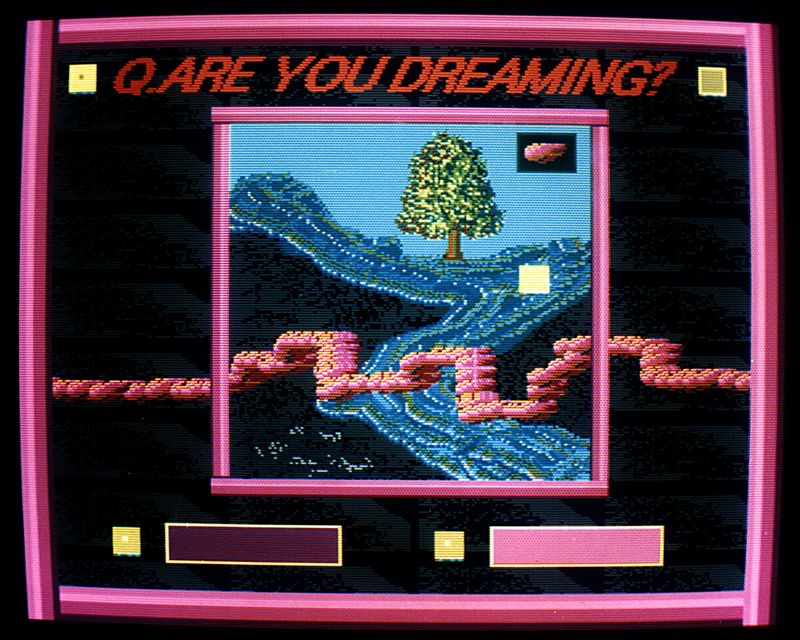
 Val Ravaglia on Electric Dreams63October 17, 2024
 Trevor Paglen on Technological Points of View62October 7, 2024
 Matt Hall and John Watkinson on Beginning Movements61September 25, 2024
 Simon Denny on Society, Technology and Art60September 17, 2024
 Joan Heemskerk on Quantum Web459September 10, 2024
 Casey Reas, Lauren Lee McCarthy & Chandler McWilliams on Expanding Software58August 20, 2024
 Operator Profiles Rebecca Allen56August 13, 2024
 John Maeda on Computational Evolution54July 22, 2024
 Analívia Cordeiro on Perpetual Motion53July 17, 2024
 Frieder Nake on “Machinic” Miracles52July 10, 2024
 Larry Cuba on Choreographing Form51July 1, 2024
.jpg) Jason Bailey, Georg Bak & Kate Vass on the Art Form of Our Generation46May 29, 2024
Jason Bailey, Georg Bak & Kate Vass on the Art Form of Our Generation46May 29, 2024 Jen Lowe and Patricio González Vivo on Democratizing Knowledge45May 21, 2024
 Colette Bangert on Growing Visually44May 7, 2024
 Kevin McCoy on Bridging net.art and Blockchain43May 2, 2024
 Michael Kozlowski on Exploration as Practice42April 17, 2024
.png) Bright Moments on Prioritizing the Personal41April 16, 2024
Bright Moments on Prioritizing the Personal41April 16, 2024 Matt DesLauriers on Challenging the Image40April 10, 2024
 Emily Xie on Textile as Personal Canvas38March 27, 2024
 Travess Smalley Profiles Mark Wilson35March 12, 2024
 machine rêverie32February 20, 2024
 Linda Dounia on Memory Machines31February 19, 2024
 Lauren Lee McCarthy on Software Values30February 13, 2024
 Christiane Paul on Curating Cohen’s AARON29January 29, 2024
 Sasha Stiles on Writing Poets28January 25, 2024
 Maya Lin on Systematic Naturalism27January 16, 2024
 Golan Levin on the Potentiality of Blobs26January 10, 2024
 Tyler Hobbs on Algorithmic Aesthetics25December 12, 2023
 AGH on Glorifying the Computer24December 5, 2023
 Snowfro and Ciphrd on a Symbiotic Relationship23November 30, 2023
 William Mapan on Breaking the Medium18October 18, 2023
 Sougwen Chung on Us in Another Form16October 5, 2023
 Rhea Myers on Code as Cultural Material14September 26, 2023
 DEAFBEEF on (Im)permanence13September 20, 2023
 Maya Man on Generative Meaning12September 13, 2023
 Kate Vass on Rethinking Art Collecting8August 9, 2023Zach Lieberman on the Resonance of Generative Art7August 2, 2023Casey Reas on the History of Generative Art - Part 23July 5, 2023Casey Reas on the History of Generative Art - Part 11June 22, 2023
Peter Bauman (Monk Antony) previews the autumn 2026 art and technology season, from Armory week in New York to ISEA Dubai. As the platforms close and the museums assess, Bauman lays out the highlights month by month, a full event calendar and picks from leaders in the field, including Corinna Gardner, Michael Spalter, Leyla Fakhr, Erick Calderon (Snowfro), Sofia Garcia, Lowbie and quasimatt.
The first half of the year saw the further shuttering of the art and technology space’s digital infrastructure. But this process dates back years. As I discussed with Kayvon Tehranian and Sebastian Sanchez, we are in a digital art post-boom era.
Two autumns ago in September 2024, Sotheby's dissolved its digital art team. One autumn later, Christie's followed suit. The last two years have seen a hailstorm of falling platforms, including Nifty Gateway, KnownOrigin, MakersPlace, Rodeo and Foundation. Earlier in 2026, fx(hash) quietly went dark before announcing its closing in the middle of August.
This Great Platform Shuttering surely has economic factors but it also speaks to something I wrote about in December 2025: how the work that stood out to the panel was more physical and experiential. That trend seems to have only intensified into 2026 and could even signify a generational shift.
Protocol artist and theorist Primavera De Filippi and Peter Bauman (Monk Antony) trace art's route to life through its grammar. They map how artists make work as, with and about protocols and worlds, which arise when rules shift from the first person to the third.
Since cybernetics, weapons—er, I mean machines—have been consciously designed to be more lifelike: more adaptable and intelligent. For seventy years, researchers, partly funded by DARPA, have sought to build machines that match, even surpass, the capabilities of humans.
Beyond weapon-making, cybernetics has profoundly impacted art and computer science as well. Through their overlap, art has absorbed tainted-but-vital technologies like computers, networks, blockchains and deep neural nets to shape cultural production. Along the way, artists have engaged with and subverted these technologies, redirecting their life-like powers to their own ends. This essay traces and examines this lineage and two central components: protocol art and worldbuilding.
Artist and writer Kevin Esherick reflects on his experience at the AI Psychosis Summit. And what was that? It was a community gathering celebrating AI-made projects and arising out of a social circle that straddles downtown New York and the internet.
I’m in a sweaty, dimly lit room in the heart of NoDi, New York’s hottest new microneighborhood. Time and time again passersby in the mingling crowd ask me the same question: “What the hell is going on here?”
I’m at the AI Psychosis Summit, which is not really a summit and which, depending on your definition of “AI psychosis,” might not really have anything to do with AI psychosis. It is also—and I hate to use this word but it really is apt here—the buzziest event of the year within a certain branch of the digital art scene, of which, if you’re reading this, you are probably a part.
Ruby Justice Thelot describes the emergence of machinic taste, a phenomenon where digital content is increasingly shaped by non-human preferences rather than human desire.
As AI-generated images get increasingly weirder, we are gaining a premier view into a new form of taste, something post-human, the first expressions of machinic taste. Accelerationist thinker Nick Land asserted, "Nothing human makes it out of the near future." Could we be seeing the first inklings that nothing human makes it out of digital culture?
Slop is “digital content of low quality that is produced usually in quantity by means of artificial intelligence.” But what we deem low quality is in fact the result of a very specific reward function. There is something that wants these images; they are not gratuitous.
Peter Bauman, Le Random’s editor in chief, attended Art Basel, Basel 2026 and its various side events and exhibitions. He connects his thoughts and a mini-diary to the discussion surrounding the Art Basel talk, “Barbarians at the Gate," with Tina Rivers Ryan, Trevor Paglen, Erick Calderon and Natasha Degen. Bauman suggests that the Zero 10 digital sector and anti-fair Basel Social Club are less barbarians than civilized "Normans," challenging the status quo but ultimately part of the institutional art world. The true "barbarians" are the general public who currently feel excluded from art spaces, emphasizing that the industry must produce work and find sustainable economic models to engage them.
While some might mistake Art Basel's digital sector Zero 10 for barbarous invaders, its third iteration is further evidence that digital art’s assimilation is fully underway. Similarly, the rebellious Basel Social Club is like a rival duchy, fighting over the same kingdom. The true barbarians, the ones the gatekeepers actually seem to keep out, are the general public.
Luckily, fending off raiders is one of humanity’s oldest problems and history suggests certain resourceful tactics. One is to let them in. To use them as a shield. They absorb threats as well as the host culture. The ancient Romans did this repeatedly along the Rhine frontier, as did the eighth-century Tang Dynasty.
Might we experience reality itself as a protocol and world in a divided brain? Peter Bauman argues protocol art and worldbuilding externalize the brain’s two halves: the protocolic urge to formalize reality into rules and the worlding urge to inhabit it as an open environment.
Artists share their minds, making them available for audiences to enter, interpret, even inhabit. What if certain attempts subconsciously mirror the brain itself, the two ways each of us perceives reality?
Wait a minute. The two ways? We only have one brain, pal.
Not according to neuroscientist and philosopher Iain McGilchrist. For him, the brain is not one unified instrument. It’s a divided system of attention, with each hemisphere feeding us two fundamentally different versions of reality. McGilchrist even refers to them as two brains.
What happens when language functions as both medium and mechanic? Alasdair Milne reflects on dmstfctn’s onchain AI text game Fango 1000, released free-to-play in 2025. Milne argues the work keeps meaning-making human by turning interpretation into onchain governance instead of outsourcing lore to AI. Fango 1000 was conceived and developed as part of the ARTeCHÓ fellowship, following exhibitions of early prototypes at Koelhuis, Eindhoven and Etopia, Zaragoza in 2024.
When is a fictional medieval Italian monastery the appropriate environment for an experimental onchain AI language game? When the game foregrounds the future’s recursion into the past. If technology is a future we build, the production of lore from the past becomes a bootstrapping method in service of that vision.
Artist duo dmstfctn’s Fango 1000 treats this vision's written construction as both game and governance, where players compete for narrative control by interpreting fixed facts. Collective voting then determines what becomes canon. From the player POV the protocol is deceptively simple: join a faction, receive a chronicle of scribbled clues about a mysterious machine, write an interpretation and vote.
Brian Droitcour argues contemporary art with NFTs operates in the productive tension between two opposing aesthetics: schizocollage (which foregrounds visible seams and difference) and generative AI (which synthesizes difference into coherent wholes). The most compelling work—Mons and Little Swag World by Supermetal Bosch, as well as Ugly Bitches and Little Darlings by Ann Hirsch and Maya Man—uses this tension to surface and critique how desire, identity and collectibility function in culture.
The avant NFT scene that has coalesced on Solana flaunts a schizocollage aesthetic: dissonant styles and references that don’t make sense together. It’s funny how this has become a significant idiom for digital art alongside the rise of generative AI.
Avant NFTs are held together by visible seams. Difference is an essential part of the composition. Generative AI, on the other hand, aspires to synthesis.
Artists who use it may follow some steps of the collaging process: assembling mood boards, reference clusters and other piles of images. But then they feed these to a model that learns patterns from them and generalizes, spitting out images that, strange as they might be, are continuous and coherent rather than visibly stitched.
As art shifts from objects to living (continuously executing) systems, institutional infrastructure and capacity must respond. We need living institutions that can preserve conditions of emergence rather than conserving artifacts. Peter Bauman explores how NODE offers one such model, as it showcases these precise capabilities with its opening show, 10,000, by artists Matt Hall and John Watkinson, curated by Amanda Schmitt and produced by Natalie Stone.
Evolution can be slow or fast, advancing through two mechanisms: gradual mutation and sudden symbiosis, when new forms of life appear all at once.
Culture, its institutions and society evolve similarly, alternating between long periods of gradual drift and punctuated leaps when new technologies (printing presses, photography, digital computation, the internet) reorganize how we make meaning and represent our current realities. But instead of recognizing that both slow drift and sudden leaps are essential, they can be cast as opposing values.
Kevin Buist attended Art Basel Miami Beach’s Zero 10 to observe digital art's shape and vibe post-NFT boom. In part two in a two-part series, Buist looks beyond the headline spectacle to the works that treated the fair itself as a medium—interactivity, systems and the shifting terms of ownership on view. Part One centered on Beeple’s Regular Animals and its crowd-drawing theater.
The 2025 edition of Art Basel Miami Beach saw the introduction of Zero 10, a special section of the fair dedicated to digital art. Zero 10 was at its best when artists built experiences with digital media (blockchains, screens, user interfaces, pixels, code, robotics) that would be impossible otherwise.
The NFT boom of 2021-22 came and went without the art market undergoing a vast digital transformation, leading some to conclude that art on blockchains was a passing fad. But NFTs are certainly not gone and digital art, which of course preceded the blockchain, will continue with or without it.
Kevin Buist attended Art Basel Miami Beach’s Zero 10, the new initiative at Art Basel Miami Beach focused on digital art, to observe its shape and vibe post-NFT boom. In part one in a two-part series, Buist finds himself unexpectedly captivated by Beeple’s Regular Animals. Part two considers the event in its entirety.
“Did you get an NFT?” a young boy asked me, gesturing at the small plastic bag I was holding with the words “EXCREMENT SAMPLE” printed on it in large white letters. It was nearly six pm on Sunday, and Art Basel Miami Beach was about to conclude its 2025 edition. I had spent the last few days in Zero 10, a new section of the fair dedicated to digital art.
“No,” I said, noticing that the boy held two similar bags, each containing postcard-sized prints. “What about you? Do those ones have NFTs?”
”Not these,” he said, “but I got one earlier.” The boy had apparently gotten one of only 256 NFTs given away as a part of Regular Animals, an installation and performance by Beeple featured in Zero 10. There were 1,000 prints in total. If you got one of those, it meant you had about a one in four chance of getting an NFT.
Le Random asked twelve trusted artists, curators and collectors to choose the single artwork that mattered most to them this year. We present a brief text by our editor in chief Peter Bauman (Monk Antony) below before revealing the choices by Christiane Paul, Sasha Stiles, Raoul Pal, Melanie Lenz, Erick Calderon (Snowfro), Cozomo de’ Medici, Maya Man, Dmitri Cherniak, Luba Elliott, Redbeard, Tyler Hobbs and Conrad House.
From 2025’s standout artwork below, it's apparent that contemporary art practices are increasingly disregarding firm distinctions between physical, digital, output, latent and block-space.
Emerging technologies like AI and NFTs were once generally considered separate subgenres of digital art, fighting for legitimacy, requiring back-footed defense. By the end of 2025 with AI featured prominently at MoMA and NFTs invading Art Basel, institutional adoption of these technologies, while reluctant, has happened before our very eyes.
More importantly, terms like “AI art,” “NFT art” or “crypto art” are fading from vocabularies due to their imprecision and inaccuracy. Calling Holly Herndon and Mat Dryhurst’s Starmirror or Beeple’s Diffuse Control simply “AI art” is not acceptable when both works are complex multimedia protocol stacks that happen to utilize AI within a rhizomatic structure.
Le Random presents a curated guide to London's digital art and culture, featuring an Art Walk Map and highlighting must-see galleries, neighborhoods and artists that shape the city’s versatile scene.
If Charing Cross marks London’s true centre, then Piccadilly Circus remains the city’s unavoidable node. Bathed in the ersatz glow of electric billboards for more than a hundred years, the arrival of Outernet round the corner as Europe’s largest digital exhibition space has helped to mainstream many of the artists once confined to the internet. This immersive screen-based experience sits within a long history of British digital art, from computer-generated drawings to software art and responsive architectural environments.
A number of seminal exhibitions in the city have introduced the public to the creative potential of computing and networked systems, from Cybernetic Serendipity (1968) at the ICA to Big Bang Data (2015) at Somerset House and Electric Dreams (2024) at Tate Modern. It was the former’s iconic curator, Jasia Reichardt, who turned computer art into a global conversation by bringing together 130 artists, engineers, poets, musicians and mathematicians in a space of playful intersection.
Peter Bauman (Monk Antony) considers how Drifella III by Evil Biscuit subverts the derided PFP to build a room-scale triptych of painterly compositions, internet meme-language and dark jester license, colliding into a complex record of life in the 2020s.
It’s immediately apparent that Evil Biscuit’s Drifella III resists simplicity and surface-level understanding.
Nothing about the collection is simple. It’s not work for scrolling or glancing or “getting” right away. It’s a series of 1,333 rooms containing 3,999 chaos-layered, reference-maxxed paintings. Each room is a triptych containing up to 78 different traits; by comparison, CryptoPunks uses 87 traits in its entire 10K collection. Drifella III has over 5,000 traits.
These numbers may begin to explain the complexity of the project but still fail. It’s room-size work that demands room-size attention, but it also demands room for emotional variance. One piece might make you laugh, another cringe, while another leaves your jaw on the floor.
Jasia Reichardt considers the little-known impact of Gaberbocchus Common Room, London’s first club for artists and scientists, on the development of artificial intelligence (AI). Opening in 1957, the club served as a meeting point for some of the earliest discussions on art, AI and philosophy. The legendary Cybernetic Serendipity (1968) curator muses on its implications for today.
Gaberbocchus Common Room was the first club in London for artists and scientists to meet. It was launched by Franciszka and Stefan Themerson as an adjunct to their publishing company, Gaberbocchus Press, and was active between 1957 and 1959 in a large basement in London’s Maida Vale.
A book about its activities dealing with art, architecture, science, communication, cybernetics, computers, poetry, mathematics, films, plays and experiment of every sort will be out this November [by Reichardt].
Brian Droitcour reviews K. Allado-McDowell’s The Known Lost at the Swiss Institute, on view through September 7, and Pierre Huyghe’s In Imaginal at Marian Goodman Gallery, which closed in June.
In the hands of thoughtful artists, much-derided AI systems can become an instrument for seeing the world differently. They invite us to imagine other kinds of intelligence and to reconsider how we understand our own powers of perception.
Two exhibitions in New York this summer, K. Allado-McDowell’s The Known Lost at the Swiss Institute and Pierre Huyghe’s In Imaginal at Marian Goodman Gallery, take up this challenge, using generative AI and robotics as collaborative, active agents in the work’s creation. They remind us that “AI art” is an imprecise umbrella term encompassing several technologies which can be used by artists to achieve powerful emotional and conceptual effects.
Peter Bauman (Monk Antony) explores the concept of "Post-AI Art," positioning it as a significant departure from "AI Art." Bauman posits that Post-AI Art rejects human-centric views, embracing a posthumanist perspective that emphasizes interdependence, entanglement and co-inhabitation between humans and non-humans, including AI.
Did you hear? The human is dead. Actually, it's a cold case. But there are leads.
Nietzsche killed (god and) humans well over a century ago in Thus Spoke Zarathustra (1883), when he described the fixed, rational human as a bridge to the Übermensch: “man is something that must be surpassed.”
For Foucault in The Order of Things (1966), “man is a recent invention…and one perhaps nearing its end.” He argued that the human as we know it, speaking, laboring, knowing, being, emerged only in the eighteenth century as a byproduct of disciplinary regimes and epistemic structures. Just as it emerged, it could dissolve.
Kevin Buist considers Infinite Images: The Art of Algorithms, on view at the Toledo Museum of Art, Ohio, through 30 November 2025.
Kevin Buist considers Infinite Images: The Art of Algorithms, on view at the Toledo Museum of Art, Ohio, through 30 November 2025.
“There is one thing that can replace intuition; it’s randomness.” So reads a quote by the artist Vera Molnár high on a gallery wall in Infinite Images: The Art of Algorithms at the Toledo Museum of Art in Ohio. Julia Kaganskiy curated the group exhibition, featuring twenty-four artists with works from the 1960s to the present.
In the catalog essay, Kaganskiy explains that the show examines “how artists working with generative systems, both analog and digital, have historically negotiated chance and control, emergence and intention, and authorship with automation.”
Peter Bauman (Monk Antony) questions the common perception that generative AI art is inherently "average" or derivative. He considers how artists use images to make meaning in 2025 when new methods and tools flood the visual landscape and individual images lose their weight. Has critical discourse kept pace? Or is the backlash repeating average metaphors?
Buckle up. Things are about to get mean.
AI critics, even artists, like to use the “average critique.” You’ve heard it before: that due to generative AI art’s inscrutable inner workings, its outputs converge on the average, the statistically typical, the already known. Their point is not crude technical confusion; they understand these systems don’t literally blend pixels. Their concerns are cultural and political: that models trained on massive datasets often yield safe, normative or derivative results. In this view, AI art becomes a kind of automated banality, a tumble down to the pastiche—what’s commonly referred to as slop. This essay reviews three of the more thoughtful and eloquent average critiques from Ted Chiang, Hito Steyerl and Gary Marcus.
Luba Elliott observes how a growing number of artists are subverting facial and object recognition, using the foundational AI technologies’ flaws and rigid categorizations to explore the aesthetic collisions between machine vision and human perception.
AI art today is largely associated with generative systems that create images, texts and videos, prompted only by a few words. Meanwhile, facial and object recognition, other foundational AI technologies, frequently lie forgotten—but not entirely.
A group of artists specifically interrogates facial and object recognition just as the technologies increasingly become embedded in our daily lives. These artists explore themes like misrecognition, hallucination and categorization errors—not simply to generate pleasing images but to scrutinize the differences and unexpected affinities between human and machine perception. They ask us to reconsider the aesthetic and epistemological foundations of how we see and how machines see for us, beginning with our most personal feature, our faces.
Le Random presents a curated guide to New York for digital art lovers, featuring an Art Walk map and highlighting must-see galleries, neighborhoods and artists that define the city’s vibrant digital art scene. Updated for 2026! Watch our 2026 New York Frieze Week preview with Rhizome's Michael Connor, MoMI's Regina Harsanyi and artist Karyn Nakamura.
On the D train from Brooklyn to the Lower East Side, I'm lucky when I look up from my phone just in time to see one of my favorite public artworks, the little-known Masstransiscope. It's an analog animation by Bill Brand, who installed and illuminated 220 hand-painted panels in the underbelly of New York. Located in a subway tunnel behind a wall with evenly spaced slits, the persistence-of-vision effect takes place, animating the panels as the train flies by.
Consumer-grade text-to-image tools make it easy to skip the arduous work of artistic practice and jump straight to a polished result. Chuck Anderson’s Imagined Wreckage shows how these tools instead can be layered into a bespoke and meandering artistic practice.
Text-to-image generators seem designed to kill artistic practice. The relatively recent rise of Dall-E, Midjourney and similar tools has made generating images exceedingly easy, divorcing image-making from the artistic practice that typically precedes it. The paradox of widely available consumer AI image generators is that the easier they make it to create an image, the harder they make it to forge a way of being in the world that results in the creation of worthwhile images.
This is the story of Alec Radford, the inventor of ChatGPT, and his foundational contributions to generative AI—a new internet and paradigm for media by Peter Bauman (Monk Antony).
A new internet, generative AI, had its mainstream breakthrough in November 2022 with ChatGPT 3.5, like the original’s World Wide Web moment.
Prior to 1993, the Internet was the near-exclusive domain of researchers and academics. Tim Berners-Lee changed that with his 1989 invention of the World Wide Web. When CERN released the Web as public domain software in 1993, it introduced the Internet to everybody’s everyday lives, including artists. The net.art movement began in Eastern Europe within a year in 1994.
Prior to 2022, generative AI was still mostly the domain of researchers and academics—plus some artists and collectors. ChatGPT, the mainstream gateway for the public to access generative AI, changed that. Two months after its release, ChatGPT 3.5 became the fastest-growing consumer application in history, reaching an estimated 100 million monthly active users.
Peter Bauman (Monk Antony) explores how technology has always changed the way artists see, create and think—first by revealing hidden details (optical unconscious), then by structuring information (computational unconscious) and now by co-generating new possibilities (neural unconscious). While these forces open vast creative spaces, they do not necessarily equate to quality and come riddled with ethical, political and moral challenges that demand critical engagement rather than passive adoption.
Like the universe, art is expanding due to the stretching of space itself—and at a hastening pace. There’s an invisible, mysterious force—art’s dark energy—driving this acceleration.
But it’s not so mysterious after all. It's actually part of us. As Joanna Zylinska said, “We have always been cyborgs,” always using instruments—technologies that expand our perceptions and capabilities—to enhance our creativity.
How have these cyborg-like instruments evolved and how have they shaped the way humans make? Computational philosopher AA Cavia frames intelligence as an active process of navigating—even expanding—a conceptual landscape. Cavia then describes creativity as mapping and realizing possibilities within that space—an artist’s unique voice.
This is Part IV in a series on building a framework for appreciating generative art. In Part I, “Demystifying Generative Art,” Peter Bauman (Monk Antony) builds the case for such a framework. In Part II, “Demystifying Generative Aesthetics,” Bauman examines generative outputs—the results of generative systems. In Part III, "Demystifying Generative Systems," he examines generative systems themselves. Now in Part IV, Bauman investigates another framework component, autonomy—control within generative systems. The essay includes Bauman’s discussions with Christiane Paul, Matt DesLauriers, Sougwen Chung and Zach Lieberman.
Now in Part IV, Bauman investigates another framework component, autonomy—control within generative systems. The essay includes Bauman’s discussions with Christiane Paul, Matt DesLauriers, Sougwen Chung and Zach Lieberman.
What does generative art—art using autonomous systems—fundamentally prioritize? You’re speaking to a curious friend who’s unfamiliar with it.
How can you help them understand what’s special about generative art while also conveying that it’s just like any other form of art? What’s it really about?
In Part 2 of a series on artists using digital systems to subvert gender and sexuality norms, Vienna Kim argues that women and the queer community have played an outsized role in shaping generative art games. Artists employ these mediums to challenge gender and sexuality norms, while creating inclusive spaces within the tech and gaming industries.
Thinking about generativity in terms of art that emerges from autonomous systems—and potentially human interaction—gives space for a profusion of visuals, poetry, music and games to be considered generative art. Much of this work has been produced independently of computers, combining procedures and human interaction with an element of randomness to produce variegated results in the vein of John Cage. More recently, generative art has become synonymous with code-based and algorithmic frameworks that produce random outputs upon mint—a narrow conception that consigns other generative systems to the periphery, including gaming systems. And yet, video game art shares a rich history with generative art, with artists such as Cory Arcangel and JODI historically blurring the lines between genres. Notably, many twentieth-century generative and game artists were women and perhaps not without reason.
Can art assume the roles traditionally fulfilled by religion in an increasingly secular and digital world? Peter Bauman (Monk Antony) argues that the religiously non-affiliated worship two new gods: technology and randomness. Digital generative art—art fundamentally addressing technology and randomness—may provide the most straightforward means to critically engage these deities.
As our lives digitize, what really is changing?
The world is secularizing. The number of people “who do not identify with any religion has been rising rapidly” over the last fifteen years in the United States, Western Europe, Australia, New Zealand and Latin America. This is in addition to the largely already secular East Asia. We can confidently say that large portions of the world that were once religious two decades ago are now…not. Why?
Cherished icon Jasia Reichardt met with Peter Bauman (Monk Antony) before the Foundation Herbert W. Franke's Generative Art Summit Berlin. The Cybernetic Serendipity curator wrote this text as one of the few people who anticipated our digital future along with Franke in the 1960s. This piece extends the earliest thought on art and AI to the present, as only a singular voice like Reichardt's could.
A noticeable aspect of computer graphics in the 1960s was that once the image started appearing on the screen, the artist could, and often did, go away. The drawing on the screen continued.
Of course, this was not always the case, but it was something one was very much aware of. To emphasise this new collaboration, whereby the artist initiates a process which then functions by itself, Cybernetic Serendipity also included painting machines, one by Tinguely, for instance, as well as harmonographs, which produced abstract patterns once they were filled with paint. The artist, or the gallery’s technician, started the procedure, which continued for an unspecified length of time and then stopped.
This is the third part in a series on building a framework for appreciating generative art. In Part I, “Demystifying Generative Art,” Peter Bauman (Monk Antony) builds the case for such a framework. In Part II, “Demystifying Generative Aesthetics,” Bauman examines outputs—the results of generative systems, while he looks at autonomy in Part IV, "Demystifying Generative Autonomy." Now in Part III, he investigates another layer of the Framework, systems themselves. He spoke to Frieder Nake, Casey Reas, Emily Xie, DEAFBEEF, Matt DesLauriers, Jen Lowe and Patricio González Vivo for the piece.
Now in Part III, he investigates another layer of the Framework, systems themselves. He spoke to Frieder Nake, Casey Reas, Emily Xie, DEAFBEEF, Matt DesLauriers, Jen Lowe and Patricio González Vivo for the piece.
Can you understand a work of generative art just by looking at it? Why use systems to make art in the first place? How do we even go about appreciating systems? What can generative systems achieve that other forms of expression cannot? If you’re reading this and thinking, “I respond to art on a sensory-emotional level only. I don’t need this.” That’s perfectly acceptable but this article is for viewers who wish to supplement that sensory level by seeking the clues artists leave that reveal so much more about their work. By studying systems, we don’t diminish our emotional response; we amplify it through justification or mature it through reconsideration.
The AI Index 2024 Annual Report by Stanford University—an invaluable publication aiming to enhance understanding of AI through dedicated research—addresses several issues pertinent to the digital art space without dedicating a chapter or even section to it. Peter Bauman (Monk Antony) reviewed the five-hundred-page report to distill the relevant takeaways for the contemporary art world’s collectors, artists and institutions.
The public increasingly fears AI, while private capital increasingly adores it. As it relates to art, these are two of the more far-reaching takeaways from Stanford University’s AI Index 2024 Annual Report. What are the implications of this dynamic for collectors, artists and institutions in the digital art space? Humans have long feared new technology so we predictably fear AI. This fact in isolation does not reveal much.
Employing John Berger's Ways of Seeing (1974) as a critical lens, Danielle King observes the rise of the algorithmic gaze—the perpetuation of the male gaze into the realm of AI-generated art—underscoring entrenched patriarchal values and the protracted commodification of female bodies.
John Berger famously articulated that "Men look at women. Women watch themselves being looked at" in his seminal BBC series Ways of Seeing (1974). This profound observation elucidates the power relations inherent in the act of viewing, wherein women are often objectified and positioned as passive subjects of male desire—a dynamic known as the male gaze. Reducing women to objects of scrutiny—deeply embedded in traditional art forms—has found new expressions in the realm of AI art, where algorithmic biases and societal conditioning continue to inform women’s representation. Employing Berger as a critical lens, we worryingly observe the rise of the algorithmic gaze—the perpetuation of the male gaze into the realm of AI-generated art—underscoring entrenched patriarchal values and the protracted commodification of female bodies.
In 2014, I did a nostalgia show, net.art painters and poets, a very serious thing, and wrote a very solemn memoir-like intro for the fancy catalog. Now, ten years later, it resurfaced during a dialogue with Peter Bauman (Monk Antony) and we decided to continue talking about net.art using this text as a chess board, moving figures around, looking for some nice choreographies. That’s what chess is for.
In 2014, I did a nostalgia show, net.art painters and poets, a very serious thing, and wrote a very solemn memoir-like intro for the fancy catalog. Now, ten years later, it resurfaced during a dialogue with Peter Bauman (Monk Antony) and we decided to continue talking about net.art using this text as a chess board, moving figures around, looking for some nice choreographies. That’s what chess is for. [Editor's note: Ćosić's 2014 text is largely intact below with the chat and updated writing in bold.]
This is Part II in a series on building a framework for appreciating generative art. In Part I, “Demystifying Generative Art,” Peter Bauman (Monk Antony) builds the case for such a framework. In Part III, "Demystifying Generative Systems," Bauman examines generative systems themselves, while he looks at autonomy in Part IV, "Demystifying Generative Autonomy." In this essay, he takes a closer look at one of the five framework components, Results—the outputs of a generative system. Peter spoke to Tyler Hobbs, Kim Asendorf, Andreas Gysin, Leander Herzog, Erick Calderon, William Mapan, Lauren Lee McCarthy, Sougwen Chung, Christiane Paul, Linda Dounia, Patricio González Vivo and Golan Levin for the piece.
In this essay, he takes a closer look at one of the five framework components, Results—the outputs of a generative system. Peter spoke to Tyler Hobbs, Kim Asendorf, Andreas Gysin, Leander Herzog, Erick Calderon, William Mapan, Lauren Lee McCarthy, Sougwen Chung, Christiane Paul, Linda Dounia, Patricio González Vivo and Golan Levin for the piece.
What makes generative art special? What makes it compelling art? How can we think about and communicate these thoughts to others more clearly? In “Demystifying Generative Art,” I proposed a Framework (image below) for appreciating generative art, which examines artistic intent and suggests approaching work from multiple perspectives: Process, Results, Concept, Autonomy and Context. But taken individually, these perspectives also function as lenses, giving you the ability to examine a work from a single, more attuned point of view. This article investigates one such lens—Results and their aesthetics—to better understand how appreciating the visual outputs of a generative system can provide a deeper connection to the work as a whole.
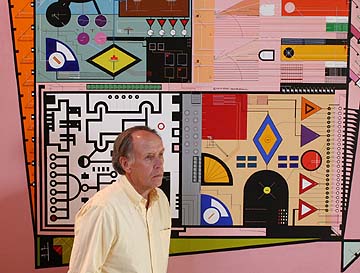
In part two of Le Random Editorials' profile on Mark Wilson, we hear from the artist himself. Read part one, the companion interview with Travess Smalley. In this brief commentary, Wilson narrates art history as he describes his journey from traditional mediums to digital art, exploring technology for creativity's sake. In this generous insight, Wilson reveals the path that led to his visionary computer-generated aesthetic, both bold and sensitive.
Born and raised in Oregon, like many kids, I loved to draw. By the time I started high school, I became fascinated with photography, developing and printing my own pictures. In college, my visual life became focused on painting in an Abstract Expressionist style.
Pop art, op art, minimalism and hard-edge art had become the successors to Abstract Expressionism. I was trying to find my own path forward. I began making large drawings that looked like some kind of abstract engineering or architectural fantasy. By the mid-seventies, these works became more painterly and appropriated computer and electronic imagery.
Eureka! In 1980, I bought a small personal computer, a Texas Instruments TI-99/4A. I loved it but I had no idea how I could use it to make art. At the same time, I started writing very simple programs. Soon I realized that software procedures were much akin to the visual procedures of artists like Sol LeWitt, Larry Poons and Jackson Pollock.
How did we transition from art in the style and form of Leonardo da Vinci's Mona Lisa to art like Kim Asendorf’s monogrid? Mona Lisa is a singular, static and complete work produced with paint on a canvas, while monogrids are iterative, animated and real-time manipulations of pixels on a screen. The short answer to explain this transition is the mechanization of art, beginning in earnest around two hundred years ago with the invention of the camera. The longer answer, laid out below, recognizes that this shift did not occur easily or rapidly. Below is an overview of the ways artists such as Marcel Duchamp, Vera Molnár and Tyler Hobbs have combined art and machines to broaden the definitions of both, considering first "Art and Machines," then "Art Machines," and lastly "Coded Art Machines." The longer answer also gives space to contemplate what this previous change can tell us about where we are in generative art and where we may be headed.
Painting has not always been seen as the ultimate form of art. In the year 1400, it was unclear which art form would dominate moving forward. The most likely answer at that time was sculpture, where painting largely played a subordinate, preparatory role on altarpiece shutters. The sculptures inside the altars were intended to be the focus, with the sparse and simple shutter paintings serving to contrast the splendor of the sculpted centerpiece. For the telling of intricate stories, tapestry was the preferred and showiest method for image-conscious, late-Medieval nobles. It was not until the first half of the fifteenth century that Jan van Eyck’s experiments with layered oil paint demonstrated its power to most richly convey light, form and color. Painting allowed artists to easily express both the outside world and their imagination. By 1506, Leonardo painted the Mona Lisa.
Vera Molnár moved to Paris at the end of 1947 and would call the city home for the rest of her storied life. Use our interactive map to follow in her footsteps across the French capital and discover the entwined narrative of artistic evolution and urban existence that defined her practice.
Vera Molnár moved to Paris at the end of 1947 and would call the city home for the rest of her storied life. Use our interactive map to follow in her footsteps across the French capital and discover the entwined narrative of artistic evolution and urban existence that defined her practice.
Veronika “Vera” Gács arrived in Paris on December 10, 1947, with her soon-to-be husband, François Molnár. “I was obsessed with the desire to see modern art, and for me that could only mean Paris,” she later recalled.1 The twenty-three-year-old Vera stayed with François at a hotel on Rue de l'Hirondelle, her first place of residence in the city. There she would produce her first creative expression in Paris, drawing the house across the street from her hotel window. The Hungarian expat would call the city home for the next seventy-six years.
Peter Bauman (Monk Antony) explores an emerging conceptual shift in on-chain generative art, signaled by the postmodern generative choreography of Operator’s Human Unreadable. Monk then speaks to the duo about the historical influences of the 2023 Lumen Prize-winning project.
Conceptual art emerged in the mid 1960s, altering and ultimately enriching our understanding of the art object. Conceptualism represented a paradigmatic shift away from traditional notions of beauty and the materiality of art "objects" toward an emphasis on ideas and actions that often engaged contemporary issues. The movement recognized that, as Apollinaire said and Benjamin Buchloh reminds, "This monster called beauty is not eternal." Artists of the period grappled with the conflict between emphasizing visual aesthetics and prioritizing conceptual ideas. Similarly today, we see some of the most exciting projects in on-chain generative art navigating this same tension, led by Human Unreadable by Operator, the two-time Lumen Prize-winning, experiential artist duo of Ania Catherine and Dejha Ti. Operator and others are bringing concept-forward projects to the blockchain, expanding the possibilities within this space.
After consulting with artists and contacts, Le Random's Peter Bauman (Monk Antony) compiled a poster for Bright Moments Buenos Aires, designed by Qian of Bright Moments. The poster memorializes these ten moments in South American generative art history. The moments can also be found in a permanent section of our larger Generative Art Timeline.
After consulting with artists and contacts, Le Random's Peter Bauman (Monk Antony) compiled a poster for Bright Moments Buenos Aires, designed by Qian of Bright Moments. The poster memorializes these ten moments in South American generative art history. The moments can also be found in a permanent section of our larger Generative Art Timeline.
For millennia, Andean textiles wove together stories of identity and ancestral beliefs. Predating written languages, textiles served as the predominant medium for conveying images and concepts. These intricate cloth creations, including striking geometric patterns, held profound significance in the Andean world. In life, they conveyed social status and symbolism through materials, colors and motifs. In death, they adorned sacred mummy bundles. Even today, Andean textiles remain both utilitarian items and instruments of ritual, embodying deep cultural values. Weaving, dyeing and knotting techniques created exquisite textiles, transcending time to express the soul of South America.
Virginia Valenzuela explores generative art's roots in South American concrete art.
Early digital generative art is defined by space: the way lines and shapes take up space, the way artworks exist in a space between order and chaos. This extends to the physical space required to house giant computers and pieces of paper laid out on tables and floors, waiting for the programmer's algorithm to take form.
It is easy to assume that this distinct aesthetic was first brought to life by artists like Frieder Nake and A. Michael Noll, some of the earliest to experiment with digital machines. Yet, their principles of simplicity and singularity were already present in the concrete art movement that began in 1930s Europe and was further shaped by artists in South America in the 1940s, 1950s and beyond.
Artist and writer Nathaniel Stern meditates on Jason Ting's Lumina against the backdrop of Marfa's art-rich history and natural wonders.
Artist and writer Nathaniel Stern meditates on Jason Ting's Lumina against the backdrop of Marfa's art-rich history and natural wonders.
Six glowing, slowly gradating tubes—each approximately the size of a yoga mat—are arranged on the ground like an art–tech campfire in the corner of the Saint George Hall in Marfa, Texas. Try imagining a bed of soft, cylindrical body-sized pillows, each engulfed by a new color about once per second. But between each focused re-encapsulation, there is a gradient animation, a soft push of hue, saturation and value, which somehow manages to pull us in to an intensity of moving light, color and shadow.
Artist Mark Webster suggests that in order to better understand art’s value, we must be willing to consider the function of craft, including elements of skill less visible or immediate.
The question of value with regard to art, whether you be the artist, collector or both, is a highly contested terrain. You may be interpreting “value” solely in monetary terms, something tied to an economic system and through which market forces conjure expectation or fear into belief and trust. Value, or rather values, are equally found elsewhere and I will suggest some other perspectives on the matter. In so doing, this brief essay, which I hope will be the beginning of many, is an attempt to open up discussion on the general theme at hand here, generative art. I will do this in a purposefully open manner, expressing varying points of view while contextualizing these references in order to lead to a more diverse understanding of the subject.
Peter Bauman (Monk Antony) reflects on Philip Galanter's classic 2003 definition of generative art before briefly speaking with the artist, Texas A&M professor and theorist about the definition twenty years later.
Dialogue thrives on a foundation of shared language. For both participants and non-participants in the generative art space, grasping the nuance of the discourse can be a challenge. We only amplify this challenge with imprecise language, especially concerning the definition of generative art itself.
What do we mean when we say generative art? How do we determine whether a work is generative? Do we include non-digital practices? What is autonomy in art? What is an autonomous system? How we talk about and communicate the answers to these questions is vital to generative art's long-term success and acceptance into the art historical canon. We have to understand ourselves before we expect even interested parties to understand us. To our great luck, the foundation to our shared understanding has already been laid.
In Part I of this series, Peter Bauman (Monk Antony) develops a framework for appreciating and analyzing generative art—art using autonomous systems in the vein of Sol LeWitt or Yoko Ono—through an investigation of the movement’s locus of artistic intent. In Part II, “Demystifying Generative Aesthetics,” Bauman examines generative outputs—the results of generative systems. In Part III, "Demystifying Generative Systems," he examines generative systems themselves. Bauman looks at autonomy in Part IV, "Demystifying Generative Autonomy."
In the early 1960s, abstract geometric master François Morellet sought to use the tools of science to "demystify art [to] better understand it." He wanted to make art more accessible, opening it up for the public to share in its creation. Such a scientific approach to analyzing art has a long tradition in digital generative art, including Georg Nees and Max Bense's "Generative Aesthetics" (1965), as well as James Gips and George Stiny's Algorithmic Aesthetics (1978).
Eschewing this objective approach, this article seeks to begin a discussion about demystifying generative art—art using autonomous systems—not by breaking the subject down mathematically but by evaluating it thematically in the vein of art historical analysis. The formal, contextual and conceptual tools of art historical analysis, however, fall short when analyzing generative art due to the idiosyncrasies of the method: the central role of process and questions of artistic control. So what makes a work of generative art interesting or good?
Elisabeth Sweet touches on the history of generative poetry and its impact to this day.
Poetry finds unlikely, yet natural, partners in generative art and blockchains. The links between generative art and poetry stretch back to at least the seventeenth century with Artificial Versifying by John Peter in 1677. The book outlines an algorithmic, deterministic procedure for composing grammatically correct Latin verse.
Language artist Sasha Stiles often says that “poetry is the original blockchain” with its distinct ability to transmit information and history within groups and across generations. In this sense, poetry stands as one of humankind’s oldest word programs. Digital generative poetry has a rich history as well. One of the earliest examples, Theo Lutz’s 70-line poem Stochastische Texte (1959), actually predates digital computer graphics. By the mid-1960s, Fluxus artists inspired by Dada’s cut-up poetry and Surrealism’s automatism were utilizing computers to compose poetry.
Peter Bauman (Monk Antony) recently curated the fxhash exhibition, feels like home, in partnership with Non Fungible Conference, 2023.
Peter Bauman (Monk Antony) recently curated the fxhash exhibition, feels like home, in partnership with Non Fungible Conference, 2023.
It was not until the last few decades that the majority of the world’s population began living in urban areas. The number today remains at only 56%.1 Thus, for hundreds of thousands of years and the overwhelming majority of our existence, Homo sapiens has associated a flower, tree or hillside with home more than a building, street or neighborhood. Landscapes serve as the backdrop to our shared, ultimate home, nature.
While landscape art has an ancient tradition spanning cultures and millennia, it was not until the nineteenth century that the subject accelerated in prominence and popularity. The work of William Turner, the Naturalists and eventually Monet and the Impressionists sparked this renewed interest while also kicking off the modern art revolution. It was not a coincidence that this spike occurred during a time of rapid industrialization and an increased sense of alienation from nature.
On March 8, we publicly announced the launch of Le Random, a digital generative art institution that aims to collect, contextualize, and elevate on-chain generative art.
On March 8, we publicly announced the launch of Le Random, a digital generative art institution that aims to collect, contextualize, and elevate on-chain generative art. As co-founder, I want to share the story and motivation behind Le Random’s founding. I will take you through my personal journey with generative art, including my discovery of its rich history and the realization that it may be the art movement of our era.
I grew up in a household in which art was never far away. My mother used to take my brothers and me to galleries and museums from a young age. One of her favorite sayings has stuck with me: “A thing of beauty is a joy forever.” This appreciation of beauty was instilled in her by my grandparents who were passionate art collectors, focusing on African art as well as seventeenth-century still life paintings and drawings.
Famed investors and art collectors Micky Malka and Becky Kleiner speak with Peter Bauman (Monk Antony), sharing the story of their love for art.
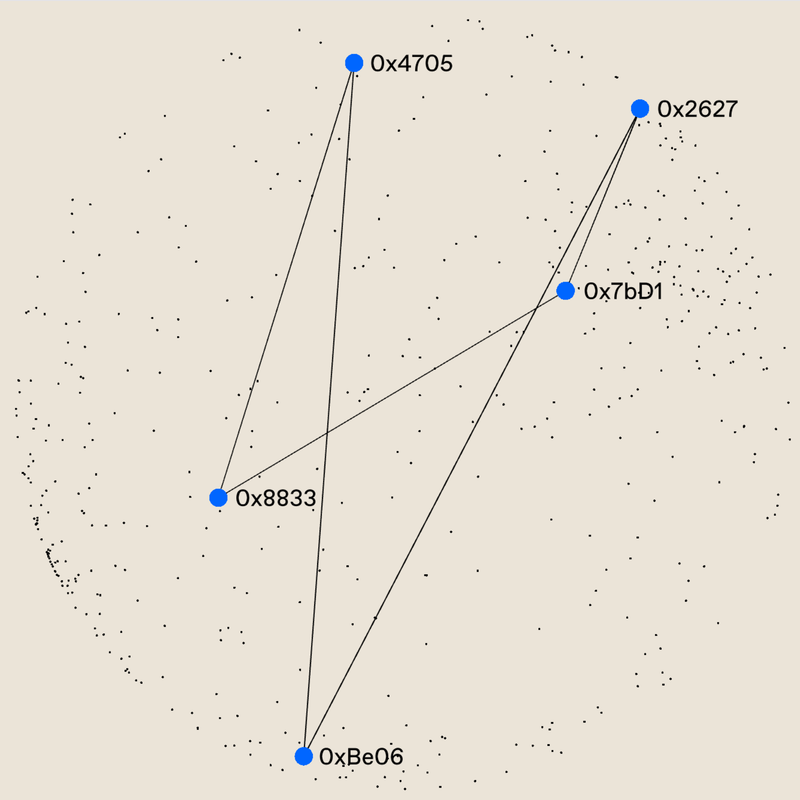
Interviews, essays and histories from the generative art canon. One editorial, every Monday.
Subscribe now →11 editorials, 2024 to 2026.
029Christiane Paul on Curating Cohen’s AARON031Linda Dounia on Memory Machines039The memoir of a net.art memoir!058Casey Reas, Lauren Lee McCarthy & Chandler McWilliams on Expanding Software069Lawrence Lek on AI Reinventing Place072Rafaël Rozendaal on a Liquid Canvas073Kim Asendorf on Elegant SymbiosisAnd 5 more in the Archive13 editorials, 2023 to 2026.
013DEAFBEEF on (Im)permanence057Gendering Systems069Lawrence Lek on AI Reinventing Place104AA Cavia on Summoning Worlds118Ian Cheng on Composing with Systems121Lu Yang on Art as the Perfect Cloak124DX Research Group on the Agent ArenaAnd 7 more in the Archive7 editorials, 2023 to 2025.
011Timeline Chapter 1: Ten Top Moments012Maya Man on Generative Meaning027Maya Lin on Systematic Naturalism052Frieder Nake on “Machinic” Miracles055Can Art Replace Religion?088Julia Kaganskiy on Generativity’s Deeper Consideration092Infinite Images, Finite ControlAnd 1 more in the Archive14 editorials, 2023 to 2026.
005Demystifying Generative Art018William Mapan on Breaking the Medium040Matt DesLauriers on Challenging the Image050THEN AND NOW070Demystifying Generative Autonomy077THE PEOPLE ARE IN THE COMPUTER—PART I078A. Michael Noll on When It All StartedAnd 8 more in the Archive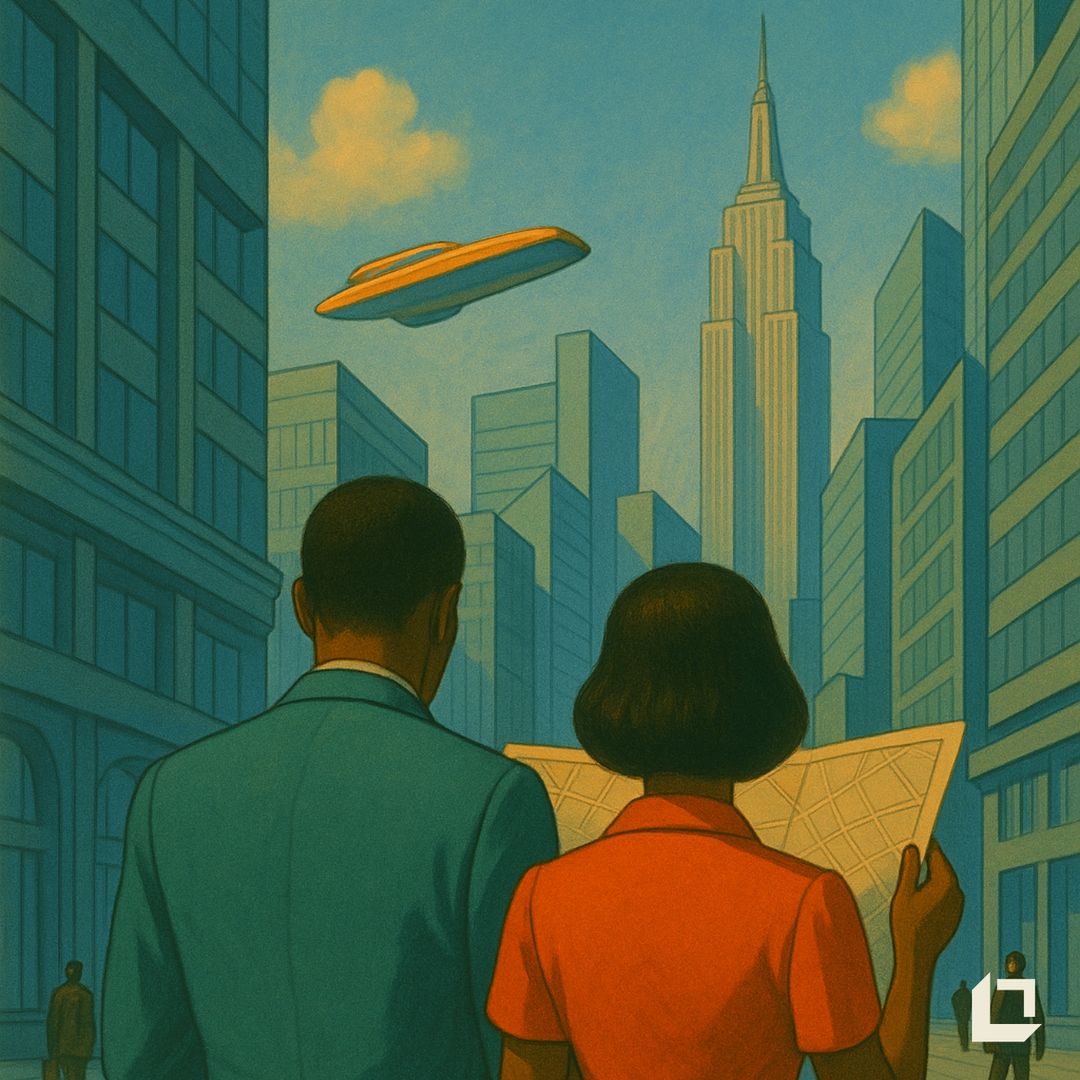 Art Walk
A curated guide to New York for digital art lovers, featuring an Art Walk map and highlighting must-see galleries, neighborhoods and artists that define the city’s vibrant digital art scene.
-p-1600.jpg) Art Walk
Art WalkA curated guide to London’s digital art and culture, featuring an Art Walk map and highlighting must-see galleries, neighborhoods and artists that shape the city’s versatile scene.
Featuring Copper Giloth, Sasha Stiles and Martha Joseph and Hans Ulrich Obrist; plus “The Ultraintelligent Machine and Gaberbocchus Common Room”.
100Copper Giloth on Video Games to Video ArtSeptember 22, 2025099The Ultraintelligent Machine and Gaberbocchus Common RoomSeptember 15, 2025098Sasha Stiles and Martha Joseph on Language as TechnologySeptember 10, 2025097Hans Ulrich Obrist on Exhibitions as Living OrganismsSeptember 1, 2025Curated by pioneer, Sonia Landy Sheridan who also wrote the show catalog, this exhibition at the Museum of Science and Industry does not have much existing information about it. Anymore would be greatly appreciated.
Explore the Timeline →Discover articles, episodes and histories connected to the artists in your collection.
Want to pitch an article, correct the record or get in touch? Email gm@lerandom.art, attention Peter.
Le Random · Miami, Florida




-modified.jpeg)






.png)


.jpeg)