

Suggested Reading
Interview
Event
Holly Herndon & Mat Dryhurst on Artificial Psychedelia
Peter Bauman
•
January 12, 2026
View


Simulation and world-building artist Ian Cheng speaks with Peter Bauman (Monk Antony) about change as a lived texture, worlding through systems and protocols, and how AI companions and “memory” are reshaping attention and daily life.
Peter Bauman: For over a decade, you’ve produced simulations that explore an agent’s capacity to cope with an ever-changing environment.
Why has change become such a central subject for you, especially at a time when we’re inundated with more complexity and upheaval than ever in our species’ history?
Ian Cheng: When I was a kid growing up in LA, my mom would take me to tide pools in Malibu. They’re like small petri dish ecosystems protected from the waves. I would sit there and poke these creatures that turned out to be plants. Then I’d poke these plants that turned out to be creatures.
Growing up, I was obsessed with Will Wright, who created games like SimCity and The Sims. He made unrewarding activities like city zoning feel palpable and fun because you could see the immediate consequence of your choices. You wouldn't have to wait years like a real city planner. This condensation of time and causality via simulation was a huge unlock for me.
As an artist, I started off making animations but I found myself preoccupied with every detail of the animation.
I wondered, what if an artwork could animate itself? This led me to making simulations.
My work sometimes gets bucketed as digital art. What makes digital art special isn’t about working with screens or pixels.
What's interesting about digital art is that for the first time, the artist can expressively and inexpensively compose with systems.
It’s in composing with systems that I can depict complexity at time scales that the viewer can appreciate.
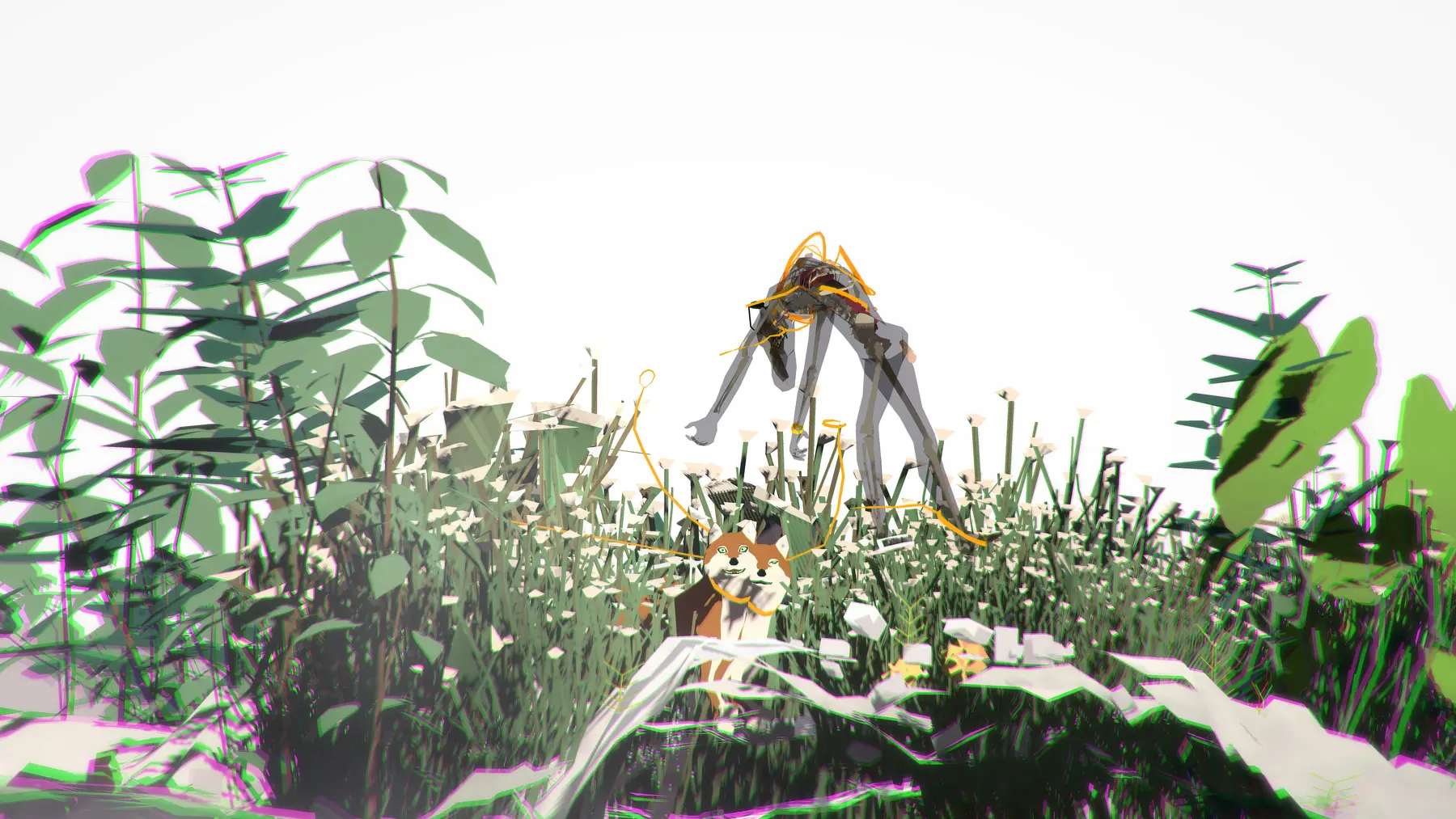
Peter Bauman: Talking about change on a microscale reminds me of something you said, that “the texture of life is a million little pinpricks of change.” It recalls the Fluxus interest in the banalities of everyday life. Why foreground this granular, ongoing change over more dramatic, hero-led arcs?
Ian Cheng: It has to do with the attention that art is uniquely suited for. In the context of an exhibition, an artwork is conditioned by the experience of visiting a physical space. Whatever the medium is, you're still encountering something in a physical space where your quality of attention is primed to be freely wandering and ambient.
In contrast, trying to impose a movie-like experience in a gallery setting often fails, a mistake I’ve made. Walking into a room at a random time and sitting in some makeshift setup by the artist or the curator, the viewer is simply not primed to metabolize long-form narrative.
I began making simulations in part to explore a temporal medium that could unfold in a way that takes advantage of the default ambient attention of exhibitions.
The experience of being at the zoo or the aquarium was a big inspiration for how I approached thinking about the exhibition of simulations. You can walk in for one minute and get an impression of a living creature. But you could also sit down and spend three hours tracking the creature and become absorbed in its patterns of behavior.
I’m now interested in a different quality of attention. It’s not about exhibition but about making something useful that fits into daily life. A big motivation for starting Opponent Systems and building a consumer AI product for families is to find how agentic systems can proactively attend to you.
It's a total inversion of attention.
Peter Bauman: How do you see emerging technologies broadly impacting storytelling?
Ian Cheng: When I look at what my wife consumes in terms of narrative, she's not really watching movies or even reality TV anymore. She's consuming group chats with other moms or friends about some real-life drama, like the dating life of another mom.
It’s like the successor of reality TV, where the medium is iMessage or WhatsApp group chat. Breaking news on Twitter/X satisfies my narrative appetite more than any movie now too. When I think about movies I will actually double-click on, I find myself picking movies that advertise an actor’s crazy performance over whatever the story might be.
The weirdness of reality, captured with ease by smartphone cameras, surfaced gratuitously by social media and circulated as artifacts for interpretation in private group chats—all this has taken the thunder of storytelling away from classic media.
Peter Bauman: It goes back to the texture of life being a million pinpricks—or a million notifications. We're able to shape what we consume more than ever before with our own feeds and group chats. We're co-orchestrating the algorithm as it also runs our life. It’s almost like consuming all the media that we do becomes part of this constructed reality.
Another area that your practice explores in a similar vein is the possibility of symbiosis between humans and technology, especially work like Life After BOB. Where do you see that already happening today and does it feel inevitable to you?
Ian Cheng: Many startups are building personal AI products or companions whose north star is the movie Her, the Spike Jonze movie, where the AI, Samantha, is in your airpod. She’s both your reliable assistant doing a million tasks and your girlfriend cheering you on to live your best life.
But I think the category is going to quickly evolve into something closer to a symbiote, like the movie Venom.

It's a Marvel anti-hero comedy where Tom Hardy plays a disagreeable journalist who gets attached to a grumpy alien goo and they learn to walk in the same direction together.
A breakthrough consumer AI product will fluidly shift on the spectrum between being a separate autonomous entity and a proxy/extension of you.
Sometimes you’ll feel like the CEO of your own life, aided by agentic functionaries and supporting characters. Other times you’ll feel like one unified superorganism. This symbiote framing is the direction I’m working toward at Opponent Systems.
Peter Bauman: That reminds me of your interest in creating worlds and in world-building. You’ve written, “The dream is to be able to possess the agency to create World—now more than ever—not just inherit and live within existing ones.”
How do you feel about companies like Dr Fei-Fei Li’s World Labs building text-to-world models that let anyone “create, edit and share high-fidelity, persistent 3D worlds”? What do these latest world models signify for world-building as an artistic practice?
Ian Cheng: As with any new medium, 90% will be mediocre experimentation and 10% will be people who really master it and do something native to its strengths. The new world models will change how easy it will be to make complex sensorial artifacts: movies, games, new forms.
But judgement and taste—about what to even make, about what elements to compose together, about what to care about—will matter even more and be harder to fake.
Time required executing will decrease but time required thinking, exploring, prototyping, creatively solving within new frontier problem spaces will all increase.
Incidentally, I wrote about worlding right before the crypto NFT explosion. What’s happened in crypto is a powerful example of worlding because it has actual economic consequence.
Crypto transcends the obvious sensorial metaverse-like notion of worlding. The pocket worlds that crypto created were both more fantastical and strange than any metaverse speculations and also more real and impactful on the real lives of those involved.
Peter Bauman: You’ve brought up your new company, Opponent Systems. Do you see it as your latest work of art? Is it aligned with your previous work and an extension of it or is it something new and different?
Ian Cheng: The company is a company. But I bring all the muscles I’ve developed as an artist to being a founder. I’m in a different phase in my life. I really want to make a consumer product that is a part of my family’s daily life. It began with thinking about how my kids will form meaningful relationships with AI companions in the near future.
I wanted to be a part of shaping what that future could be like.
It’s evolved into how an entire family, including grandparents, will be supported by AI functionaries. Royal families used to have courtiers—the biographer, jester, tutor, fightmaster, matchmaker, herald, gossips—who maintained the family’s cohesion and intermediated drama across generations. As the adult child, with young kids and aging parents, I want something like this for my own family. So I’m building it.
I do think culture is downstream of tech now. So I’m also following a directional bet of where the nexus of adventure is at.
Peter Bauman: I’m curious how the company folds in what you’ve absorbed as an artist, especially around control. You’ve always seemed comfortable designing a world or system and then letting it run beyond your control. How does that play out in a startup context?
Ian Cheng: I would say the main difference is that as an artist, I would rarely ask for feedback, literally until the opening of a show. Even at the opening, it’s easy to cherry-pick the feedback I wanted to hear. People tell you what you want to hear at an opening because the energy of an opening conditions you to say celebratory things. It's low effort and high reward to say, “It’s amazing.”
Sometimes they mean it; sometimes they don't. Regardless, it’s not a useful signal for understanding what’s working and what’s not. Most visual artists are deprived of feedback because the feedback cycle is too protracted.
Building a company is the opposite. It’s basically getting feedback all the time, at every stage of the process. More importantly, it’s about learning to correctly interpret the deluge of feedback.
People will really tell you what they think, not through words, but through their actions.
If they just don't use the thing, it’s definitely a signal. But it could mean it sucks, it could mean it needs different framing or it could mean it’s the wrong user. This is the maze I’m learning to navigate now.
One thing that is similar is an appreciation and a nerdiness about human psychology. In art, even though you're making a work first for yourself, you’re a proxy for the audience who might care about what you're trying to capture. Your job is still to bridge this communication gap between you and your hypothetical viewer. The artwork is the artifact to do that. It’s communication with more steps. Communication about something ambiguous, gray or complex that words alone cannot express yet. It’s communication that requires a sensory experience. An appreciation for human psychology is really important to get good at this. Likewise, in making and distributing a consumer product, appreciating what motivates people is everything.
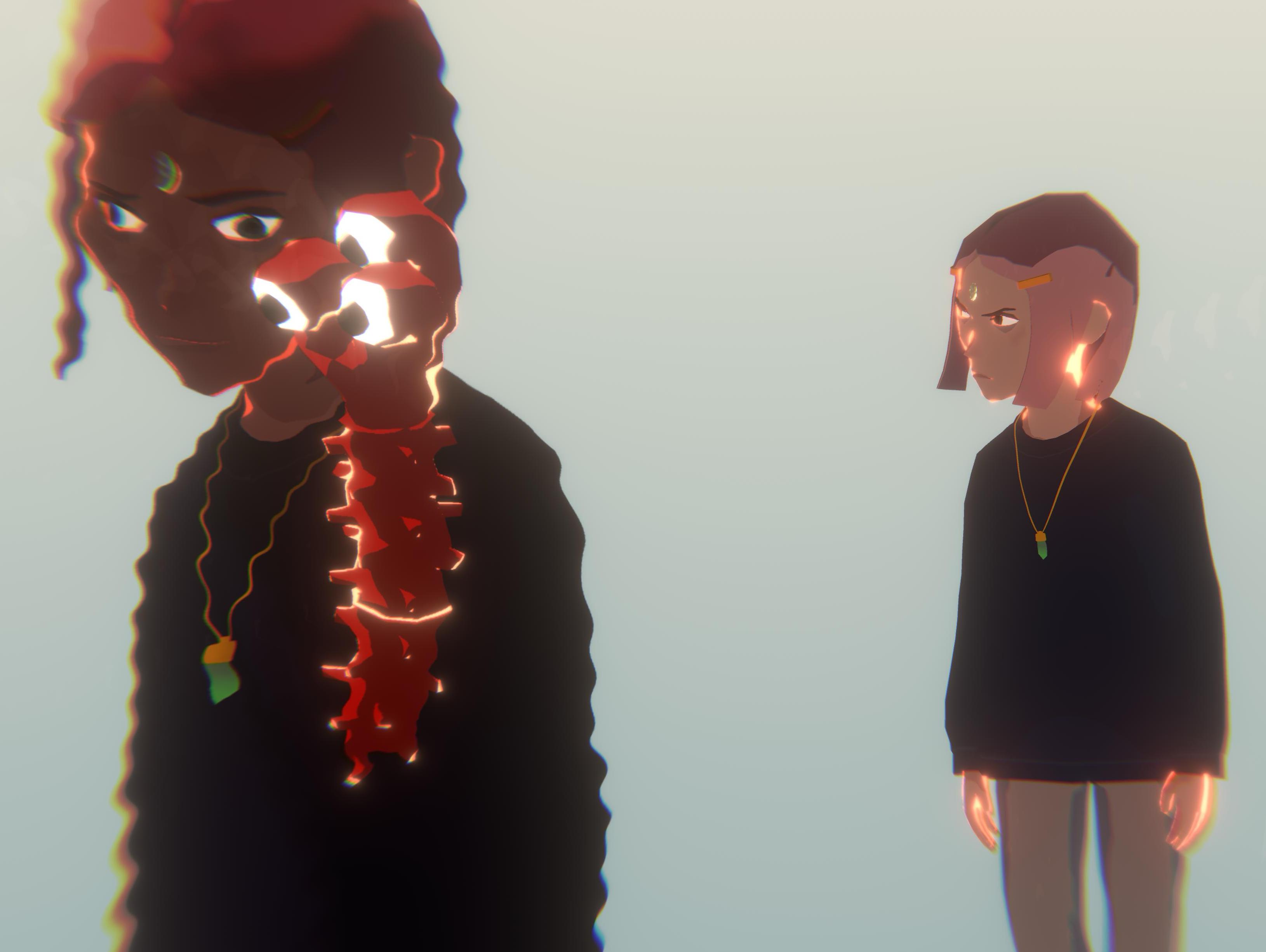
Peter Bauman: Some people talk about protocols the way you talk about worlding: devising a system and letting it run. In that frame, they don’t really distinguish between artists and engineers who create protocols. Do you?
Even in cases where the “world-builder” is an unsavory tech billionaire shaping culture downstream, would you consider that kind of protocol-making a form of art?
Ian Cheng: I would consider whoever Satoshi Nakamoto is a great artist.
Individually, the ideas and technical pieces that comprise the Bitcoin protocol were known, but it's in the composition together where Satoshi made magic. It’s the artistic and engineering judgment to select from past work and subplots that may have failed, seeing further potential in them.
Satoshi recomposed these non-obvious ingredients together in pursuit of a vision of how energy, property and sovereignty could work anew. This is a tremendous achievement.
For Bitcoin to have such a real-world impact and become something autonomous, having a life beyond its author, it’s a paragon of artistry—worlding at its best.
Peter Bauman: I’m also interested in this idea of “loving the system” and how it runs through your work, especially pieces that play with artificial forms of consciousness. Do you feel some works are more “alive” than others and how might that change your thinking about preserving them? For example, is a sketch on paper less alive than something like BOB that needs ongoing care?
Ian Cheng: In my earlier works, I was focused on the visible performance of the simulations—how things moved, how they looked, how they evolved while you watched. It wasn’t until BOB that I began to also think about saving—saving the simulation’s state, saving the state of BOB’s brain.
Now, at Opponent, we’re working on Dragon Time. It’s a dragon that kids (and surprisingly, grandparents) call directly on FaceTime. It’s a character interface for naturally eliciting a person’s inner world in a way that a chat textbox simply can’t do.
I’ve come to realize that a big part of achieving aliveness with Dragon is about preserving and persisting its memory. It’s unsexy, but it’s the precondition for a user to keep coming back to Dragon and feel like the relationship continues to compound and enjoy its own internal network effect, the network effect of memories.
It’s led me down a rabbit hole working on memory. There’s a saying that your brain keeps memories not for happy recall, but for remembering experiences you have not yet understood and haven’t yet drawn out the patterns from that will help you in the future. That’s why, especially with jarring experiences, you keep replaying them over and over in your mind until you—and likely, some therapeutic help—figure out what pattern to take from it.
So memory is just the first tier of a larger system for extracting durable patterns—knowledge—that enable an organism to better act in the future. At Opponent we’re building a system called SAGA for refining a family’s memories into cross-generational unified knowledge. I joke that it’s like Palantir for families, or like a mentat for your royal House. It’s family intelligence. Again, not sexy, but over time, routinely magical, agency enhancing and maybe even redemptive for the adult child (you, me) and our unresolved bond to our aging parents and our young kids. I’m betting that achieving better cross-generational family cohesion—no matter how complicated your relationships are—will be an important source of meaning for everyone in the coming tribulatory years.
------
Ian Cheng is an artist and founder based in New York. He has exhibited widely including solo presentations at Leeum Museum of Art, Seoul; Light Art Space, Berlin; The Shed, New York; LUMA Foundation, Arles; Serpentine Galleries, London; MoMA PS1, New York; Carnegie Museum of Art, Pittsburgh; Julia Stoschek Collection, Berlin; Fondazione Sandretto Re Rebaudengo, Turin; and group presentations at Venice Biennale, Venice; Museum of Modern Art, New York; De Young Museum, San Francisco; Moderna Museet, Stockholm; Whitney Museum of American Art, New York; Okayama Art Summit, Okayama; Hirshhorn Museum, Washington DC; Tate Modern, London; Louisiana Museum, Copenhagen; Fondation Louis Vuitton, Paris. He is the author of Emissary’s Guide To Worlding. He is the founder of Opponent Systems.
Peter Bauman (Monk Antony) is Le Random's editor in chief.