Suggested Reading
Interview
Event
Holly Herndon & Mat Dryhurst on Artificial Psychedelia
Peter Bauman
•
December 15, 2025
View


Le Random asked twelve trusted artists, curators and collectors to choose the single artwork that mattered most to them this year. We present a brief text by our editor in chief Peter Bauman (Monk Antony) below before revealing the choices by Christiane Paul, Sasha Stiles, Raoul Pal, Melanie Lenz, Erick Calderon (Snowfro), Cozomo de’ Medici, Maya Man, Dmitri Cherniak, Luba Elliott, Redbeard, Tyler Hobbs and Conrad House.
From 2025’s standout artwork below, it's apparent that contemporary art practices are increasingly disregarding firm distinctions between physical, digital, output, latent and block-space.
Emerging technologies like AI and NFTs were once generally considered separate subgenres of digital art, fighting for legitimacy, requiring back-footed defense. By the end of 2025 with AI featured prominently at MoMA and NFTs invading Art Basel, institutional adoption of these technologies, while reluctant, has happened before our very eyes.
More importantly, terms like “AI art,” “NFT art” or “crypto art” are fading from vocabularies due to their imprecision and inaccuracy. Calling Holly Herndon and Mat Dryhurst’s Starmirror or Beeple’s Diffuse Control simply “AI art” is not acceptable when both works are complex multimedia protocol stacks that happen to utilize AI within a rhizomatic structure.
They don’t show what “AI art” is but how AI can enable artists, diffusing into practices. As Beeple told me at the end of 2025, “the takeaway is that when people hear ‘AI,’ they don’t think of it as this binary thing, where the work is AI or it's not.” The same can be said for NFTs, where artists at Art Basel’s Zero 10 slyly demonstrated the potential of blockchains in art without making them the focus.
Rather than associating digital culture solely with particular technologies, screens or virtual spaces, the works below show that the digital is just as comfortable in performance lectures, kinetic sculptures, immersive installations, site-specific interventions, books and coordinated choir projects. As digital technologies increasingly control us beyond screens, shaping our everyday actions on a turn-by-turn basis, the art that captures this complexity with honesty will rely less on screens as well.
Reflecting our digital condition in a lasting way requires more, as the choices below show.
The genre of performance lectures had a strong moment in 2025. Unfolding on a stage framed by props and a large-scale projection in a dance studio, Maya Man’s StarQuest brilliantly drew parallels between the characteristics of generative AI and American competitive dance for girls. Incorporating her own childhood experience as a dancer and restaging the drama of the TV series Dance Moms, Man positioned herself in the role of coach to AI-generated girls pirouetting across the screen in ever-evolving choreographies. By juxtaposing her embodied presence with virtual ballerinas, Man drew back the curtain on the mechanics behind the construction of realities through fabricated narratives and artificial intelligence.
Another highlight of the genre was Luke Shannon’s engagement with his custom-built four-by-six-foot plotter-scanner, the center of his exhibition Replacement Character. The title uses the � symbol—signaling a computer’s inability to recognize or render a character—as a metaphor for our existence as both unreadable and replaceable personae. Reading associative reflections that connected art-historical references with philosophies of existence and “chat” as an ambiguous collective pronoun, Shannon moved and contorted his body on the plotter bed to scan and render himself in the form of the replacement character.
I could never pick a favorite but one 2025 moment that will stay with me is a visit to Holly Herndon and Mat Dryhurst’s Starmirror at KW Institute, Berlin. The experience left me wondering:
Am I in a temple? An observatory? A lab? A lung? Am I on Earth? Why am I crying?
The work is described as “part app, part agent, part angel,” and their luminous circuitry has stayed with me ever since.

Very rarely does something come along that entirely stops you in your tracks for its sheer brilliance. PXL DEX did that to me on numerous levels.
Initially, the complexity, beauty and movement of the art itself is stunning, alluding to a future world of holograms and a 3D digital world, something that looks like a future technology but also feels like nature. Something akin to a digital representation of the emotion of music perhaps?
But then you realize that it is zoomable down to the individual pixel and manipulable, it begins to remind you of physics, neural networks and molecular biology. It has suggestions of a universal consciousness where everything is connected and a part of something larger, organic yet somewhat preordained.
And finally, you realize that every pixel is a token and every token has value and it becomes an ecosystem, where token numbers dictate the density but not the beauty and also will be the composition units of new art. As a statement on the value of art in a digital world it is deeply profound, or even as a statement of nature itself and every atom that makes it.
But most of all, it is just gorgeous, playful, perfect and unique in every way. Bravo Kim.

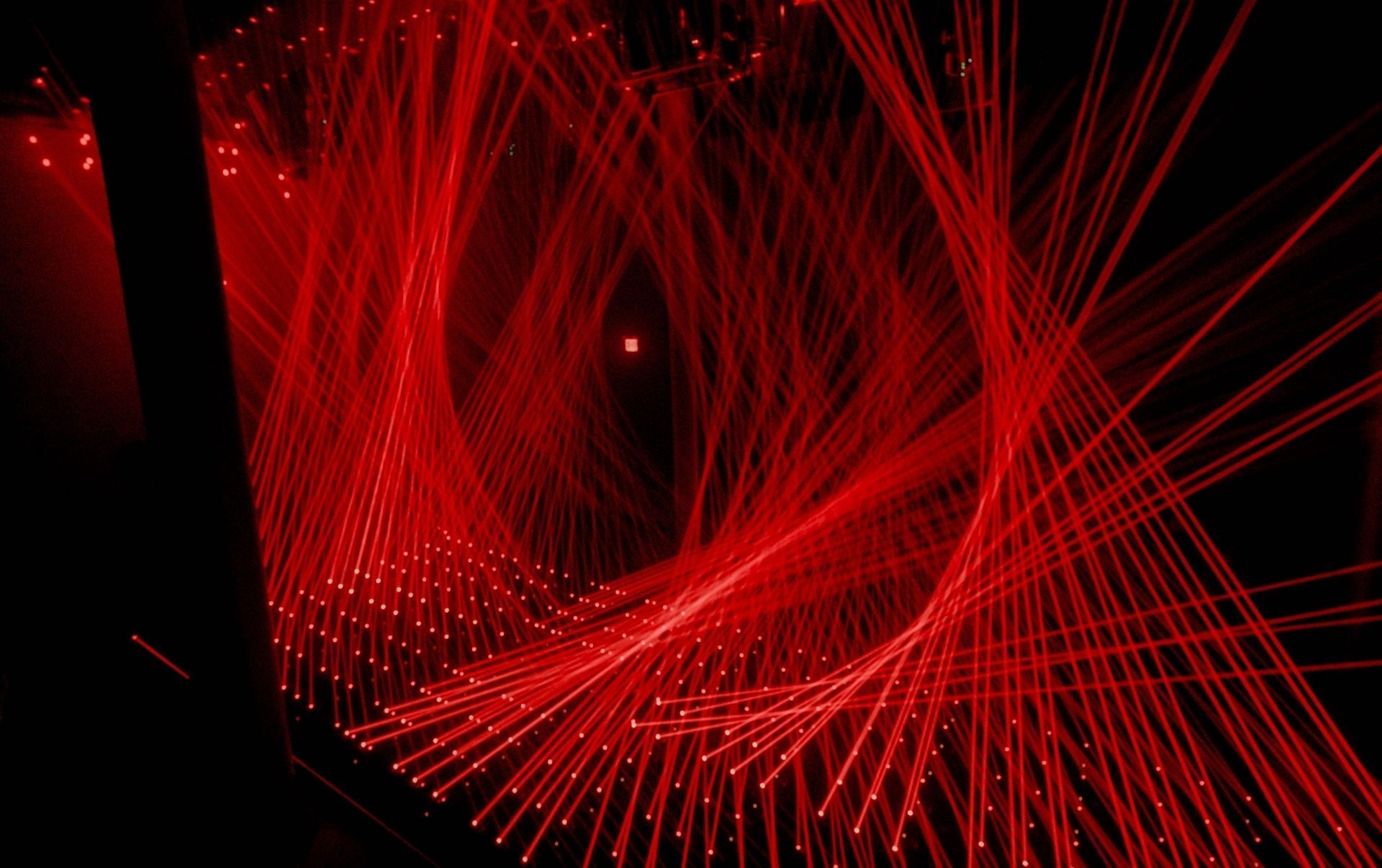
Shohei Fujimoto’s intangible #form is a work that remains etched in my memory. Comprised of a moving laser bar, strobe lights, fog, custom software, and sound, the 2022 installation invites viewers to consider how we recognize shape and space even when they lack physical substance. I felt fully immersed, experiencing the piece through shifting sensations and vivid visual impressions.
Its absorbing presence demonstrates how powerfully art can probe the nature of visual perception. Presented at Signal Space, a new venue devoted to digital art, the installation also underscores the emergence of different sites committed to supporting and thoughtfully engaging with art and creative technologies.
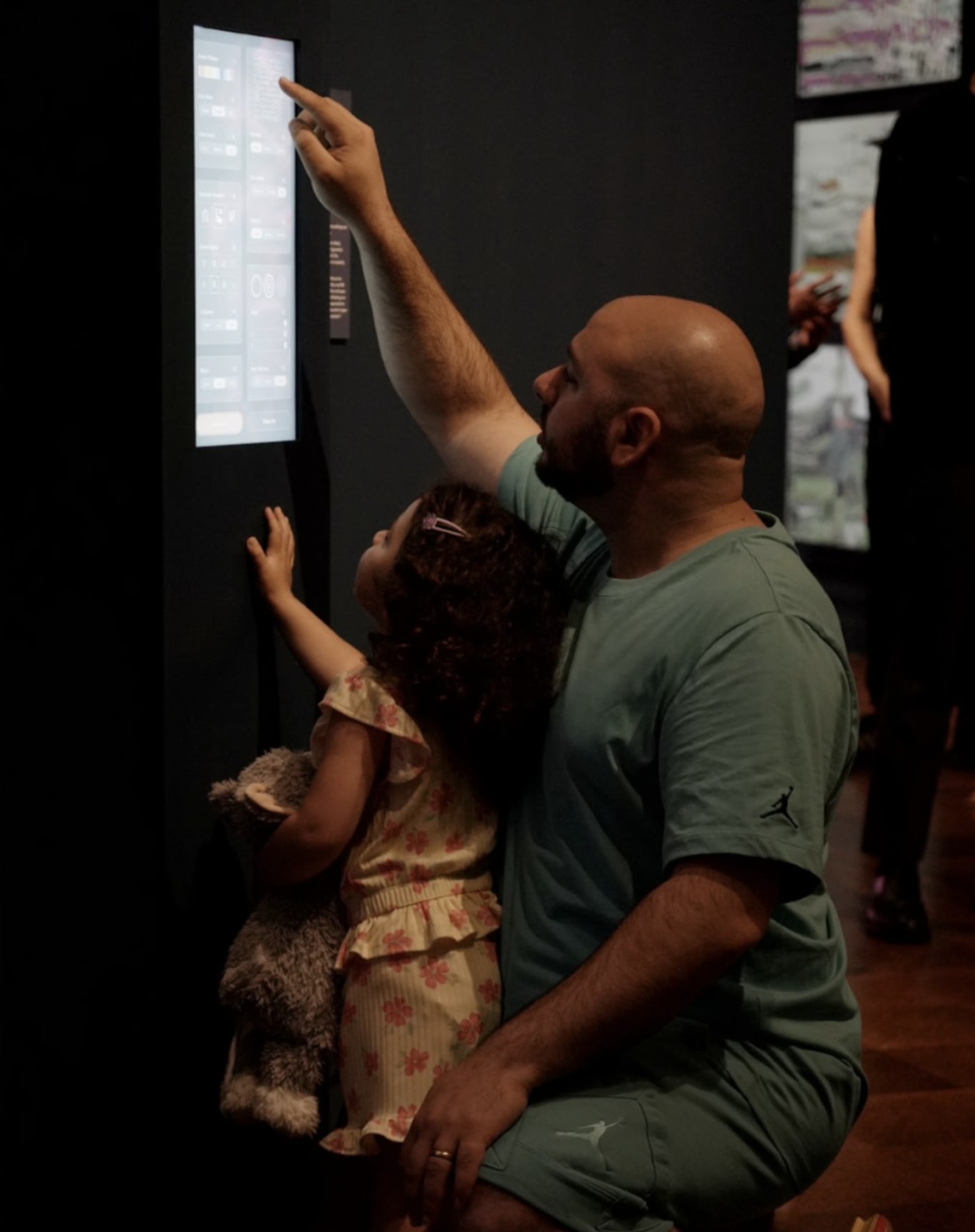
The Infinite Images group exhibition at the Toledo Museum of Art has to be one of the most thoughtful, meticulous and validating artistic experiences I’ve had, not just of 2025, but in my life.
As a founder, seeing years of dreaming resulting into something so public facing is surreal. As a collector, seeing work from artists I love shared with a broader audience enhances my appreciation for the works I've collected. As an artist, being on the walls alongside my heroes in such a cohesive setting is humbling.
And to see it all come together in a way my entire family enjoyed is icing on the cake.
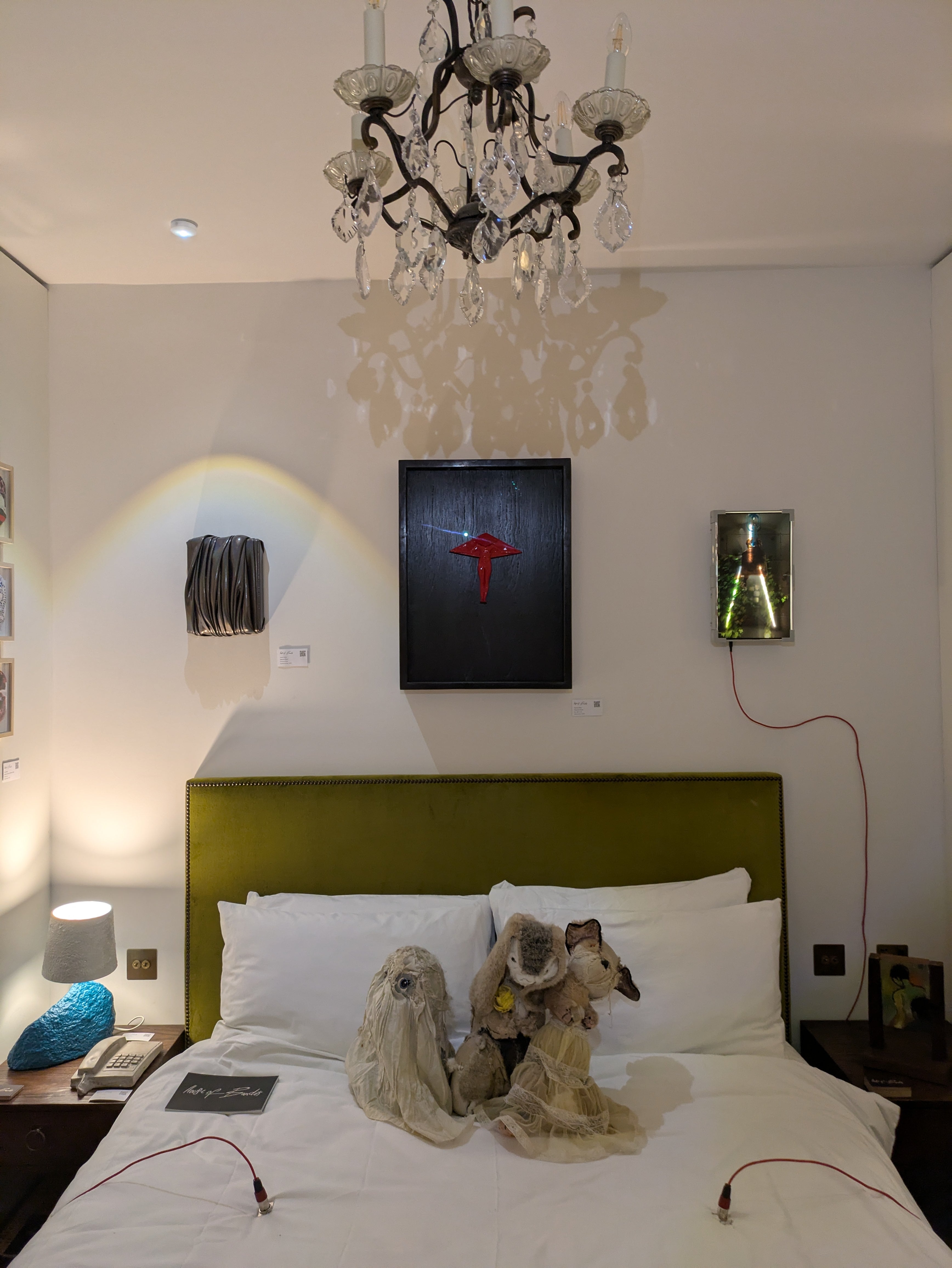
For me, the big highlight was the Minor Attractions art fair at The Mandrake Hotel during Frieze week in London. During the fair, seventy galleries presented artworks throughout the hotel, using spaces such as corridors, guest rooms and lobbies. It was exactly what an art exhibition should be about: full of fun, in a public space and with certain spatial constraints that encourage creativity.
Artists filled bathtubs with countless little pieces, lit candles, drilled holes in the duvet to mask power sources fuelling installations, and hung steel sculptures in the wardrobe (you could easily mistake them for hangers!). I would love to see more artists make inventive site-specific installations in places not typically used for art display.
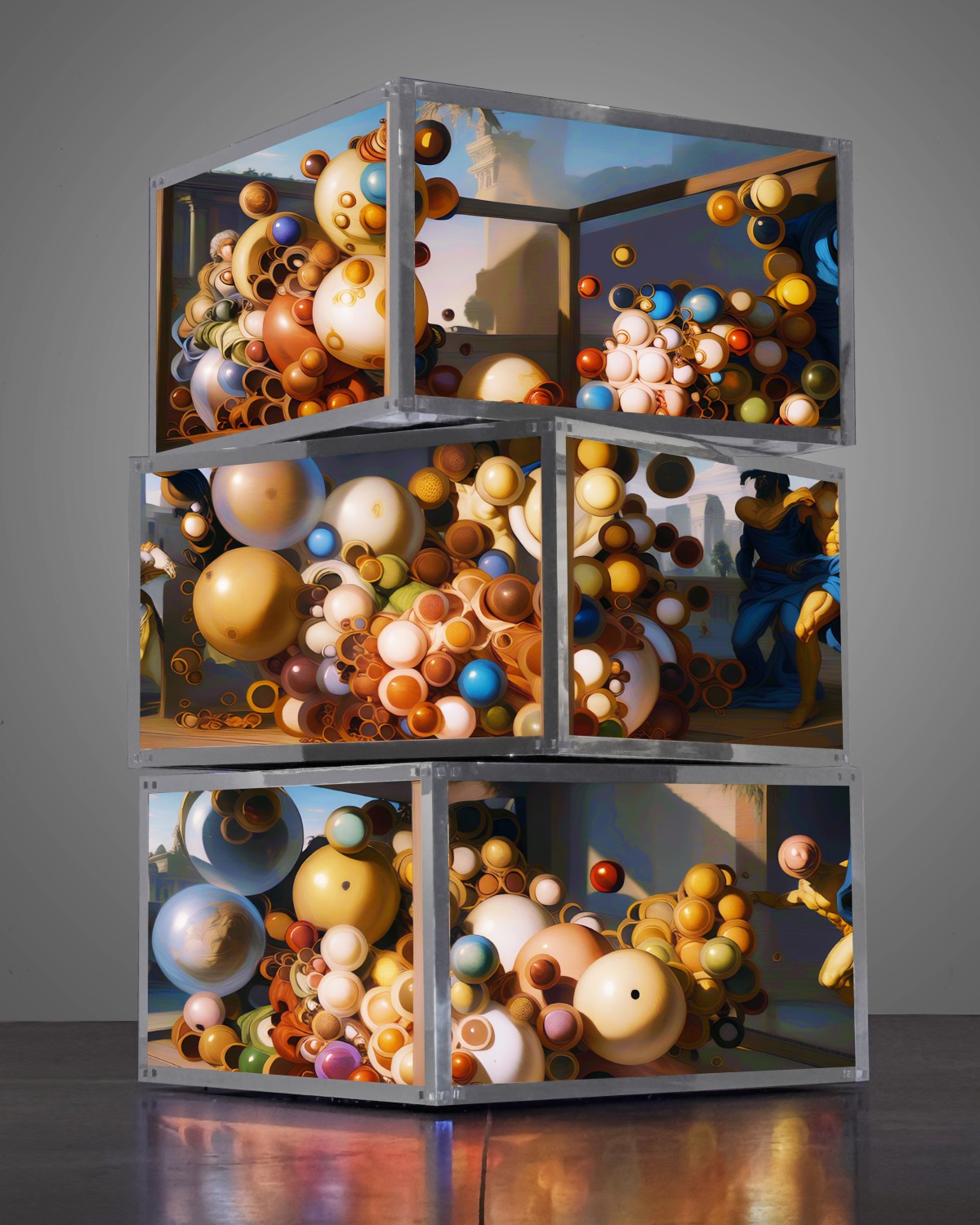
For one of the biggest artists in the game, it’s a surprise that Beeple has not yet had a solo show at a major American museum. In November, though, we saw doors begin to open with his kinetic sculpture, Diffuse Control, on show by itself at LACMA. We may look back on this as a pivotal point in our digital art entering the mainstream museum circuit. And this time, we’re here to stay.
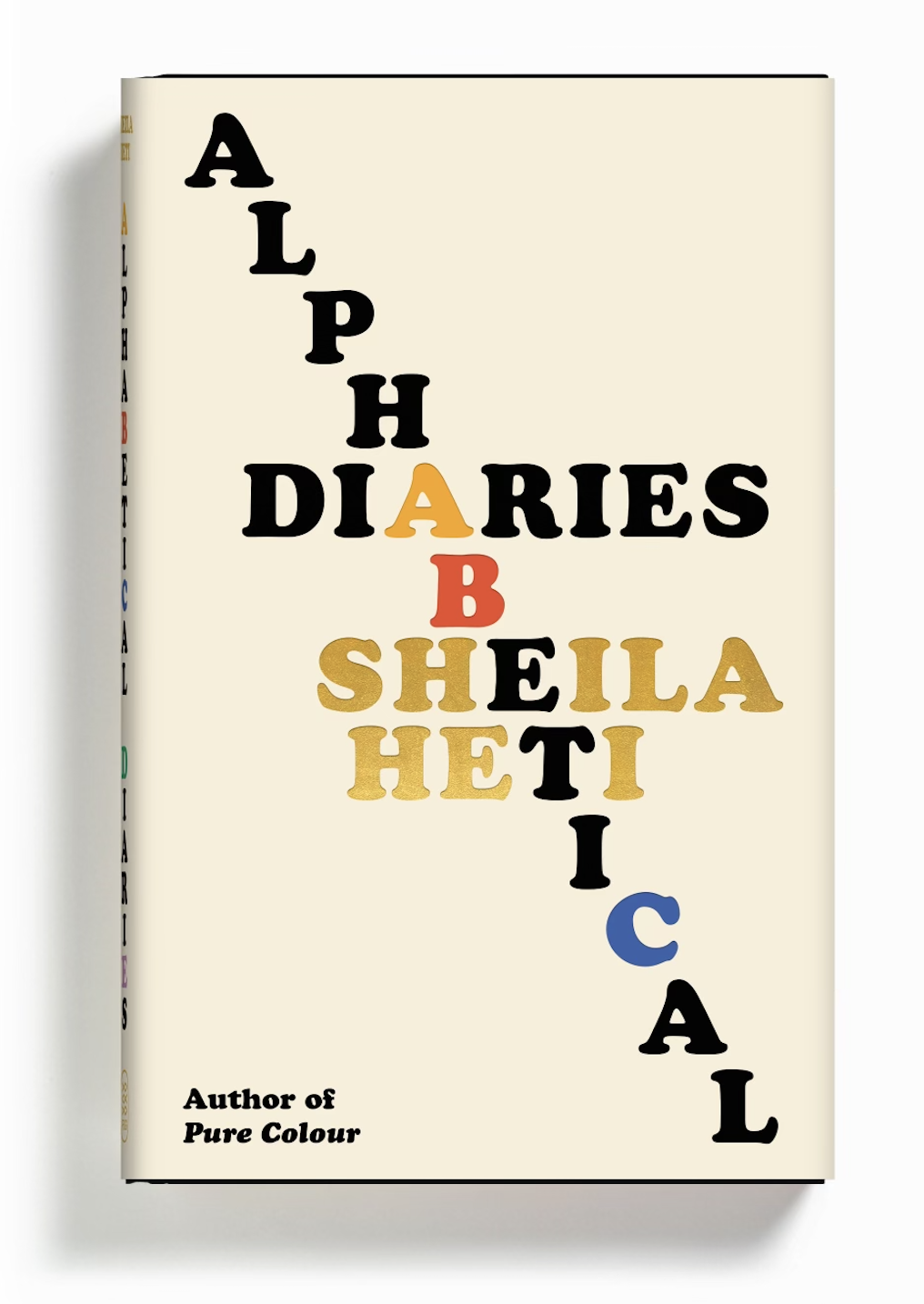
Sentences from the author’s diary organized in alphabetical order, a simple concept, but a divine read, making meaning out of “chance” that’s really a piece of “generative art.” There’s weight in her curation and specificity, but also beauty in the release of agency to the algorithm. The work forces you to think about your own self patterns. I’ve read Sheila Heti’s work before but this book is a new favorite of mine that I read for the first time this year.
As an artist who has long said that “automation is my artistic medium” and that I create “hand-coded goods,” I’ve been watching the rapid acceleration of AI with a complicated mix of urgency and skepticism.
The technology has so rapidly redefined the landscape around my practice that it forces me to reconsider where my work fits in the future.
Yet, despite all the noise, very few AI-driven projects have genuinely impressed me and most feel disconnected from human experience.
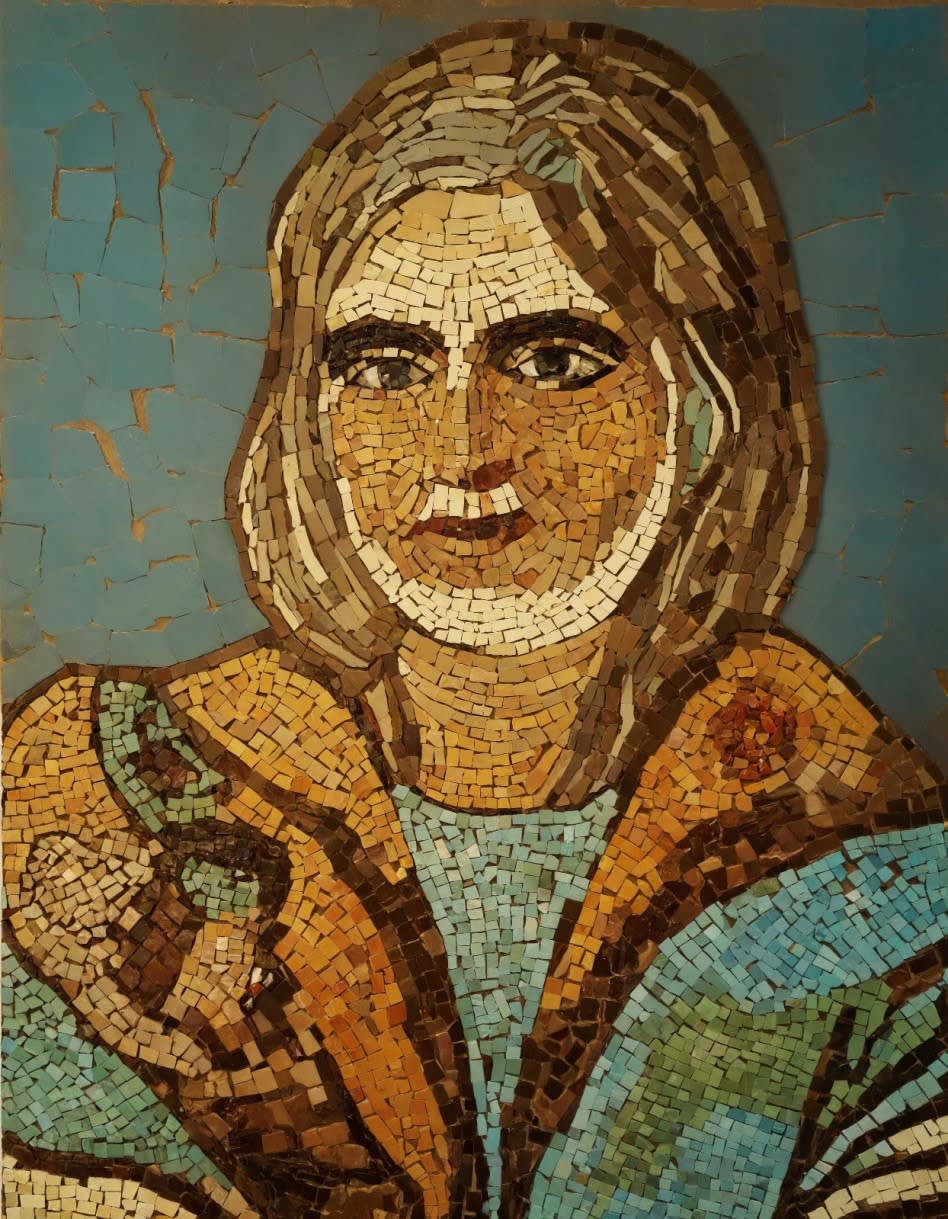
One 2025 project by Ofir Liberman, however, stands apart for me. Hector & Ofelia, which uses AI to help reconstruct mosaic works lost by a survivor of the October 7 massacre, demonstrates a rare combination of humanity and restorative power. Rather than chasing novelty, it shows how AI can support memory, repair and cultural continuity. It demonstrates that AI, thoughtfully applied, can still participate in the creation of art that commands reverence and engages the deepest dimensions of human experience.
The artwork that meant the most to me this year was Sam Spratt’s Masquerade. The work was executed so well with Sam’s artistic and digital talents on full display. But it was the deep connection of friendship that it created between me and an artist that changed my life.
Toledo and Basel were also events for me representing huge steps in the acknowledgment phase for the digital art renaissance. I think we will look back at both moments in the future and see the ripples they created.
What others call our chaos is really our white paper on how digital native collectors will dominate the art world. This is how we build.
.webp)
Luke merged hardware hacking and the human spirit in the most beautiful way.

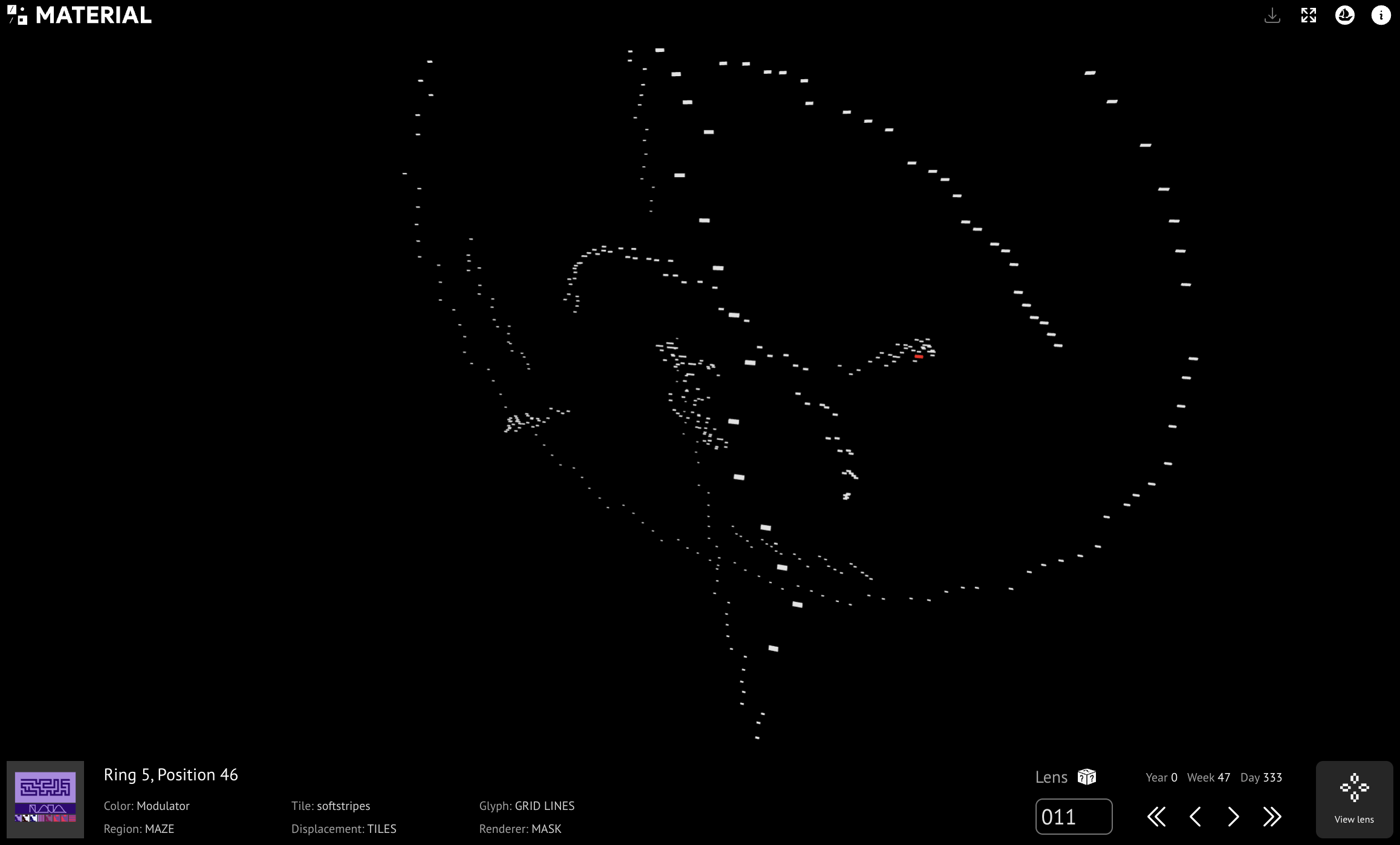
There’s no series I spent more time with this year than Cycles. Visiting the protocol became a meditative experience, exploring its self-driving paintings—all part of an on-chain kinetic sculpture running on the Ethereum world computer.
-----
We would like to give a very special thank you to the twelve artists, curators and collectors who made this piece possilbe: Christiane Paul, Sasha Stiles, Raoul Pal, Melanie Lenz, Erick Calderon (Snowfro), Cozomo de’ Medici, Maya Man, Dmitri Cherniak, Luba Elliott, Redbeard, Tyler Hobbs and Conrad House.
Peter Bauman (Monk Antony) is Le Random's editor in chief.