

Suggested Reading
Interview
Evergreen
Beeple on Infinite Creation Machines
Peter Bauman
•
December 8, 2025
View


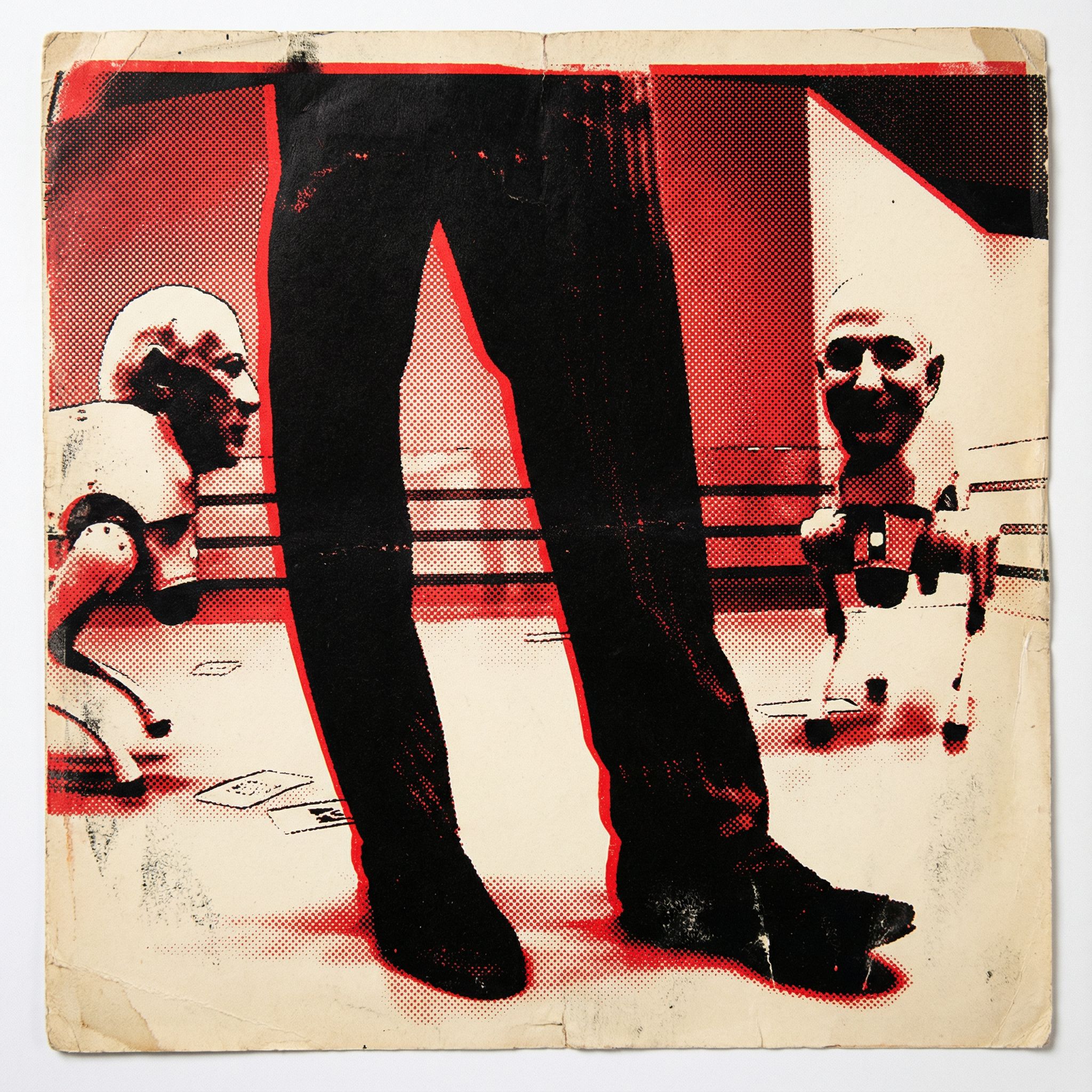
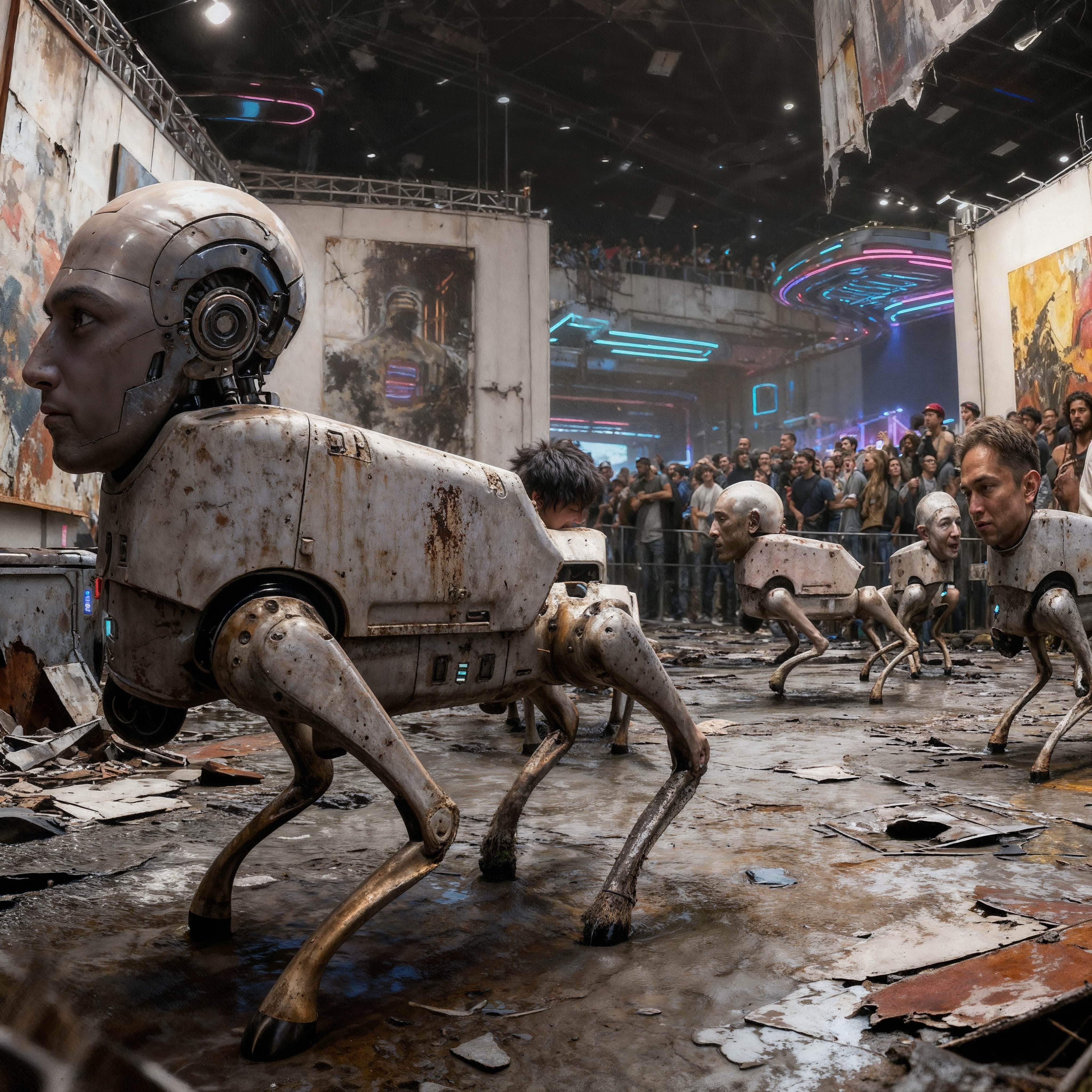
Mike Winkelmann (Beeple) speaks with Peter Bauman (Monk Antony) about his robot-dog “living sculpture,” Regular Animals, at Art Basel Miami Beach’s Zero 10. They also cover digital art’s institutionalization, the artist's Charleston studio as a public lab, and why AI feels like an alien poised to transform society. Watch or listen to the full conversation on our YouTube and podcast channels.
Peter Bauman: This has been a big year of institutionalization for your practice. You’ve had Diffuse Control at LACMA and The Shed, Transient Bloom at Toledo Museum of Art, Human One at Mori Art Museum in Tokyo and The Tree of Knowledge at South by Southwest London.
This is all in addition to the numerous events at your Charleston, South Carolina studio and now Regular Animals Art Basel’s Zero 10. How does this year demonstrate the evolution of your practice and what are your takeaways?
Mike Winkelmann: I think it's inevitable that there will be more of an embrace of digital art as its own medium and not just lumped in with mixed media. I think it definitely warrants its own full category and full consideration that has nothing to do with VHS tapes in the '80s.
It's really cool to see. It can also help demystify for broader audiences what digital art can be, what it can say, and how it can be a medium, just like any other medium with craft and intention that evokes an emotional response.
In my own practice, doing things like this helps get outside of the thinking of the bubble and forces me to stretch and be like, “Okay, how would somebody look at this?”
“How interesting would they find this if they don't know anything about NFTs, if they don't know anything about digital art?”
Is this something that could still pull them in and be like, “Wait, what is this?” Because that, to me, is the bar we should be shooting for.
If we're just shooting for what's going to be interesting to our own echo chamber, the space is never going to grow.
I personally would love to see the space grow and affect more people because I think digital art is such a massive part of the overall visual language of society today. The things that we're talking about—digital identity, decentralization, data privacy, AI—are massively important topics to society as a whole.
Peter Bauman: Your studio does a really good job of that growth and outreach. You have an event in December that's focused on Charleston local artists. You also had Synthetic Theater, which reminded me of a Fluxus happening.
How do you see your studio as part of that public outreach and what have you learned from them?
Mike Winkelmann: They walk both lines but the ones that I'm increasingly more interested in are the ones that do reach a bigger audience. Select Start, our video game event, had broad appeal and showed people a bunch of different artistic video games. Then it also had a crazy video game tournament in this experiential space.
That was exciting because you got a lot of people who wouldn’t really consider themselves fans of digital art, but they really enjoy this stuff. I think it really helps normalize it.
With the events, we're trying to do things that make them very accessible to outside people.
I honestly love when people come in and they're like, “What the f– –k is this?” Seeing their reaction when they have no idea what this is. You can see on their face; they're visibly like, "Where the f– –k am I?”
Peter Bauman: Have you seen healthy demand locally for these shows?
Mike Winkelmann: Definitely. Every show, we have more and more people. Now we're engaged with other local arts groups. There's a big performance festival, Spoleto Festival USA, in the area. We're engaged with them, other dance and theater groups, and artist studios, none of which are digital at all.
I would say the amount that the arts community in Charleston has embraced this is quite massive. Also, we have people come in from all over the world to the studio and events. I think there's still room to bring people together around this stuff. It’s just a very different experience; it's much more intense.
Spending an hour talking to somebody face-to-face about digital art or experiencing digital art together is such a higher signal, higher fidelity experience that's equivalent to five years of talking to somebody on Twitter DMs.
Paradoxically, in person is still the best place to experience digital art.
Peter Bauman: How do you compartmentalize the institutionalization of your practice and digital culture more broadly with market and price action, especially when they don’t align? You seem particularly effective speaking to both conditions through Everydays that are more of the moment, like Burn Address Vibes, versus your more sculptural work.
Mike Winkelmann: I think one of the signals is a very temporary signal and one of the signals is a very long-term signal. I like to play in both areas. When I post something on social media about some hyper-specific thing to our space, 90% of the traditional art world is not going to know what the f– –k it is.
I like playing both sides there. But I think so much of the sentiment is because of the fact that this is a market within a market, which is all affected by the global market. The digital art market is affected by the global market, then the crypto market, then NFTs. If ETH and Bitcoin were at all-time highs, I honestly think you would see drastically different vibes all around.
It's really hard to step back and look at some of these things because there are some people who think there's going to be this second boom and I do not believe that is going to happen.
I believe it is going to be a slow march towards acceptance over the next ten, twenty years for this to be fully canonized. But I believe that's completely inevitable.
The duality happens because the timeline is focused on one thing: what is the price? The broader acceptance of this is a completely separate thing that will, over time, translate to a more stable price. With a lot of this stuff, we’re still in price discovery.
One thing I recently recognized is that our market is unique in that you can immediately see the price of almost everything. By contrast, the traditional art market is very opaque and their prices could actually be zero on something, but you just can't see it.
If you go into a gallery and you buy a painting for $10,000, almost immediately, that is worth zero. No one will ever pay you anywhere close to $10,000 for that. They will pay nothing. You will be able to sell that in a garage sale, maybe in the future for a hundred bucks, maybe.
Peter Bauman: And I think Zero 10 will be one of those long-term signals. Let’s talk more about your work there, Regular Animals, which will feature the robot dogs that have also been at your studio events.
When you were approached to present work for Art Basel, what was your thought process? How did you decide on the dog idea?
Mike Winkelmann: We've actually had these dogs for four years. We got them in spring 2021. We did some experiments with them in 2021 and 2022 but it went dormant for a while. Then in 2024, my brother finally convinced me. He was like, “Let's just start doing some stuff with the dogs.” Because I had been like, “It's not a fully finished idea. I don't want to show anything.”
So we started using the dogs more. When we did PepeFest, we had Pepe dogs. When we did Election Night, we had these Donald Trump dogs walking around. When we did Select Start, we had Mario dogs. When we did CryptoPunks Meetup 2.0, we had CryptoPunk dogs. We started just using them more and developing them as a medium.
For this show, when Eli reached out, we discussed bringing a box, like Human One. I was like, “You know what I'd really rather do besides the boxes? This dog idea we've been kicking around.”
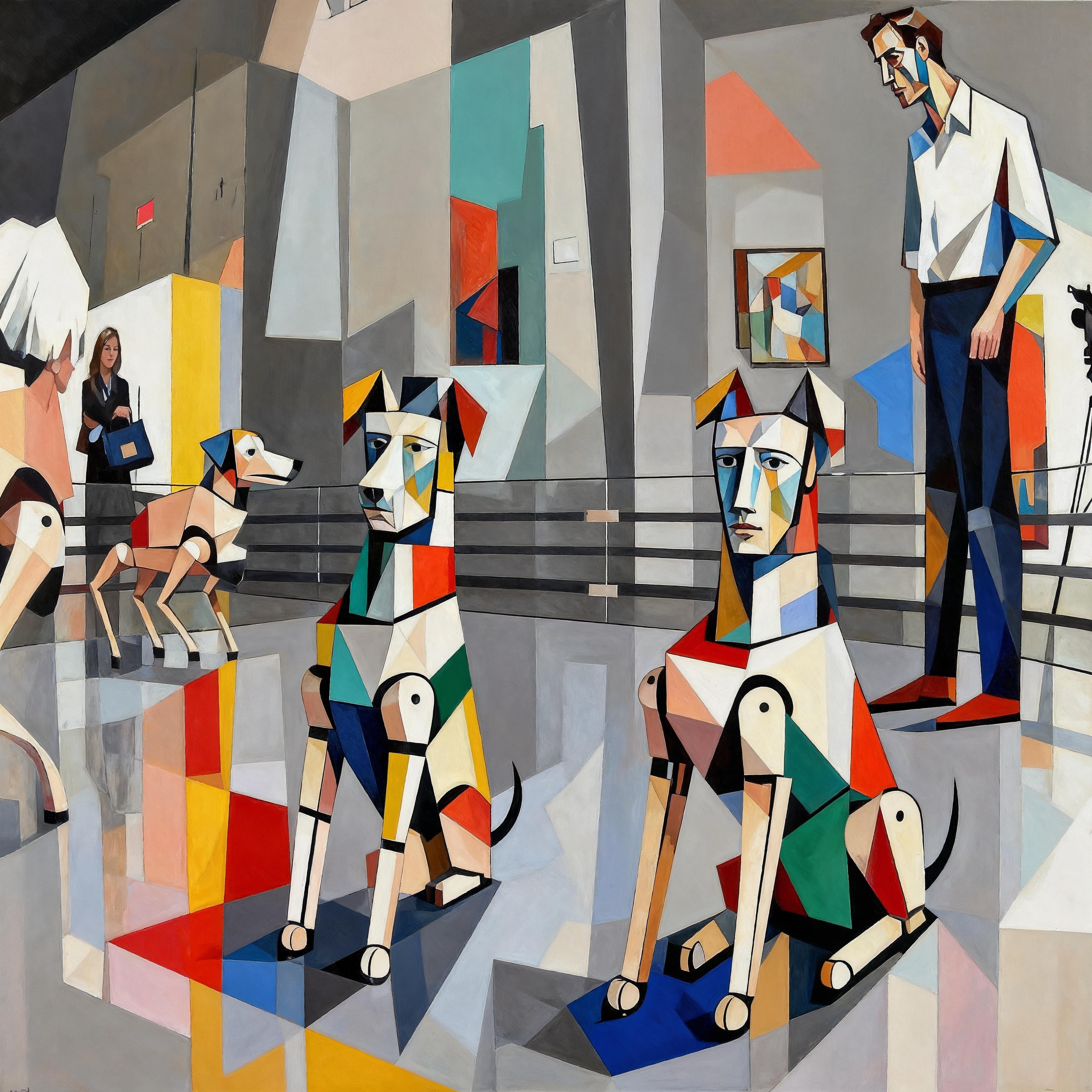
I look at this as a mix of a lot of different mediums to create a sculpture that feels alive. I think robots in general are going to be this massive canvas combined with AI to express many different things.
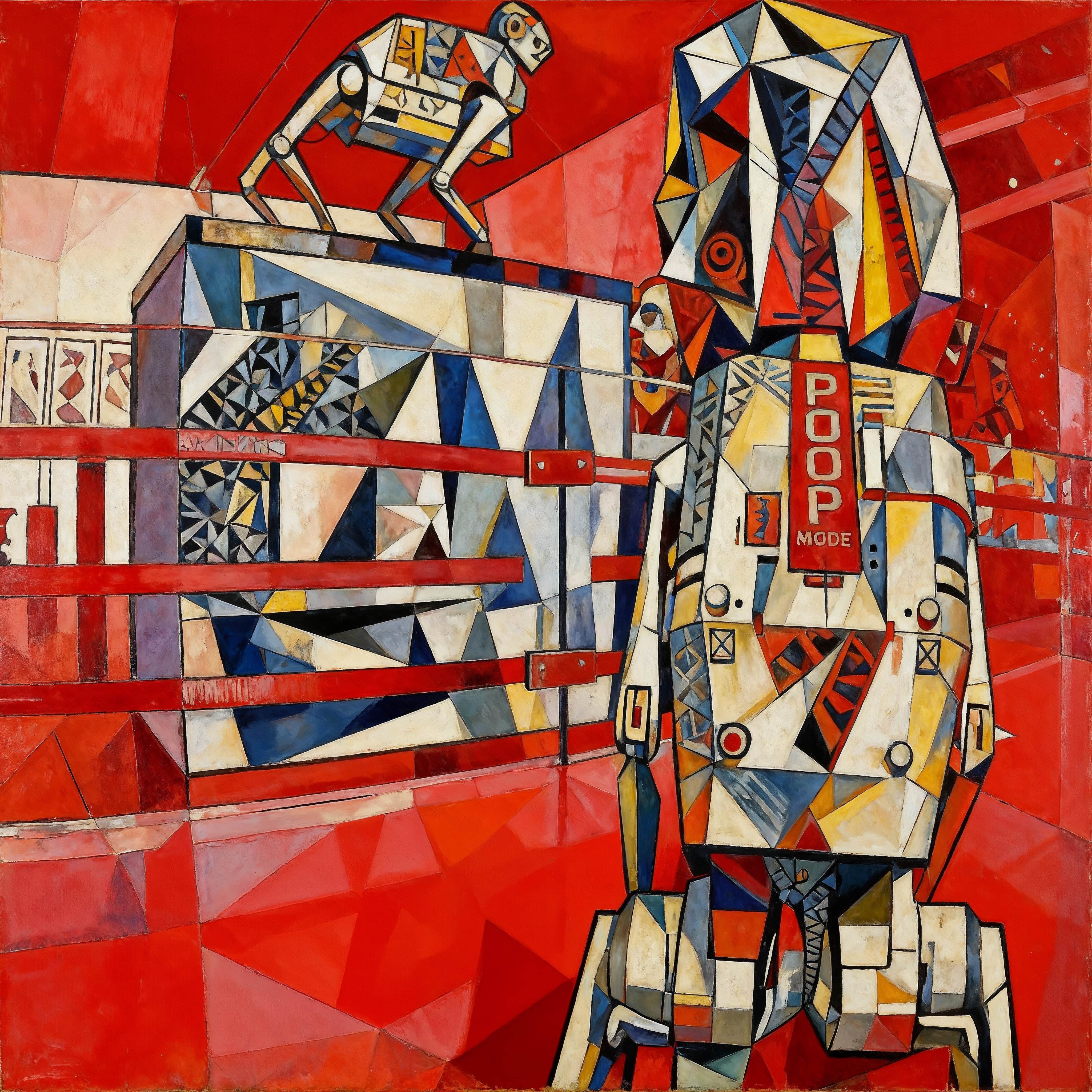
The creation of life itself, to me, is the purest form of creation. I think it's where art is driving towards. Trying to make these robots feel as alive as possible was something really interesting to me. The robots will basically be moving around autonomously in this space, trying not to bump into each other. They also take pictures and reinterpret those pictures based on which robot they are and their personality. Then they poop out prints of those pictures. Some of those pictures have QR codes with NFTs for people to scan and claim.
It’s actually a long-form generative work in that it will, in the end, produce 1,000 prints over the course of Art Basel and 256 NFTs. Regular Animals speaks to what I see as the future of generative work in that you're not writing a hundred lines of code in JavaScript. That's not going away and nothing against that.
But I'm more interested in building atop these systems of code to craft very complex things that take advantage of the latest technologies to make generative works that couldn't have been done before.
I love the Art Blocks stuff. I think the way it was done is super groundbreaking. But sometimes the algorithms could have been written fifty years ago.
Versus these robot dogs taking pictures and translating them through Seedream 4.0 to make an AI image out of that picture and then poop out a f– –ing thing. That could have only been done in the last literal year. Those are the things that I'm interested in making generatively.
Peter Bauman: What you said about “building atop systems of code” to make even more complex things reminds me of the relationship between protocols and worlds, which I've been thinking a lot about.
And these complex systems must not be easy to manage. Can you talk about the logistical and technical challenges with the dogs?
Mike Winkelmann: It's definitely been a challenge because this is the first time we decided, "Let's have them autonomously move around." How are we going to switch them out during the course of the day? Then all this printing and pooping NFTs and style transfer.
Claude has also increased our capacity to build systems faster in a way that is just absolutely mind-blowing—how fast we're able to develop these things now. It's so inspiring and fun.
I've always really been drawn to using the bleeding edge, most advanced technologies. What more granularity can that give me to express ideas?
Peter Bauman: How will you continue to work with robots as a canvas because there's obviously so much potential there? You've also experimented with humanoid robots, like at the Punks show.
Mike Winkelmann: That's coming fast, too. The advancements there are getting crazy. There's a lot. Matt and John were on iPads on FaceTime on the robots. They were walking around and interacting with people.
The robotics thing is so exciting when you look at it as sculpture for these living, dynamic platforms that now have so much agency and intelligence that you can embed them. It's going to be a lot of fun.

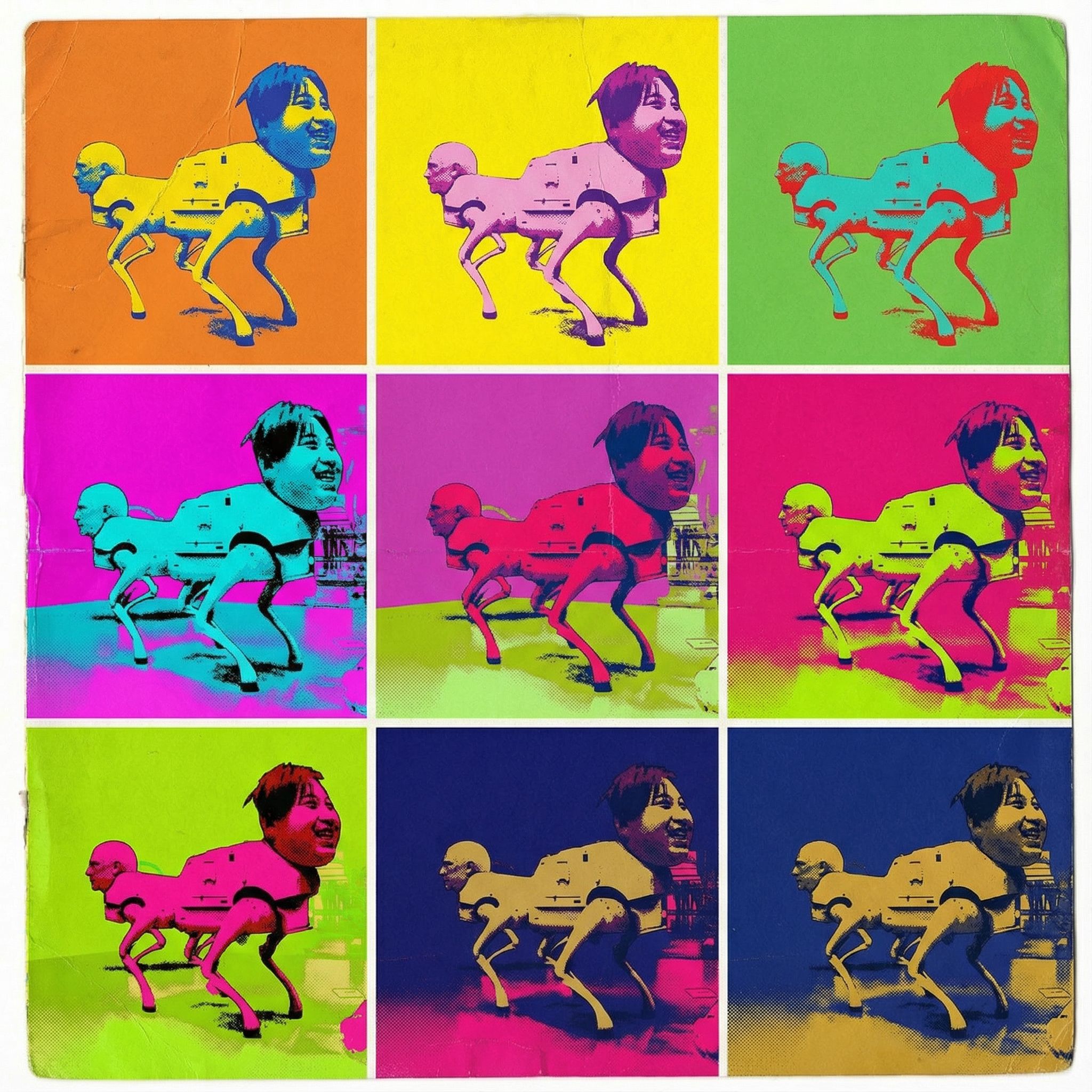
Peter Bauman: Speaking of having some fun, you chose to put hyper-realistic masks on the dogs with faces like Andy Warhol, Elon Musk, Mark Zuckerberg, Picasso and yourself. Why these people? What went into those choices?
Mike Winkelmann: Those faces and heads on the dogs were actually masks that we bought years ago. We've had the masks be part of events at the space with people dressed up like Andy Warhol, wearing the Andy Warhol mask, handing out Polaroids. And this guy dressed up as Picasso, and he's grumping at the pictures and very dismissive of things at the events.
I looked at it again as these living sculptures that could move and interact. Then at one point, we had the idea of putting the masks on the dogs and giving them this much more human feel. It speaks to a couple of things. It speaks to this future of pop portraiture but it also speaks to the ways in which humans will merge with robots in a slightly more, hopefully, distant future—that our bodies will become this half technology, half biology thing.
But those characters are iconic in many different ways and have different meanings to each of them. That’s why we chose those people. Each of them has had a massively outsized impact on society. Each person has changed the way we see the world. To have them be taking pictures of the world and reinterpreting it—it’s how I see them, seeing the world. It’s an analogy to the way we will view the world increasingly through the lens of AI and other machines.
Peter Bauman: Are you also asking the audience to rethink who artists are by juxtaposing Picasso and, say, Elon Musk?
Mike Winkelmann: That's actually interesting. I am now! [Laughs] I'd honestly not really thought about the relationship of those people: the tech people with the art people.
It is an interesting parallel but I think it is true in a way, especially for Zuckerberg; he's the ultimate curator of humanity right now in many ways. Honestly, Elon, too, with X. Both of them have massive curatorial roles in society that I think really do lend themselves to being artists.
Peter Bauman: It’s something artists like 113 and Mat Dryhurst have spoken about: the ramifications of thinking of artists as protocol makers, for better and worse.
You mentioned that Regular Animals speaks to a potential future where humans merge with technology. Then in the work’s trailer you say to the audience, “You are not prepared for the future.” That audience is the Art Basel Miami Beach crowd. What message are you hoping they walk away with after experiencing the work?
Mike Winkelmann: That line is saying, “I think things are changing very fast and I don't think we're prepared for how fast they're going to change.” That is the part of it that does worry me with AI—how disruptive I believe it's going to be in a relatively short period of time.
The biggest thing I would like more general audiences to take away is that things are changing very fast and that we need to start having more conversations.
It shocks me that more of the conversations in the broader art world are not about the impact of technology on life. To me, that is the defining conversation of humanity right now and there is nothing bigger.
Guys, a f– –ing alien is landing and you’re worried about what happened two hundred years ago? It's like, Jesus Christ, man, what in the f– –k are you talking about? Let's focus on right f– –ing now.
This isn't a hundred years away. When you talk about one hundred years from now, it's like, dude, I have no idea what the f– –k that is. That is some f– –ing Dune sh– –t, f– –ing crazy sh– –t that I have no idea about. I'm talking ten to twenty years; things are going to look radically different.
I hope those are conversations the work spurs.
Peter Bauman: Then how do you hope the work shapes the way audiences think about the impact of AI on art?
Mike Winkelmann: Hopefully, the takeaway there is that when people hear "AI," they don’t think of it as this binary thing, where the work is AI or it's not. To me, that's a very rudimentary understanding of what this technology is and what it allows.
That binary understanding is not how it's going to be. A lot of digital works will have some level of AI moving forward. AI will be so embedded into everything that we do and there will be a lot more nuance.
Hopefully this work can push forward that conversation so that people see that a piece of it is AI but there was a massive amount of direction in how the AI was used.
AI was used as one tool in this broader category, which was this broader project, which obviously had a massive amount of human intention, human craft and human decisions behind it. And oh, yeah, it uses AI for part of it.
Watch or listen to the full conversation on our YouTube and podcast channels.
-----
Mike Winkelmann (Beeple) is an artist and graphic designer who does a variety of digital artwork including short films, Creative Commons VJ loops, Everydays and VR/AR work.
Peter Bauman (Monk Antony) is Le Random's editor in chief.