
Suggested Reading
Article
Essay
Drifella III: Room for Complexity
Peter Bauman
•
June 8, 2026
View


.jpg)
Artist Evil Biscuit spoke with Peter Bauman (Monk Antony) before the release of card nft 2, the artist’s trading-card-game-inspired project, first appearing with SOLOS Gallery at Felix Art Fair in February 2026. They discuss the project's evolution from card nft, Biscuit's digital-to-physical process, and how the work's emphasis on destruction and rebirth is material as much as conceptual.
Peter Bauman: How is your new project, card nft 2, related to its predecessor, card nft?
Evil Biscuit: This collection is split in two, where one half is based on the same ideas at play as card nft. Those were also designed on preexisting trading cards with collages on top of them but they were much lower-quality photos and screenshots from the internet. With this collection I’ve decided since we want to print on top of them when people redeem, we should scan them at a high DPI and use those scans as the base artwork, making them really crisp and detailed as opposed to the noisy, meme-like quality of the original set.
The other half of the collection are similar to these holographic IRL cards I've been posting recently. These are a heavy upgrade from the original collection using and remixing these scans with color gradients.
I’ve been making those with black or white, sometimes inverted, masks. There are collage elements too but the unique thing about this half of the collection is they'll all be printed on a holographic base. When redeemed, they will be printed on demand on an acetone blank with precision and detail.
Another unique aspect of this collection is an homage to the rendering of scribbles and paint marks the first set had. I got my watercolors out and hand-painted on a selection of cards before scanning them to add a special altered rarity.
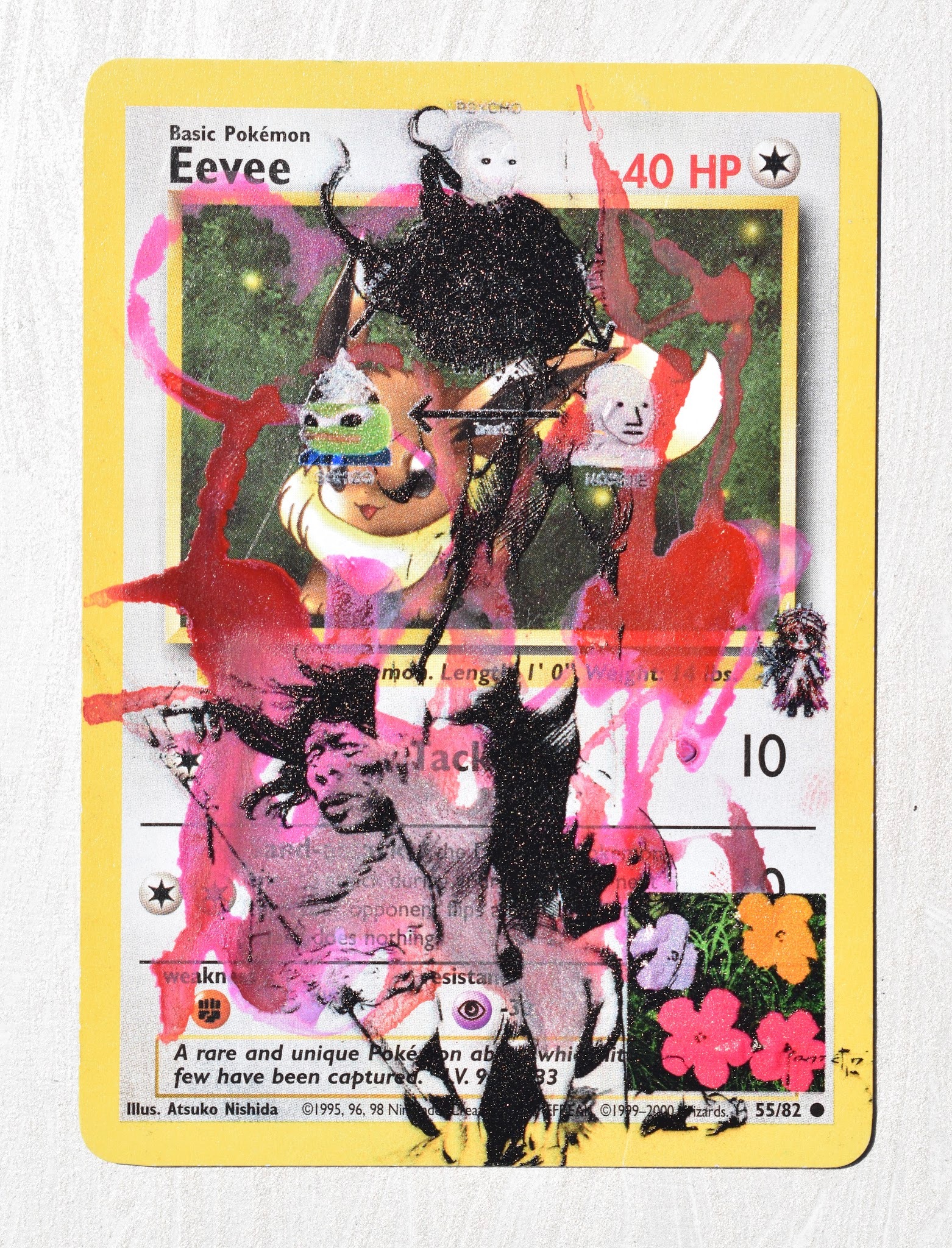
There's going to be around 11,000 cards. But we’ll be minting them/preparing them in packs. There will be more than 3,000 packs. The Poncho Driff collection that I did was a precursor to this idea where each card is produced and available to be redeemed for the physical object if the collector chooses so. This is an ambitious extension of that.
There were only two hundred cards in that collection but we did it the same way. We sold it in packs, minted them, and then people could open the packs and reveal them on the site.
Peter Bauman: How many physical cards do you anticipate making for card nft 2?
Evil Biscuit: It's interesting because we've done this a couple times now and it's usually around a third get redeemed, a third stay sealed, and then a third are opened online and kept as the digital NFT.
It does have that element that you have to give up something and sacrifice the NFT to get the physical object. You get a little receipt to provide provenance so it doesn’t leave you digitally empty-handed.
Peter Bauman: Burning NFTs for physicals and recently starting to post on Instagram, it seems like a conscious effort to make this project more accessible.
Evil Biscuit: One interesting thing is we added—I collaborate with a developer and some friends—Stripe payments for people to pay with card on mons.shop. It's a way of bringing the work to different audiences than solely someone who is into crypto/NFTs.
I started using Instagram a couple weeks ago. It's been interesting to see how people react to stuff. I posted one that had Mifella and Drifella sprites on it and some people who knew what Milady was found it. They were replying "Milady," lol.
Then there were some people who were really pissed that Milady was on it or something. And I was like, "Okay, first of all, it's not Milady; this is Drifella."
It's sort of like the NFT thing. If you talk to someone about NFTs, they can be hard-headed about it. They say, “This is not okay.” “You shouldn't be doing this,” or whatever. I run into this a lot with young people, Gen Z that I talk to. They immediately get shut down by things like that.
But it's been interesting to see them get challenged with something that's really good artwork. They're like, “Holy shit, like this card is beautiful.” But then some say, “But it has a Milady on it and that's racist and it's an NFT, so that's even worse.”
I’m curious to see how many people will buy the packs without minting. It'll reduce the supply within the NFT collection but they'll just be getting the physical objects. Apparently it's illegal to sell NFTs with Stripe unless you KYC.
Peter Bauman: So Stripe customers will get the physical only with no wallet or NFT?
Evil Biscuit: Yeah, it’s an experiment in onboarding because you'll get receipt codes in the packs. We did this with Poncho Driffella, where we inserted little codes that you can type in on our site to redeem the exact artwork for your cards. But it's just a receipt; it's not the card nft itself.
I want to see if we can get some people to log on the site and be like, “Oh, this is sick; let me make a wallet. I actually want to claim these and collect these too.”
There’s been some interest and change in perspective from some followers on there. In preparation for the collection, meinong built out a unique binder viewer to discover and sort through the first card nft series. Although they may dislike the idea of NFTs, some have spoken to me and realize that it’s a very good way to catalog and use the tech with traits and so forth.
It’s hosted at cards.art and will be updated with future series and possibly have a collecting feature where you can sort your own card nfts in your binder with customization.
Peter Bauman: It brings up an interesting question as to whether Twitter or Instagram is more relevant and important. IG is certainly less of an echo chamber. It’s engagement for the most part with the “real world.” It’s two billion users compared to Twitter's few hundred million or so.
Evil Biscuit: I gained like 1,500 followers in like a couple days from Instagram. It's a lot slower of a grind on Twitter.
Peter Bauman: With Stripe payments, you’re making the NFT either irrelevant or invisible. But it’s still present and an important mechanism in the artwork. Is that the future of NFTs? That they become something like invisible infrastructure?
Evil Biscuit: NFTs still allow you to catalog and record the artwork in unique ways. I still love NFTs and they will always hold a spot in my heart. Having that element is super important still to me and is/was the basis for my art career.
Peter Bauman: I’m just thinking about the young Gen-Zers who instantly recoil at NFTs, like you mentioned. The hope is that this is a temporary sentiment issue, similar to how the word “computer” used to be a bad word. And using computers in art was a career death sentence from the early 1970s. Yet, here we are today where computers are the air we breathe.
But what about the IRL cards themselves? What’s the process like for making them and how do you achieve the different textures with that iridescence?
Evil Biscuit: I bought this massive UV printer at the end of last year and started printing and experimenting—just building up the knowledge of how to work it, how to run it, and how to get good prints.
The textures are part of the printing process. What's unique about the UV is you can print with white and clear ink. With those elements and the color, you can build up interesting effects where the whole can peek through on some transparency and the clear ink refracts the light in spectacular ways.
A few of the cards have this engraving, fine linework. I'm creating files like that and printing them on top, so it's layered and built up. That final layer is what makes the holographics pop and sparkle.
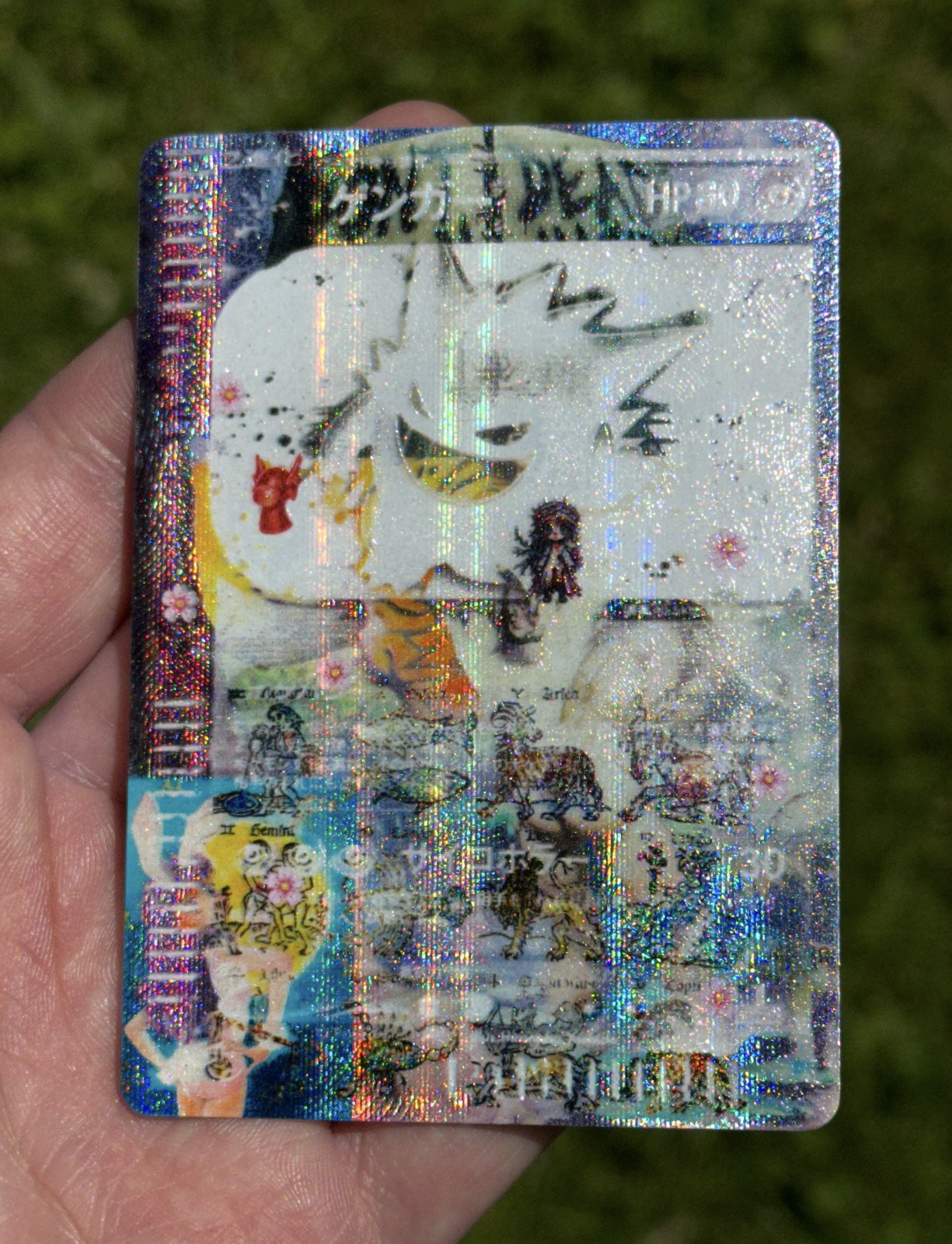
The iridescence comes from the base layer. That's on a lot of original Pokémon cards. They have really unique hologram patterns. I’ve just been buying a bunch in bulk and had collected some too.
My father has a small business comic shop that I used to help him with. He’s bought massive pokemon collections and I love to dig through his boxes. He probably has around 50k+ Pokémon and Magic cards. It’s where a good portion of the stuff I scanned for this collection came from.
The holographic cards, you can process them with acetone and you can clean all the ink off of them, leaving the silver foil. That's what I do as the first part of it. Then I'll print a white layer and leave some transparency and then print color and then texture. That’s the process for the holographic half of the collection with brand new artwork printed on it.
Peter Bauman: Did the reception this work got from the Felix Art Fair show encourage you to double down on it?
Evil Biscuit: The reception was positive but I had already been building up to this, even before I got the printer. Most things I'm thinking about or start to work on are subconscious. The work builds up and sort of leads a map to where it goes next for me.
Then I also like creating sequels to collections, especially with how wildly good vibe coding tools are now.
Bringing vibe coding elements to an old idea that I've already tapped into and seeing how much more I could bring to that idea and develop it more is awesome.
It feels like traveling back in time to a familiar process of creating and then being able to bring all your new knowledge you’ve gathered since the years passed along with new tools, of course, too.
Peter Bauman: So part of the behind-the-scenes difference from the first collection to the second is the element of vibe coding that’s cropped up since early 2025. When do you get into it?
Evil Biscuit: It was around April 2026 when I was making those GIFs for blessing/curse; preliminary dimensional drifella composer & breeder in New Bad Image curated by sssluke. For card nft 2, we built this card curator in like a couple days. I still can’t believe how good it is and how fast you can iterate. I can just go through stuff so fast and it makes the collection better too.
Peter Bauman: What is the process of actually assembling the layers of images?
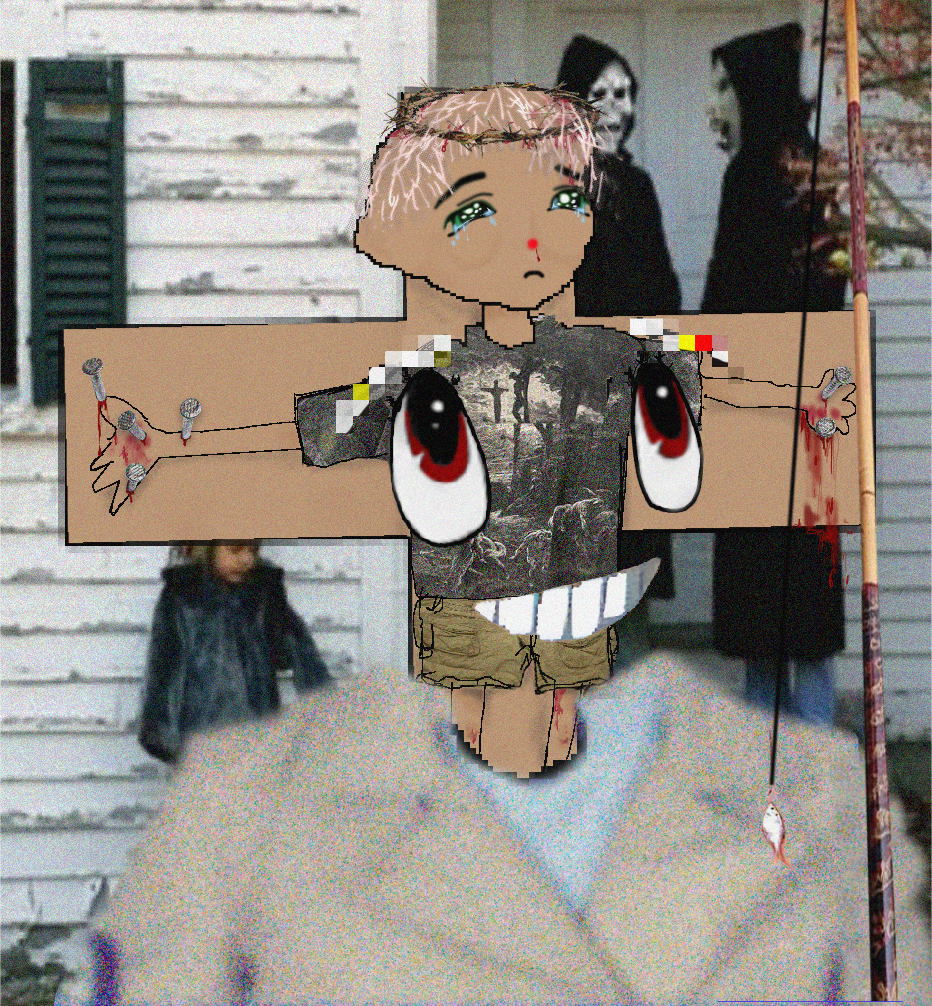
Evil Biscuit: It's been at least six months of collecting images. Like the Jesus face one, I think I made it early January 2026. I just collect images and stuff over time and deploy them where I see fit.
I was finding all these engravings to use for the assets on art auction sites. My brother is helping and he got a bunch together. Then meinong made some stuff too. That's the pre-generation, just finding images and making artwork to collage.
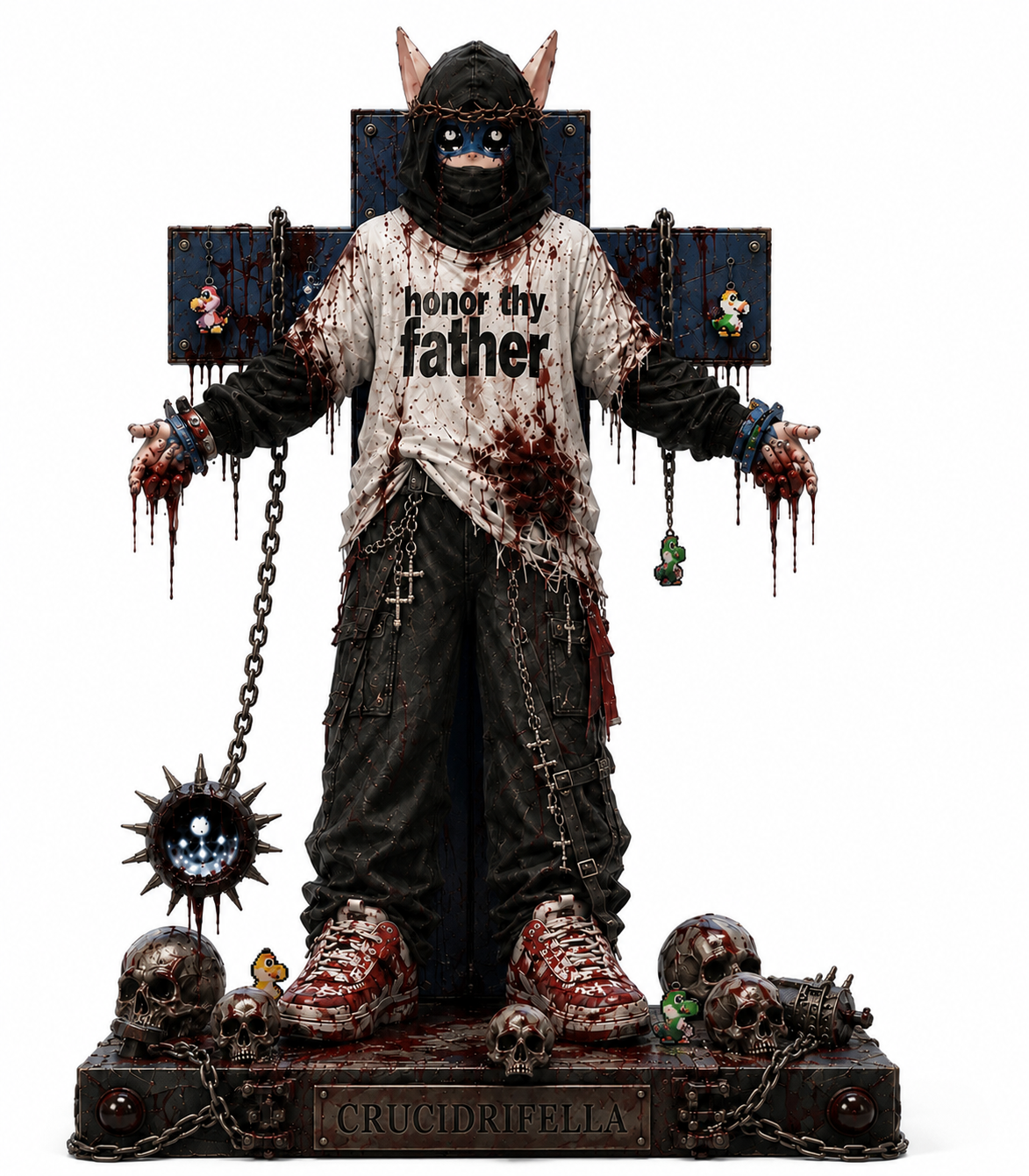
There's also a lot of GPT and AI stuff that I made. This guy's a Drifella that I was like, “Here, take this image of a CruciDrifella and make him into a dark '90s figure statue in Todd McFarlane style.” I talk to GPT and make images like that.
My friend cherub also made some digital drawings of Drifella characters. Some are featured in the hero asset layer and others are scattered about.
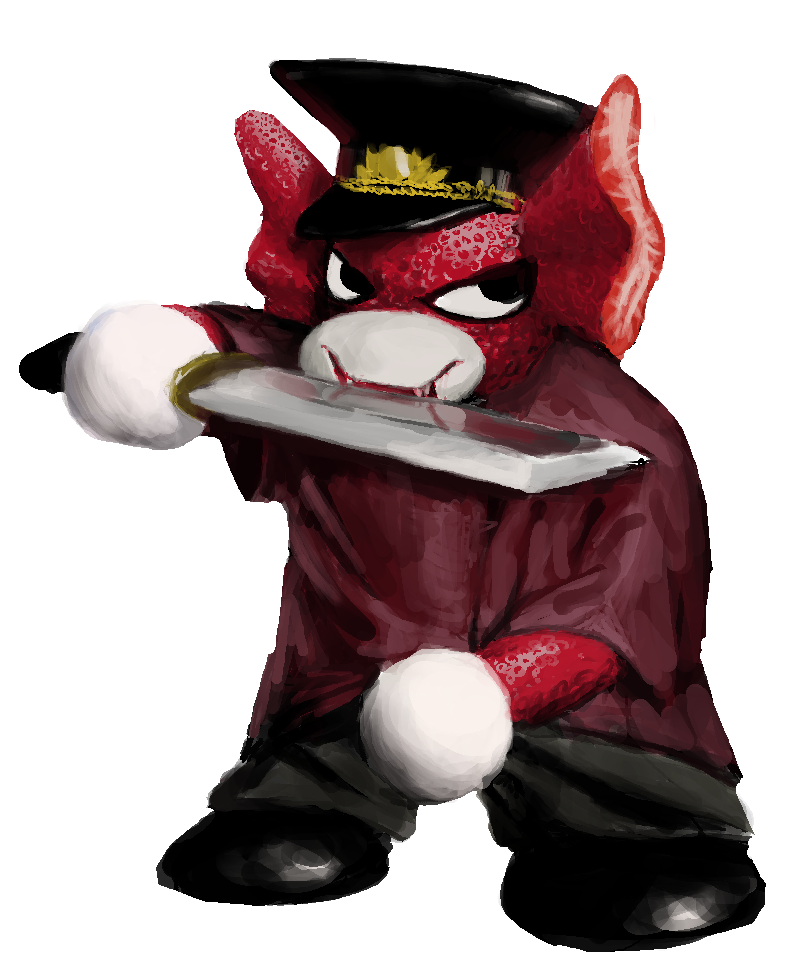
There's a ton of stuff in this collection like that. It's not just found collage elements or paintings or comic and anime references. There's a lot of pixel artwork that I did. These guys were from the GIF project, blessing/curse.
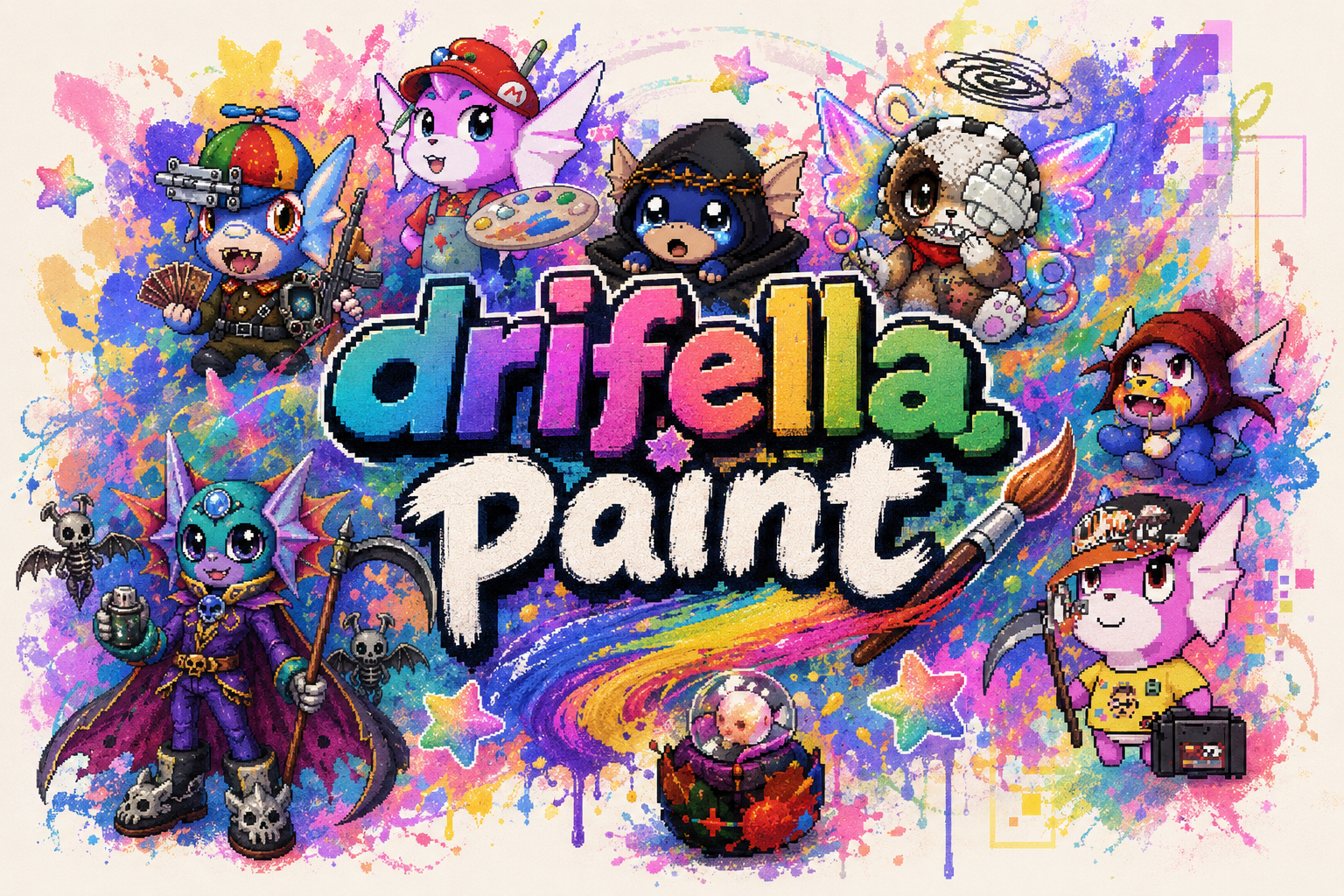
The first step is making or finding all of those. And then we organize them into a three-by-three grid of nine on the card. There are overlay elements, which appear like the engravings and paint marks.
We have it all organized in folders. Then we basically just talk to the model, vibe coding it. I've done this before simply with three or four projects already, where I tell it, “Okay, we want to do a HashLips NFT generator.” It’s super simple, and we mod the nft tool.
Now, we’ve expanded on it and made unique things that fit the project better. That's what I did for blessing/curse. That was pretty unique to do because it would give us GIFs back, placing the sprites in these worldbuilding scenarios where they're all scattered and running around and doing different things. My brother actually made his own independent generator that had more Pokesav aesthetics.
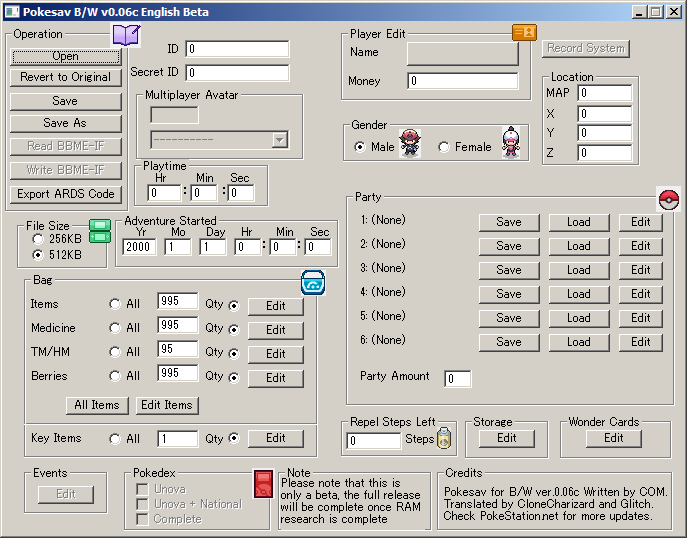
Once you do that, then you say, “Okay, we're gonna make an NFT generation; we need a JSON file and all this stuff to take care of the metadata and all the assets.”
A lot of that stuff was a huge headache to do two years ago when I did card nft. I had to name each base card individually before. Now I can literally give a folder to Cursor and just be like, “Hey, can you read these cards and name them all?” And it takes like 30 seconds or something.
Peter Bauman: So it reduces a lot of the manual labor.
Evil Biscuit: Yeah, no human soul should have to sit there and read a card and name it. That would probably take me staying up like three nights in a row to do it all. For this project, I could focus on the art and the other details.
Peter Bauman: That's possibly why card nft wasn’t curated but 2 will be?
Evil Biscuit: We're picking every single card. If I had this stuff for Drifella III, I feel like the collection would be—I mean, I’m already really happy with the collection already but I could make it better. I could be able to choose and curate and take the time to do all the stuff that I was saying that we could do now in vibe coding.
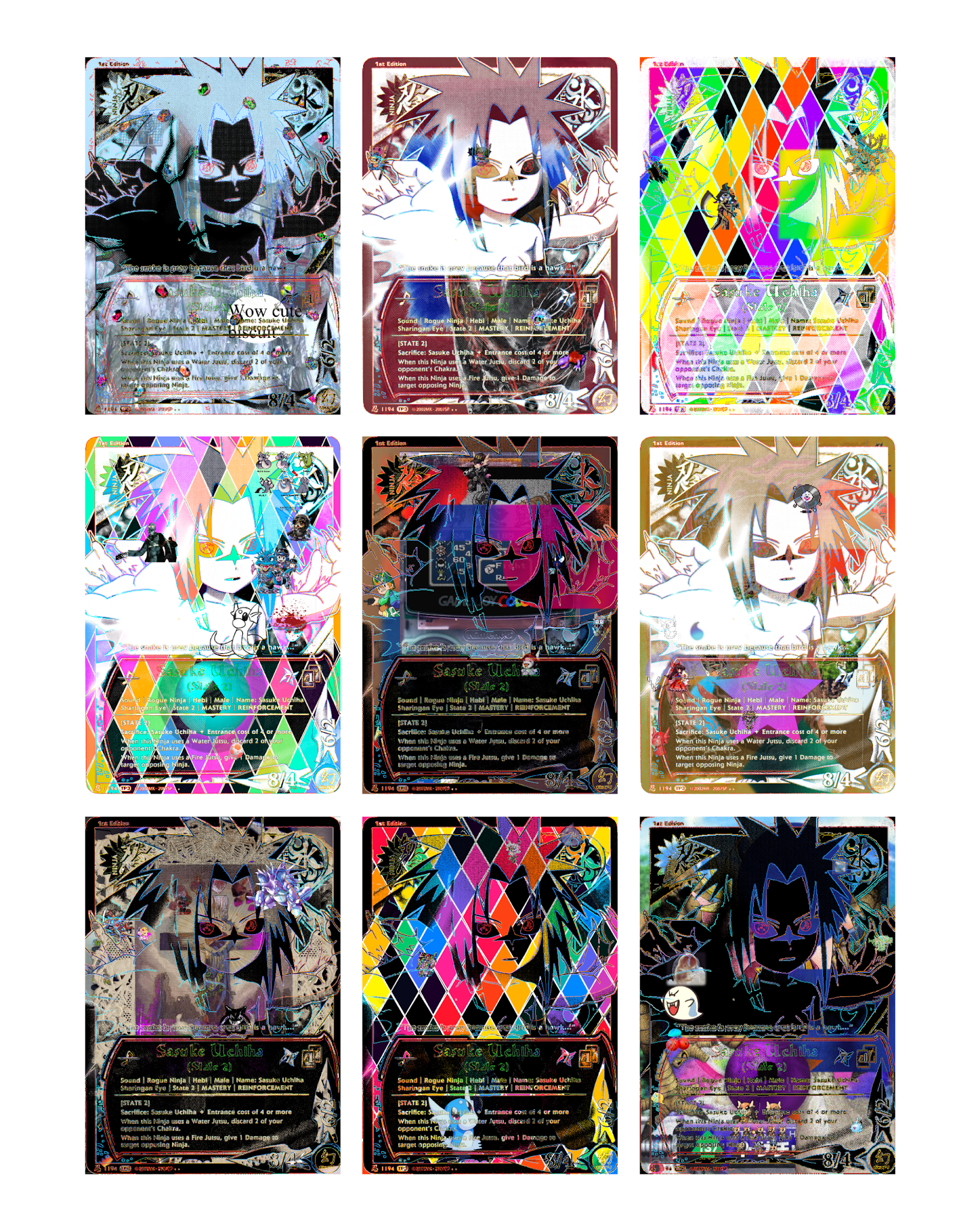
Here you can see six cards and they're all the same base card scan. Each one has a unique generation on it. I can be like, “Okay, I don't like any of these.” I click "regenerate," and it makes six new ones. And I'm like, “I like this one,” so I can save it into the Commons folder. Then it can give me six more to choose.
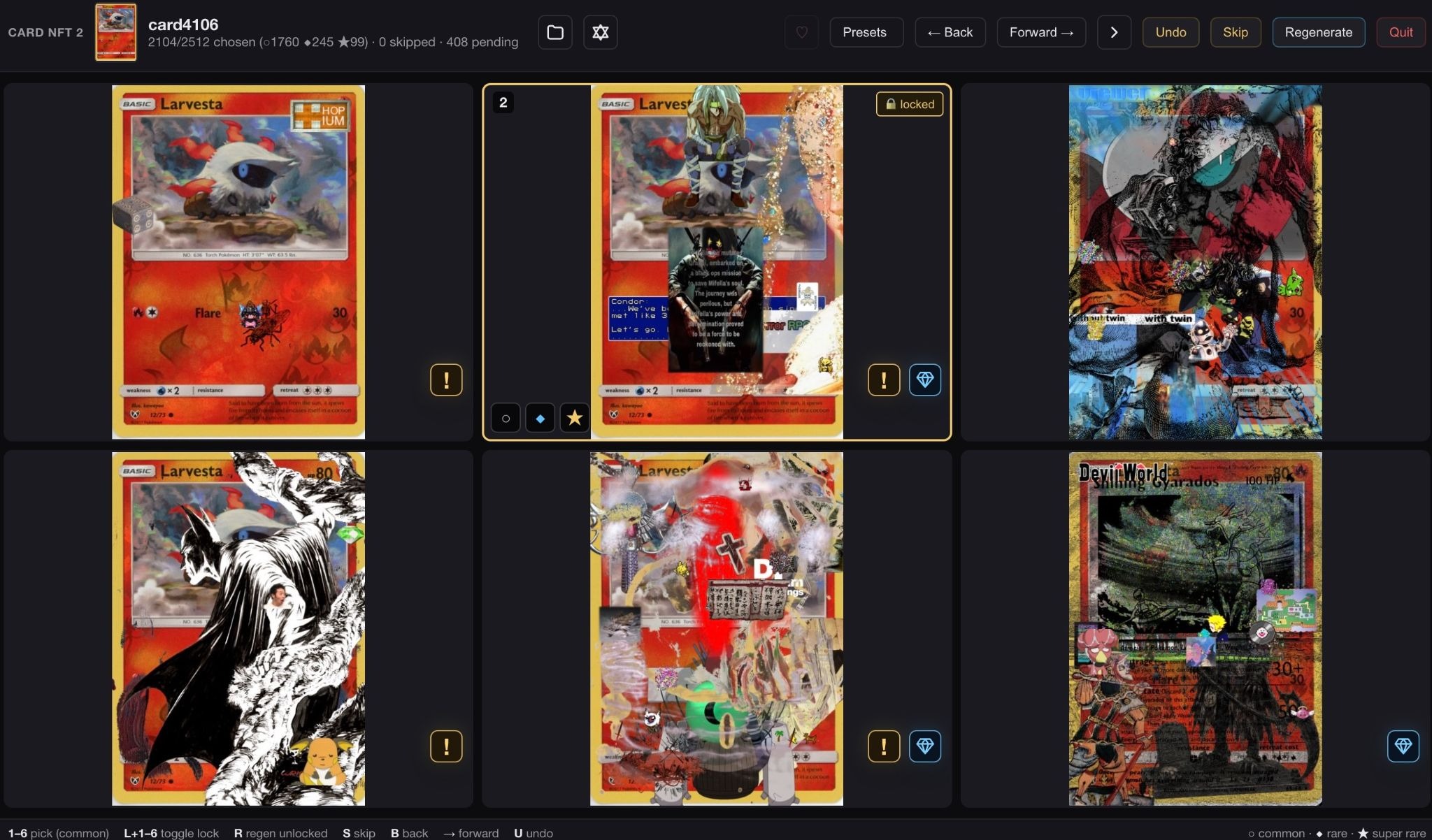
This is all I've been doing the past couple weeks. It's genuinely really fun to just sit here and choose through the cards like I’d be collecting or shopping for them myself.
With the scans, since we're doing the IRL printed ones when people redeem, we have to keep it to one design per card. That's why choosing the collage that goes on top of it and curating it is important because there's only one of them. If someone redeems it, we'll go into the stacks of cards that I have organized; we'll pull it out and print on that exact one.
Then we have the acetoned ones and metal aluminum card blanks. Those will be rarer, but we'll do double-sided printing and the backs will be the card nft back design.
Peter Bauman: Do you expect the hologram half to be more sought after?
Evil Biscuit: Well, it depends on the base card that’s used, I think. I have some expensive ones scanned in there, like $30 cards and a $100 card but also a lot of bulk commons. If you get one of those with printed collage on it, we are making sure it's still really cool artwork.
One thing I've always tried to do is break rarity standards.
In nearly all of my collections, a more common piece could still hit crazy with what ends up meshing together within the traits. It could even be cooler than a rare one. With these super rares, I feel like they can compete in that way.
But the one added element is that if you get it printed, it'll be holographic, textured and have that high-quality, premium feel and look that I put into all the ones I've been teasing and printing as preliminaries.
Peter Bauman: With the holographic ones, I’m interested in them conceptually too because the first thing you do is destroy the card’s value by removing all the ink.
This seems to play with the legacy of Gustav Metzger and his Auto-destructive art. So there's a long history of degrading form as critical message. How were you thinking about destruction as a conceptual position?
Evil Biscuit: It's definitely a crucial part in making those early cards: destroying the value and their original content.
Pokémon cards have only been going up in relevance and value so it’s interesting to play with that idea of destroying them to then create something new.
I have some $300+ cards that I'm saving to print overtop. I’ve also been playing with the idea of making forgeries of insanely expensive cards. I’ve printed several gold star cards that look very good to the layman and even fooled a few people at card conventions when I've shown them my prints. They are astonished at the quality I can get.
But this is a big theme with Drifella and really any Biscuit collection: destruction, death and rebirth, making something anew.
Peter Bauman: That is also where a lot of the more religious imagery comes from, too?
Evil Biscuit: For sure. I think so. Christ and the crucifixion. It’s a very crucial part of history for me and trying to understand that and wrestle with it is a big part of my work.
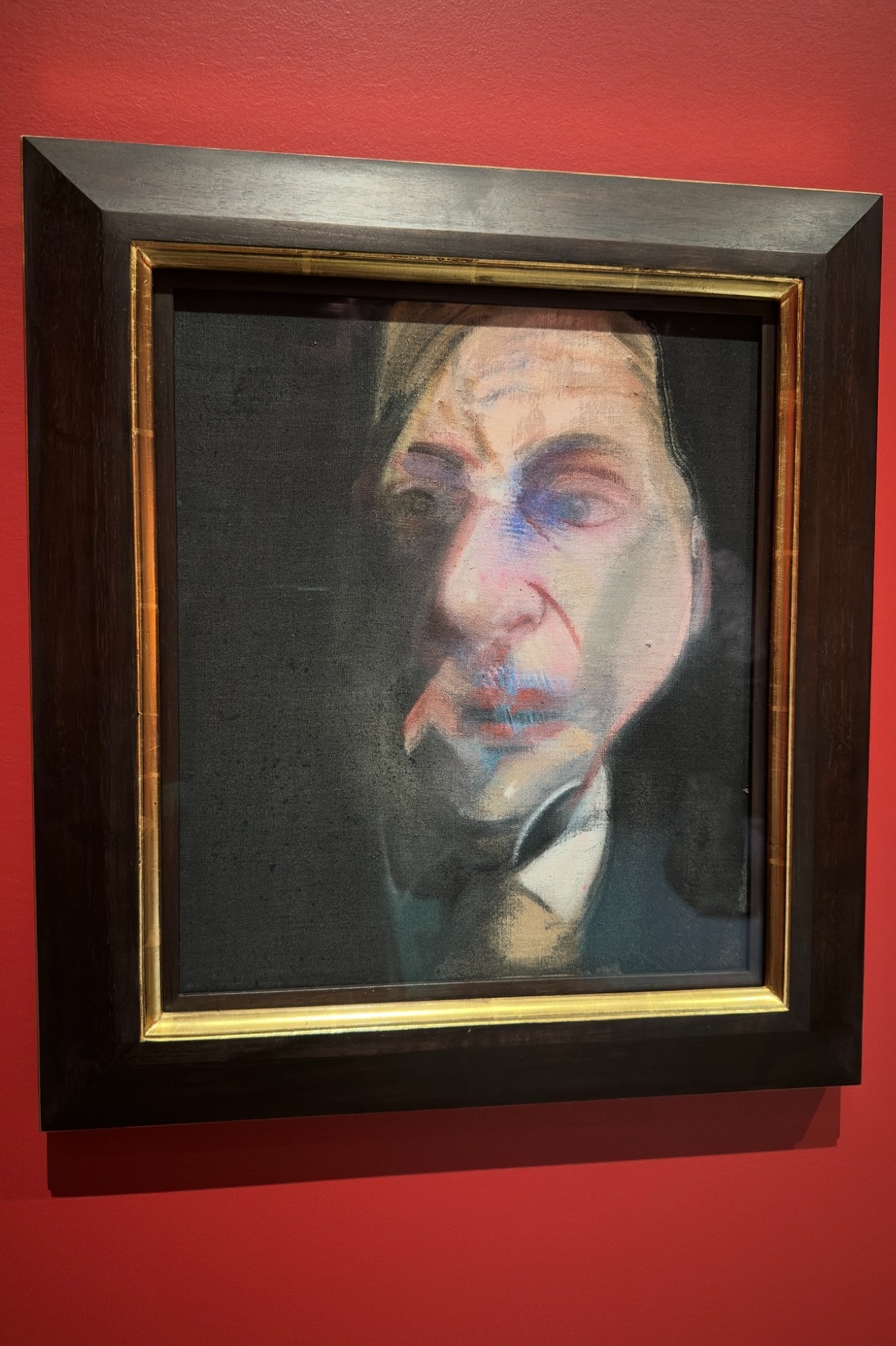
Peter Bauman: That imagery is so embedded in art history, even Modern art with Bacon and his crucifixes.
Evil Biscuit: Yeah, I'm obsessed with his work too—so many references to it. Even with Drif III, I created my own language in homage to his style.
Peter Bauman: Did you study art? How did you get into it and artists like Bacon?
Evil Biscuit: I went to art school for like nine months and dropped out. Then I continued to make art and sort of found my place.
I went into art school very naive, too. There were artists that I learned about on the way that opened my eyes a lot. There's a lot of Frank Frazetta stuff in here too; I really love Frazetta’s work and the popular culture element of his book covers. I really love physical paintings.
When I went to New York a couple months ago for the closing exhibition at Yeche Lange, we went to New Museum. They had a Giger sculpture and there was a Francis Bacon painting I got to see. I saw another one before at the Met but it was behind glass and I wasn't allowed to go up close to see it. But I saw this one up really close with all the paint and the texture; it’s just gorgeous.
Peter Bauman: Collage has this fascinating lineage besides postmodernism and post-internet. It has these traditions in (especially British) Pop art and Dada. To what extent do you engage with them?
Evil Biscuit: On the American Pop art side, Andy Warhol has been an influence in the repeating silhouettes you see with Drifella or the masks in this collection. I am using this screen tone method in a similar manner to his screen printing and halftones.
Also at the New Museum and their New Humans exhibition, they had some of the earliest collage work by Hannah Höch, which was sick to see those IRL with the scale and everything. I wish I was more of a student and knew these other names but I'll have to look them up and I'm sure I'd enjoy them.
Peter Bauman: I’ve seen some early sketches and drawings of yours. How did you first start out in art? Were your first forays the NFT projects?
Evil Biscuit: I tried to make a comic book and was doing comic art. I was drawing stuff like that. Besides Frazetta, I like Mike Mignola a lot and many other comic artists; you can probably see the influences easily through my collections. Then in 2021 I first discovered NFTs.
They’ve given me this outlet and approach to projects and work more seriously. I’ve always experimented with collage and painting and things like character design but never as rigorously as I have through Drifella. Drif III was huge for me in studying character design and randomness—with painting.
Peter Bauman: It seemed to also give you an outlet to build worlds. Like you said, your work often involves lore, sequels and motifs. Projects bleed into each other more than they’re entirely distinct.
Do you see yourself more as building worlds across projects? Is there some kind of bigger world you have in mind?
Evil Biscuit: Yeah, there definitely is. Drifella has laid out this whole backstory for me to swim in. It develops over time, though. I never sit down and write everything out plainly. That's more difficult for me to do. But over time the ideas connect and it makes threads here and there.
The sort of thing with religion & conspiracy interests me a lot and how the storylines and archetypes emerge. That's how I think of Drifella and how he came to be within the Mifella universe from Milady.
Like going back to Drifella I and the memeing on Twitter, where he's an aborted fetus child of Milady. He was completely rejected by that side of the rift. There's also the Mifella and Dratini lore, how a Mifella uses his own soul to revive his fallen friend.
I love exploring these ideas through collections and even through the rollout with music videos, films and memes. The last collection I did, blessing/curse, gives a peek into the evolutionary line of Drifella and how he can morph and grow up depending on certain factors.
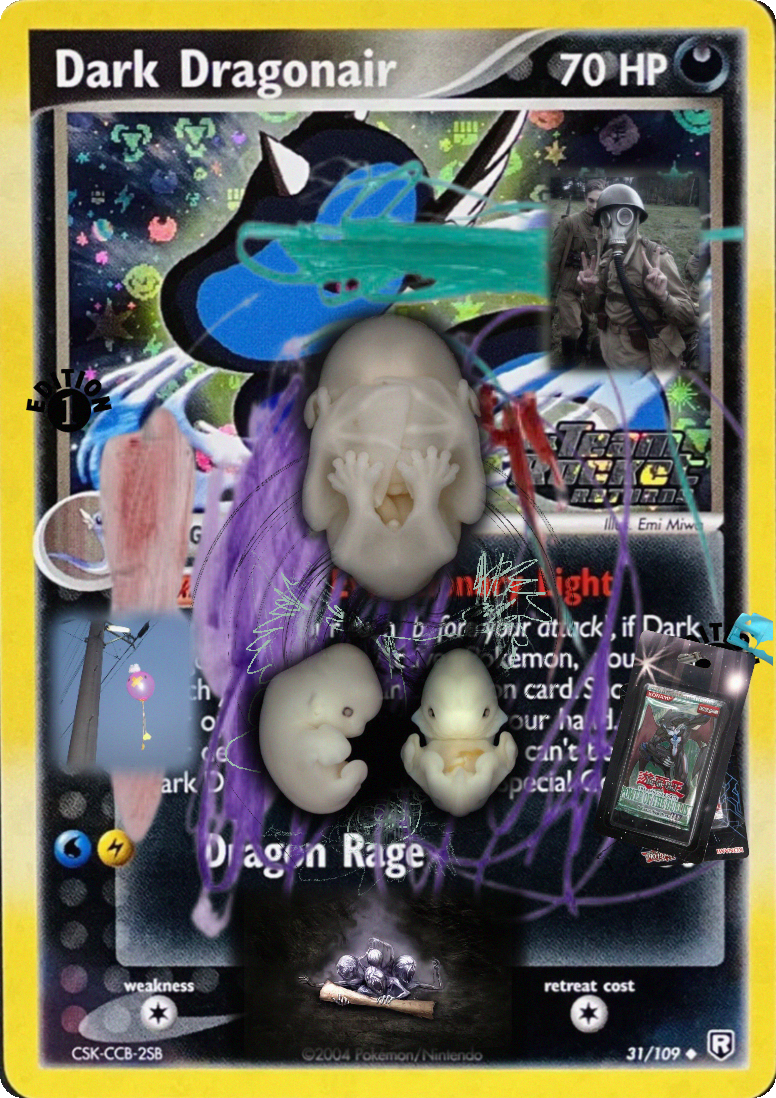
It's sort of like subconscious developments over time weaving their way through the different installments. Like in card nft, there are a bunch of embryos and little squishy unborn snake, human and bat fetus little guys.
I initially was adding these when we found out my wife was pregnant with my baby boy and we got our first ultrasounds of him when he was a little gummy bear. That morphed into this idea in Drifella III, like the Alien Triptych, where the center one is a Drifella embryo character with different items and upgrades.
With these pixel versions in blessing/curse, they're evolving from an embryo stage to a baby Drifella sprite. Then it goes into a teen sprite and it gets more unique features and traits from Drif 1. Then it evolves into more like a champion. And the final evolution is the CruciDrifella, where he's on the cross.
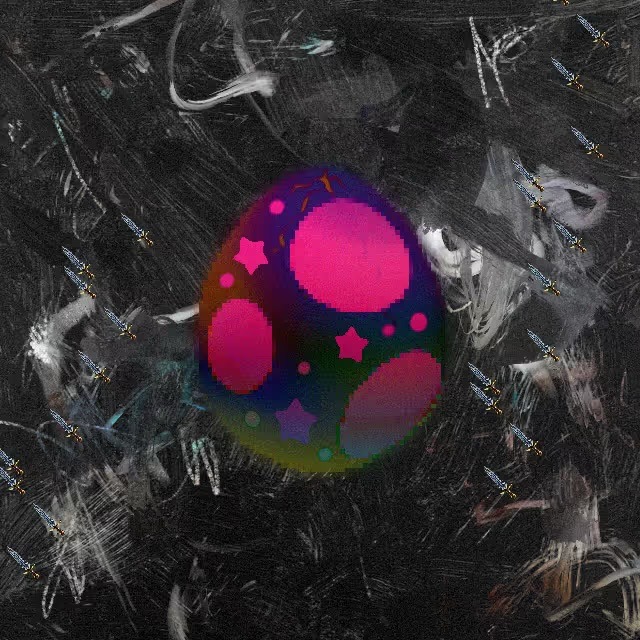
Then he dies on the cross and gets reborn into a Drifella egg, which originated in Milady Aura 2 After Death. When I made them, I didn't really know what they were or what they were going to be but they became the Drifella eggs. Out of that chaos is where they hatch into a serpent demon jester embryo.
------
Evil Biscuit is a pseudonymous artist know for the Drifella series, card nft, Constant Fella, Milady Aura2 After Death, Heavy Liquid Graphic (with Parker Ito), and blessing/curse.
Peter Bauman (Monk Antony) is Le Random's editor in chief.