About us
Stay in touch
Peter Bauman: Hello, everyone, and welcome to this Le Random podcast at the end of the third quarter of 2025. I'm your host, Peter Bauman, the editor in chief at Le Random. Today, very luckily, we are joined by thefunnyguys, the co-founder and CEO of Le Random, and Conrad House, the collection lead at Le Random. Today, we're going to look back at the third quarter, review it, think about what some of the big picture topics and items were. We're also going to talk about some of our favorites and what we were up to this quarter. Then at the very end, we'll look ahead a bit. There was a lot that happened this quarter. We're going to talk about the rise of the digital scene at the Toledo Museum of Art, how Sasha Stiles debuted at MoMA, the restructuring at Christie's and their digital department, and then our very own thefunnyguys will talk a bit about Raster and its relation to Le Random. Then finally, we will talk about the rise of the Solana Avant art scene, especially what's happening now on VVV. A lot to talk about, a lot to discuss, and we're very excited. So let's begin.
I guess let's start with the big picture takeaways from this quarter. It felt like a lot was going on this quarter. One of the major developments, and this was due to the opening of Infinite Images at the Toledo Museum of Art in Toledo, Ohio. I knew that was coming, so that wasn't a huge surprise. But what's been more of a surprise was this continued programming around the digital. It really seems like moving forward, it's going to be something that they're going to prioritize. That was maybe a bit that I didn't expect. I think that's one of the most interesting things that happened this quarter, that Toledo is now one of the major players, it seems, in the institutionalization and presentation of digital art. But what do you guys think?
Conrad House: I think it's quite interesting to see Toledo becoming such a heavy-hitting figure. I think it's great to see they're not just stopping at Infinite Images to some degree, but they're adapting to the broader space and seeing other ways that they could fit in. I think that's really important. I think a lot of us in this space feel that the space is underrepresented to some degree. So having anybody that's here to help push us along the stage and give us a bit more spotlight is always nice to have.
And I think there is a lot of excitement about Infinite Images. I think we even talked about it at the end of our Q2 review, a lot of things that we were looking forward to. I think it lived up to a lot of the expectations that it had. It was great to see the reception of it. It was great to see Frieze and other larger publications write about the exhibition. I think it gained a lot of praise for what it showed, from the connections of our digital space to the 1960s with their Albers and Max Bill pieces that they had included. It's great to see them continue to push forward on this digital front. It's great to see that Toledo is taking that effort to become one of the leading figures in it.
thefunnyguys: Yeah, and hopefully it's also the start of seeing more physical installations for this Web3 native generation of digital artists, because I think a lot of them have ideas for physical structures and projects like that. They typically don't have the resources, or they don't get the space, or they don't know how to reach the audience in physical spaces with these projects. I think some artists in the exhibition really took good advantage of the opportunity. The one that really stood out to me was DEAFBEEF, his Glitch Box, a physical sculpture where people can physically interact with the parameters. That looks fantastic. I'm really sad I missed the exhibition. That would have been an amazing piece to interact with.
Peter Bauman: I think that's a good point about these institutions showing what their value can be, because sometimes they can be questioned in this space. Do we need them at all? I do think that they're showing that they can be valuable with what they are doing in Toledo and what they're doing also at MoMA. A lot of that is giving this digital scene a physical space, giving it a physical presence.
That was something that I spoke to Sasha Stiles and Martha Joseph, the associate curator at the Department of Media and Performance at MoMA, about in a piece at Le Random. That was just about translating this concept of a living poem into an experience in a space. Sasha even said something talking about the wall and the physical space, the work as this embodied performance that was immersive and also participatory. She said, "Part of it is thinking about the wall and this amazing screen in the MoMA lobby as a performer itself and a next-gen poet that is here to retell this AI epic."
Really incorporating the space into the telling of her story. It also allowed for them to add sound and a noise component to the space. What's also interesting is that it doesn't really take away from the more ephemeral aspects of it, because you can also engage with this work on your browser too. But it still has this space, and it still is this opportunity at the moment that will be engaging visitors, or every visitor that walks by that lobby.
Conrad House: It's the same line of thought with Toledo. It's really encouraging to see these larger institutions put forward effort and, what you said, Peter, give actual physical space to these artists. And a lot of times, physical spaces are not all equal. Obviously, when you look at things like the infamous Tezos pole compared to a MoMA screen, just because something gives it physical space doesn't mean it's done in the right way. But seeing MoMA do, obviously starting with Refik and then moving to Rafael, and then now Sasha, all three seem to be executed really well, and the works that are within the space fit really well.
It's great to see the breadth of work that they're showing. They're showing very easily appealable Refik to some degree with this very complex data cloud structured piece. And then you go to a very, I think, minimalist opposite of Refik's work with Rafael with these hard edge geometrical compositions. And then you get to also highlight another side of generative art, which is this text-based literature, which is really fascinating. And then also highlighting more AI or machine learning fields with Sasha as well.
thefunnyguys: It also feels to me like with all of these North American museums that we discussed, it's not a one-off anymore. It's not an experiment anymore. Ryan Zurer is on the boards at MoMA. The Toledo Museum of Art has started its own Labs division to encourage experimentation and invite digital artists for residencies. LACMA also announced this Digital Leaders program. These are all structural changes. These are structures that will continue to be in place at least for years, maybe for decades. It's a very different type of engagement than what it was in 2021, when NFTs and digital art were this whole thing that they just wanted to touch on for the attention and stuff. Now those structural shifts have really happened at these museums over the last years.
Peter Bauman: Yeah. I think one of the other things that presenting this work in a museum context allows is that it can have these conversations with the museum's collection. And when it's a place like MoMA, then it's conversations with art history. Sasha is doing exactly that. She told me about how the piece is in conversation with people like Bruce Nauman and Barbara Kruger and Cy Twombly, and they all have significant work at MoMA. And like you mentioned, Conrad, it was this opportunity to also show that side of text-based generative art and the language art side of it. I think that it shows the maturity of the space and has definitely been a positive development.
Well, I think if those are two positive institutional developments, maybe something... Well, I don't know. This has divided the community in terms of how they've read these tea leaves of the Christie's digital art restructuring. Some people read it that now digital art not being separate and being part of normal evening sales, that that will be overall a positive thing. There will no longer be this artificial distinction between digital art and real art or whatever that is. And now it will all just be together, although that has been done before to, I guess, varying levels of success. But how did you all interpret that news? And what did you think of that conflicting signal in this quarter?
thefunnyguys: I don't know to what extent we should feel saddened or not about Christie's not paying attention to digital art. I feel like with these type of auction houses, it's always more like a lagging indicator of relevance. It's not any predictor. They're late to the party. They come when things already have a big market, when they can make money. And once that goes away, I guess it makes sense for them to allocate less resources to the digital art sphere.
For me, it doesn't interact at all with the excitement around digital art. If anything, I feel like it's sometimes more interesting when these auction houses are not there or not in the news every week with digital art sales. I feel like, especially this quarter as well, we have seen a lot of bottoms-up movements with new collections, new artists entering the space with prices that are very affordable. That always feels like an energizing moment where real things are happening. A digital art sale at Christie's, I don't know how big of a loss it really is for the digital art space.
But that's maybe from my perspective. I think from other people's perspectives, it's really important that we get validation from institutions like Christie's, and it helps mature the space. It's a different side to the story. But personally, I don't really mind that Christie's shut down its digital art department. But I also don't want to claim it's a positive thing, to be clear.
“I feel like with these type of auction houses, it's always more like a lagging indicator of relevance. It's not any predictor. They're late to the party.” — thefunnyguys 9:37
Conrad House: I think what you nailed on the head is it depends. It's a very personal thing of whether you think it's good or bad. What Jan said, it's a lot of validation. You see some artists that joke, "I would never want my work sold at Christie's or Sotheby's." And then some other artists love that, and they love to even put it in their bio like, "Oh, artist that has been shown at Christie's auction, sold at Sotheby's auction." So it's a very personal thing. Some people feel very validated by being a part of these auction houses. Some people feel they want nothing to do with it. So it's very much a personal preference thing.
And I almost agree with Jan. I don't think it's necessarily a good thing. I don't necessarily think it's a bad thing. I think if they really do plan on just merging the digital with the real auctions, or however, what you said, Peter, what even is that? What does that even mean? I don't think it's surprising, that's for sure, that this happened. I think just last year we saw Sotheby's do this same thing when they laid off a handful of their metaverse and digital art workers in 2024. Specifically, the auction houses took one of their biggest hits in 2023.
I think a lot of the time around 2023 and even 2022 was this scramble to pick up on anything that could start generating more. And as these traditional markets collapsed, we saw these things like Sotheby's really diving into the metaverse. We saw Christie's creating these digital auction things. And it was probably due to, yeah, they're chasing the penny. They're trying to keep afloat, which you can't blame them for.
But I think even when we looked at traditional markets from 2024 to 2025, the decline hasn't been as much as it was from 2023 to 2024, where I believe from 2023 to 2024 they saw a 25% to 30% decline, whereas from 2024 to 2025 we only saw, I believe it was about a 2% to 3% decline. It seems like the falling knife has stopped its speed a bit and we're hitting a bottom.
thefunnyguys: Do you think in practice it will probably mean that only a handful of top digital artists that can sell for big ticket prices will still be featured at Christie's? We'll probably see more like Refik Anadols or Beeples go through Christie's.
On their Web3 platform, I think it was called Christie's 3.0, right? Their digital arm. I must say that they did a lot of pretty strong curations, and they did feature a lot of emerging artists. Many of the prices were actually quite accessible, sometimes starting at 0.5 ETH or 1 ETH. For Le Random, we actually collected some artworks there. We collected a Minne Atairu piece at Christie's, and she's not the artist you would expect at a top auction house already. She's very much at the start of her career, I guess. They did do a good job with curation, and they did feature a lot of underrepresented voices in their curations, which will now probably not be the case anymore.
Conrad House: Yeah, I do want to just add on that too. I was going to mention that same thing. Christie's did do a really good job, I think, even compared to the other big auction houses, at actually putting together really nice curations of new work, especially work that's coming directly from artists. I think this is partially probably due to fashion being such a big hand in it, but they put together a lot of great shows with a lot of great new work.
Peter Bauman: Yeah, I think that's where the cope went a little too far, that, "Oh, actually, this is a good thing that happened." I think it's pretty clear when you hear what Sebastian Sanchez was saying, that it went from a team dedicated and allocated and working on this and thinking about this and presenting it, and the resources of a team, to just me. When you think about it like that, it's a clear downgrade in terms of the resources that they're allocating. But that is an indication and a signal of a weaker art market, especially a secondary art market. But that doesn't say to me that there's any indication that what's happening in art is less interesting, or that it's an indication that the creativity is somehow filtering away. Again, I think it would be quite the opposite.
Let's move on to the next item, I think one of the main and big picture takeaways from this quarter, whether you're at Le Random or not, which was the introduction to the space of Raster. I wasn't surprised that it captured so much mind share on Twitter, maybe as much as it did. But I would say that I was a bit surprised at how many artists posted about it and said that they were emotional seeing all their work. That genuinely did surprise me, that it seemed to resonate with such a large number of people. Did you want to say anything about it?
thefunnyguys: Yeah, it was a big quarter for me and for the entire Le Random team with the launch of Raster. As you guys know, it's something I've been talking about for years, working on for many months, together with Michael. He was a developer, the technical co-founder of Raster. And for all that time, I always had a feeling that it will probably resonate, that it hopefully solves a real problem, not just a problem that I made up in my own mind. But when it actually launched and it received that type of reception from a lot of amazing artists, collectors, curators, it was really overwhelming. I was extremely happy to see that. It definitely made it all worth it.
I think a part of it was we want to position Raster as a new digital art marketplace. We want to make the digital art market way more efficient than it currently is. And to do so, we knew we had to aggregate artist profiles. We have to bring all their work together on one central profile. We did that mostly to improve the collector experience, so the collector doesn't have to jump from one page to another to find all the work. But it, of course, also solves a big problem for artists. They all have to work with link trees. They all have to really onboard collectors in a quite painful way when their work is dispersed across so many platforms. And some of them who have the resources, like XCOPY, they've created a really beautiful portfolio website where you can find all the work. But most artists, they don't have the time, they don't have the resources to do that, to create this portfolio website. I guess Raster does that for them at scale. It makes sense that they're really happy with Raster, but it's also something I didn't expect. Really grateful with the reception.
Conrad House: Yeah, I think this is a big congratulations to thefunnyguys for getting us out there, because like you mentioned, this has been something he's thought about for years. And I've tweeted it anecdotally, but the first time we had ever met in person, we had this discussion of, hey, it would be cool to have some really good aggregator that didn't require you to go to Foundation, SuperRare, objkt, Hic et Nunc, whatever it was at that time, fxhash, Art Blocks. You had to go through 20 different hoops just to get, hopefully, what you thought was a full encompassing view of an artist's on-chain career. Coming from a collector, it was something that I think we both had always really wanted and dreamed of.
I think at the start of 2025, we started to see a few platforms try to spearhead this initiative of, let's get all of an artist's works into one place to explore it. But it still wasn't there. They're still missing, whether it was cross-chain adaptability or even just the artist's profiles weren't fully complete and they were missing certain projects or certain works, or they weren't dividing it as nicely as Raster does, where you can divide one of ones to long-form editions, you can do series work. It's a really nice breakdown. You can see all activity on one page.
Again, with what Peter said, I was also pretty surprised to see how happy artists were, the reception of artists in general, because being a collector, I was stuck in this collector mindset of, oh, yeah, I know why collectors would love this, because of all these incredible things we just mentioned. But I never really thought about why artists might like it. And what thefunnyguys brings up with, yeah, you go to an artist's Twitter page and they have a link tree that has 20 different links attached to it with different project pages and different NFT websites that they have a work on or a project on. And it can become very convoluted for them. And again, they don't all have the time to set up a really neat artist website, or even have the time to manage an artist website where they keep up with everything that they're doing. The ability for them to just be like, oh yeah, if a collector comes to me with interest in my work, I can just share my Raster link, and my Raster link will display everything that I've done in my on-chain career, is really helpful to them. It takes away a lot of the unnecessary manual labor work that comes with being an artist and having to represent yourself to some degree, or present your work in a neat, organized fashion.
thefunnyguys: You mentioned, Conrad, that the idea has been mentioned by other platforms. I wasn't the first to mention this idea of aggregating artist works. Over the years, when I thought about the idea, I always had this feeling of, it's maybe too simple, it's too obvious. Surely someone is doing this right now, and by the time we get started working on it, someone would have beat us to the market. But then the years went by and nobody really executed it well. The devil is in the details and getting the system right. It's not very easy to solve.
And the only reason that we did end up, maybe not solving it, but making a good attempt at solving it, is because of Michael. Michael Ehlsdorfer, my co-founder, he started Masterpiece in 2022. That got acquired by Kraken, and it solved some similar issues. I actually knew that he would be the person who can actually solve it, because a lot of other people I talked to, they thought they would also be able to solve it. But with him, I actually knew, yeah, he did it before. He has a system in his mind to tackle this at scale. It has been a fun journey so far, but still a lot of issues and a lot of things to improve. So it will keep ourselves busy for a while.
Peter Bauman: Yeah, I think like Conrad said, it's one of my earliest memories also of talking to you, Jan, was you mentioning this idea. And so I'm really proud that you were able to see it through on top of doing what you've done with Le Random. So really proud of you, really proud of Michael too. And overall, very impressed and happy for you guys and what you've contributed now to the space.
thefunnyguys: I appreciate it, guys. Thank you so much for saying that. Maybe later in the call we can also talk about it a little bit more, because one particular question that I've received a lot is, how does this interfere with Le Random? Is this an entirely different business or not? I would like to answer that question. We can talk about it a little bit more later in this call.
Peter Bauman: Yeah, we'll bring up Raster a little bit later. One thing that we've talked about is the institutional changes that we've observed this quarter, the continued interest from MoMA, the rising interest from Toledo, the maybe waning interest at Christie's. One thing that we haven't talked much about is just the art that's being made right now. I think one of the most interesting things that's happening this quarter, the art being made is, I think, really exciting.
That's one of the big picture takeaways of this quarter, which is not the rise of the Solana Avant, but certainly its entrance into more of mainstream prominence, or maybe slightly more and greater acceptance, especially with ETH collectors over the last few months. It's been a really exciting energy, and I think, Jan, you even alluded to it earlier with this exciting work at approachable prices. There's this energy in the scene that I think to us who are veterans of a few years, it reminds us of some of the projects that really brought us into the space and really got us excited about everything that the space is and can be. I think that's also why it resonates maybe to us, or especially with me, is that it reminds me of my roots a little.
What do you guys think about this Solana Avant scene that's gained traction, certainly, you could say, this third quarter of 2025?
Conrad House: Yeah, I think you hit it pretty good on a lot of points, Peter. But you're right. It's nothing specifically new, because Parker Ito and Remilia and Swag World and Horses and Drifella, all these projects and Mons, they've been around for some time now. It's not like they just emerged this quarter. But you're starting to see a lot more, I think, specifically the ETH crowd and maybe even some of the Tezos objkt crew start to share it, collect it a lot more than usual. Usually it was this very niche pocketed group of enjoyers of it. It was something that I was only familiar with through adjacent talks that happened in the Terraforms Discord and people like matto and people like Garden Party on Twitter that had showcased this a lot.
When I first came across it, it was very intriguing just visually to me. Trying to understand why it's so visually intriguing was a journey in and of itself. I think you mentioned it a bit, Peter, but it reminds you of the early roots of why you got into NFTs or this digital art scene in some ways, and the relationship to how it almost feels. There's some similarities to the early Hic et Nunc stage. To some degree, it's apples and oranges, but I think in another way they're very comparable, because of just the energy that is felt within this new art movement or experimental art movement.
And not just that, but also this idea that it's stuck to Solana, which is really interesting to me, because I think for a long time Solana was seen as the meme NFT scene where obviously nothing is taken too seriously there. Anything that was serious art was seen as usually Ethereum and objkt, whereas Solana was very PFP oriented, very degenerate. So it's very cool to see an actual artistic rooted scene emerging from Solana and that they're sticking to Solana too. It's the same way that the early Hic et Nunc cool kids stuck with Tezos as this part of the personality trait. They're doing the same with Solana and creating this environment for themselves. And it's really fun.
I'd love to talk a bit more on why we think it's so captivating. I think Brian talked about it in that thread that I think we mentioned actually on our Q2 review, the schizo-collage thread of why is this so intriguing. And he talks a lot about Parker Ito's early career and how Parker has been doing this for a long time. Parker's early paintings have a lot of familiar trait-maxing compositions that you would associate to his current projects.
But to me, I think the reason I find it so intriguing is, to some nature, it's almost comforting to the chronically online kids. And I think a lot of people in our space are chronically online. So when you find work that is obviously referencing so many of these online cultures and items and niches that you're familiar with, the work resonates with you in a lot of different ways. And it's so soaked in ironic imagery and memes that there's so many layers to it. It's so meta, and it can be so much more intriguing than a regular PFP project like CryptoPunks or something, where, oh yeah, I have a CryptoPunk with a beanie or a hoodie or a basic set of earrings, rather than, oh, I have a little Swag World that has a Vetements hoodie with a Chrome Hearts hat, and I have a bacon background or something that is just so out of this world. But you can almost relate to it a bit more because you're building these connections to these cultural references that have impacted you in some ways.
It's really hard to put it into words. Sometimes you see a painting that just emotionally provokes you. I think this is how the Solana Avant scene is. It's unexplainable to the outside world. But when you've been seeped in this space for so many years, it's hard to get something that gets the motors running. For me, this is something that gets the motors running again. That's what makes it so enticing for me.
thefunnyguys: I was just going to say that I haven't been as tapped in and following as closely as you guys. I'm mostly learning about this scene from having calls with you and talking about it and the stuff you guys share. But when people talk about Drifella and Mifella, they lose me along the way.
What I find interesting from, let's say, a further distance from the scene: generativity and NFTs, it has always been a part of the story. Even CryptoPunks are generative to some extent. These traits, combinations, they're algorithmically determined. We have generative art, Art Blocks stuff, which is mostly abstract art. The Solana Avant scene, or whatever the right name is, it also plays around with generativity, but it's not the typical cartoons, like the Bored Apes, and that type of generative NFT collections. It's also not these purely abstract generative art collections. But it's something in between and something that hasn't really been explored as much yet.
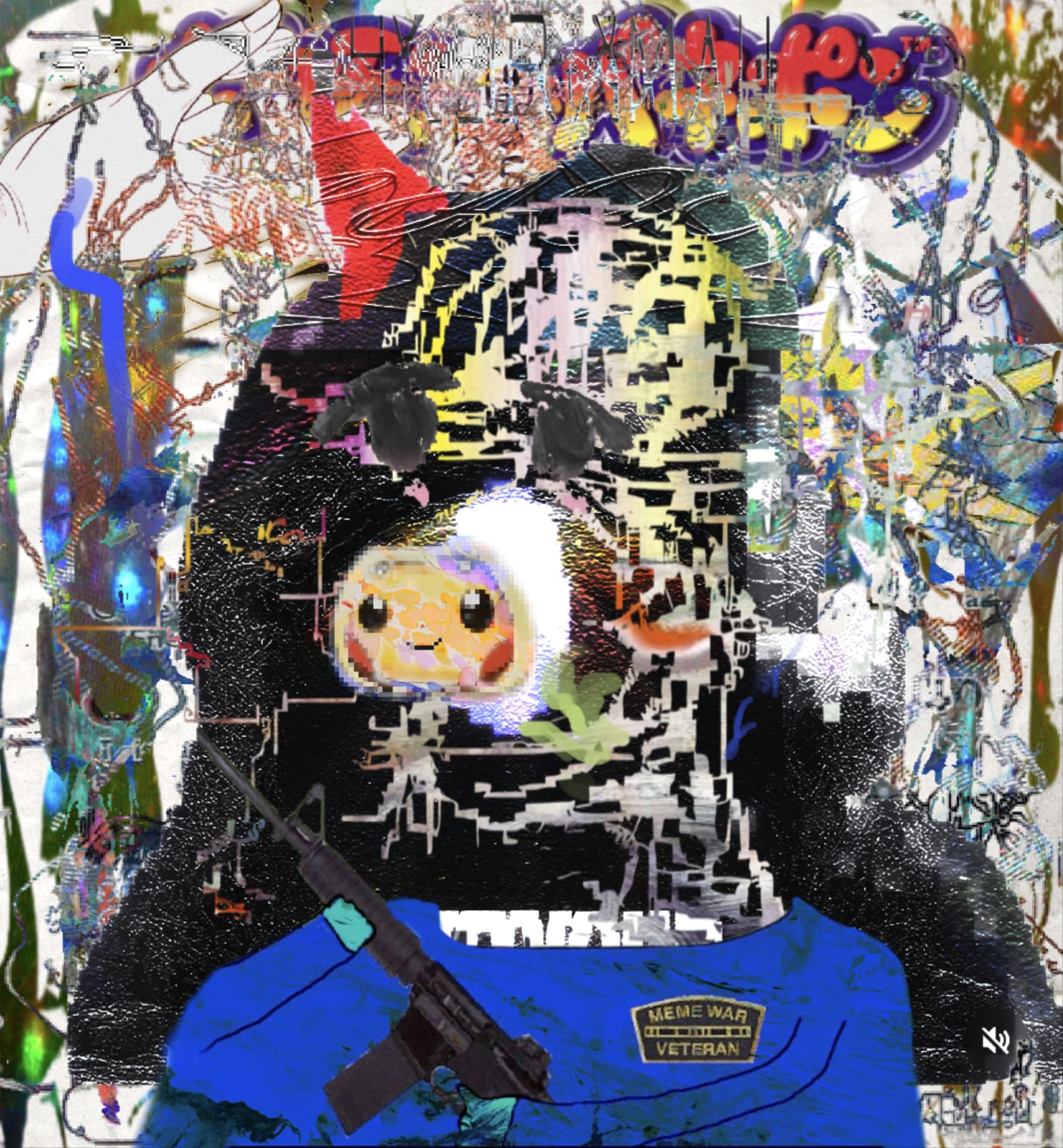
“Sometimes you see a painting that just emotionally provokes you. I think this is how the Solana Avant scene is. It's unexplainable to the outside world.” — Conrad House 28:24
And it really targets painting. It has so many art historical references about the tradition of painting. And that, to me, was something I've never seen before. And the way that also connects with internet culture, it's definitely something very unique. Territory that nobody has explored over the last years. It has been fun following from a distance.
Peter Bauman: Parker Ito, his work, I think it's really incredible. Just the fact that it has these two elements, it has the formal and figurative qualities, and then all these recognizable mimetic cultural touchstones that I think for people that have grown up with the internet over the last 20, 30 years, those things mean a lot. And it speaks that language. And it speaks it in a way that it's different. It's not better or worse, but it's different in a way that the purely abstract geometric work, maybe not purely, but the vast majority of abstract geometric work on fxhash and Art Blocks do. And maybe some people prefer, maybe people will prefer, the simplicity of pure geometric abstraction.
What I really like about the Solana scene, and Conrad, you mentioned it too, is that it isn't new. I remember about a year ago talking to 113 about Remilia and Milady, and it was the first time that I had heard about it in a serious way. I had heard about it before. I looked into it a bit more deeply at that time, about a year ago. I remember being a little afraid. I remember thinking, once you look into Remilia and Charlotte Fang, I remember thinking, oh dear. Okay. Well, that's that. Then also, maybe around that time, I looked into the Solana meme coin trenches, and I was also similarly taken aback, maybe.
Putting those two things together, I think that maybe I unfairly lumped in the Solana art scene with the ETH Milady scene, and then maybe with the worst of the Solana meme coin trenches. But there's no question the art being done there by Parker, but also people like Biscuit, Tojiba and Bosch, is some of the most interesting work being done right now. Jared Madere called Drifella 2 the most interesting painting conversation in the last 30 years. This isn't somebody who, I think, says that flippantly. This is somebody who actually knows a lot about the painting of the last 30 years, him and Parker. I really think that what's happening with Jared and Worm and Parker and Biscuit and all these guys, VVV, is exciting to me and very refreshing.
One of the reasons that I think it's also interesting is that, again, I think you can't help but compare it to some of those earlier movements that originally got us into this space. I wonder from you guys, how do you think that this Solana Avant compares and contrasts to... What is the best comparison? Is it fxhash? Is it Hic et Nunc? Is it Art Blocks? Maybe we can start there. And then how does it compare and contrast?
Conrad House: In a lot of ways, it's apples to oranges. They're almost uncomparable because it's a whole new thing in and of itself. And like you said, the roots from the Remilia scene or the Solana degen trenches scene, the way that it emerged is completely unique compared to maybe the way fxhash or Hic et Nunc emerged. But I think mine is just, yeah, what I mentioned before. I think the thing that is so... is this hardcore nature to stick to Solana and this being their home. And this is where the Avant scene is happening. And anything remotely similar to this movement is all happening on Solana. We're not seeing it happen really on ETH that much, and we're not seeing it happen on Tezos that much. I think that's what makes it so reminiscent of things like fxhash and Hic et Nunc, is that it's created its own home chain to some degree. And it's really boosted that chain's art scene just because of this one movement. So the same way that Hic et Nunc boosted the Tezos scene and fxhash boosted the Tezos scene and Art Blocks boosted the ETH scene, it's its own homegrown, I think, unicorn to some degree. So I think that's where I see the most similarities.
Peter Bauman: What I think is the main difference is the people that it's attracted. So I think that the fxhash and Art Blocks crowd attracted artists, engineers, and engineers who were creative and experimentalists and wanted to then explore with the blockchain, but probably, for the most part, didn't have a huge background in something like traditional art history or painting, or even, I would say, contemporary art for the most part.
But I would say that what this VVV scene in particular has brought is people with a painting background and people who love painting, people who understand painting and that composition. They brought that energy. That's a different artistic energy than maybe what more of an engineer brings. I don't know if it's cooler. I wouldn't say it's more authentic, but there's something about it that people who not only understand painting, but then can translate that, like Biscuit does with Drifella 2 and Drifella III, into collections that both essentially have 10,000 pieces, is, I think, a real display of talent that, again, I haven't maybe necessarily seen.
And I also think if you're not really familiar with the space, it's maybe easy to look at one Drifella and dismiss it, or just the entire collection, or just the name. Oh, it sounds... Drifella 2. But there's a one, and what is Mifella, and what is Drilady? Once you get bogged down in all that, it's easy to be like, I'm out. But if you stick with it and if you can try to meet it at its level, I think it's incredibly rich and rewarding and exciting. Like Jared said, most interesting painting conversation in the last 30 years with Drifella 2. I don't know. I don't know enough about painting to make that statement, but I think it's definitely some of the most interesting generative, coded work that's come out over the last few years.
thefunnyguys: One thing that's also really interesting, I think, to see is that I think in general, the Art Blocks, fxhash crowd, a lot of people are... Maybe it's because of the type of art, but it might also be because of the Ethereum infrastructure. But a lot of people are in their 30s, 40s. You're an outlier if you're younger than 30, I would say. If you're 27, you're one of the young guys. But I believe Jared was saying that a very large part of the user base is between the age of 16 and 23. And that to me was mind-boggling. We don't really have digital art collectors that young anywhere else. Also in long-form gen art, people are typically quite a bit older.
And I think there's many different reasons for that. I think it's the way that... there's memes in these collections, but also the accessibility of the Solana network. They have really good wallet providers like Phantom. Transactions are basically for free. A lot of these collections were distributed almost for free or for a few dollars. That's the type of stuff that someone who's 16 can actually buy into with just a bit of pocket money. They can't afford an Art Blocks mint. It's like a gas war where you need to have hundreds of dollars just to have a shot at getting a piece.
Peter Bauman: Yeah, there's an honesty and an approachability to the work that's refreshing. It isn't being shilled by people that have been around for years and they're clearly just pumping their bags. It's people that like it because it's compelling work. I can understand why young people like it too.
Like you were saying, Jan, it speaks the language of the internet, but also it's honest, it's financially approachable, but it's got the sense of irony and deep cynicism of, I think, young people on the internet who look towards the future and don't really love it, and see and feel maybe the most alive online. Maybe it shouldn't feel that way. There's a lot of conflict in more ways than one in the work. It's called Poe's law, where you're not sure whether anything that you read online is ever sincere or whether there's a wink. I think there's so much to that in this work. There's a cultural depth and a layer to it that I find difficult for abstract art to approach and to touch, personally.
We're all intrigued, certainly, to maybe different levels. It's caught our attention and a lot of people's attention. That also brings us to maybe one of the other main themes of this quarter, which is a renewed sense of optimism, I think, in the space. I think part of that has been just number go up, basically. ETH and TEZ rallying against Bitcoin in the third quarter, almost 100%. I think ETH went from around 2,000-something to now over 4,000. That has helped sentiment. A lot of these assets are denominated in ETH. I think that helped sentiment more than the Bitcoin rise. I don't think it's surprising that it trailed the Bitcoin rise. Who knows what's going to happen in the future. But the quarter has definitely been marked by, I think, some tailwinds in terms of the macro sentiment. What do you guys think about just the vibe, the feeling of this quarter?
Conrad House: Yeah, the fervor has been reinvigorated as the number goes up. And this is always to be expected. When everything is so tied to crypto fiat prices and people's emotions are so attached to it, no matter how much they want to say it isn't or it is, it's a big part of the space. And the space is noticeably different when ETH is at 4K compared to when it's at 1,500. You see many new faces that weren't there before that reintroduce themselves and come back in, and interest in certain works goes up and down. And there's more life in the crowd, maybe not due to the right reasons, obviously. It's not just because, oh, people are getting more interested because the art has gotten more interesting. It's, oh, people have gotten more interested because the prices have gotten more interesting and the prices have gone up. So it's something that we've been through before, so there's not, I don't think, much to add to it. We've been through this roller coaster of lows and highs before. So it's to be expected. The more interesting thing is to see how the crowd reacts after we go through another low, after this high. That is what I'll be eyeing towards.
thefunnyguys: Yeah, to me it felt like for some time there was some euphoria coming back, but then it quite quickly ebbed away as well. Right now, I don't know, it still feels a little bit calm. There's not that many sales happening. There's some pockets of very high energy, like the Solana scene. Also the NFT strategy side of things, which started with a punk strategy. That's taking a lot of liquidity away from NFTs. Of course, it flows back in other ways, but there's millions in trading volume, lots of NFT collectors who are speculating on those fungible tokens right now. They can also have an impact. But overall, at least neutral vibes, I guess. And maybe it's good that nobody is euphoric at the moment.
Peter Bauman: Yeah, I agree that the markets aren't exactly scorching. One thing that's interesting that just struck me, the difference between this quarter and last is, have we even really said the words AI yet? Which is definitely a departure from the last few discussions that we've had about major trends and things like that.
If there is a renewed sense of optimism, although we don't necessarily all think that it's hugely optimistic, I do think that if you were to ask people in more traditional art spaces, what's the sentiment, there would be no talk of any optimism. It seems like the last few years have been tough for the traditional art market, and now 2025 seems to represent some final capitulation and more of an acceptance, whereas before there was always a bit of a defensive tone about some of the negativity.
What we like to do on these calls is track that relationship between that traditional world and our space, the digital space, the digital/Web3 space and ecosystem and its economy and its art. The last quarter they were in unison, essentially, both down, both down bad, basically. It does seem like this quarter, what we can say is that with all these traditional galleries closing, that includes spaces like Clearing and Venus Over Manhattan. With all those spaces closing, there's been two reasons, I think. One, it's pretty simple in that respect, if you really look at it from a macro level, is that they're getting crushed by high overhead from rent and fairs, and then sales are too low to really make up for that.
What I think is interesting is that, again, if you compare this quarter to last quarter, now it seems like the traditional market has fully capitulated with these gallery closings, whereas our space seems to, if not plateaued, at least stabilized and maybe even gone up a little bit. I do think that that's interesting, that we are tracking the sentiment of both of these spaces, and they were in unison, and now they do seem to have departed.
Conrad House: If you just look at typical floor prices, USD prices of collections, they have gone up in the past quarter. But this is obviously due to a large part of ETH nearly doubling in price over the past time. So it's hard to make a real comparison, because sales really aren't happening that much. It's not like market volume has drastically increased at all on any platform or anything.
I think it's more of an acceptance side on the traditional art world. We mentioned a bit earlier in the chat, they took the really hard cuts a few years back, whereas this past year or two years hasn't seen as much of a falling knife, whereas it's really just stabled out into this bottom down trend line of, wow, this is probably how it's going to be for the rest of the time. And I think that comes to a mode of acceptance where they took this really huge cut a couple of years ago, maybe three, four years ago, with the markets coming down so wide in traditional markets, that they thought, okay, well, maybe we will see how these next couple of years play out. Maybe we can see a renewed interest in it. And I think now that these couple of years have played out since that big crash, and they are not seeing a big renewed interest in these traditional markets, that they're finally at the point where, yeah, okay, we should just shut these traditional spaces down. Like you also mentioned, Peter, but maybe try to explore lower overhead avenues of presenting and selling art in different ways.
But I do think there's a bit of a difference, whereas I think the traditional art world right now is in this acceptance, low ebb phase right now, whereas the NFT market is maybe just obviously not super euphoric, but I think we're in a bit of a happier state. But this could also just be due to that ETH fiat price being so good, and that almost maybe being a Band-Aid to make us feel good about the space that we're in, even though market volumes in terms of USD isn't really anything to be smiling about.
thefunnyguys: I think also on the digital art side, as you mentioned on the traditional art side, all these organizations, they have huge overheads, and that's also what kills them, I guess, when the market turns and goes down.
I feel like on the digital art side, things are growing. There's new entities that are being spun up, whether that's Mimi opening a new gallery, VVV. They're doing quite well, have the gallery in New York. It's always a very small group, sometimes just one person, maybe three people who are super passionate, who really want to see digital art succeed, who bring these projects to life. I think in almost every case, they have to be very resourceful. They have to be creative. They don't have a lot of money. I think they also find developers with a passion for digital art who want to create their vision while also accepting a pay cut. They could make more money if they just went into the corporate world.
And that's also a similar story, actually, for us with Raster. That has been a two-person build-out. We're only one person in charge of the technical side of things. It's a new platform, but it's just two people who basically dedicated a year of their life to this new project. It's not like there's millions flowing into any of these entities. Mostly bootstrapped ventures.
“It's always a very small group, sometimes just one person, maybe three people who are super passionate, who really want to see digital art succeed, who bring these projects to life.” — thefunnyguys 47:47
Peter Bauman: Yeah, I think it's a good point that what is happening in these success stories is still happening at quite a small scale. One argument, I think, in favor of some divergence, which I think would be a positive spin, because if they're both bad, well, that's not great. But one argument in terms of divergence, and you talked about it, Jan, with Mimi expanding to London and the seeming success of things like VVV and Heft. I'd throw in on the digital side, online spaces like Verse and Fellowship and Transient, Feral File.
I'd say that one thing that makes me optimistic is not that if I chose one of them, I would know 100% that they will succeed. But what makes me optimistic more about the cohort in general is I think that they have fixed some structural issues that the traditional art world is still contending with and hasn't really shown signs that they're equipped to grapple with, at least in a timely manner.
We've talked about it a little bit already, but one of those is the crushing overhead. Gallery spaces in London or New York or LA can be very expensive. Then they also spend tens of thousands of dollars going to fairs. Just the economics doesn't seem to work. The Artnet Intelligence Report Mid-Year Review came out and basically laid it out. Reporting was done, talking to these galleries that have closed, and they just laid out that the economics don't work.
One of the reasons too is that they can't make up for that crushing overhead with sales when right now we're in a bit of a declining market. They don't have that many sales, so there's more volatility there. Instead of relying on a thousand small transactions, they're relying on maybe one large transaction. And so there's more variance. What happens if something happens to that one person, essentially? There's these fewer collectors, fewer transactions, high overheads. Those are issues that traditional galleries are going to have to solve. That's a puzzle that they've yet to show, really, except for maybe the largest ones, that they can successfully solve.
But it's something that I think that at least those places like VVV and Verse and Heft and Fellowship, they seem to have structurally realized that a better model is asset light. I don't think many of them have a physical space. Heft does, but they also recently raised, so they're a bit capital rich right now. Places like Verse and Fellowship are more nimble and don't have necessarily a permanent space that they pay rent at. That combined with things like the ability to be geographically nimble. And then also they're not relying on just a few collectors. They're relying on a larger group of thousands of collectors, hundreds of collectors, even if each of those individually is paying a lot less. I think that adds to their resiliency. I do think that those demonstrations that they've solved those structural issues is what gives them a bit of a leg up and what makes me a bit optimistic that there is a little bit of good news and divergence there.
thefunnyguys: I do feel like a lot of the problems that you described, Peter, for traditional art galleries, I feel like a lot of them also applied to some NFT/digital art platforms who already shut down over the last years, whether it's KnownOrigin or MakersPlace. There's quite a few of those who got really bloated in '21, '22, when price only went up and they hired really big teams. I think it's probably a similar story in traditional art. There have been periods where the market was growing a lot every year and it was some mania. These galleries hired teams that were just too large to survive a bear market.
So I guess it's also a cautionary tale for the new galleries, for Heft, Fellowship. I'm sure they will do really well. There will be periods where the amount is really high and the revenue is going up exponentially. Hopefully they don't over-hire. Hopefully they don't become bloated, so they can survive a downturn, which will also definitely come.
Peter Bauman: I think things like resilience and adaptability are what is going to really be the deciding factor in terms of whether these galleries succeed. And that's another thing that makes me confident about these more digital native spaces, as they seem to already be demonstrating that resilience.
We've talked a lot. We've been talking a lot about macro trends and themes. But now maybe we'll talk a little bit more about what Le Random itself has been up to this quarter, what the three of us have been high-level focusing on this quarter. How about we start with you, Conrad?
Conrad House: We talked about it a bit before, but with ETH drastically doubling, basically, in this quarter, the strategy for the collection changes pretty drastically. Your buying power is obviously extremely diminished on the secondary market. That is almost out the door at that point. And then you have to hope for these newer primary releases and these newer primary platforms being a bit adapted to that new or higher ETH price and that they repriced their primary releases.
But to just ignore these problems, one thing that we could do is just focus on commissions. And that's what we did with the quarter, was really hammer down on a couple of commissions that I think we'll talk about a bit later, but with Juan Rodríguez García and Copper Giloth. Focusing on commissions directly with artists, so we can ignore the financial obstacles that come with a rising fiat price and secondary markets and trying to hunt for certain pieces on secondary markets or OTC deals, with just working directly with artists and working with direct USD prices and avoiding crypto prices, becomes a big part of the strategy, I think, when we see ETH at this level. That was a big focus for, I think, the collection side of things this quarter.
You don't want to go too crazy when ETH is at $4,600, obviously. You have to be a bit more reserved. I think that comes with just doing commissions. It allows us to slow down. It allows us to talk to artists a bit more, which is always a good thing. That was a big focus. And I think we'll expand a bit more on those commissions a bit later when we talk about our favorite acquisitions of this quarter.
Peter Bauman: Yeah, that's really interesting about how the price has impacted the way that you think about collecting. And then, Jan, did you also want to tell us more about your work with Raster this quarter?
thefunnyguys: Yes, for sure. For maybe some background context, because I'm not sure all our listeners know about this: Le Random started in 2022. The NFT market was still relatively hot. We found a group of investors who wanted to support us, get behind this mission of building a digitally native generative art institution. So we raised money, we started building out a collection, we started creating a lot of high-quality content, started building out a brand. But in 2022, we probably would have expected the markets to be stronger by the end of 2025.
So along the way, we started to think about ways that we can make Le Random basically more resilient. What does a self-sustaining future for Le Random look like? How can we make sure we're not fully reliant on new investor inflows? How can we make sure we don't have to sell off the collection as soon as the market is not as positive for an extended period of time? And that's how the idea of Raster came into the picture.
The long term vision for Le Random and Raster is that both entities exist next to each other, with Le Random being the largest shareholder of Raster. Hopefully Raster can do well, can make digital art more accessible, can become a new base layer for digital art, where new collectors are onboarded and can start collecting digital art with relatively low friction. And if we succeed in that mission, Raster should become a profitable little business that over time can maybe even issue dividends to its shareholders. And that would be Le Random. That's how Le Random can hopefully stay alive for decades to come. And we can really see through this vision of building a digital native generative art institution.
That's just some clarification I wanted to provide, because a lot of people are a little bit confused. There's Raster, but there's also Le Random. How did these two go together? They're basically separate entities, but super tightly aligned, with Le Random being the largest shareholder in Raster. And there's a lot of beautiful synergies, I think, between the two entities. If Raster can make digital art more accessible, that's obviously also going to have a positive effect on how Le Random is perceived and how well our collection does and things like that. Really excited that we managed to launch Raster. And now, hopefully, over the next months and years, we can really build towards this future of having two successful entities that feed off each other for a very long time to come.
Peter Bauman: Yeah, there are definitely these synergies. And I think those include things like onboarding and thinking about how we can grow the space and just make the space more approachable to everybody. And that includes newcomers. That will trickle down to newcomers.
I also get asked, I'm sure you do, Conrad, are you involved with Raster? Or what are you doing with Raster? Assuming that we are. I think that's part of what we're doing now, is clarifying that you've been busy at Le Random and with the collection. Jan has been busy at Raster. And then I have been also busy at Le Random.
And so the editorial focus for this quarter, really on a critical approach to AI and looking at it in a way that was multifaceted, was not just thinking about it as a cheerleader, but looking at it from different critical perspectives. One of those was Hito Steyerl. So really honored to have her voice on Le Random and to be able to talk to her. She's been for years and decades one of the most prominent figures in the contemporary art world. And so to have her perspective and learn from her was really invaluable.
But it wasn't just Hito. We also had pieces by Brian Droitcour, Kevin Buist, Luba Elliott. I interviewed Sarah Meyohas, really an OG GAN artist from 2016. Minne Atairu, one of my favorite and one of the most prominent artists, who happens to include text, image and generative modeling in their more varied practice.
And then, of course, really interesting this quarter was Le Random's 100th article, which was a nice little milestone. And we had a little celebration by Jasia Reichardt, genuinely, who I could say is my hero and the person I look up to the most. Her writing our 100th piece really meant a lot to me. We'll always be grateful. I'm just proud that that will be part of Le Random's history, and it means a lot.
Well, we had a busy quarter. The space had a busy quarter, and maybe now we can go less macro and now a bit more micro in terms of the specific things that we liked this quarter. And maybe we can start with the group exhibitions or the group releases of the year. So that could be a museum or a gallery group exhibition, or it could be some commercial group release. But what were your favorite group exhibitions or releases of the year? How about you, Conrad?
Conrad House: I guess I'll touch on one that is a bit more digital and then one that's a bit more physical for group exhibitions. But for digital, it would be the NetEvil exhibition that occurred on Feral File that was curated by Mackenzie Devonport and featured artists like Maya Man, Lorna Mills, Ann Hirsch, Databotz and others. It was this invitation of seven artists that got assigned to one of these Seven Deadly Sins. And then they created a piece that explored the way that sin was expanded on through a specific internet online lens. So it's really fascinating to see. I think, for example, Maya Man had Envy, and her piece revolved around this influencer scandal where these two influencers had a lawsuit where one was accusing the other of ripping them off and ripping off their brand. Kind of explored the side of envy that occurs with these online social media presences and influences in the world. It was just a really fascinating show. I love a lot what Mackenzie puts out there and obviously what Feral File puts out there. Seeing them work together and release NetEvil was really fascinating. I loved a lot of the work that was in there, and I loved the curatorial note and theme of exploring these deadly sins and how they express themselves through this online culture that we all grew up in.
Then for the non-digital side of things, this is obviously going to touch on what we talked about with the Solana scene a lot, is the Yeche Lange gallery show, One of Us Is Real and It's Not You, which is, I think, actually still ongoing. It's in, I think, its last few days as you're listening to this, but very great exhibition. The space looks lovely. They have the Mons chess boards laid out. They have the Drifella triptychs on the wall. Really fascinating show. It's really incredible to see that gallery in and of itself emerging to really represent this scene that we've been talking about a lot earlier in the show. But I think those are the two that have really stood out to me, one on the digital side, one on the more physical side.
Peter Bauman: So I didn't know you were going to say the Yeche Lange show, but that was one of mine. It was Super Metal Bosch and Evil Biscuit. So it was this small group show with those two. One of the reasons why I liked it so much is because it has work from the Drifella series, and also Drifella III, which, spoiler, I'll be talking about a little bit later.
But the other exhibition that I was going to talk about and highlight from this quarter, do we really need to bring it up again, but it's Infinite Images. I think it was one of those significant moments that it's going to be in the timeline. It's going to be something that we look back at the end of the year talk and we think, okay, what were the big moments of this year? Infinite Images is definitely going to be at the top or one of the top. I think it's worth mentioning it brought a lot of people and artists from our space and brought some attention to a museum context that hasn't historically focused on the digital.
At Le Random, we covered it from every angle. We spoke with the curator, Julia Kaganskiy. We had a talk with several of the exhibiting artists, including Sofia Crespo and Tyler Hobbs and Erick Calderon. We also had written pieces with Sarah Meyohas and DEAFBEEF. Then we had Kevin Buist review the show. We took it seriously, and it deserved to be taken seriously. It was definitely one of the highlights of the quarter and the year.
Those were the group exhibitions and the group shows. What about the solo exhibition, solo work of the year that we like? How about Jan, do you want to tell us your favorite?
thefunnyguys: Yeah, sure. On the personal collecting side, I'm not sure if you guys have noticed, but this quarter I've also collected quite a bit of figurative works. There's one artist called yuri_jjj whose work I really love. It's at the intersection of figurative work similar to David Hockney's, but also digital textures, like Pixel Rugs by Travess Smalley. And it really resonates with me.
In that light, I did visit the David Hockney exhibition in Paris this quarter as well. I'm not sure if you guys have heard about it, but it's probably one of the most comprehensive exhibitions of his work, from the early days in Yorkshire when he was still at art school, his work when he was living in LA, his iPad drawings. Everything was basically there. I do really like his work. I find him very joyful. That makes me happy, to go visit a David Hockney exhibition. It's in line with this other scene of digitally native figurative artists, people like Yuri, RJ. I think it's a scene that's mostly active on Tezos, but they've also received quite a bit of love over the last months. It's work that really resonates with me personally.
Just last weekend, I was at Fellowship for a dinner with Kim Asendorf. You can't really call that an exhibition, but it was basically in Studio 137, his house/gallery in London. There was a few dinner tables. A lot of Kim Asendorf collectors came to London, and they also installed an enormous LG screen in the same room. Kim was there as well. They showed a lot of Monogrids on the screen, pixel decks. He also showed some of his work that he's currently working on, but maybe released in the near future. And that was just a really, really awesome experience. I guess it wasn't some type of exhibition, but a very informal one. It was awesome to hear Kim talk about the work and how he sees his work and the breakthrough that Monogrids was. I really got a lot of context on his practice from that night.
Peter Bauman: Yeah, amazing. I think probably if you're going to talk about artists who really broke through this quarter, Kim would be up there. One thing I wanted to mention too, that we didn't say about the exhibition side, is that Ars Electronica and SIGGRAPH both happened this quarter, and they both had several really interesting non-commercial digital art exhibitions.
I guess from my solo work that I wanted to highlight, I've said the word already. It's confusing, but it's Drifella III. It came out, I think, in September. I missed the mint. I was not quite tuned in to mint it or anything. It took me a couple of weeks before I sunk my teeth into it. I looked into Drifella 1 and 2 a lot more first. But then when I finally did look at Drifella III, genuinely, I was blown away.
They followed the style that you mentioned earlier, Conrad, that Brian spoke about and did a thread about, called schizo-collage. It's also known as trait maxing. What I think is really interesting about the work: it has this trait maxing itself as this aesthetic, or hyper collage is another thing that Evil Biscuit themselves refers to it as. It's a way to compose, it's a way to literally paint. If you look at Drifella III, they're all triptychs, so that adds to their complexity right away. You're looking at three images, and it's not just one in isolation. It's how they all relate to each other and how they look next to each other. They look like paintings. They look like paintings that would be hung in a contemporary gallery space with little things strewn on the floor. They have the aesthetic sensitivity of somebody who is, I think, deeply attuned to the language of painting and its aesthetic.
I think one of the reasons why I really like that Yeche Lange exhibition that Conrad mentioned is that that was a way to also bring those pieces to life in that space in New York. And so some of the more special Drifella IIIs actually were presented in physical form in the gallery. I think Drifella III, the fact that it also had this physical component, the fact that it was the culmination of this series, it was in conversation with Drifella 2 that we've already talked about, is this really revered project in this space. Drifella III took those aesthetic concerns really to this extreme that I found really visually compelling, especially once I sunk my teeth into it. Going through that progression of understanding it from Drifella 1 to Drifella 2 first, and it really, really blew me away. I think it is incredibly strong work.
I guess that also brings us to the artist who stood out this quarter for us. We mentioned SIGGRAPH and the fact that Frieder Nake won the 2025 SIGGRAPH Distinguished Artist Award for Lifetime Achievement. That was really special because I was on the jury for that and helped select him. So obviously Frieder is abundantly deserving. And Conrad, thank you for pointing him out. And then, Conrad, how about you? Who were the artists that stood out for you this quarter?
Conrad House: Yeah, I think it's nothing that we haven't talked on already, but a lot of the Solana artists have been really great to see how they've progressed this quarter. Again, it's nothing new. They've had their work out for more than this quarter, but it's really interesting to see them getting more recognition, whether that's Bosch, Parker, Biscuit or Toji. They've really stood out. It's really interesting to see how their space is growing and how they're adapting to it.
Frieder Nake, of course, again, he didn't really create any new work this quarter that we're familiar with, but just the fact that he won that SIGGRAPH Award, I think, is a standout thing and should be praised a bit. I think, again, Harm van den Dorpel, obviously, I think was a bit of a standout with Quantizer, and then Copper Giloth, which we'll, I think, talk about a bit more with our favorite acquisitions. But those are the few artists that, I think, have stuck in my mind throughout this quarter.
Peter Bauman: I would just add Sasha, the fact that she premiered a living poem at MoMA. I think it's a really significant moment for not only her, but for this entire space. In terms of acquisitions, what were the acquisitions that stood out specifically to you this quarter, Conrad?
Conrad House: It would have to be the Juan R.G., or Juan Rodríguez García, commission that we were able to finalize this quarter. This was a commission that took nearly a year in creation. We initially came to Juan with the idea of wanting to commission a real-time software work that explored the figurative body, anatomical nature or theme that he had been exploring for a long time now.
I think every commission, every artist we collect is always so rewarding. But I think Juan just personally was a bit different. Juan was somebody that I had really grown attuned to when I was first collecting personally in the NFT space and his early objkt mints, and just trying to familiarize myself more with generative art, and Juan being a figure that had these daily shares that I'd always look forward to and somebody that I had grown an affinity for as an artist and always looked up to.
Being able to commission this, at least to me, it seems like a very pinnacle piece of work in his career, as a one-of-one, unique long-form software piece that really encapsulates all of his architectural anatomical inspirations into one conceptual piece too, of inhabiting the moment, where it's this real-time animation piece that quickly moves through these compositions, and it forces the viewer to really sit and embrace these changes. It's really fascinating. Just hearing him talk about the work with Sofia García, who we were able to arrange an interview with, was really fascinating. Hearing how he feels about the work, how he wants others to feel about the work, where his inspiration comes from, really stood out and was by far, I think, the favorite acquisition for this quarter for me.
thefunnyguys: I was going to say the same name, Conrad. Juan R.G. The commission we did from him. Yes, definitely also up there for me. Some other really exciting acquisitions are also Quantizer by Harm van den Dorpel. I have to say, as well as EDG, his series Zero Revenues Symmetry. Both of these were at Verse. So I guess I have to give it to Verse. They knocked it out of the park with both of these releases.
I feel like they're both part of this theme of also artificial intelligence, artificial life, but not in the very big data and neural network type of way. But in EDG's case, these emergent systems where it can create lifelike structures with a very limited amount of code, Harm van den Dorpel with these genetic algorithms. I just think in general that this type of work is often a little bit maybe underappreciated. Those are some of my favorite acquisitions of this quarter. I think both releases were incredibly strong.
Peter Bauman: Yeah, I would echo that. And then I would also add Copper Giloth and that commission to the favorites. We mentioned her earlier, but she's another hero of mine. She is really this seminal figure in the history of digital art with what she did both as an artist and maybe the first video game artist, and what she did organizing the SIGGRAPH computer art shows that were really important. And then what she's done as an educator and what she's done as a feminist video artist. I just think she's really underappreciated. So well done on us for supporting her and acquiring her work.
And then maybe we'll wrap up with two things. One, a couple of pieces of what content excited us this quarter, and then one quick look at what's coming up for us this quarter. For me, I think I already said the content that really stood out for me. That was that 100th article by Jasia Reichardt, the myth, the legend, the Cybernetic Serendipity from 1968 curator, the scholar. Again, like I said, my genuine hero. That was the piece for me. What about you, Conrad? What content stood out for you this quarter?
Conrad House: Yeah, mine is, again, we touched on it a bit before, but the DEAFBEEF article that we released during the Infinite Images ongoing excitement, "DEAFBEEF on the Vernacular in a Standardized Age," where he talks about the physicality of his piece, specifically in the Toledo Museum. I think a lot of this chat we've talked about, just in regards to the Solana scene, the chronically online nature of the space we live in and the almost forced nature of us wanting to keep pushing every part of our life into this digital space. But it was nice to read this DEAFBEEF article. He takes a step back where he talks about the electricity and the iron, and he likes the feel of it. He likes the smell of it. He likes the way that working with these physical materials changes his psychological way and how he wakes up thinking in different ways. It was a really fascinating piece.
Again, I think also thefunnyguys mentioned it, but it was one of his favorite pieces of the Toledo show. I would also resonate the same thing, with the Glitch Box physical installation being incredible and the ways that he created his own fine-tune board where you can adjust the parameters, and seeing videos of young kids at this really barbaric iron machine, messing around with it and seeing their enjoyment was really fascinating. That article was really great. I think DEAFBEEF is just always fascinating to hear from. Anything from him is always going to be at the top of my list.
thefunnyguys: Yeah, I'm going to highlight the interview you did, Peter, with Minne Atairu. I feel like in general, her practice is super interesting. She uses AI in a quite unique way. There's not that many artists who are using AI as a tool for activism, as you described in the article. She definitely has more of a critical lens of the technology. She investigates the biases, racial, cultural biases. Besides her work with the braids, which I think you talk about quite a bit in the article, she has created quite a few very interesting AI collections. I remember her project with the Benin Bronzes, for which she won the Global South Lumen Prize a few years ago. So it was a really interesting way to use AI to basically reconstruct lost artistic heritage of a region. There was also her early work that she minted on Foundation where she had created this custom-trained AI model using makeup editorials from Instagram, which I thought was really terrific. I think the article, the interview that you did with her, was a really good insight into the way she thinks about her practice. It's quite rare. She's not that widely featured. She doesn't talk that much in depth about her practice. I'm really happy that we got to give her the opportunity to talk about her practice to our audience.
Peter Bauman: Thanks for the kind words. She's someone top of mind when I think of people that are really using some of those generative models in a compelling way that often gets flattened and overlooked.
Well, we've been talking for a lot, but I guess it was a busy quarter, and we can talk about maybe what we're looking forward to coming up in just the last minute or two. The main thing for Le Random would be, I think, in terms of physical appearance and where we'll be supporting something in person, it's FEMGEN 4 in Paris during Art Basel, and it is October 21st. We're supporting it. There's a really great list of contemporary artists involved: Gretchen Andrew, Hermine Bourdin, Saeko Ehara, Jake Elwes. And then we have Copper Giloth, who we've mentioned. She will also be there on a panel. So we're really excited about FEMGEN 4.
And then just for the rest of the year, for me, on the editorial side, I'm really excited about sinking my teeth more into that Solana Avant scene from an editorial perspective. So there's going to be... It's coming. And then I'm also looking forward to our London Art Guide that's going to coincide with Frieze London. Also keeping my eye on that NeurIPS conference in December. But it'll be a big fourth quarter, undoubtedly, too. But what are you guys looking forward to?
thefunnyguys: For me, it's also FEMGEN, Peter. I'm really excited for that. I think Art Basel Paris is going to be a great one, not only for FEMGEN and Artverse. I think the generative art crew in France is also going to do something really interesting with William Mapan, Florian Zumbrunn and a few others. So I'm quite excited for that week. It's a good reminder that I need to book my accommodation and my train tickets.
Conrad House: Yeah, I'm more on the artwork side. I'm really excited for a collection that is actually releasing today or tomorrow as of the time of recording, which is Riffs by Hash Runner, which is a new protocol-based art series where he's basically decompiling/compiling Solidity code into these bytecode compositions of different ASCII forms, which is really wonderful. I think in previous quarter talks we've talked about protocol art a bit more, in our excitement for it, to see people dive into it a bit more. So again, I still think it's a very unexplored region of this digital art space that we're in, and people are really taking the time to work with the literal contracts that they have at their hands to create new interactive protocol art. So this is really exciting. The pieces that we've already seen emerging look really great and just cool, very conceptual project by Hash Runner.
And then in terms of exhibitions, what I'm looking forward to is the Gysin-Vanetti Bear Systems exhibition that is going to be happening at the MUD Shanghai, which is curated by Mimi, actually. Again, I love that duo. I love whatever they create, so I'm sure whatever they come out with in Shanghai is going to be incredible. And look forward to seeing pictures that arise from that event.
Peter Bauman: Yeah, amazing. I think the fourth quarter of 2025 and Marfa, Miami, Basel, there's always stuff to look forward to. Big events. Well, guys, quarter three was big. It was a lot to digest, but I always enjoy doing it with you guys, with you as a sounding board, and to bounce some of these ideas off. So thank you all very much. And thank everybody for listening. And we'll see you soon.
thefunnyguys: Thank you, Peter. Thank you for hosting us. Bye, guys.
Conrad House: Bye, guys.