

Suggested Reading
Interview
Evergreen
Frieder Nake on “Machinic” Miracles
Peter Bauman
•
March 2, 2026
View


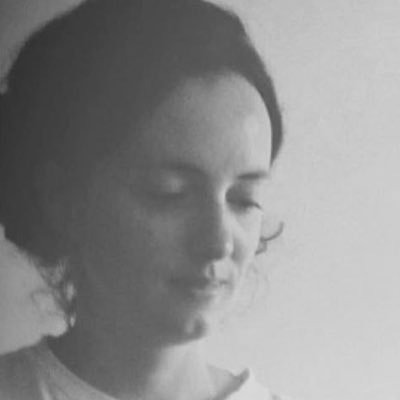

Gottfried Jäger reflects on how he helped define Generative Photography as a practice grounded in systems, light and mathematics. Looking back with Anika Meier across more than half a century, he considers how his earlier experiments resonate with today’s AI-driven image culture.
Few figures have shaped the discourse around photography as persistently and rigorously as Gottfried Jäger. Emerging in postwar Germany at a time when photography was still fighting for artistic legitimacy, Jäger did not pursue the path of subjective expression or documentary realism that dominated the medium in the 1950s and ‘60s.
Instead, he turned toward light and systems. Jäger introduced and theoretically framed the concept of Generative Fotografie (Generative Photography) in the late 1960s. He used the term to describe a rule-based, system-oriented photographic practice grounded in mathematical structures, seriality, and autonomous image production. At a time when many declared photography either subordinate to painting or bound to representation, Jäger insisted on its independent, image-forming capacity.
The 1968 exhibition Generative Fotografie, in Bielefeld, Germany, became a signal moment for this approach. In dialogue with figures such as Pierre Cordier, Hein Gravenhorst, Kilian Breier and Herbert W. Franke, Jäger positioned photography within a lineage that connected cybernetics, mathematics, and aesthetic theory. Long before the current conversations around algorithmic art and generative AI, he was exploring how rule-based systems could produce visual form. His practice combined art, science and pedagogy, a field he would cultivate for decades in academia and advocacy for photography as an autonomous discipline.

In this conversation, Jäger reflects on his beginnings in his father’s photographic studio, the intellectual battles over whether photography could be considered art at all, and the emergence of Generative Photography as both artistic and theoretical proposition. Looking back across more than half a century of work, he situates past struggles within the present moment, where questions of automation and image generation once again reshape what photography can be.
Jäger’s work is currently presented in the exhibition I’ve Missed Our Conversations: On AI, Emotions, and Being Human at Schlachter 151 by OOR Studio, curated by Anika Meier, on view until 12 March 2026. Placing Jäger’s work in dialogue with current AI practices, the exhibition highlights that generative image-making is part of a longer lineage.
Anika Meier: What inspired you about photography? And what led you to expand photography in an artistic direction?
Gottfried Jäger: My first photographic role model was my father, Ernst Jäger (1903–1998). Together with my mother, he opened a studio for modern camera portraits in 1932 in Burg near Magdeburg in Germany. It was my birthplace and I grew up there.
The photo studio and the darkroom seemed to me like magical places, with their special equipment, sounds and smells. They impressed and shaped me.
After the war, my father continued to run his studio into old age, maintaining a strong artistic ambition: a life with and from photography.
I, too, became a photographer: apprentice, journeyman, photography student, photo engineer. With my first job after graduating from the State Higher Technical School for Photography in Cologne, I became a teacher of photographic technology at the Werkkunstschule in Bielefeld. There I experienced nothing less than a second course of study.
Alongside teaching photographic optics, photochemistry and photographic-technical processes, I was able to expand my own field and explore it creatively. The results of my images took shape and a rethinking began with regard to the ideas and practice of my discipline, which had originally been oriented toward faithful representation.
Pure light images emerged.
Anika Meier: When did you know you wanted to become an artist?
Gottfried Jäger: As I had not undertaken a formal artistic education, “art” was unfamiliar territory to me; accordingly, I used the term rather defensively. I entered the field through practice. At first this took the form of solo exhibitions: in 1964 with light graphics and photograms at the Otto Fischer Art Salon in Bielefeld and at Galerie Clasing in Münster. Of importance to me was my participation in the exhibition Photography ’65 in Bruges, which connected me to the experimental European photography scene. These included the Belgian Pierre Cordier and the Swiss photographers Roger Humbert and René Mächler.
.jpg)
Decisive for my path toward photographic art, however, was the exhibition Generative Photography, which I myself conceived and installed in 1968 at the Kunsthaus Bielefeld. It became a signal for concrete-constructive, serial photographic work and brought together my pinhole-aperture structures with Cordier’s chemigrams, Kilian Breier’s luminograms and Hein Gravenhorst’s photomechanical transformations.
The theoretical “mind” behind it was Herbert W. Franke, with a text on the foundations of a cybernetic theory of art. It was here that I knew this kind of “art” would be my field of activity in the future. Seven years later, this was confirmed in a book I co-authored with my longtime friend and Bielefeld colleague Karl Martin Holzhäuser.
Anika Meier: When did you first call yourself an artist?
Gottfried Jäger: I was always reserved about using that term and felt one had to earn it. Only after achieving certain successes in the field did I begin to use it more assertively. Now I use it quite naturally, especially in order to justify administrative matters, for example in copyright and tax law.
Anika Meier: How do you define success for yourself? Artists today who work in the field of NFTs often associate success with financial success. That did not exist back then.
Gottfried Jäger: Success means recognition of one’s own work by others, particularly by one’s own role models. For me, originally a craftsman and trained engineer, participation in the art world and the art market represented a different, lofty goal. It included engaging with art history and art theory. So I began to write.
What prompted this were statements that challenged me, including “Photography can never be art” by Pawek or Albert Renger-Patzsch’s description of art photography as a “dubious genre: neither art nor photography.” That sentence had already annoyed me during my studies. The book Photography – an Illegitimate Art deepened the divide. All of these provoked my opposition and challenged me to stand up for a photography that, alongside the recognized medium of faithful representation, is equally significant as an image-forming discipline.
Anika Meier: In 1960 you were appointed as a lecturer at the Werkkunstschule Bielefeld. In 1973 you became a professor at the newly founded Fachhochschule Bielefeld. You were not under the necessity of having to assert yourself on the art market or to shape your path as an artist in such a way that you could make a living from sales. Did you experience this as liberating for your art?
Gottfried Jäger: By now, the trench battles mentioned earlier have long been fought out. Everything is possible with everything and material success seems to be the primary measure. As a professor, however, this aspect did not play an existential role for me. My family was financially secure.
All the more, I saw my task in free photo-aesthetic image research, using experimental investigations and revealing their generative potential.
My initially distant goal was the recognition of photography not solely as an object-based, faithfully representational medium, but as an autonomous, image-forming discipline.

Anika Meier: You kindly refer readers to your own writings on the theory of photography and on the history of Generative Photography. The majority of these texts were published in German, as were many of Herbert W. Franke’s publications.
The Herbert W. Franke Foundation, for example, is currently preparing an English publication of Art and Construction: Physics and Mathematics as a Photographic Experiment from 1957—a publication that strongly shaped your further path and, if I am correctly informed, was decisive a few years later in prompting you to contact Franke and visit him at his home in Wolfratshausen.
He became your friend and mentor. As early as his 1957 publication, he set himself a task that still, unfortunately, occupies us today: “People generally dismiss technology as a threat to art. I will attempt to demonstrate that it is not and even opens up previously unimagined artistic territory.”
Gottfried Jäger: Yes, art and photography, an eternal theme. It has accompanied and shaped the history of photography since its beginnings. Generations have struggled with it. But suddenly, it “worked.” And the market decided what was art—being or non-being—and granted both representational-realist and abstract-concrete photographs the status of works, with prices that confirmed this quality.
Today, one merges into the other, just as photography appears both as a medium of information and as a sovereign art object, each in its own distinct form. At present, representation and image generation are merging in “generative” AI, creating a new visual existence—its own mode of being.
Who would have thought that in 1968, when we, following the traces of Max Bense and his generative aesthetics, drew attention to a new kind of being? This time it was in our cherished field of photography.
Anika Meier: In your case, there was an additional level of difficulty. From the early 1960s onward, you created art using photographic means based on mathematical and, above all, comprehensible principles. What were the reactions at the time? And how have those reactions changed over the decades?
Gottfried Jäger: There is an apt text on this by the art historian Gerhard Glüher from 2006:
“For a long time I asked myself why a group of young men, thinking freely and full of new ideas, in the wild years around 1968, set out to pursue such an enormously dry, otherworldly, methodically disciplined and, at first glance, completely unemotional project—so far removed from the mainstream, from the Total Photography of a Karl Pawek or a Family of Man. … Outside, in the metropolises, life was raging … Yet this was a fundamentally democratic approach, namely the transparency, the traceability, and the crystal-clear didactics that lay behind all the experiments.”

Anika Meier: As we mentioned, most of the literature on Generative Photography has been published in German. Has the discourse so far been predominantly a German one? Generative Photography is, in a way, a response to—or the next chapter in—the history of photography, if one thinks of the Subjective Photography of Otto Steinert or later of the Bechers and the Düsseldorf School.
Gottfried Jäger: At the time, it was a new approach: Generative Photography as the visible expression of an exact, mathematically and natural-scientifically grounded aesthetic using photographic means.
It can be traced back to Pythagorean approaches to an aesthetics of numbers, such as the harmony of sounds based on numerically defined intervals. A rational, mathematically and scientifically founded doctrine of the beautiful thus experienced a kind of revival here, a medial renewal.
The Stuttgart school around Max Bense revitalized it in its own way with the instrument of calculation, the computer. Frieder Nake, Georg Nees and Michael Noll were among its early exponents. Herbert W. Franke was an early apologist. And it seemed obvious to us, the small group of generative photographers, indeed necessary, to link the specific competence of an apparatus-based, scientifically grounded medium such as photography with the new ideas of generative aesthetics—to pursue new, independent paths.
For a long time, these were regarded as opposing paths to the activities dominant in West Germany, represented by Otto Steinert and Karl Pawek, the protagonists of Subjective and Total Photography. In our view, they represented an elitist, outdated concept of art. A similar situation existed with the class aesthetics of Berthold Beiler in East Germany and his call for a partisan-socialist photography, which opposed our efforts with the disparaging term “formalism,” thereby drawing an existential boundary.
Still, it is good that you recall the names of the leading apologists of committed photography at that time. For a period, they were my colleagues and professors of photography: Steinert in Essen and Beiler in Leipzig. With Steinert the relationship remained rather distant. However, I developed a friendly, collegial relationship with his partner in Subjective Photography, J. A. Schmoll gen. Eisenwerth. I visited Beiler around Christmas 1975 at his place of work.
With Bernd and Hilla Becher, I shared little more than roughly the same year of birth. But our art and our teaching followed historically opposing photographic paths: they referred back to Albert Renger-Patzsch, whereas I followed the traces of Heinz Hajek-Halke and László Moholy-Nagy.
------
In the exhibition I’ve missed our conversations. On AI, Emotions, and Being Human, curated by Anika Meier at Schlachter 151 by OOR Studio, 20 artists reflect on how we live with artificial intelligence. In collaboration with Numéro Berlin and Fräulein. Powered by the Tezos Foundation, and with support by objkt.com.
------
Gottfried Jäger is a German photographer, theorist and historian whose work since the early 1960s has treated photography as an artistic object in its own right. A key figure in abstract and generative photography, he is known for series such as Gradations, Chromogenic Series, and Mosaics. He is also regarded for his contributions to early computer art, receiving the 2014 Culture Prize of the German Society for Photography.
Anika Meier is a Berlin-based writer and curator specializing in digital art. Meier teaches at the University of Applied Arts Vienna, curates the objkt labs Residency and co-founded The Second-Guess. She has written extensively, including for Monopol and Kunstforum.