
.jpg)
Suggested Reading
Article
Event
NODE's 10,000: Fast Art, Slow Looking
Peter Bauman
•
January 19, 2026
View


Famed investors and art collectors Micky Malka and Becky Kleiner speak with Peter Bauman (Monk Antony), sharing the story of their love for art. They also discuss how an attempt to showcase their own digital collection led to the founding of NODE, a Palo Alto hub designed for living, code-based art through dynamic exhibitions, artist-led presentation and hands-on education that brings new audiences into digital culture. NODE opens January 23, with 10,000, an exhibition by Matt Hall and John Watkinson curated by Amanda Schmitt and produced by Natalie Stone.
Peter Bauman: You’re these iconic fintech investors, which is a story you’ve talked about before. But I’m particularly curious about your art-collecting journey. Where did your love of art come from and how did a career in fintech investing in Silicon Valley lead you to art collecting?
Micky Malka: Thank you for doing this. It's the first time that Becky and I have done one of these together. But to answer your question, art collecting has been a part of our life journey since we were dating in our 20s. It's always reflected where we lived in so many ways. Both of us grew up in Venezuela, a place with an amazing art culture that was really blossoming in the '70s and '80s. We had a chance to grow up with it in the streets, in the highways, in the airport, in the universities that we attended, everywhere; it was everywhere.
For us, it started there as just simple kids that could not afford it but could actually enjoy it. We still see photos of Becky’s alma mater in Caracas, and we both go like, “It's just beautiful.” The auditorium was designed by Calder. The airport floor is Carlos Cruz-Diez, one of the great visual artists, who even inspired Snowfro’s Chromie Squiggles.
Becky Kleiner: Then you would drive on a highway and see sculptures by Soto. It was everywhere you looked; you were surrounded by art.
Micky Malka: Our journey then continued as immigrants from Venezuela because of the turmoil, which now is super obvious to the world, especially after the last month. We had a chance to travel a lot through Latin America. We lived in Brazil so we got exposed to other regional art. We started to fall in love with Brazilian artists and Argentine artists.
Our art collecting journey started there. It started with Venezuelan art and evolved to Latin American art with a particular focus on women artists.
Then we got to Silicon Valley. We've been here for a long, long time building the innovation economy of financial services, both in crypto and in traditional fintech. It was probably a fifteen-year journey to make it to Silicon Valley. Then it's been another eighteen-year journey here.
But for a long, long time, our art focus was very much on Latin American art because it was a way to anchor ourselves to our homes and what we were missing. We haven't been back in nearly twenty years so you miss it, right? Art was a way to reconnect.
Also, Becky and I are always grateful for where we are and how we learn. We missed the heyday of NFTs. I was in the middle of everything in crypto, and I did see the Punks; I did see CryptoKitties but I didn't do anything. It was just like a highway billboard; I passed it like it was nothing.
Only after it blew up in 2022 and we had a little bit of free time did we suddenly one day see a piece by the Mexican artist Juan Rodriguez Garcia. I stumbled on it from my Twitter feed. I don't know how. I was just looking at my feed and that piece resembled a piece that we had from a Latin American artist from the '70s.
Becky Kleiner: A Brazilian woman, yes, Beatriz Milhazes. When we saw that, we started to find more analogies between whatever we were seeing in NFTs and our actual traditional collection. We started to pair them. And that's how we started.
Micky Malka: Yes, everything was paired. We didn't start by going OG, OG with XCOPYs or Punks. Those were not our first purchases. It was all based on pairing with our traditional collection.
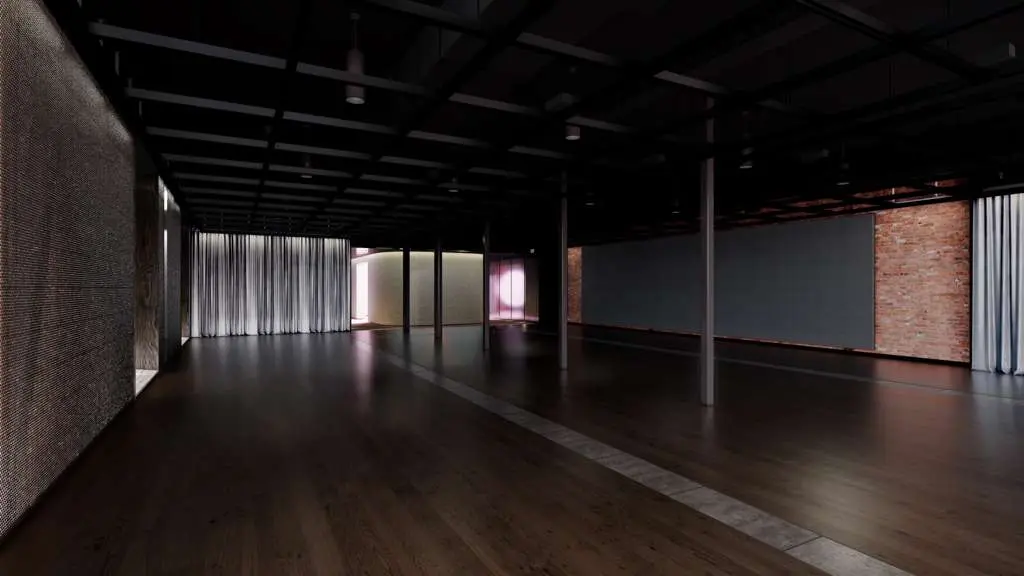
Then as we got to understand a little more and we got to realize the abilities of what this art form could do in terms of dynamism and movement, in the way you can express those things, we suddenly started to spend more and more time on it.
That's where our love for meeting the artist comes from. When we got to start meeting the artist in this world, it flipped us completely.
We probably still have done a few physical traditional art purchases but we've over-skewed the last three or four years to building an amazing digital collection.
Peter Bauman: When did you begin the traditional collection?
Becky Kleiner: Our first piece we bought twenty-five years ago and it was our only one for many, many, many years until maybe six years ago.
Micky Malka: I remember I got one from college so we had a couple. I asked my parents for a piece and chose an artwork that I liked.
Becky Kleiner: That's true. My siblings got one for us from a Venezuelan artist when we got married. So we had maybe three or four pieces and that's it. We moved from Venezuela to Brazil, back to Venezuela, and then to California.
But we always kept those four pieces with us. They traveled with us. As Micky said, it was a way for us to feel that we were at home no matter where. I would say that for many years. Then six years ago, we started to expand our traditional art collection.
Peter Bauman: That's a really interesting entry point into the more digital side with Juan Rodriguez Garcia. He's somebody that Le Random has commissioned from as well.
Micky Malka: We had a long meeting over breakfast with him. He's such a lovely person.
Peter Bauman: It really shows how important these personal connections are.
Becky Kleiner: Definitely, I think that is the driver.
Micky Malka: I think meeting Seth Goldstein and Phil Mohun from Bright Moments early was also one of those moments. Meeting Snowfro early in person in his home in Houston was another one. Sam Spratt in Venice was another one. And Michael Kozlowski in Venice was one, too. Going to Beeple’s studio the first time in Charleston two and a half, three years ago was probably as critical as any.
We remember meeting each one of these artists. We know exactly where we met. They're not only artists to us. I think all of them have been at our home or have stayed on our property, which just creates this situation where we can truly fall in love with the artist and their work, all together.
Peter Bauman: Fascinating. Once you started collecting and noticing more digital artists, what was the next step where you started finding problems you thought that an institution like NODE needed to solve?
Micky Malka: I would say two things. One, we saw it firsthand. We started putting some of this digital art in our home. We have it all over our office here, really. Behind, we have these physical Punk prints. We have some physical works by Mpkoz. We have a lot of Beeple Everydays in front of us.
And as we started to show them, two and a half years ago, around our home and our office, people were mesmerized, particularly the younger crowd. We have three kids. They were all in their teens back then, and you could see it—how they and their friends would just actually stop and spend five, ten, fifteen minutes in front of one of these pieces. Still, the Masquerade is a forty-five-minute conversation at every meal.
Becky Kleiner: We have it right in our dining room.
Micky Malka: Beeple’s HEAVEN + HELL physical sculpture also gets attention. If you're looking for product-market fit, which is a very silly corporate term for if a product actually matches the market, we had it.
We saw it clearly. It was speaking to the youth in ways that no other art could. That was what excited us.
We saw that and said, “Okay, how do we show more of what we have?” because a lot of it is just in a vault—even a digital vault. Then we went to visit Beeple’s studio and it blew our minds: the fact that he had a physical space with digital rooms and was able to make it happen. Becky and I came back and said, “How do we do this for our own collection?”
We were not even thinking about NODE. Then two hours into that conversation, we looked at each other and said, “Why would we do this for ourselves and not do this for anybody else to learn and enjoy?” That was the birth of NODE as a foundation.
Becky Kleiner: We tried to engage institutions first before doing all of it ourselves. We tried to go through those channels but it was really hard to get them excited or their timeline was very different from ours.
Micky Malka: 2028 was the earliest they gave us a day with a small room that they could not confirm how they were going to curate.
Becky Kleiner: That's why we decided to just do it ourselves. Hopefully, we'll educate audiences and the institutions will come. They’ll realize they can do it too and how important this movement is to all of art history.
Micky Malka: Besides Beeple’s studio, going to Bright Moments was also transformative. I went to Paris and Becky and I went to Venice together. When we did the live minting of our own CryptoCitizens, combined with how the whole experience went, it was like, “Okay, it's time for us to do something around it.”
Now Phil is our Executive Director and Qian, who's the artist that did CryptoCitizens, is also the artist responsible for the NODE logo and many other design choices.
Jeff Maynard is also involved. So it's to tell you that NODE is really trying to bring together not only the moments that we learn but also the amazing people that actually did it in a different form. That's something that speaks to us a lot. That's what we like.
Peter Bauman: And once you realized that you wanted to build your own institution, can you talk about the decision to make Palo Alto in Silicon Valley its home?
Micky Malka: First, with Becky and I being founders, it had to be something that we were intimately close to at the beginning because you need to imprint your DNA. Any successful endeavor in life, as you know from Le Random or anything, needs the founder's DNA to be as embedded as it can. For us being here near our home, near the epicenter of the place that allowed us to be who we are today, was an important way to give back to the community, but also for us to imprint our DNA.
The second thing is that downtown Palo Alto is the epicenter. It’s a mile away from Stanford, three miles from the Meta campus, seven miles from Google, fifteen miles from Apple, twenty-two miles from San Francisco. It is like an epicenter of some of the world’s most creative engineering. They are either here or migrating here. But there's not enough design. Design and beauty have been missed. So it was a way for us to bring that back.
Third, I still remember because I'm in the same office that I've been in for eighteen years since moving to Palo Alto with Becky. My office is two blocks away from NODE on the same street. I still remember watching Steve Jobs walking to the first Apple retail store, which is a block away, between NODE and us right now.
Jobs spent the first year customizing every single element of the experience: How did it feel when you walked in? Where were the Macs, the phones, the iPods? How was the checkout? We're not Steve Jobs, but we're honored to try to replicate and start in a small town, suburban area, something that has a similar view of trying to build a NODE anywhere in the world. It allows us to really mimic it and learn from it.
It speaks to the DNA of Silicon Valley and what better place for code-based art to be understood than here?
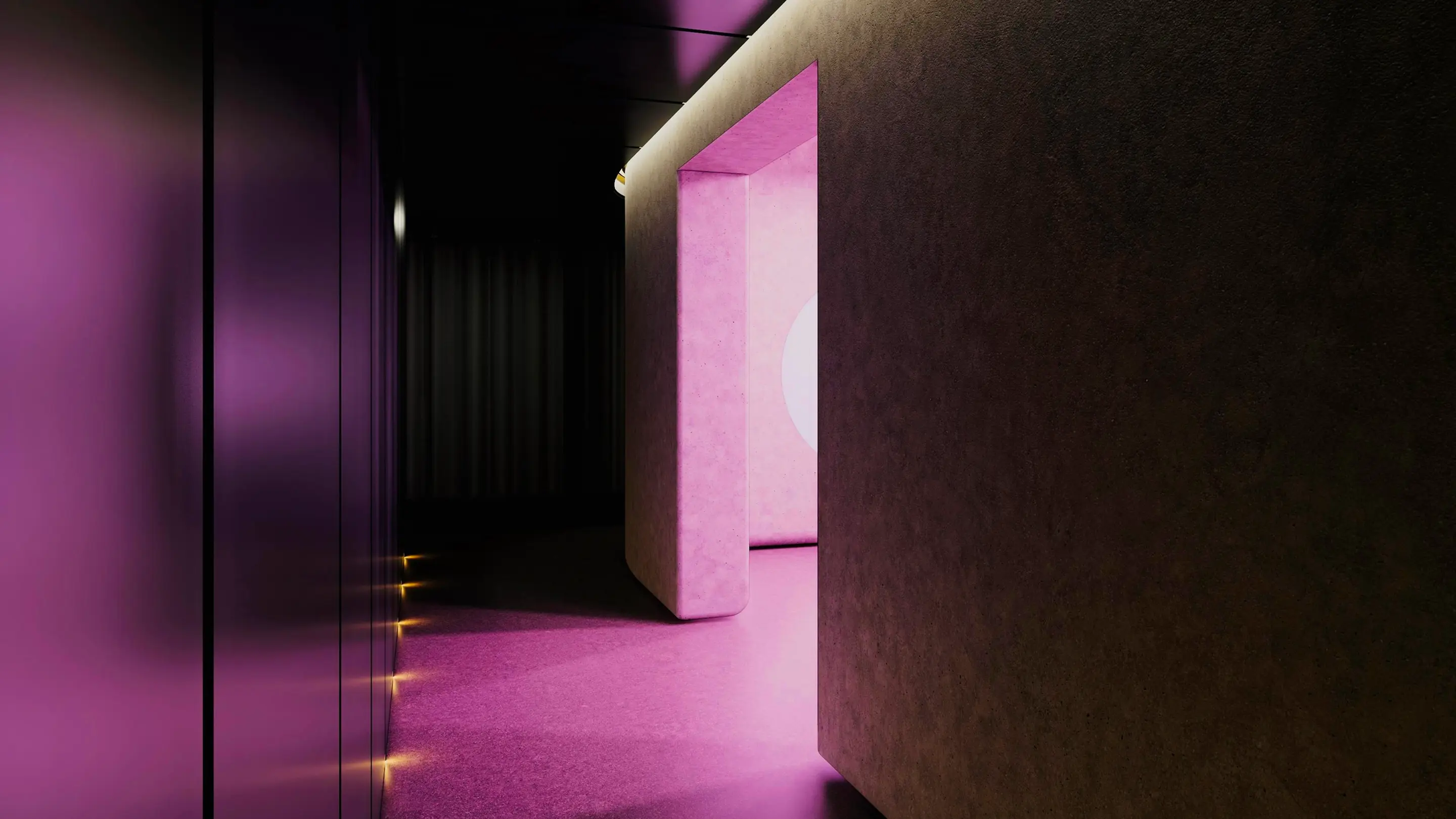
Peter Bauman: You see the potential of NODE to be like Apple stores, where there's at least one in the major cities around the world?
Micky Malka: Yeah, 100%. That's why we call it NODE; It's a node in the network. And our network makes artwork.
It’s not only that we hope to see more NODE locations around the world; honestly, we hope that museums take this and say, “I'm going to build a NODE inside my museum,” and use our technology and our best practices.
That will make us really happy. It really is an experimental hub for all of those things. We have a bunch of curators coming for the opening from all over the world, who are going to see it. Hopefully, they will come to us later and we can figure out how to bring NODE to museums.
Maybe that's a way to hack into the system faster than waiting for 2028 or '29 for an exhibition.
Peter Bauman: Making something almost modular that can be plug-and-played into different institutions is really exciting. When you were thinking about Silicon Valley, how did you consider previous art world attempts to make inroads in the region, like Pace’s Art and Technology space from 2016? What gives you confidence in NODE’s ability to succeed here, where traditional commercial galleries haven’t?
Becky Kleiner: It is an experiment and we hope that it's going to be a successful one. I think it's true that traditional galleries here, especially in downtown Palo Alto, haven't survived. You cannot compare where we live to New York or LA.
However, I think that we offer something completely different than a traditional gallery. It's much more an experience than an exhibition. So far, we have been getting amazing support from the community. We have been building the physical space and we have been getting notes underneath the door that say, “Thank you for coming. We need this so much.” So we are hopeful that it's going to be well received by the community.
Micky Malka: Other galleries have a different business model and different reasons for operating. They look at a graph and say, “Look how much money there is in Silicon Valley. We should have a location there.” And that's not us. This is a not-for-profit model to teach and to let people experience digital culture. If they want to buy it, great. They can do it online super easily. They're all tech-friendly here in this town.
But what we want to focus on is telling stories. We know our audience is going to add to the stories that we’re able to tell through the artists. That's very different from a gallery that probably sends their best piece to New York, their second-best piece to London, their third-best piece to LA, and their fifth piece from a famous artist out here.
The guy who can afford an artist here would rather go to New York and see the best piece. I think it's a very different business model.
Peter Bauman: You talked about the experience being narrative versus exhibition and sales driven. What else is genuinely unique about NODE that visitors can only experience there?
Micky Malka: We’re thrilled for visitors to begin experiencing it for themselves at the opening on January 23. Part of the answer may be in our ten commandments.
Becky Kleiner: We created a list of ten commandments. And we’ll strive to have every visitor know and experience those commandments before they leave. They can be "Have serious fun," "No one leaves empty-handed," "Bring a beginner's mindset," and so on.
We are working to make sure that every single contact is meaningful, from the artists showing their work to the visitors. We hope that they live through it themselves.
Peter Bauman: Can you talk about the choice to open NODE with Larva Labs’ CryptoPunks and Beeple?
Micky Malka: We couldn't think of a better way to learn or to try this than with CryptoPunks. First, it’s obviously one of the most important collections in the history of this movement. Second, Matt and John have proven time and time again their ability to be different and unique, and yet they have never been able to fully do a show their way.
We’re providing a much-needed space for artists. We’ve hosted twenty-five, thirty artists there so far already. When they see it, all of them have the same face. It’s the face my kids had the first time we took them, a face that you never forget the first time you go. If we can provide that experience for artists and our visitors, especially young people, I think we'll be on our way.
Peter Bauman: Part of being able to connect with new generations might stem from your emphasis on building for “living culture,” something maybe closer to people’s everyday lives than paintings in a white cube. What changes institutionally—staffing, infrastructure, programming, conservation—with that living mindset?
Micky Malka: A lot, it's very different. If you compared NODE’s org chart to a traditional museum’s, everything would be different. First, we have engineers. We're building a bunch of technology stacks.
Second, we don't have curators. We empower the artist to curate, to make decisions about what to show, placement, and what to say about their own work. We give them a space without rules, a chance for them to be themselves.
Today’s gallery experience is a white room with white walls and no place to sit or even talk. It should be the opposite.
Becky Kleiner: I think that the main difference is that the space has a lot of reactivity. The space was designed to facilitate an ongoing dialogue between the visitor, the art and the artist.
Peter Bauman: It seems like you’re really trying to elevate the viewer experience to be part of the artwork. That also speaks to the pillars on which you're building NODE, specifically presentation and education, which seem to center the viewer. Can you say more about that focus?
Micky Malka: As Becky was saying, there's a lot of dynamism with this work. It’s mostly code-based and when you elevate the CryptoPunks marketplace to be part of the art, then the work is ongoing and potentially infinite. To guarantee the work can last forever, we have to think about and emphasize preservation.
You need engineers to make sure that that's being done the right way. Look at the CryptoPunks' web page today and what the smart contract allows you to do; it's been enriched dramatically since NODE bought it six months ago. But it kept the art the same way. It didn't change the art experience. So that's what we call preservation.
We're not looking to build an infinite-size collection of Beeple pieces ourselves. That's not NODE’s purpose. Artists have gifted us work and that's great, but that's not what we're looking to do. We're not looking to build art storage warehouses around the world.
Becky Kleiner: Education is critical, too. We still have friends that have no idea what NFTs are, or maybe they do know, but they don’t know how to buy one. We also approach museums and universities to collaborate on programming. We want to open their eyes because there are some colleges that are teaching about NFTs in their art departments. But then the engineering part might be neglected. We are trying to make all of this more accessible to everyone so education is a necessary pillar for us.
Peter Bauman: Education will be fundamental and I wonder how the opening show’s elements, like “Free to Claim” and “opt-in participation,” connect to NODE’s larger ethos, like the ten commandments you mentioned? How are you connecting education with physical experience and learning by doing?
Micky Malka: I don't want to ruin all the surprises of the venue or show, but I will say we had a work session in June with John and Matt in Palo Alto when the space was still empty. We were still waiting for work permits. They sat there for two days. Then they went back to New York and we started weekly calls on everything they wanted to do.
I'll give you a quick story. They were here recently in early January 2026. They came late after not landing until 10:30 PM. We showed them the space again. It was already one in the morning their time but they sat there quietly. They were just mesmerized by how real it was, how much bigger it looked now versus the mockups.
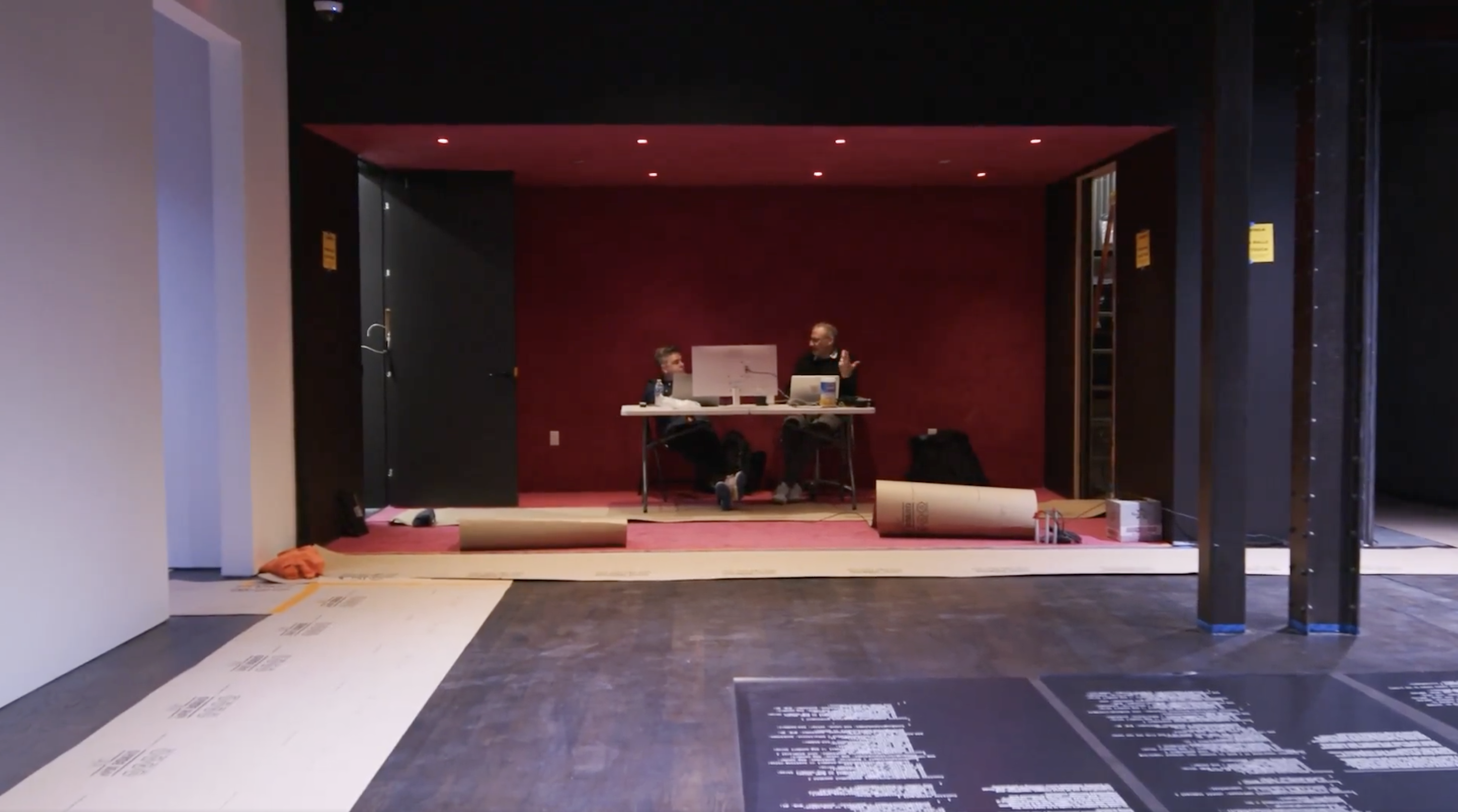
Then for the next three days, the two of them sat on a small plastic table, coding away, making sure everything was perfect. They would sit there doing their stuff until nine, ten at night and then be right back in the morning. We both took pictures of them working and would look at each other, thinking, “This is beautiful.”
We're biased but we love what we see. We want visitors to be delighted by the level of software design, elements of surprise, the taste level of what the artists want to show, and how they want you to rethink what Punks are, especially in isolation. After experiencing the show, we want visitors to understand how much more the artwork is than just the images. I hope that's the feeling. There'll be surprises, like what we’re doing with the free-to-claim ethos, that are core to the experience.
Becky Kleiner: We hope you will feel Matt and John everywhere because it's their vision, their art, their hard work—and that's the beauty of it.
Peter Bauman: And beyond this show, can you tell us any more about how you envision curating the seasonal programming moving forward and what you're wanting to highlight as the founders?
Becky Kleiner: During the year, the idea is to have four to five main exhibitions, but at the same time, take advantage of the fact that this is all digital and be able to be flexible and say, “Tomorrow, another artist will have the chance to be enabled.”
If an artist like Juan came in and wanted to see how their art lived in the space, we have software for them to do that. It's going to be open to any artist to submit work from all over the world. So we are looking forward to NODE having a rotation of four main shows with everything else built upon them.
Micky Malka: We want to have four shows that attract people from all over the world for a particular reason. At the same time, the idea is that there will be something alive and different almost every day or every week. Any Stanford student who wants to be an artist can submit, and we can tell them, “Today from five to ten in the evening the space will be yours. Invite all your friends to come see you.”
Or we can even have an artist come from Mexico for a week. This first year will be about testing all of these features to a point that has not been seen before. But being in Palo Alto, we do want to align with the natural rhythm of Stanford’s school year. We will have four anchors for those big moments of the year but we're going to work on a lot of other shows around them.
------
Becky Kleiner is an investor and the founder of NODE, a nonprofit foundation dedicated to transforming how digital art is experienced in Palo Alto.
Micky Malka is the founder of NODE and the founder and managing partner of Ribbit Capital, a venture capital fund focused on investing in innovative companies in the financial services.
Peter Bauman (Monk Antony) is Le Random's editor in chief.