Suggested Reading
Interview
Evergreen
Jane Veeder on Loving Change
Copper Giloth & Peter Bauman
•
May 4, 2026
View


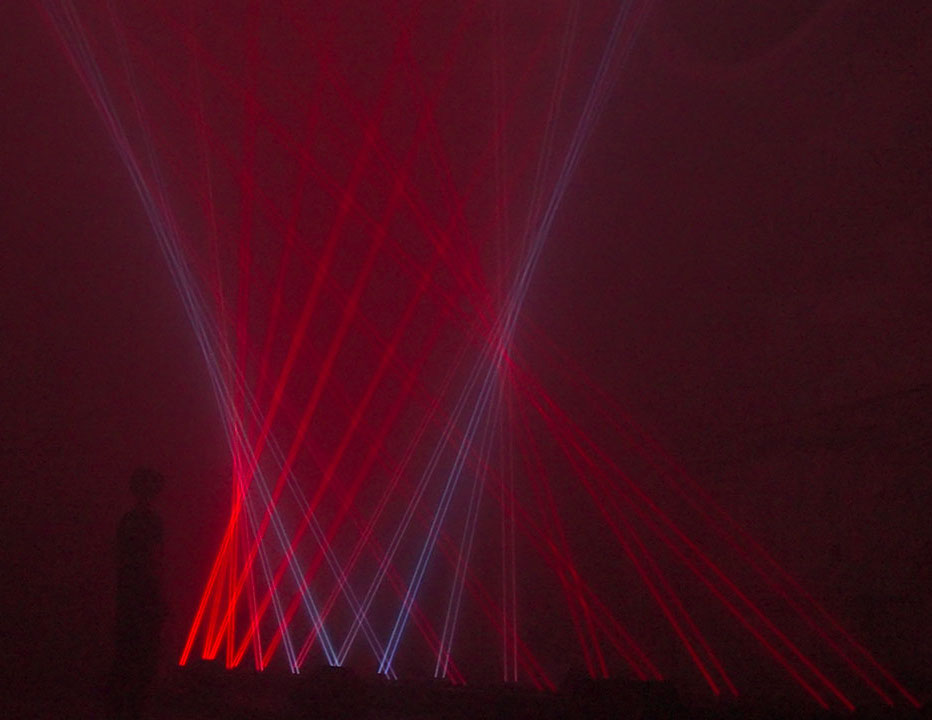
Data artist Shohei Fujimoto produces site-specific, data-driven perceptual installations. The artist spoke with Peter Bauman (Monk Antony) about the primitive structures underlying human perception, how the body remembers space, and whether simulated realities can ever fully replicate physical experience. Fujimoto is exhibiting at Personal Structures in Palazzo Mora alongside the Venice Biennale (May 9–November 22, 2026).
Peter Bauman: Your work has been shown in many different contexts for over a decade. What seems to tie it all together is your focus on perception. Why does that territory keep pulling you in?
Shohei Fujimoto: For me, perception is not so much a theme that I consciously chose but rather one of the most fundamental functions humans are born with. Throughout life we learn many things but even before that there is already a basic tendency to search for forms or meaning within the world. I have always been drawn to that primitive level of experience.
When I was a child, I often played a simple drawing game by myself. I would draw random lines on a sheet of paper and then look for shapes within them, sometimes discovering something that resembled a face or a figure.
Looking back, it was less about drawing an image and more about noticing the moment when an image suddenly emerges from something unstructured.
It is often said that one reason humans developed a strong capacity for survival is the ability to share imagined realities. Perception itself is highly individual, yet people can somehow share impressions or images even without seeing exactly the same thing. I find this condition fascinating.
Phenomena such as dappled sunlight through trees or small ripples on water are things people can watch for a long time. I often wonder what conditions allow us to remain with such moments. My practice approaches this question through making situations where perception itself becomes noticeable.
Peter Bauman: You've written about wanting to stir the "real" as interpreted by the human mind. What do you mean by that?
Shohei Fujimoto: The word “real” feels both very strong and very ambiguous to me. When I use the term, I am not referring to whether something objectively exists in front of us. Physical phenomena and virtual experiences can both become real within human perception. In that sense, it seems to me that people are constantly generating their own sense of reality almost instantaneously.
We appear to read the situation around us and quickly establish the reality we need to understand in that moment. Even when placed in unfamiliar environments, people begin to interpret where they are by observing subtle cues from the surrounding space and from the behavior of others. This ability may be closely connected to human learning and sociality.
For example, when we encounter sculptures or paintings that are extremely precise representations of natural objects or physical phenomena, people can feel deeply moved.
The reaction does not come only from the object itself but from the moment when our perception briefly accepts it as reality. At that instant, the mechanism of perception itself becomes visible. My work attempts to create situations where such moments become slightly easier to notice.
I am interested in the moment when the process through which people generate reality quietly reveals itself within experience.
.jpg)
Peter Bauman: You're showing at Personal Structures alongside the 2026 Venice Biennale. Can you tell us about the work and what’s specific about the Palazzo Mora that shaped what you're bringing?
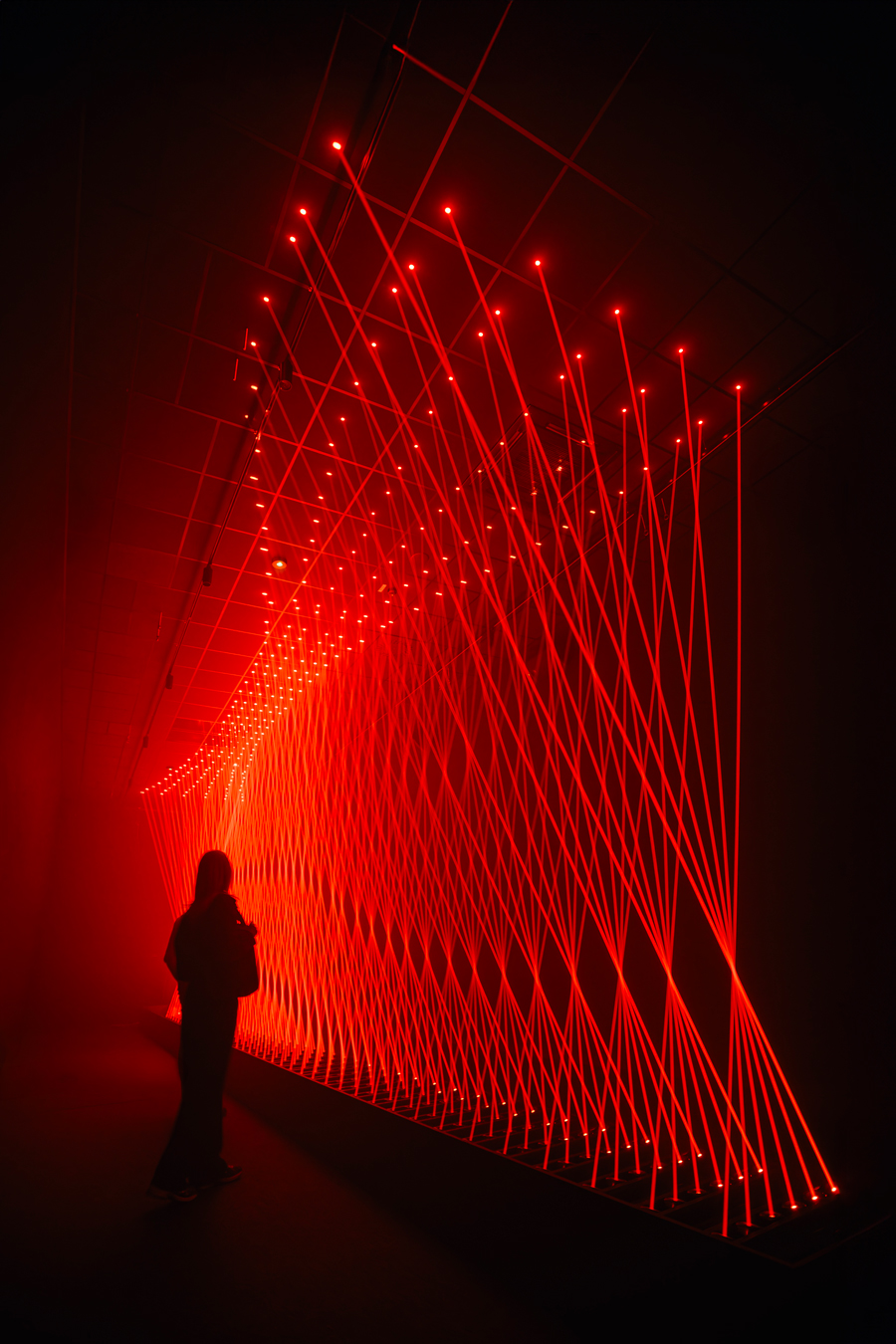
Shohei Fujimoto: In my previous laser works, I was interested in the relationship that emerges between the artwork and the audience. When people encounter something happening in front of them, they naturally try to understand what it is and begin to assign their own meanings to it. I wanted to share that process itself.
I was interested in how people attempt to interpret a phenomenon as it unfolds before them.
In this new work, however, the perspective shifts slightly. Rather than focusing on how viewers assign meaning to what they see, the work may create a situation in which one can look back, from a small distance, at how we attribute qualities and meaning to the things in front of us.
This idea also relates to the theme of Personal Structures, which explores how individual experiences and perspectives connect to a broader human context. Within that framework, the work emerged as a way to reconsider my own perception from a slightly detached point of view.
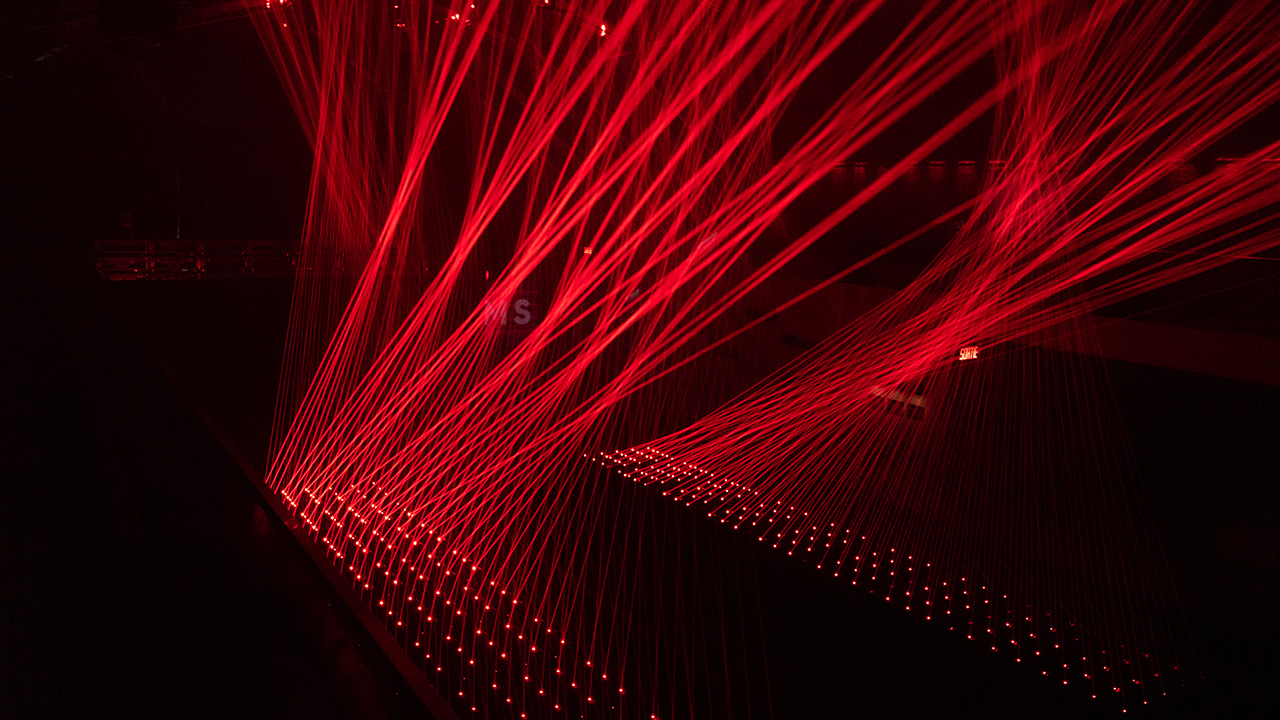
While working with laser lines floating in space, I realized that I had been perceiving them almost as if they possessed a kind of material presence. Although they are purely visual phenomena that cannot be touched, they seemed to carry a sense of mass and structure.
This work emerged from a question: how can materiality that exists only in perception be fixed within an actual physical structure?
Presented in a historic building like Palazzo Mora, the work cannot be completely separated from its surroundings. The light, air, presence of visitors all become part of the situation. In that sense, although the structure of the work is static, it continues to contain the outside environment within it.
Peter Bauman: You've spoken about space as the thing that genuinely sparks your creativity. How do you see the relationship between space, memory and creativity?
Shohei Fujimoto: Space is often the starting point of my creative process. Rather than beginning with a fixed image or concept, my thinking usually begins to move when I encounter a particular spatial situation.
I was born and raised in Kumamoto, Japan, and many of my early memories are closely tied to natural environments.
One vivid memory from childhood is a kind of athletic playground where we could run around barefoot. There were many structures that required you to measure the distance between your body and the space around you. Some of those playground elements would probably be considered dangerous today and no longer exist. I clearly remember climbing logs and trying to reach a rope that hung just beyond what I could easily grasp. I think the sense of fear or risk I felt at that moment is what made the memory so strong.
My school route was also mostly a perfectly straight road. When I walk it now as an adult, it feels surprisingly short. But when I was a child, it felt incredibly long.
Perhaps we do not remember the actual scale of space very accurately. Instead, we remember space in relation to bodily sensations and experiences. In that sense, we may be constantly scaling space through the body.
Later in life I had similar experiences. When I used to ride a motorbike around Mount Aso in Kumamoto, there were moments when a narrow road surrounded by trees suddenly opened up and the sky became enormously wide. At those moments I felt a strong sense of excitement but also a kind of fear.
I felt something similar in Bali while doing field recordings. One early morning, before sunrise, I walked to the sea in the dark. Again, a feeling of excitement and fear seemed to arise at the same time. Perhaps one reason I create large spatial installations is connected to these sensations.
In a way, they might be environments where situations that feel slightly abnormal or even frightening can be experienced in a safe way. In my work, I am interested in moments when the relationship between the body and space shifts slightly.
Peter Bauman: Your work seems to highlight those tensions with algorithmic processes and materials like lasers. Has your relationship to algorithms shifted in the age of AI models, LLMs and agents?
Shohei Fujimoto: From my experience, the distinction between AI and human authorship may not always be the most essential point. Situations where I work with code written by others have existed for a long time. Commercial middleware is a good example of this. In many cases we are already working on top of systems designed by someone else.
Today I also frequently generate code with the help of AI. If I imagine AI as a person, it sometimes feels like having a very capable engineer sitting next to me.
However, even with such an engineer, I still need to describe precisely what I want and carefully verify the results. I do trust AI in terms of its ability to produce code, because its capacity for that is already very high. But confirming whether the system behaves as intended still requires human understanding and verification.
In my case, especially with installations, the final system is something that people operate and physically interact with. For that reason, when something is presented publicly, human verification becomes essential. In a way, that process of verification may be something like a signature on the work.
In that sense, whether a system is hard-coded or model-based, what matters to me is whether there is a process through which a human can understand and verify its behavior.
For example, even if a fully autonomous mobility city existed, it would probably only be introduced after extensive human verification. Thinking about it this way, it may not be that I do not trust AI. Perhaps what I ultimately trust is the process of human judgment and verification.
In terms of workflow, the biggest change has actually been in research rather than coding.
I now regularly use AI to search for information, compare options, and carry out small forms of verification autonomously. It is simply very convenient. Tasks that might take several days for a person to research can often be summarized in just a few minutes.
Previously, about once a week, I would set aside time to search for artworks on platforms like Vimeo or YouTube and create my own spreadsheets, mapping references to check whether my work overlapped with existing pieces. However, that method inevitably had limitations, and I often felt that it was difficult to fully grasp everything I needed to know at that moment. At the same time, I also wanted to spend more time actually making work.
This part of the process has changed significantly through AI’s autonomous searching. However, because it is still largely based on information available on the internet, I believe that the search structure itself is shaped by algorithms. I sometimes still wonder whether I am really discovering the works that I should be aware of.
At the same time, I have a feeling that search results do not necessarily represent the full picture of the world.
It may also be that my experience has increased simply through continuing my practice, but compared to the time before AI became part of my workflow, I feel that the time spent failing has become significantly shorter. In the past, I spent much more time searching, reading, experimenting, failing, and then moving in a different direction.
AI has dramatically changed the speed at which I encounter information. At the same time, I feel it is important to remain aware that there may still be spaces and relationships that I have not yet seen.
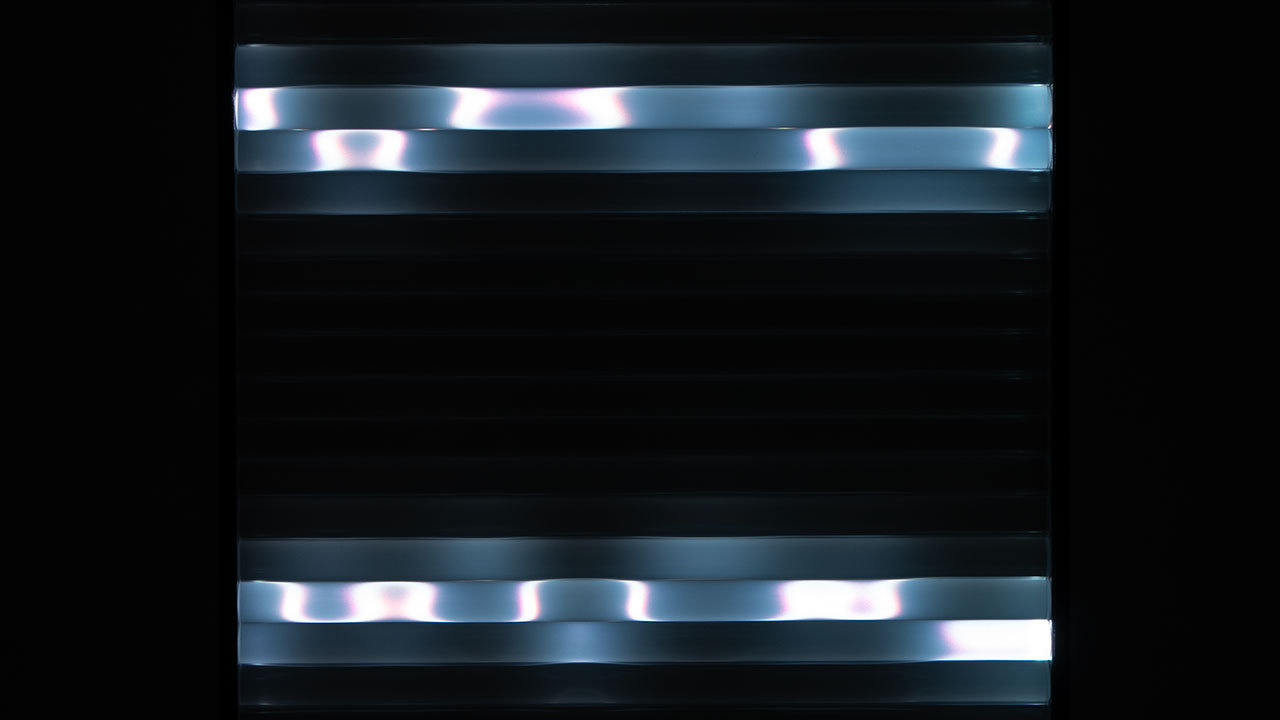
Peter Bauman: We’ve discussed your emphasis on physical space to “stir the ‘real.’” How do you feel about entirely simulated realities and their potential to replicate holistic sensory experience? Is it possible or even desirable?
Shohei Fujimoto: Simulation continues to become more abstracted, even in areas that once required specialized engineering knowledge. The resolution and precision of information have improved dramatically, and it may even become normal in the future for the brain to remain in one place while other senses are extended elsewhere.
If elements such as wind, smell, or temperature could also be managed and shared as data, it raises the question of where human perception will remain. Many of the senses humans have developed over long periods of time through the body and genetics might potentially be deceived by artificial signals. At the same time, such technologies may also play an important role in neuroscience and medical applications.
Simulation and reality can also be described as virtual and physical. For example, an avatar can run endlessly in a virtual environment without the operator experiencing the physical fatigue that would occur in reality.
If this bodily dimension cannot be incorporated as a functional component, it is possible that forms of perception different from those of the physical world may emerge within highly refined virtual spaces.
When we consider physiological reactions such as sweating, changes in heart rate, or shifts in body temperature, it becomes clear that human experience is not composed of perception alone.
In that sense, simulation may lack certain forms of embodied perception that can only occur in physical situations.
Whether simulation can fully replicate a holistic sensory experience is still unclear to me. But it seems possible that simulation will not only reproduce reality but also reshape the way human perception itself is formed.
------
Shohei Fujimoto is an artist whose site-specific installations explore the fundamental structures of human perception. Working with laser, light and data, he creates immersive spatial environments that make the act of perceiving itself visible. Fujimoto has exhibition practice spans ARTECHOUSE (New York, Washington D.C., and Houston), Berlin Atonal, MUTEK Montreal, Illuminate Adelaide, and NOOR Riyadh. In 2026 he presents new work at PERSONAL STRUCTURES, Palazzo Mora, Venice, coinciding with the Venice Biennale.
Peter Bauman (Monk Antony) is Le Random's editor in chief.