Suggested Reading
Article
Event
Let the Barbarians In
Peter Bauman
•
August 17, 2026
View


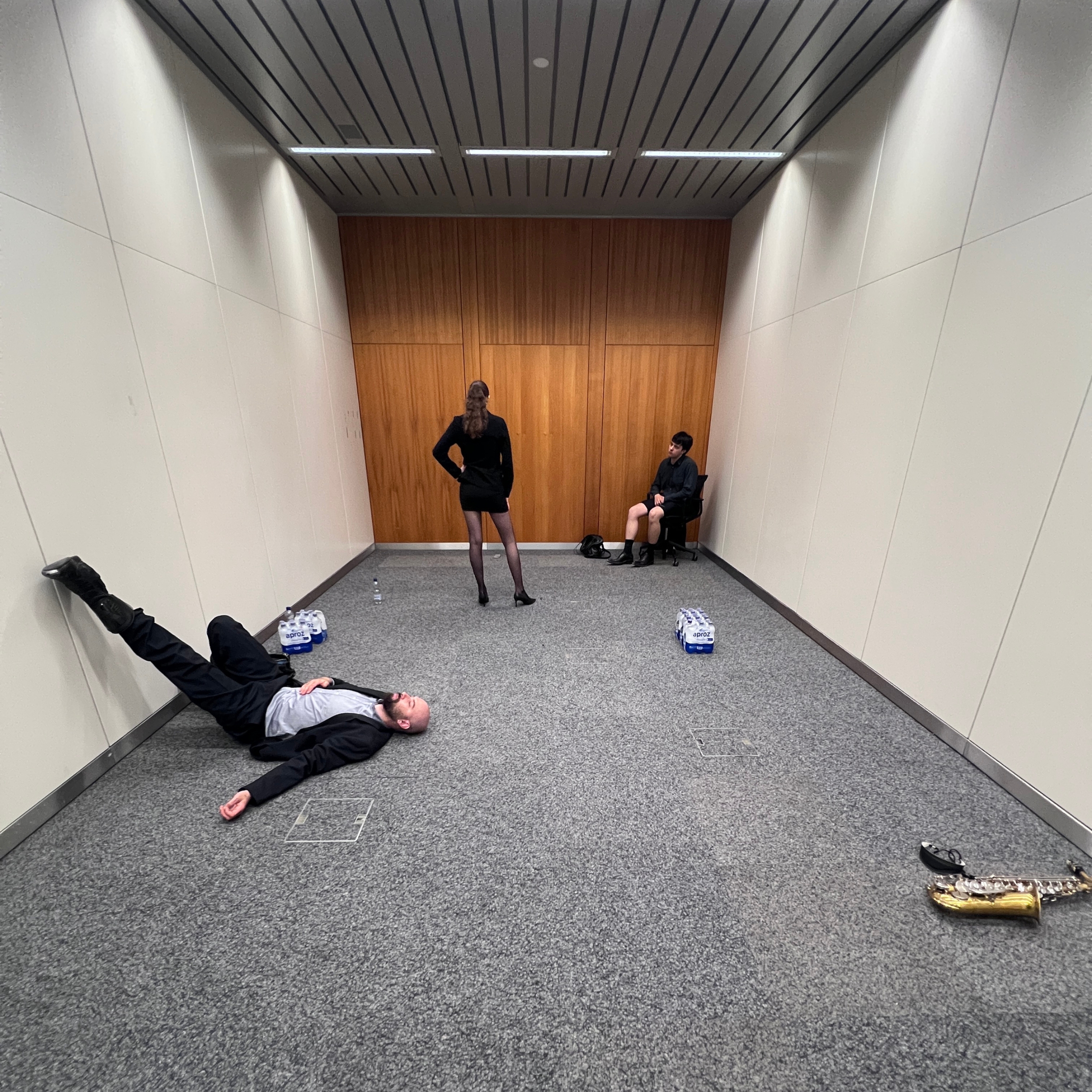
Curator, gallerist and co-founder of Basel Social Club, Robbie Fitzpatrick spoke with Peter Bauman (Monk Antony) about the anti-fair’s founding and its newly announced offshoot, Tokyo Jazz Club.
Peter Bauman: I'm interested in how the idea for Basel Social Club first came about. The lore is you decided to skip the Basel fairs in 2022 and started making calls to friends. But how did it all sort of start?
Robbie Fitzpatrick: It was the spring of 2022. I'm one of the original founders, together with Yael Salomonowitz, a performance curator; Hannah Weinberger, who's an artist based in Basel and also represented by my gallery, Fitzpatrick;
Dominik Müller, who is an art historian and art dealer with a gallery based in Basel that focuses on deceased artists; and Jean-Claude Freymond-Guth, who is a former gallerist and actually stepped away from the project after the first edition.
But indeed, the project was sort of initiated out of my personal frustrations related to the fair system. My gallery applied to the Statements sector of Art Basel, having done that a few times. Then we got waitlisted and ultimately rejected from the main fair and considered bringing the project to Liste. Finally, we realized that we wanted to do something else.
I rallied this group together, each one coming from a different background but having known each other for quite some time. We saw an opportunity to bring something new to that fair week. I personally have been going to Basel for years now, prior to my own gallery, which has participated in both Liste and Art Basel for many years.
I attended the fair with the gallery I used to work for, Tanya Leighton. So I knew the landscape of that week very well and increasingly felt like there was an opportunity for something else. Aside from the main fair and Liste, of course, you do have a few satellite fairs. There are some local galleries and off-spaces but it's still less dynamic than other cities that boast an Art Week. That's really where it came from, its birthplace.
Peter Bauman: Location is so important to Basel Social Club’s ethos. But how did the first one come about?
Robbie Fitzpatrick: We started looking at a few locations and had this great opportunity that came through Dominik Müller’s cousin: a former villa in the residential neighborhood of Bruderholz that was going to be torn down.
.jpg)
We visited and realized it was the perfect venue for the kind of space we were looking for, a space that could host art but also have this social component where we could do some pop-up bars, some performances in the garden.
It honestly happened very organically and within a very short time frame. We only had about two months to put it together. So I immediately started making calls to friends of mine, colleagues at galleries, both younger and more established, primarily in Europe.
Almost all of them said yes. It was a very straightforward invitation. We said, “show some work at the villa, pay a very small participation fee and have fun.”
It was key that we kept the costs very low. I think it was 800 francs.
Peter Bauman: How did it start growing after the intimate first year?
Robbie Fitzpatrick: After that first year, we hit a nerve. It became a bit more word of mouth and we realized we were onto something. We met a few weeks after that week and started cooking up what we could do for a second edition.
We were actually approached by Franck Areal, which had purchased the former Thomy mayonnaise factory. They invited us to take over the building for the second edition prior to him developing it into a cultural center. It’s a sprawling factory with eight very large silos. It was a much bigger scale than the more intimate villa.
At first, we found it a bit daunting but realized that it was too good an opportunity to pass. The approach would be very different but we knew if we stuck to the core tenets of what the project was founded on—that it's an exhibition of works presented by galleries, with a performance program, some culinary component, a few bars and this emphasis on the social experience—that we could do it at a much larger scale.
It was really after the second year when the project really blew up. Given its proximity to the main fair, Messeplatz, most of the art world came and saw it. The first year, the villa was in a residential neighborhood that was a bit harder to get to. It was more word of mouth. We also went from 35 participating galleries to close to 150 for Factory.
With that edition we realized that we could continue to play with how the model can adapt to different architectural spaces or sites. It was with that in mind when we challenged ourselves to maybe the most difficult edition to date, which was the Farm in the third year.
After the Factory we thought it would be fun to do an outdoor edition, responding to these urban farm properties. It was also to challenge our audience to trek a little bit farther, to make it a bit less accommodating.
You almost felt with the Factory it was too easy for our audience to attend. Inherent to the model is a challenge to the status quo and to this day it continues to be our core mission.
Peter Bauman: Challenging the status quo also opens up the art world to different audiences.
Robbie Fitzpatrick: To that point, we really strategically try to challenge ourselves in each edition to have more diversity with each year, in terms of exhibiting galleries or spaces and the artwork that's on display.
The first year was definitely an intimate community that didn’t extend far beyond our personal network. With the second edition, we tried hard to incorporate galleries from as diverse a geographical perspective as possible, as well as in terms of the type of work that was on display. We really try to show the full spectrum of art today.
That includes very young artists coming out, fresh from school, showing with an artist-run space, to the opposite end of that spectrum with very famous artists showing with established galleries. We even show historic work and everything in between, mashing it all up so that a young artist is shown right alongside a famous figure.
With last year's Bank edition, we realized that we were missing a community within our larger ecosystem, which was the digital space.
We had one of the rooms at the Bank devoted to NFT work. With this past edition, we incorporated quite a number of artists and artworks and galleries whose programs reflect that digital space and generativity. That's also been felt in the diversity of our audience.
From the beginning, we never had a VIP day or VIP hour. Our doors open to everyone on the Sunday before the main fair starts. It's free. There is no fast-lane pass.
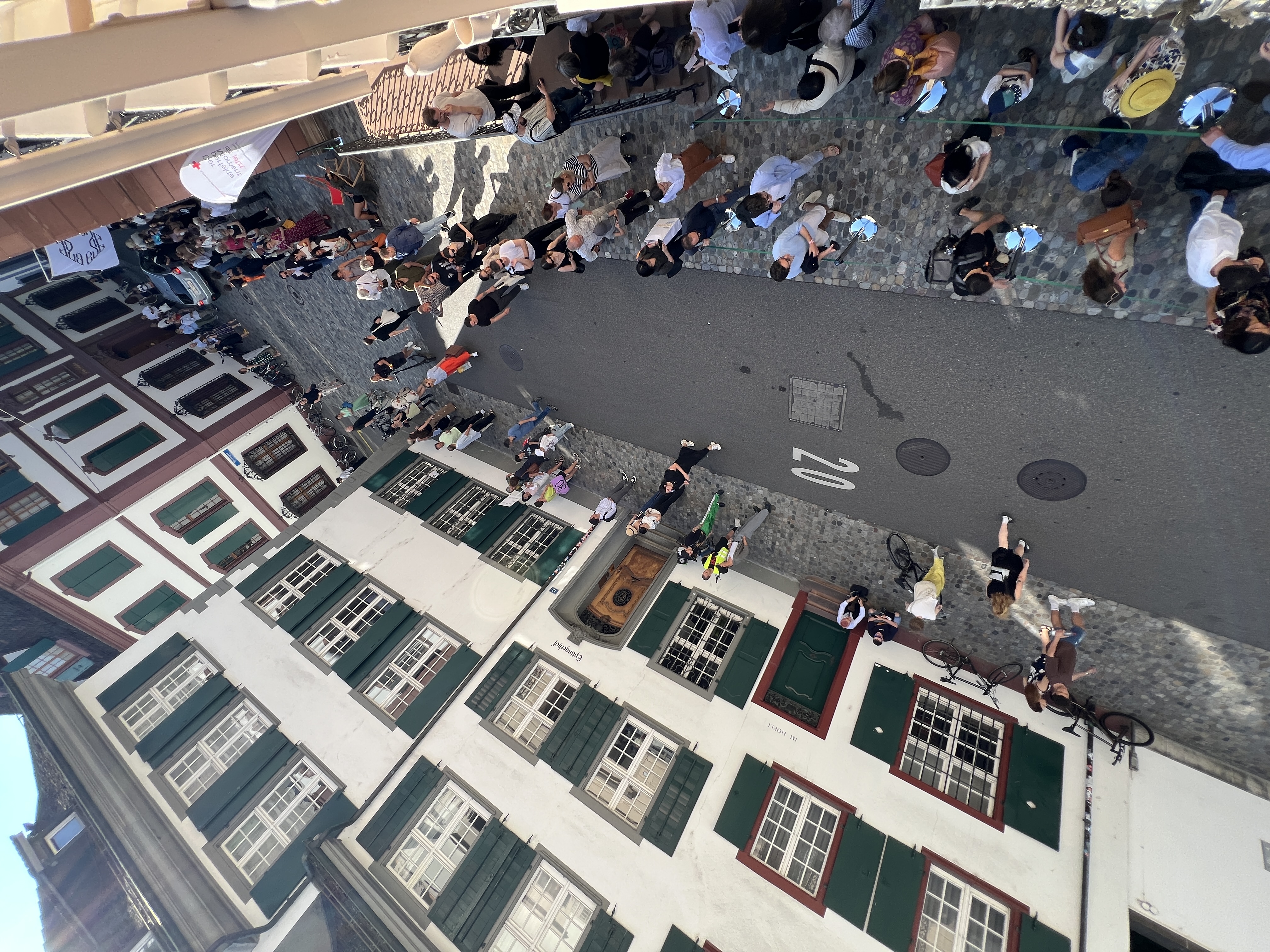
Everyone stands in line together. Luckily, this year with Office, because the building was so big, we didn't have a problem with the lines, except for late at night when we were at the max capacity in the club area.
It’s important for us that the hierarchy of the art world and the systems it’s created are revealing their cracks.
We have this privileged opportunity to flatten that hierarchy and that's what we try to do. We try to do that not only through the exhibition and the content but also on the flip side with the audience. Maybe that's why the barbarians feel welcome in our space as they do.
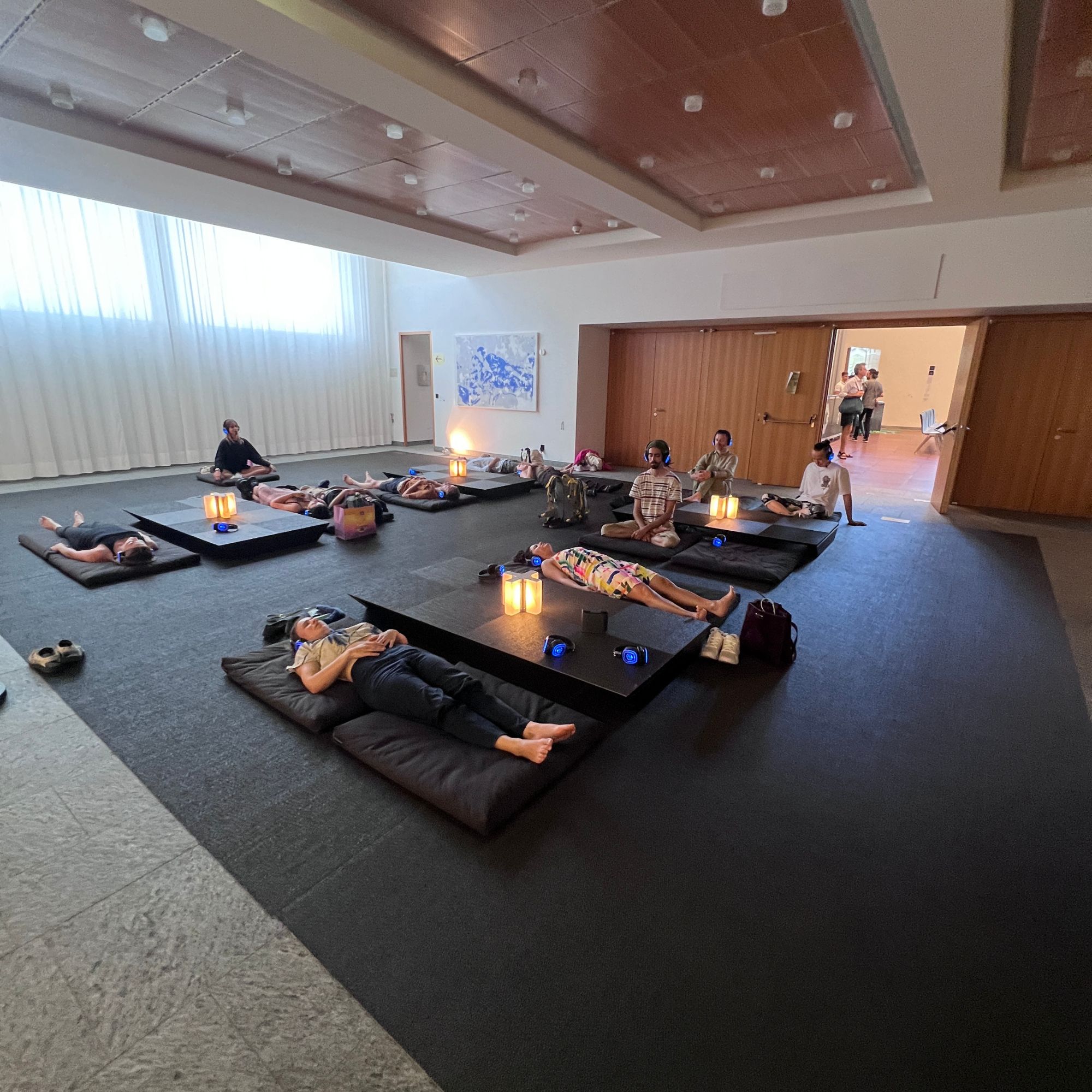
Peter Bauman: You mentioned how this latest edition, Office, was more of an engagement with the digital. Will future iterations continue?
Robbie Fitzpatrick: I think it will continue to be a part of the fabric of the content that we're doing. We're looking at a venue for next year. It would actually make a lot of sense to continue to have those positions. But there might be another community or type of work that we introduce for next year that wasn't as prominent as this past edition or in past editions.
For Office, we really wanted to have fun with how you could play with the theme in so many different ways. Certainly AI and automation are a part of that. They are also finding their way into our practices and into the vocabulary. So there was no way that we could not accept proposals that either explicitly dealt with it or implicitly used elements of the AI process in creation. Maybe that's why this year especially it was noticeable that there were a lot of new mediums and positions from the digital community.
Peter Bauman: As you continue to expand into new communities after five editions, do you see BSC moving from an anti-art fair to its own parallel institution? What’s the vision?
Robbie Fitzpatrick: We want to remain independent. Our independence allows us to keep the project hard to define precisely because we don't have rules. Then we can constantly break whatever rules we do seemingly have.
If someone asks what next year is going to look like, maybe we decide that next year is only going to be sound work. We can do that even if, sure, we might piss off a lot of people.
We don't operate with a mandate. We don't operate with stakeholders that bind us to a commercial goal.
We're a nonprofit association composed of a small board that approves our concept and gives us the go-ahead. But the project has grown so organically. It's not like when we started at the Villa we had a ten-year business plan. It was just rolling with the punches.
To our own surprise, it’s pretty remarkable that it has occupied such an important space in that week, to be really frank. It was really a grassroots initiative.
And you're right, there is maybe a feel of an institution, maybe because this last year especially was so large. Many people weren't necessarily impressed by that. But we don't have a mission; we didn't write a mission statement for ourselves even.
That's intentional because as soon as you pigeonhole yourself, you're stuck having to respond to your own expectations, let alone anyone else's.
We have a vision and each one of us, as individual parts of the collective, has our own thoughts on the positioning or the future direction. But ultimately we're just operating from year to year, responding to the site itself and going from there.
It might be that for some edition, the venue that we decide on is so radically small that it's maybe unimpressive but we have to then take that as a challenge to adapt the content so that it can resonate as powerfully as past editions that it may differ from.
Peter Bauman: You've been explicit that live encounter is central to BSC's DNA, introducing audiences to each other, sharing resources, working collectively. How deliberately is that framed as a focus on social ethos versus object? A response to the boothed atomization of major art fairs?
Robbie Fitzpatrick: I come from a school that fundamentally believes that the process of engaging with art, whether it be through an exhibition or a marketplace, is one founded on experience.
When you think about artworks that remain with you, that resonate, they resonate because of the experience that you've had. That can be a visceral response or some journey that brought you to discovering work.
That circles back to how I've always thought about exhibition making: that the experience needs to play as important a role as the framing or presentation of a work. They go hand in hand.
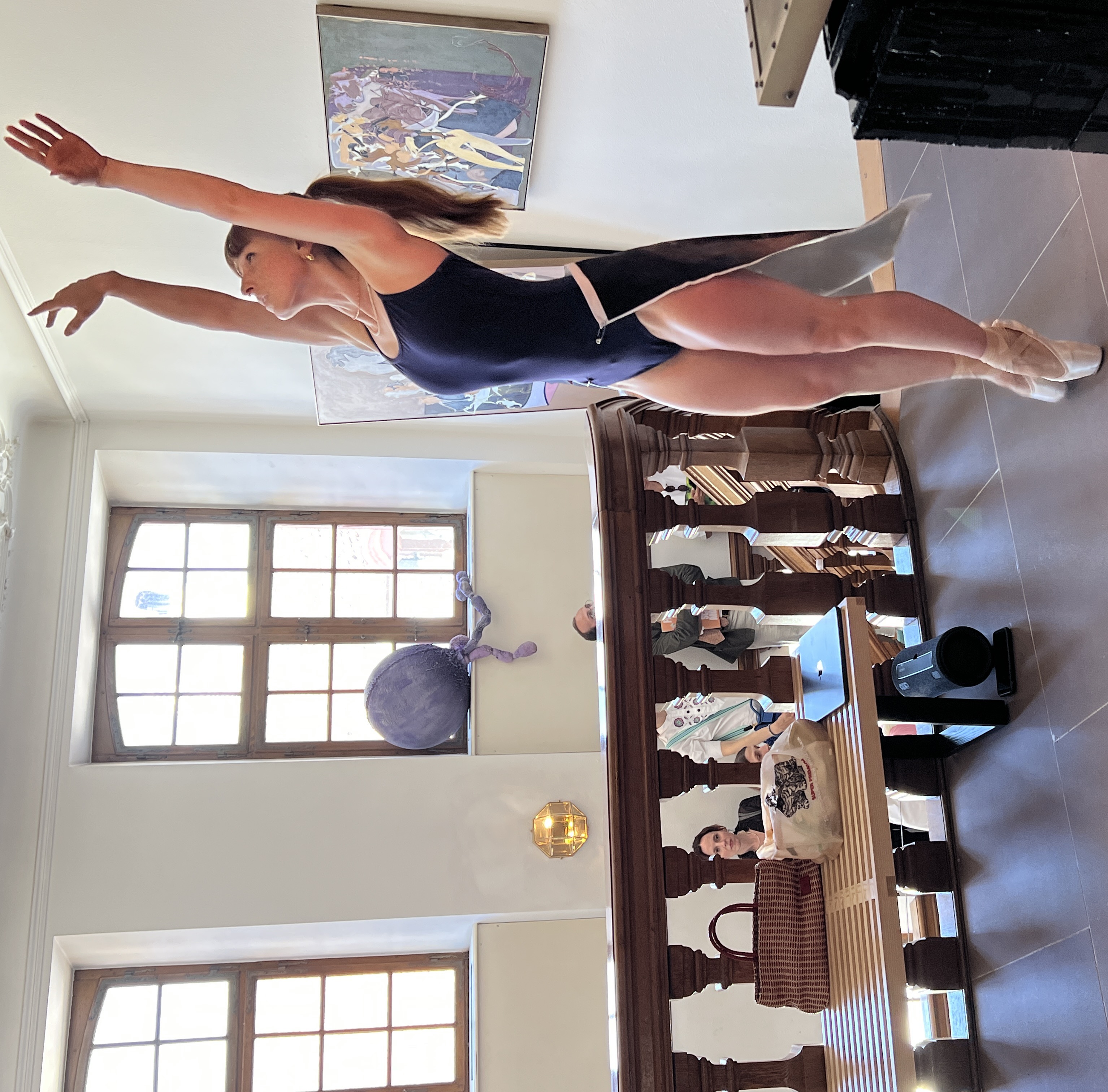
I personally don't remember very many artworks that I’ve seen from visiting an art fair. Works that I remember, that have stuck with me, are those from experiences that are much more engaging as a platform, whether that be a museum or even some kind of specialty boutique fair—not a convention center.
The convention center’s architecture mutes the work into its stale visual language. It's not accommodating for the work or the viewer. It's hostile. And it's not curated. Galleries do curate their booths and some do an excellent job. But you jump from one visual sensibility immediately to another in a jolting way. Often, as an aesthetic experience, it’s quite horrendous.
The presentation of the work itself was always fundamentally aligned with our experiential emphasis. Then, of course, the social component is the other part.
The fair model doesn't emphasize the social aspect. It emphasizes the transaction of the mercantile exchange of an object from a seller to a buyer.
Our reimagined marketplace prioritizes the social aspect. In doing so, maybe the process of selling can become harder for some dealers. At least they have to adapt to it; it's different. But we also do prioritize our audience.
We care about the public that remembers visiting Basel Social Club and was won over by a good show. We put so much care and consideration into every aspect, including the exhibition, the program, the bars, the food and beverage and the unique hospitality that is a core tenet of our project.
Peter Bauman: How does Social Club’s emphasis on architecture and site specificity also align with its itinerant nature?
Robbie Fitzpatrick: The site specificity, because we are responding to a location, is where it begins. The creative side is governed by the location that we have; then we build from there.
That again happened very organically. We did it the first year in the villa, knowing that building was going to get torn down soon. I don't think when we went into the curation of the first year that we thought that the second year would even happen.
Then it just so happened that we were offered that factory. From there we realized that in order to keep the project fresh, we had to constantly do a one-eighty on ourselves. And you couldn't get as far from the Factory as the Farm properties, which is why we chose it.
But it's also that things come to us. With Bank, we were approached again. It was then we realized what we were doing thematically. It was only with the Bank edition that we started playing with the language of Villa, Factory, Farm, Bank.
We've sort of pigeonholed ourselves now because we don't have a choice, really, but to continue with that pattern. Although there's a limit there. Basel is not necessarily full of empty spaces with a strong resonating identity that we can respond to conceptually, that can continue this themed rhythm, but we'll try.
What we have noticed is that Basel week visitors, even those who have been many, many years still pretty much only go to the same places. Many of them didn't know about Farm or even that big office building that we occupied this past June, even though it was right next to the train station.
People hadn't even really been to that area where the factory was, even though it's only a ten-minute walk from Messeplatz.
I think that we will be able to continuously surprise people with what is available in Basel, despite the fact that it's a small town. And for now we will continue on the itinerant path.
Peter Bauman: Speaking of itinerant, you recently announced Tokyo Jazz Club. How is it an extension of Social Club?
Robbie Fitzpatrick: Since year one, we were already dreaming about how this model could exist in different places in the world. I’m not from Basel or Paris; I'm really a product of a restless soul. I've traveled a lot in my life and that's also the case of the gallery story.
And Japan is a personal story for me. My mother's from Japan. I lived there as a child in Tokyo. So I've been a lot and know the gallery and artistic community very well in Tokyo. That was already an easy entry point to considering doing something there.
Tokyo Jazz Club is certainly born from the legacy of Basel Social Club but it's important to recognize that it is a separate initiative. We never wanted Basel Social Club, even when considering bringing it to other places, to follow the same kind of branding exercise as a big fair, like Art Basel.
Basel Social Club responds to the immediate moment. It responds to the architectural site that we find. It is during the fair week with that audience in mind. So when considering how the project could exist in a different place, somewhere as far and as different as Tokyo, say, we felt it needed to really have its own unique identity that responds to the local audience and framework.
It was never going to be Basel Social Club Tokyo or even Tokyo Social Club. We were looking at how we could really draw people there, where it immediately felt like Tokyo. And so that's where we came up with the name Tokyo Jazz Club.
Of course, it's not a literal jazz club, although music will play a big part in the programming.
Peter Bauman: You announced Tokyo Jazz Club will be in a former capsule hotel. Will this architecture and site specificity inform the show?
Robbie Fitzpatrick: Sadly, all the sleeping pods have been removed. But on one of the floors we're actually going to bring them back and work will be shown in those capsules.
I definitely think that it's a fun idea to play with, so it will find its way certainly in some of the work but it won't be a defining curatorial thread in the same way the Office was for Basel Social Club.
But there's a lot to play with and I think that we would be silly not to embrace the fun that we can have, at least in the storytelling of the capsule.
Peter Bauman: I’m curious about Social Club as a concerted world-building exercise. How are you promoting different sets of social relations, economies of attention, relationships between art and life, versus event staging? Do you think of it in those terms? If so, what world is BSC actually trying to build?
Robbie Fitzpatrick: Absolutely. I think it's undeniable. It's already there in the way that we play with the theme that's responsive to the architecture.
It's actually shocking to me that art fairs don't create more distinguished worlds. A fair in Milan, a city with so much distinguished design and culinary history, doesn't play with that more.
Rather, they lean in on the convention center look and feel, and it becomes indistinguishable from the fairs in Madrid and Singapore that do the same thing. Even if you haven't been, you have some association with how it looks and feels and smells and tastes.
We have an opportunity to do so, and honestly, it's so much fun. I think in part it's why people leave feeling uplifted from spending a bit of time at Basel Social Club, or even come back for more, because they enter into a world and they leave having brought with them a little element of that world.
Peter Bauman: I think a fundamental challenge of galleries and generally contemporary art moving forward is how to engage audiences outside of those spaces; how to make general audiences feel more comfortable engaging with art.
Ninety-nine percent of people are never going to walk into a white cube but I think they would go to a Basel Social Club or a Tokyo Jazz Club. That's what makes them exciting directions: they feel like they have the opportunity to grow and change things. To make the experience of art itself different.
Robbie Fitzpatrick: I think that we are really reflecting on the potential next-gen collector base. They're having fun at our events. They're not even interested in walking through the door of the other events. And I think it starts there.
------
Robbie Fitzpatrick is a gallerist and a co-founder of Basel Social Club. He also operates the nomadic Fitzpatrick Gallery.
Peter Bauman (Monk Antony) is Le Random's editor in chief.