Suggested Reading
Interview
Event
Eli Scheinman on Amplifying the Digital
Peter Bauman
•
June 24, 2026
View


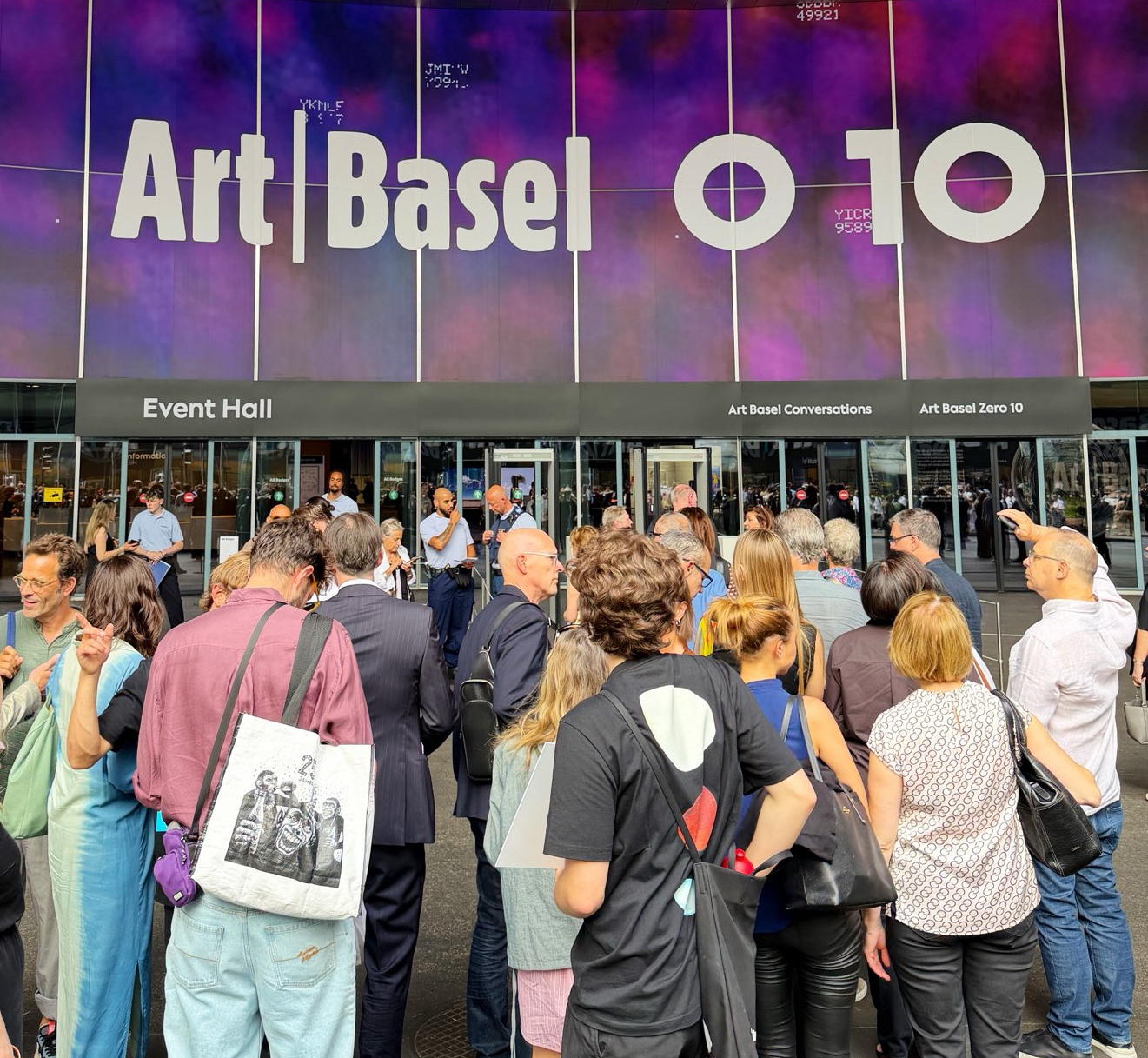
Peter Bauman, Le Random’s editor in chief, attended Art Basel, Basel 2026 and its various side events and exhibitions. He connects his thoughts and a mini-diary to the discussion surrounding the Art Basel talk, “Barbarians at the Gate," with Tina Rivers Ryan, Trevor Paglen, Erick Calderon and Natasha Degen.
Bauman suggests that the Zero 10 digital sector and anti-fair Basel Social Club are less barbarians than civilized "Normans," challenging the status quo but ultimately part of the institutional art world. The true "barbarians" are the general public who currently feel excluded from art spaces, emphasizing that the industry must produce work and find sustainable economic models to engage them.
"Barbarians at the gate" is a euphemism for the world is ending. We all seem to agree that’s happening. We can actually see and hear (and smell) the gate in distress. But who are the barbarians? What do they actually want? Can we communicate with them beyond grunts and gestures?
While some might mistake Art Basel's digital sector Zero 10 for barbarous invaders, its third iteration is further evidence that digital art’s assimilation is fully underway. Similarly, the rebellious Basel Social Club is like a rival duchy, fighting over the same kingdom. The true barbarians, the ones the gatekeepers actually seem to keep out, are the general public.
Luckily, fending off raiders is one of humanity’s oldest problems and history suggests certain resourceful tactics. One is to let them in. To use them as a shield. They absorb threats as well as the host culture. The ancient Romans did this repeatedly along the Rhine frontier, as did the eighth-century Tang Dynasty.
But the classic example is the Normans. Weary from decades of fighting Viking raiders, medieval French kings ceded part of northern France to the Nortmanni from Denmark and Scandinavia in the early tenth century. The Normans were allowed to settle the land but really they were a strategic buffer against even nastier barbarians. Meanwhile, the Norman settlers adopted the Frankish language, beliefs and social customs. They assimilated but famously kept their rambunctious spirit, see 1066.
Within two centuries this militaristic upstart invaded and conquered England from their French base. From there, they became the main rival of French kings for centuries until (2026) around 1453.
So for Art Basel—er, I mean the French—was inviting the Normans in a massive blunder? Or was it brilliant?
Without ceding Normandy, it’s possible the French kings would have been overrun throughout the rest of the tenth century. Perhaps France as we know it would not have survived to rival Norman England in the first place. France did what it had to do to survive. Over a thousand years later, France is still here.
Zero 10 represents Art Basel and the commercialized digital art space, both doing what’s needed to survive. Could Zero 10 someday be the most significant part of Art Basel? The sector drawing the most visitors? Garnering the most attention? The main floor’s biggest “rival”?
For those saying flatly, “No,” it already nearly achieved this in its very first iteration in Miami in 2025. The second iteration in Hong Kong furthered that possibility. Great art (more than Beeple’s robot dogs and Sougwen’s robot arms) attracted interest and excitement, caused a genuine mainstream spectacle. My sister messaged me about it.

Zero 10 is not the barbarians. Agnieszka Kurant, Avery Singer and Vera Molnár are no barbarians. They are fully Norman. They are being civilized, er, institutionalized before our very eyes. Co-curated by art world darling Trevor Paglen and populated by one-third deceased artists, Zero 10’s third edition was the sector becoming more like the main fair and less like its more barbarous (and spectacular) first two editions.
So is Basel Social Club (BSC) the barbarians? Unlike Zero 10, there’s much less direct integration with the main fair. These two appear more combative, especially with BSC positioning itself as an anti-fair. But again, these are no barbarians. Listen carefully and they both speak the same language; they are countrymen who disagree on economics.
BSC is more rival French duchy than inscrutable barbarian. It is rebellious but clearly situated within France, even if on the fringes of infrastructure. This is boisterous contemporary art with refreshing exuberance but it’s still highly professional and top quality. It’s no art school, extitutional, DIY happening. In fact, multiple galleries from Zero 10’s past and present also had space in BSC.
Zero 10 and BSC maneuver, but from within; neither represents a total regime change.
Then who are the barbarians? It’s the non-art-world public. Everyday people who love films and music but feel excluded from art spaces, left out, mistakenly thinking art isn’t for them. The people who wouldn’t even think to experience Art Basel. The uninitiated are who the art world truly keeps out.
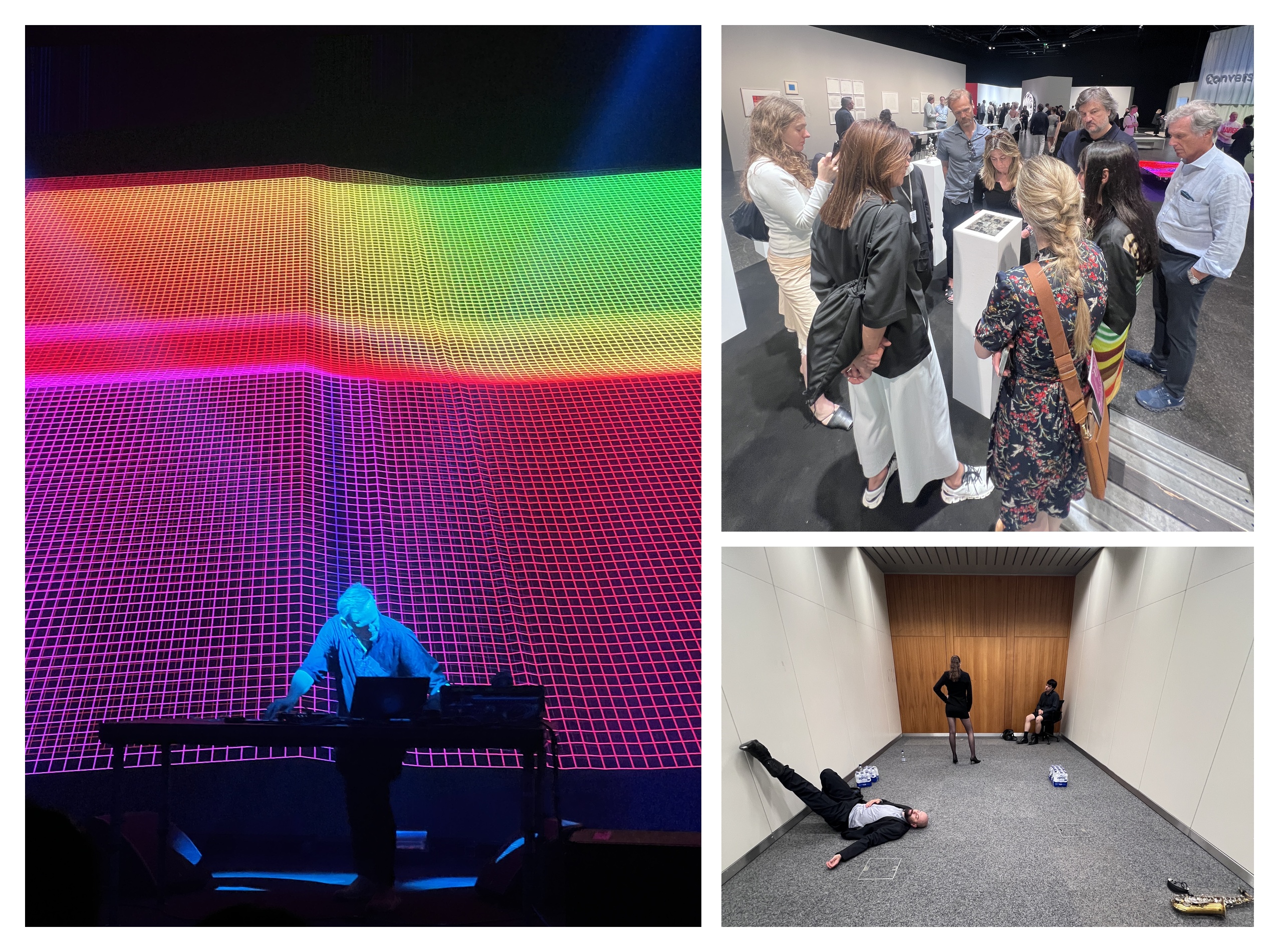
The contemporary art world disdains spectacle. How gauche to bathe in the shallow waters of sensorial pleasure. Watch your White House lawn UFC fight and be away, plebeian! Don’t make a splash in those waters lest ye be labeled s** art (spectacle art).
Spectacle art is when audiences are enjoying work too much, not deeply enough or not of a gatekeeper’s liking.
It’s enjoying art at technology’s speed: superficially, hearts filled with a commoner’s fear and violence, just waiting to be polarized and severed from truth, helpless. The appreciators are looked down on as much as the art is judged.
But for all the major galleries crying “spectacle” over Zero 10’s Miami throngs (people were queuing up to experience art!), they cannot claim to be pure and free from spectacle themselves. After all, they are firmly situated within the art world’s paradigmatic spectacle, Art Basel. The fabric of art world spectacle itself can’t bemoan spectacle—with a straight face.
As the Normans retained their fighting spirit for centuries after being “civilized,” the digital’s outsider spirit will remain. Invite Beeple and he may depict our dear leaders in an unfamiliar way or raise points with less customary subtlety. Yet, supposedly superficial positions involving tech-dog robots invite questions about the nature of art and society itself.
Can substance and spectacle overlap in art? Are you comfortable seeing “great” thinkers like Picasso and Warhol juxtaposed with Musk and Zuckerberg? How truly “great” are any of them anyway? Are you comfortable asking questions like who controls culture? Are you comfortable being confronted with a catastrophically disappointing answer?
Why aren’t the people we’d prefer more in control? The people with our interests and not dollar signs at heart? As Josh Kline pointed out in October, many of the answers are unfortunately related to those dollar signs.
Where all three of the contemporary, digital and grassroots art worlds struggle is with connecting to the actual barbarians, the general public, in ways that are economically sustainable—that make the dollar signs work.
Film, fashion, music—even technology—are industries that do engage with wider audiences more successfully than contemporary art. They all have faults but their sizes indicate levels of success and growth that contemporary art dares not dream of.
What can these art worlds learn from each other? What lessons can be gleaned from these more sustainable art industries?
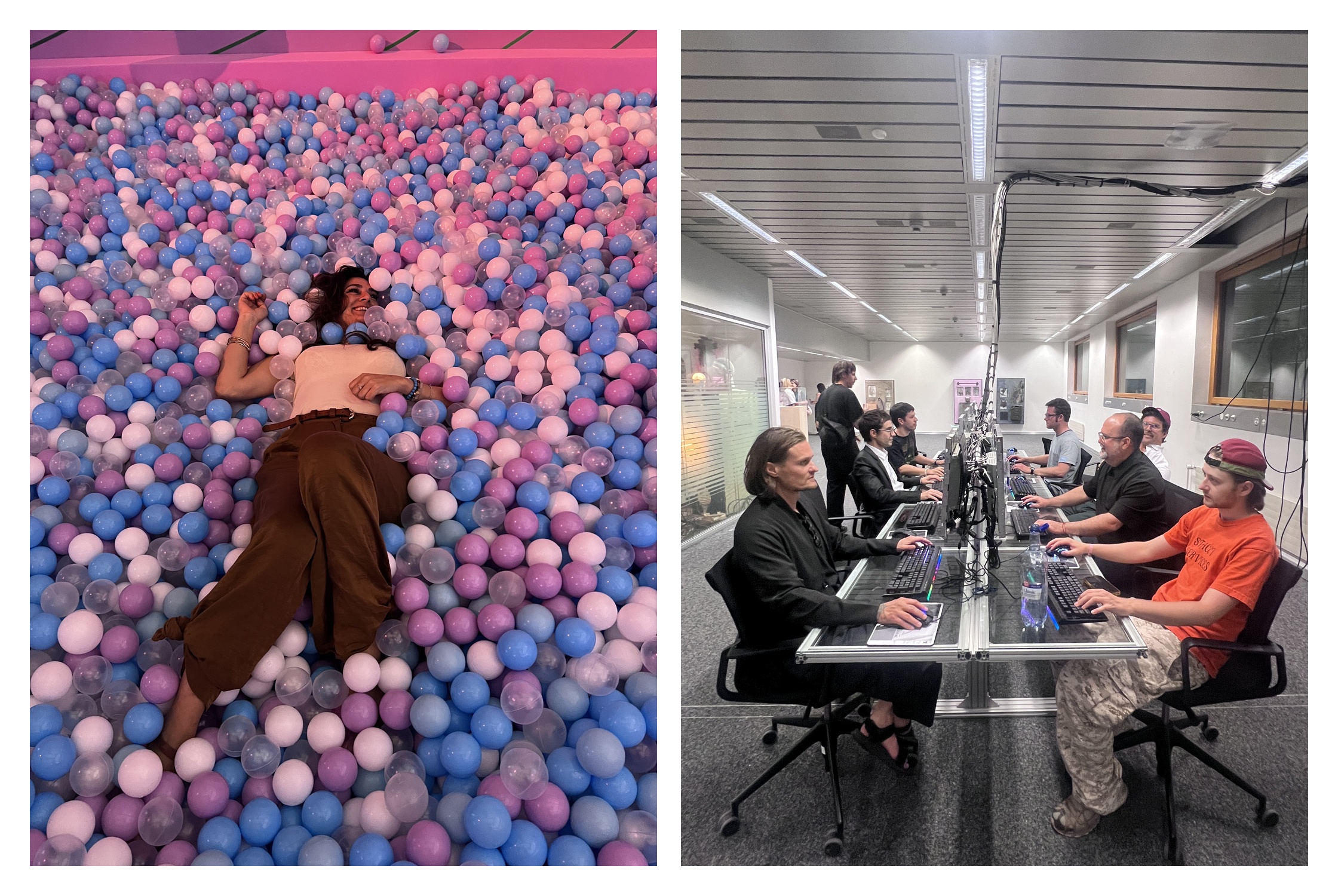
It’s possible to do all four and I was lucky to encounter at least three examples during Basel fair week. They were 0xCollection’s Cosmic Knots at OMG Franck, Cao Fei's Testimonies to the Near Future at Kunstmuseum Basel and Basel Social Club itself. All built believable worlds for audiences to explore in depth, at leisure, like a kid.
0xCollection presented established artists like Kurt Hentschläger and Mariko Mori in a casual setting that could resonate with general audiences due to its universal appeal. Their opening also included performances from crossover artist-musicians like Alva Noto, another clue as to how to tap into basic human love for art (synchronized sound and visuals).
The show demonstrated how experiential worlds can function as the cultural spoils and diplomatic offerings needed to lure in the barbaric public.
In fact, video game engines (as john gerrard’s Flag triptych showed at Zero 10) and sites of immersion can be seen as the new gates where this cultural exchange takes place. Refik Anadol’s newly opened Dataland further illustrates this potential. But like Picasso in Motion-style exhibitions, immersive-infinity room work risks straying too far into pure spectacle. Art should avoid timers.
I celebrate artists who create spaces for long-durational immersion. They want you to take your time and aren’t trying to get the next paying group in. Jakob Kudsk Steensen encourages his audiences to enter daydream-like states and spend hours experiencing the work. He and artists like Cao Fei intuitively grasp the shift from finite object to systems thinking and worldbuilding.
Systems and worlds create reactive ecosystems of participation and dialogue. They are open ports rather than closed gates—open entry points, allowing the barbarians straight in. Other examples of accessible ports include Evil Biscuit’s Card 2 with its pop art sensibility of bridging high and low art with nostalgia and the most contemporary media.
It turns out, the challenge is getting the barbarians to the gate in the first place. Once they’re there, it’s about meeting them with authentic and enchanting art experiences. It’s about enticing them through the gates.
------
Peter Bauman (Monk Antony) is Le Random's editor in chief.