Suggested Reading
Article
Event
Let the Barbarians In
Peter Bauman
•
August 10, 2026
View


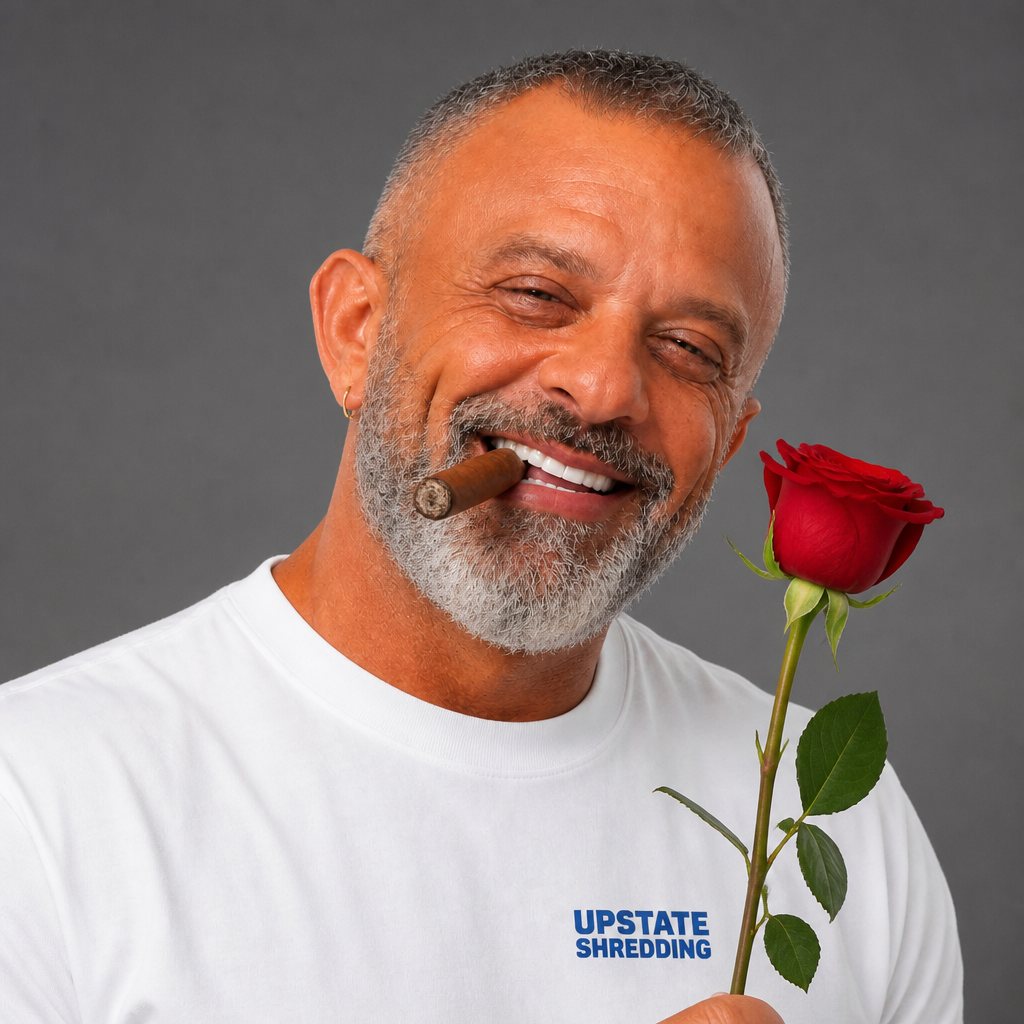
Jared Madere and fairybaby, co-founders of VVV, speak with Peter Bauman (Monk Antony) about the artist-led platform's origin and philosophy, as well as Rare Weitsmans, its first official release. The creators explain how their shared aesthetic led them to build an alternative to generic minting tools and to reimagine how artists can raise.
Peter Bauman: How did you two meet?
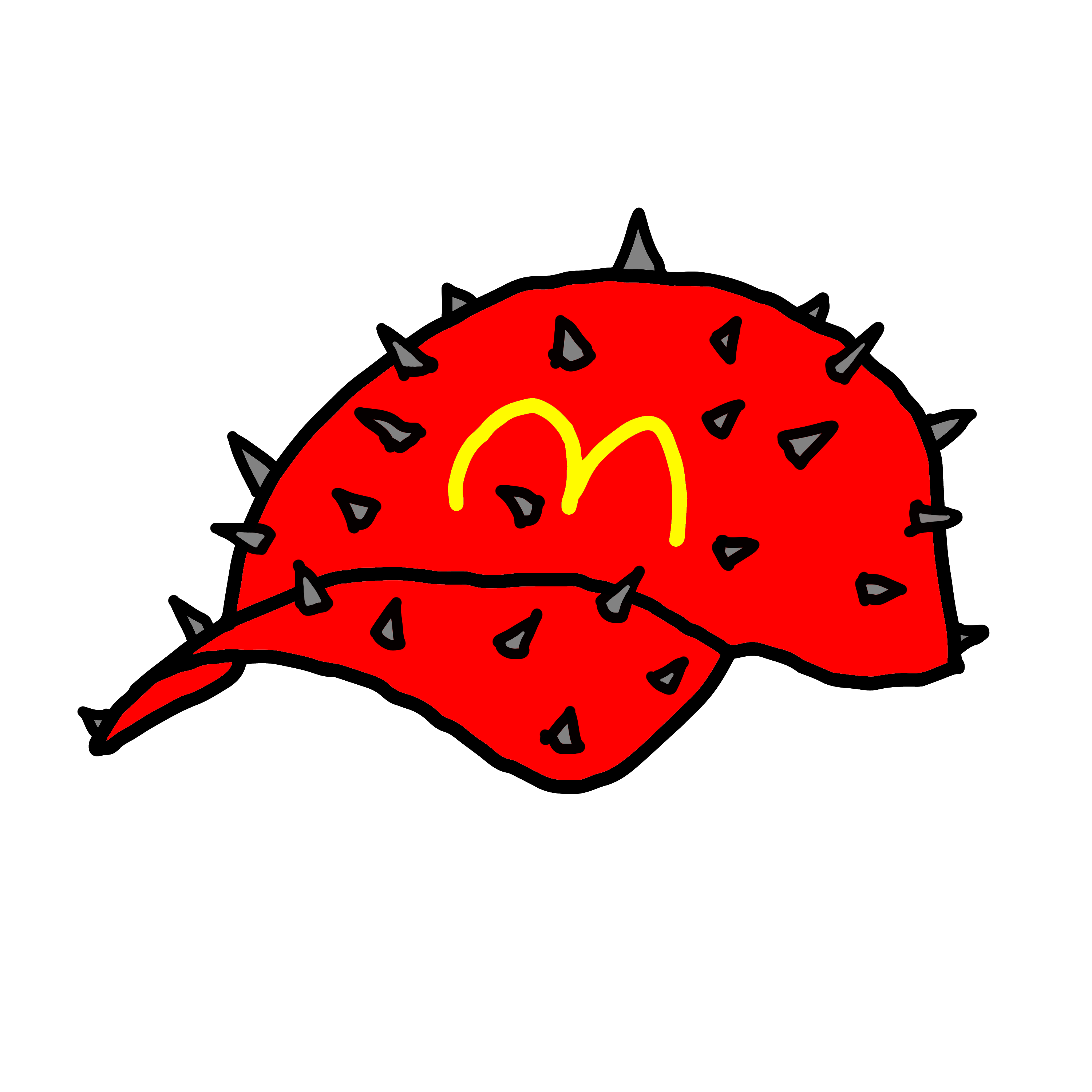
Jared Madere: I first became aware of fairybaby because he made this pre-fairy identity NFT project called THEM Hats. It was a mainnet collection that looked like MS Paint but was probably Procreate, right?
fairybaby: Yeah, I did the artwork but the concept was developed collaboratively with 0xfff in February 2021.
Jared Madere: They were drawings of McDonald’s hats. It was the first time I saw a project like that. This was at a point in time when you had a lot of trad artists coming over and doing these launches because they read the Beeple sixty-nine million headline and thought, “Oh, let me get a piece of that.”
When I saw THEM Hats, I was like, oh, okay, this is cool. It had a lot of swag to it, which I think at that point was really rare.
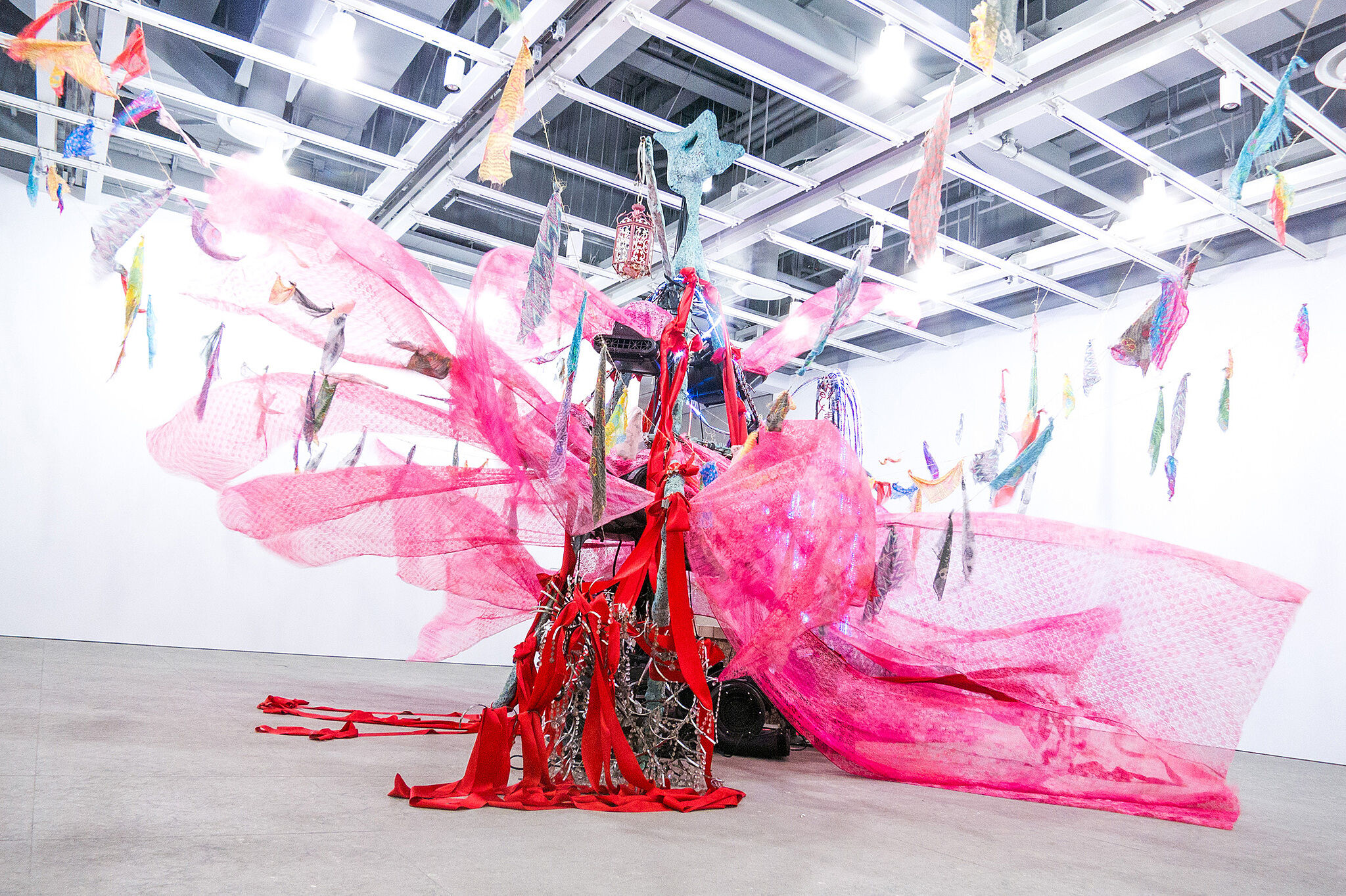
Then you had the EFAN stuff, which wasn’t extractive in the same way, but I think was related because they were working with a lot of trad artists and the value system of that world. Not all of it but I think that’s a significant chunk of it. I loved the Simon Denny Dotcom Séance collection, which was such a good title. I also think Ed Fornieles’s Finiliar was a cool project for many reasons. I always appreciated the way the art was kinda Trojan horsed into being this price-reactive digipet utility.
I first got involved in NFTs in January 2021. During that time I was looking at collections and thinking, which ones really speak to me? I come from an algorithmic generative background: in high school and college I studied algorithmic music and that’s kind of my backbone.
But I was never a huge generative art guy in the sense of pixels on the screen.
My interest was more Autechre or connecting the interior of a truck to seismic data coming in from a tectonic plate fault that’s going to control how the truck bucks like a bronco in the middle of a gallery, or something. Those were the kinds of ideas I was interested in with generative art.
Peter Bauman: Jared, you noticed fairy and 0xfff's THEM Hats but what made you actually reach out to fairybaby?
Jared Madere: Projects mostly fell into two categories at that moment: we are serious art people doing serious work and look at this f— —g hideous thing I made on Fiverr! And in the next twenty-four hours there will be 5,000 different people launching things exactly like this.
THEM Hats really stood out and I would always talk to people about it. For a long time it was my favorite collection. Years later, when Galerie Yeche Lange opened in New York, we transitioned from ETH to Solana when Super Metal Bosch put out Little Swag World.
There was this mass exodus of people who had previously done things on ETH. Right after I put my first NFT collection out, I really wanted to create a gallery or some kind of platform for distributing other people’s art, contextualizing it and making it visible to people who weren’t inside.
I talked to some friends and asked whether I should talk to the THEM Hats guy because I really liked that project. Maybe it’d be cool to get him involved. They were like, “Nah, he’s probably not going to respond.” I just thought, “Oh, okay.”
Then, three years later, we were in this Save Solana group chat and a few people really got me thinking, like fairybaby and Lowbie.
I thought it’d be cool to do something constructive. This fairybaby guy, I like his ideas. Maybe we should talk. I reached out and that was that.
fairybaby: We ended up having a phone call after chatting a long time. On that call we figured out we actually knew each other through THEM Hats. That really was a bonding moment.
Since then we always throw ideas back and forth; it just came very naturally. Then over the last two years, things got a lot more serious. Jared and I were on the phone all the time.
Peter Bauman: How long did it take to get to the idea of VVV after that first conversation?
fairybaby: Not long. We started talking about it fast, really fast. But it wasn’t the launchpad from the beginning. It started as an idea for an online magazine, a way to document what was happening in our corner of the space.
At some point, we realized there was so much more that interested us than just an online magazine. That led us into a discussion about the current infrastructure for artists to release NFTs, which was mainly dominated by the LaunchMyNFT platform.
Seeing all our friends, including myself, launching on a platform that felt generic never sat right with us. From there, the whole idea started to grow, which led to Jared talking to Wretched Worm and Miles Peyton, who he had been running Yeche Lange with.
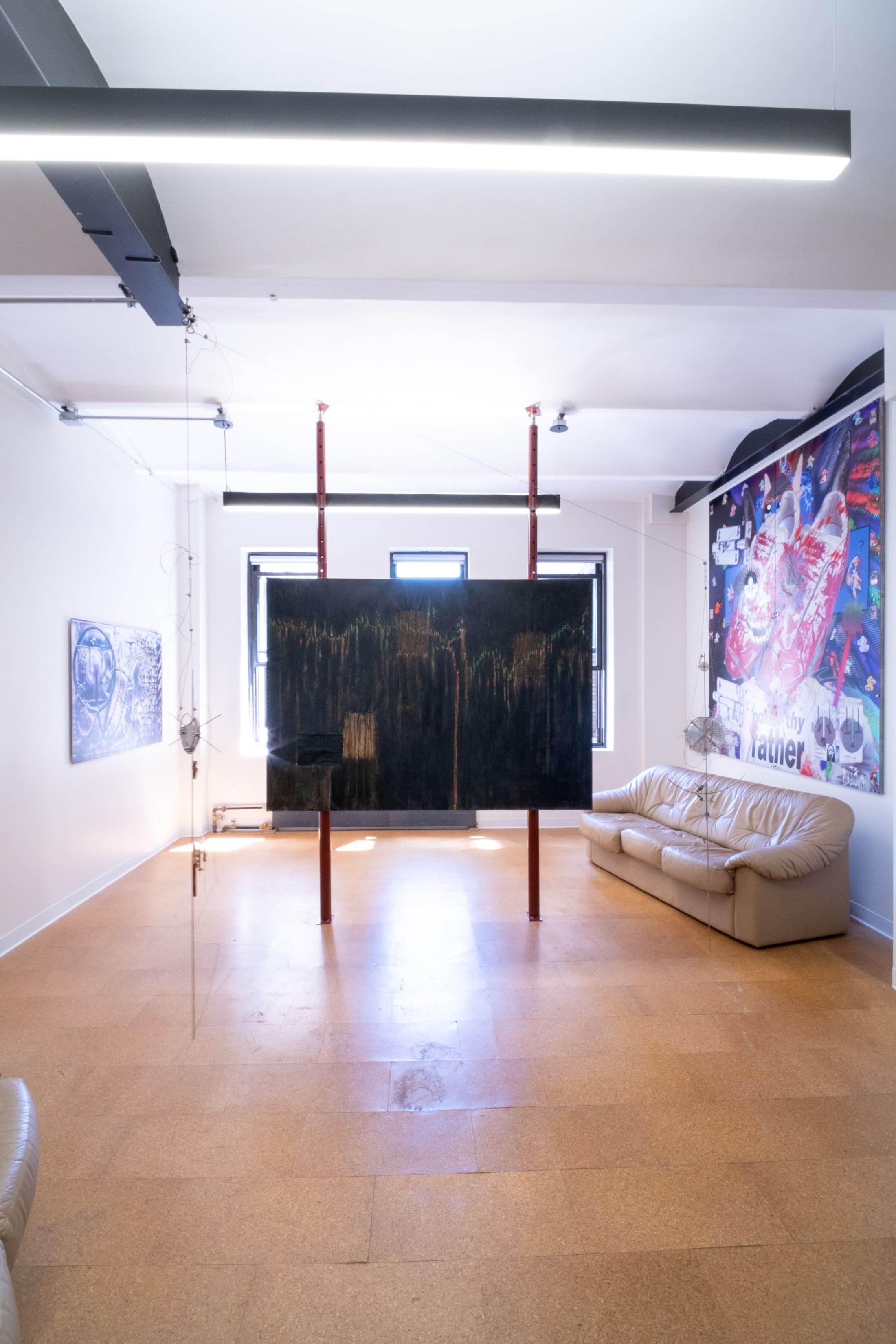
Jared Madere: It was something we had been talking about at Yeche. We had thrown it around for a bit because it was this era where anyone with a Twitter account, if they wanted to put in the time, could run up an audience and a collector base.
At the beginning of Yeche the idea was to create a space for trad artists and for crypto-native artists. Then it became apparent that it was hard to include the trad art people because they were not in the culture all the time. And it wasn’t like 2021, where you could afford to be a passive participant.
It became a thing where if you want to play, you’ve got to be on crypto Twitter every day, not just for getting your name out there but also just because the culture itself moved so fast.
Because of that shift and with the digital incarnation of Yeche, it became about what we could actually offer crypto-native artists beyond just being able to deploy. The answer was really bespoke experiences: we’d create these 3D environments as mint sites or these very elaborate skeuomorphic auction environments.
When everything shifted over to LaunchMyNFT, it felt cool and punk how you could put something out quick. But it felt so amateur as an artist to go to LaunchMyNFT.com to mint my neato little NFT.
Let’s be real, the reason to put something out on LaunchMyNFT is to make money. No one’s saying, “I just love looking at that subtle black-to-gray gradient and those generic-ass rounded corners and that f— —g sick turquoise-to-purple gradient. Damn, that shit’s hot! I can’t wait to put my shit there.”
We also came out of 2021, where it was so, “don’t talk to me unless you’ve got a custom contract or a very considered mint page.” We thought it’d just be cool to give people a way to have that kind of customization available to them but also have it be this thing that you can deploy while you’re at lunch. It’s simple enough that you can just connect your wallet, upload the assets and launch.
Then you can also treat it like a MySpace page or like some kind of exploded version of a MySpace page.
fairybaby: It’s important to add that for us it was also quite a translation of all the group chats we’ve been in. We saw what people wanted and realized someone needed to build it.
It’s been a work in progress and still is. We are in constant communication with the artists and many come to us with requests. Then we build that feature for them and give it to everyone else on VVV. Every feature we ship comes from real demand and serves a real purpose.
Peter Bauman: From the beginning, how did you also see yourselves as different from the Art Blocks, EFAN and Tezos communities?
fairybaby: With their tooling, there’s not really much customization, especially at the mint level. There’s not much of a bespoke experience that you can create with those platforms.
Building tech is just different from making art, collecting, curating and writing for this scene since 2021. It always felt like there were a bunch of tech bros building stuff, interpreting stuff, projecting stuff into what artists and collectors need.
It’s funny. I check those guys from different platforms, where they’re coming from. You see they have some academic pedigree in computer science or business, which is cool. But is this the guy telling me as an artist how I should roll out my art onchain?
We don’t have to guess what artists and collectors need.
We carry that knowledge in ourselves. Every mint we’ve launched, every piece we’ve collected, is baked into what we build. That’s the difference between building for a scene and building from inside it.
Jared Madere: Part of what fairy’s saying that goes to an even more specific place is those platforms aren’t open like ours. They function a bit more like a record label or traditional art gallery.
With us, we were deploying our own projects all the time, whether it be THEM Hats or Yeche projects. Or both of us have put out collections on LaunchMyNFT. We know what the pain points are.
We’ve both done projects with custom contracts that you couldn’t do without a developer. I’ve been working with Miles Peyton for half a decade now. Our birthdays are one day apart. Miles is a brilliant artist and very talented dev so working with him is almost telepathic at this point.
We understand each other’s sensibilities deeply and are able to riff off each other’s instincts.
Most artists don’t have the ability to build their own infrastructure that looks and behaves the way they imagine it.
Nor are they blessed to have a collaborator they’re really in tune with who can help bring that to life. We wanted to give that to every artist.
It’s a matter of building a tool versus building a storefront. It happens to be that this tool is for spawning storefronts that are an uncompromising expression of the artist’s vision.
Peter Bauman: When tools spawn storefronts, what does a sustainable scene look like, for artists and for the culture?
Jared Madere: Something really interesting happened with VVV when it first launched. I’ve been thinking about this a lot, which is this if-you-build-it-they-will-come phenomenon. It’s like any scene. You have a group of people making music, they start doing nights at a club. Then people start coming to the shows and are like, “You know what? This is sick. I like being here. Maybe I’ll make something for this room, too.”
When VVV opened its doors, all of a sudden there were all these people launching. And one of the coolest things about it was seeing the way the conversation evolved, for example, with AI.
When we first started doing Yeche, Worm and I were some of the only people using AI in the scene. Then people started using it more and more. As we first started working on VVV, we realized some of these artists were masterful with the collage stuff. But there were many others who were just doing that because it was the only way they could think of to make a large body of work.
We were like, “I wish people just knew how to harness AI more, because you can do so many amazing things with it and I’d love to see that.” And during a sleepy period everyone started learning that stuff.
When VVV began, all these people were like, “Oh, this context is cool. I want to create more stuff more often.” Just standing in the room surrounded by other people who make art, you’re excited; it feels good. You start to want to put more and more up on the wall and everyone’s getting fueled by seeing what their friends are doing.
I think that’s something really healthy for the scene, to create a space where the room itself is inspiring enough to make you want to do something for it.
Peter Bauman: That same energy responding to EFAN you mentioned earlier has resurfaced, as it does periodically, in late July 2026 as cabal talk.
Jared Madere: Because of Art Basel 0 10, people love to talk about it right now. Before that I’d always plugged my ears to it because I think crypto is a funny place. Some people who are involved in it have made enormous amounts of money. But they’ve never done anything in the real world.
A lot of these people’s friends IRL don’t even know they’re in crypto or they’re certainly not doing it with them. It’s such an individuated activity.
But anyone who’s ever done anything in the real world, if you’re part of an art scene, it’s very obvious, a lot of these things.
There’s always this concept of gatekeepers being tossed around when people feel like they aren’t getting the attention they believe they deserve. The reality is, there are certain instances where gatekeeping is very real. But I think those are rarer instances, when that word is actually meaningful.
People have all different kinds of power. Sometimes power is as subtle as being first or early and staking a claim, like parks that have a limited number of free barbecues.
In other instances it’s people that have made connections with other people and are guided by where their interests align. That’s not gatekeeping. People aren’t saying, “You can’t come over here.” It’s more like, “I’m busy talking to my friend. Sorry I don’t have time for new friends.” Or “What you’re doing doesn’t speak to me.”
I’ll give a really concrete example that almost every person is guilty of. If someone stops you on the way to a restaurant you love and says, “Please let me cook for you,” most people would say, “No thanks, I’ve got a meeting at my favorite restaurant.”
That’s not gatekeeping opportunities for that person to cook. There are a lot of hungry people out there who haven’t decided what restaurant they want to eat at. It’s your job to find those people and figure out how to talk to them.
The reality is, with art collecting, some people are in it for reasons beyond hunting for gems. The ones that show up because they’re infinitely curious, God bless them.
But if you wish ill on everyone who has had sex when they weren’t in love, you’re going to be driving on a very empty highway.
People like sharing things and giving preferential treatment to people that they can share things with. There’s a big difference between that and being like, that guy’s under three feet tall, we have a rule here that says we can’t let three-foot-tall people in.
fairybaby: I personally find it amusing. I’m really interested in meme coins, where cabals are just normal. You are constantly in this prisoner’s dilemma. You never know what’s on the other side or the easiest outcome. The best way is trying to figure out how you can work with it.
If there is an NFT cabal, it’s generational, because all these people that I see are old. I don’t see Gen Z guys included. This is just hilarious to me because it simply makes no sense to exclude the young. They’re the ones who will outlive all of this and define what’s next. Whatever we build now, they inherit. They’ll carry it further than any of us will so shutting them out means building something with an expiration date and plugging your ears to the future.
That’s exactly what makes the younger generation so valuable to be around. I love being in group chats because that’s where we hang out. You chat with a guy who’s twenty-one years old from Suriname. And he gives insights into fashion that I never would have and you’re just blown away by the knowledge this guy has.
That’s why I think the problem with an NFT cabal, if it exists, is mostly ignorance. They try to protect what is theirs. I think it’s just natural. Game is game.
Jared Madere: What fairy said is really important and maybe the only way that I see a cabal being a solid thing is when people say, “Look at this dead thing I have in my pocket. Look, it’s good. Did you see it? I’m not sure if you got a good look at it, because you haven’t expressed an adequate enthusiasm yet. Right? Right. Oh, did you forget? This is it. Remember?”
That’s an issue. When you have people that are so obsessed with advocating for what’s sitting in their wallet rather than poking their head out and being like, hold on a second, what else is being discussed here?
That might be one of the more tangible things about what people are pointing at when they say “gatekeeping” that is very real.
Peter Bauman: You mentioned how “the best way” is figuring out how you can work with the system. That brings us to VVV's Rare Weitsmans project. What is it doing? Why Adam Weitsman?
fairybaby: Jared and I occasionally get hyperfocused on random things we see on the timeline. Without knowing who Adam was, this happened with him because of his smile. We had long discussions sending images of his smile back and forth.
We were like, “Dude, it is his smile, very magnetic. He’s just really a glowing guy who’s in love with life.” So we got more curious and started digging into his backstory. The more we found, the more it pulled us in.
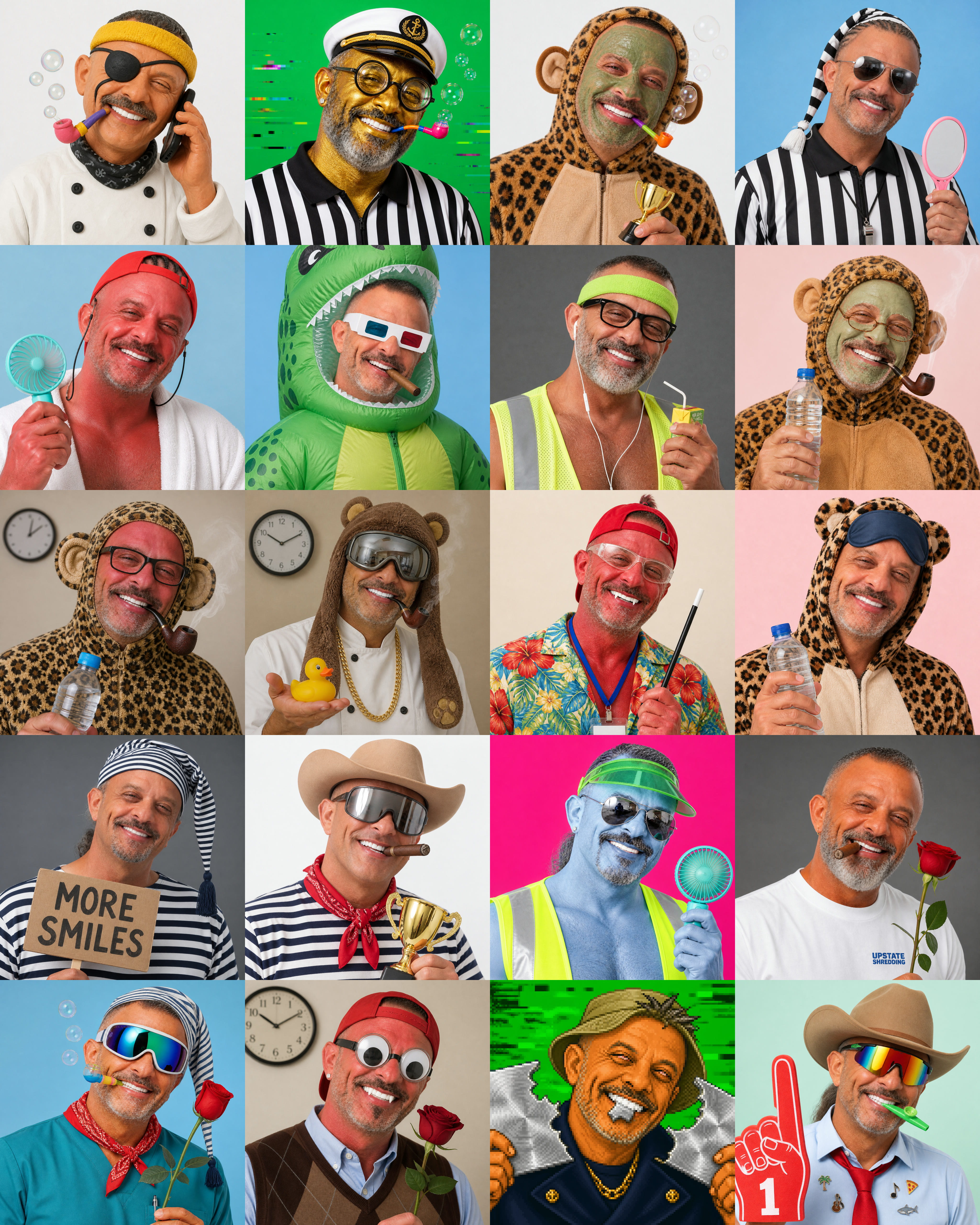
Jared Madere: When we started researching, we were like, holy shit, this dude’s a f— —g real one. He’s just so humble. Seems so f— —g cool.
fairybaby: His whole life arc is really interesting.
Jared Madere: He started a steel-shredding business and has been an art collector since the ’80s. He’s a super honest guy. We watched all these interviews with him and found them so refreshing. He’s so sincere and really well-intentioned, a super humble guy.
fairybaby: He went to prison, which we love. Obviously he’s a guy who’s been through the fire and came out the other side.
We started seeing his face everywhere in this phase where we just had a few breakthroughs with our vision for the future of VVV. We were like, “Okay, we are ready to raise.” That’s a process we’ve started now and we’re talking to different people.
The idea with Adam just came naturally alongside that, not even knowing who he is. Again, we were just making memes with Adam’s smile and the Purple Shirt Guy. And the more we learned, the more we thought, this guy seems like good energy and very passionate. We should try to somehow get in touch with him.
But anyone can send someone a pitch deck. We wanted our raise to feel like an artistic process, something fun and multilayered.
In Adam’s case, instead of a cold message, we created a whole collection around him. That felt way more like us.
Jared Madere: There’s also something funny about it. I mean, fairy has only had microinteractions with him on the timeline. All complimenting him on his smile.
The raise is an interesting context that no one really plays with as material. Maybe that’s because most founders aren’t artists.
And maybe if you’re just an artist-artist, you’re not noticing this as much either. We kind of occupy many roles as artists and people creating tools for artists. We’re kind of on a crusade for these people.
It’s our job to go out into the world and advocate for these artists. We give lectures about the artists. We do interviews about the scene. We’re like political pundits passionately believing in these people and what we’re building together.
That puts us in engagement with a certain frequency of information that not all of these artists are thinking about, which is founder Twitter. A few years ago I didn’t know what a VC was.
Once raising became something we were observing and thinking about, the language of raising starts slipping into becoming part of your jokes with each other.
That fabric bleeds into everything you’re thinking about. It’s all material. It’s all the world you’re playing with.
Peter Bauman: You mentioned the Purple Shirt Guy. Those Twitter posts with him were one of my favorite art projects of Art Basel, Basel. How do you see that character related to this Adam Weitsman project?
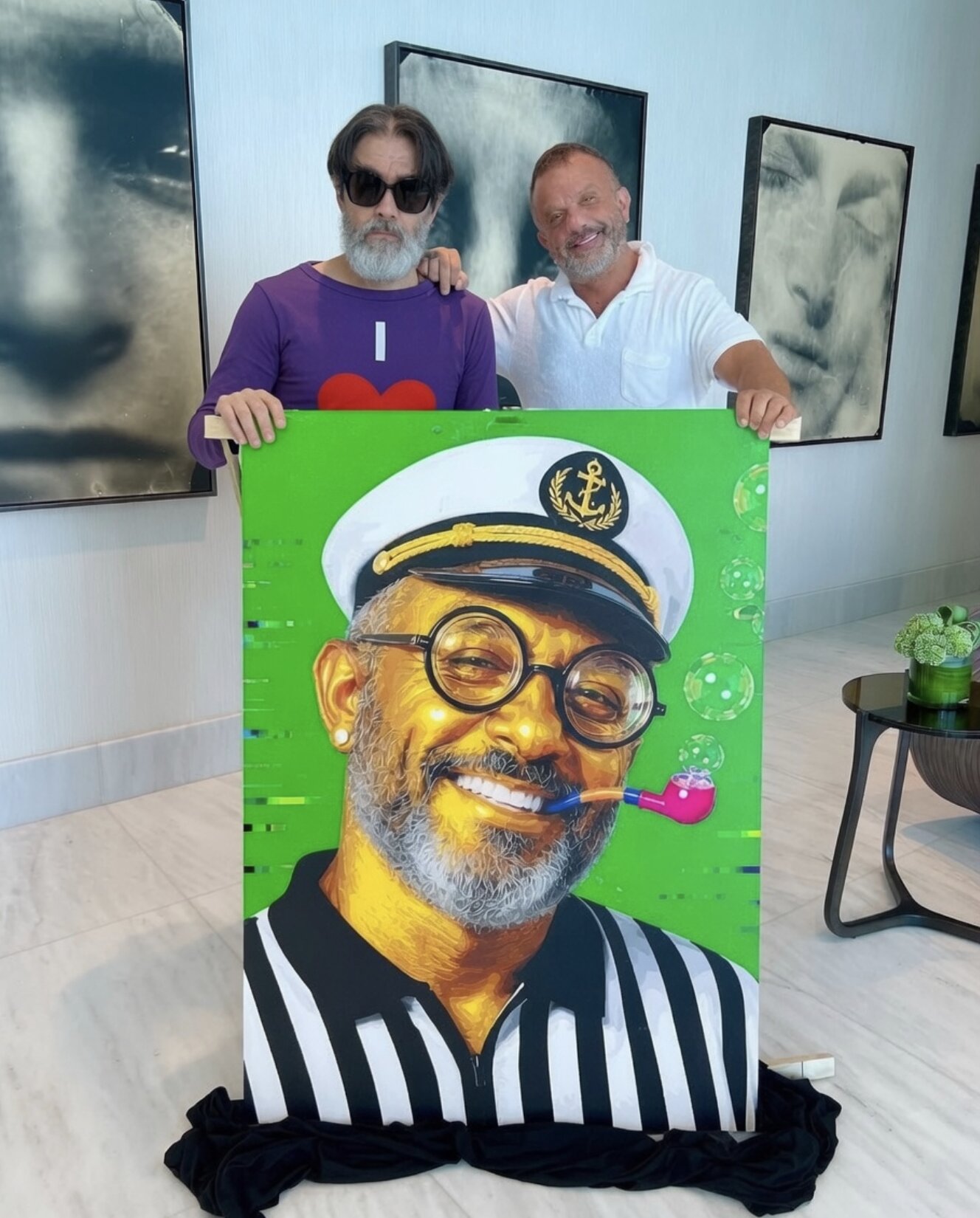
fairybaby: It’s very similar because it came naturally. The idea came to me on the train to Basel: take this guy we once generated as a meme and make him the face of our Twitter posts about the 0 10 exhibition. That’s very much what I love about this space: you can play with a conceptual layer in a way you never could physically.
Some people really thought that was the VVV guy because they saw him on the timeline. And he’s maybe not what you’d expect. He’s this old bearded guy.
Jared Madere: He looked cool, though.
fairybaby: He’s been in the film business and retired; now he’s collecting art. It just came naturally to turn the whole Art Basel visit into another creative process and stay playful. Since then it’s just very easy to use AI and implement him everywhere.
Jared Madere: Yeah, fairy is so brilliant at inhabiting these spaces in a really natural way. He’s had a ton of experience rallying communities IRL and in the space, a real timeline warrior. He’s good at coordinating people and he’s really amazing at just being off the cuff with it. Posting flows really naturally to him in a way that it does not for me.
So much of VVV’s success has to do with memes. As funny as that sounds, how do all these things start? Someone sees a post, they think it’s funny, they’re like, oh, these guys have some energy around them. So they reach out.
Everyone wants to be around the funny guy. He’s not thinking about it strategically. It’s more just, like, he sees the post and it’s like, it’d be funny if I put the Purple Shirt Guy in that. It just so happens that’s the fabric of building things in this space.
There’s been a shift where you can’t even call it marketing or advertising or whatever, because those boundaries have disintegrated so much. Posting is just the rails you meet people and build things together on.
Shitposting is a very authentic way of pulling people into your world.
That guy’s funny; let’s talk with that guy. Oh, he’s also insightful. Interesting.
Peter Bauman: We’ve covered VVV’s founding and its present with the Rare Weitsmans project. But what can you tell us about the future of VVV?
Jared Madere: The thing that nobody has gotten right yet is that building an art world that people yearn to be a part of isn’t about building tech. People don’t show up to pull a lever or press a button; they show up because the people in the group chat understand something that nobody else in their life does about what sets their heart on fire.
They show up because they wake up thinking about the art and get giddy whipping out their phones to show it to their friends. They show up because every day the conversation around the art is evolving and they’re dying to know what happened while they were asleep.
Right now most of what exists in this space is issuance. You make a thing; you put it out. But the part where art actually becomes culture is everything that happens after. How it moves, who it moves between, what gets said about it while it moves. That’s the half nobody’s built. We’re building the whole path rather than another piece of it and doing it cross-chain to finally bridge the culture being built on SOL and ETH.
It’s rails that allow people to meet in ways they’ve never had the opportunity to before. You can still mint and flip and do all that too if you want but more than anything it’s about creating a holistic ecosystem that delivers dream infra for deploying, trading and, most importantly, pouring everyone’s passions together.
When you connect everything, the momentum of each component multiplies to become infinitely greater than the sum of its parts.
------
Jared Madere is an artist and co-founder of VVV. He co-founded Galerie Yeche Lange with Wretched Worm and Miles Peyton. In 2015 he received his first US solo exhibition at the Whitney Museum of American Art.
fairybaby is an artist and co-founder of VVV. Creator of Squishy Drifters (2025) and co-creator of THEM Hats (2021), he has spent years rallying communities across NFTs and meme coins, treating the timeline itself as a medium.
Peter Bauman (Monk Antony) is Le Random's editor in chief.