Suggested Reading
Interview
Evergreen
Memo Akten on Rituals as Algorithms
Peter Bauman
•
August 3, 2026
View


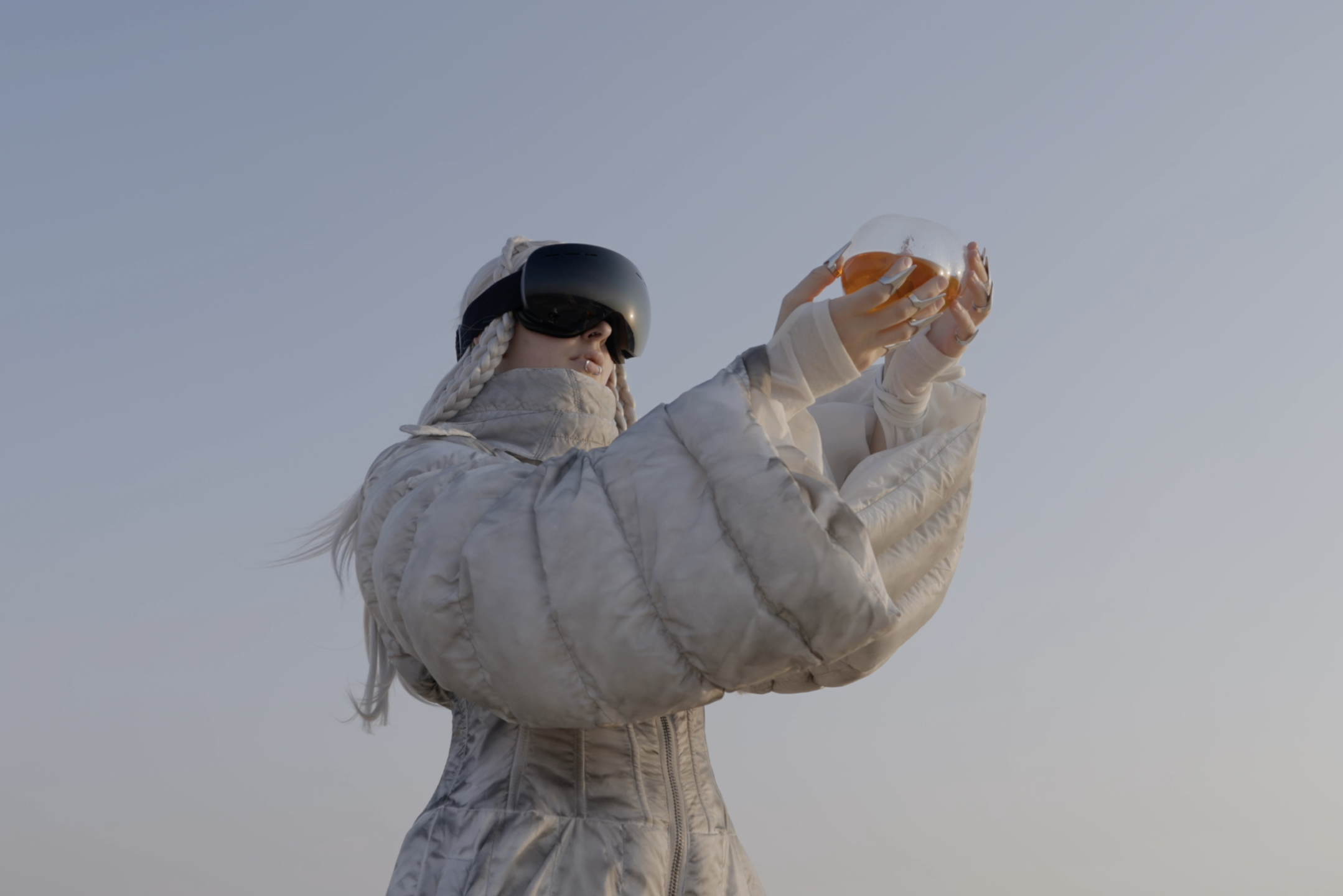
Curator and researcher Marlene Wenger, Head of Programme at HEK Basel, co-curated New Rituals for the End of the World with Anan Fries. Wenger speaks with Peter Bauman (Monk Antony) about ritual as transformational technology, bringing back Magic in Federico Campagna's sense, and art's role in finding loopholes as the world ends. New Rituals is on view at HEK (Haus der Elektronischen Künste) through August 9, 2026.
Peter Bauman: As your show New Rituals at HEK closes, what reflections do you have? What rituals are you hoping this show might actually change for audiences?
Marlene Wenger: What co-curator Anan Fries and I tried to do with this show was capture the zeitgeist around ritual but also the notion of the apocalypse.
It’s using the exhibition as a seismographic instrument to see what is happening and why we feel the way we do. These topics are just in the air. They’re not something that we measure or that we have statistics for. They’re based on our experience being online or living in contemporary times.
For ritual, some of the works are actual rituals, new takes on rituals or explorations of ritualistic practices, especially with the notion of doomsday. We also designed the exhibition itself as a ritual. When you go back to museum history, the exhibition itself has always already been a ritual. You go somewhere and you perform this act of watching art.
We wanted the visitors actually involved in the show. They could take a scented lava stone, designed by the graphic designer who also did the book Mean Goddess. The vessel holding the stones is a specific design from our scenographers, as is the whole exhibition setting, which is reminiscent of an apocalyptic landscape, a desert.
You bring the stone with you as you move through the exhibition. This is already in itself a small ritual that was interesting for us to include. We wanted to make the exhibition experience happen on other levels, not only the cognitive but also the embodied. We hope that audiences notice that art is something you experience on many levels.
We also wanted to remind audiences of the rituals of daily life spent online.
Are they rituals or just addictions?

Often online we don’t realize how much time we spend. So it can become a ritual to do the actual act of going offline. I hope that people also take away this awareness of being present in a moment. You can call it different things, like meditation, but it’s about being aware in the exhibition of what resonates with these artworks and also happens in my everyday life.
Peter Bauman: Ritual versus addiction reminds me of Yuk Hui. One of his big ideas is recursion and contingency: recursion being feedback loops and then contingency just being information. He talks about the difference between a circle and a spiral: a circle is like a loop but you always go back to the same place and so you don’t really move. A spiral is also a loop but propelled by its interaction with the outside world.
Marlene Wenger: When Anan and I were discussing our definition of ritual, we noted the ritual as transformational technology, something that transforms, regardless of size. It’s a transformational state in awareness that can be reproduced. It also has to have some means that can be performed by people, some kind of choreography or script to follow.
But they’re also never the same and they change with time and transform the state that they’re in. So I would say that it’s not possible to go back to the exact same place. They are not loops but spirals.
It’s also a matter of agency. You think you have agency when you’re doomscrolling but the algorithm is designed in a way that you completely lose your awareness of what you’re doing. You’re entirely driven by images and you cannot stop.
You’re in this addiction. It’s not a state of awareness that I would argue you have when you perform a ritual, where you’re completely in the agency of what you’re doing in a particular moment. This is maybe also the difference between the two notions.
Peter Bauman: New Rituals also aligns with Hui’s calls for a more pluralistic interpretation of technology. He staunchly opposes Silicon Valley tech monoculture. What’s the role of ritual in demonstrating resistance? I’m thinking of works in the show like Skawennati’s Mohawk ceremony in a Californian game engine, Sian Fan’s Tamagotchi-amulet and Ichihara’s mourning devices.
Marlene Wenger: These works are doing this in the sense that they engage with magic.
Whatever you call it, spiritualism or what Federico Campagna calls “Magic” as opposed to the “Technic,” the way things are. Magic is exactly the different knowledge systems that exist outside of the Technic, which is what he sees as an industrialized world that led to Silicon Valley as it is today. For Campagna, Magic is the opposite.
These works bring back Magic in Campagna’s sense but also in the more common sense of treating magic as something that is totally real.
Rituals then are just manifesting real things in life that are embodied, that are happening, that are important for your community.
This goes to what we wrote about in the catalog, quoting Meghan O’Gieblyn about her idea of the re-enchantment of the world.
Of course, it’s important to learn that re-enchantment is happening on both sides. The tech bros in Silicon Valley re-enchant technology in the way that they call AI a god. Meanwhile, re-enchantment happens in other cultural bubbles in a different sense, seen as bringing back belief in spiritual systems or different knowledge systems as opposed to late-stage capitalism.
They are ways of coping with the problems that this system has created. But as a way out? Not so much. They’re also not exempt from existing in these systems.
Peter Bauman: It’s the horseshoe effect where the two extremes curve back around and meet on re-enchantment.
It speaks to society’s broader confusion about how to respond to AI. The hate is quite vocal but ChatGPT is by far the most downloaded app of the last twenty months. Gemini and Claude are in the top twenty. New Rituals seems to make sense of this by approaching AI through ideas of god and the apocalypse.
Marlene Wenger: Yeah, exactly, and just to point out again the resistance notion: the title of the exhibition is very polemic in the sense that we call it New Rituals for the End of the World.
We are also asking, “Can we have new rituals to erase what is happening?”
How can there be actions of resistance to what is happening? Not in an activist sense but more in the sense that it has been happening this whole time but we are rediscovering it.
For example, when you mentioned Skawennati going back to Mohawk culture and examining it through the lens of technology. Or bringing back the reconnection to charms that Fan designed. They are very cute and aligned with techno-capitalist culture but made as something good for your body. You can carry them with you and they remind you to breathe.
This show is saying it’s about the very small, everyday things that are happening.
Peter Bauman: Again, that aligns with Hui, who’s trying to find some middle ground between complete rejection of technology and worship of it.
Marlene Wenger: We were also trying to describe this weirdness or this kind of confusion of the times you mentioned earlier. We know these technologies have a monopoly and are created by these people who are super bad, in a sense. Still, everyone is using it or we are not exempt from using it or there are no other options to date. So we all use it.
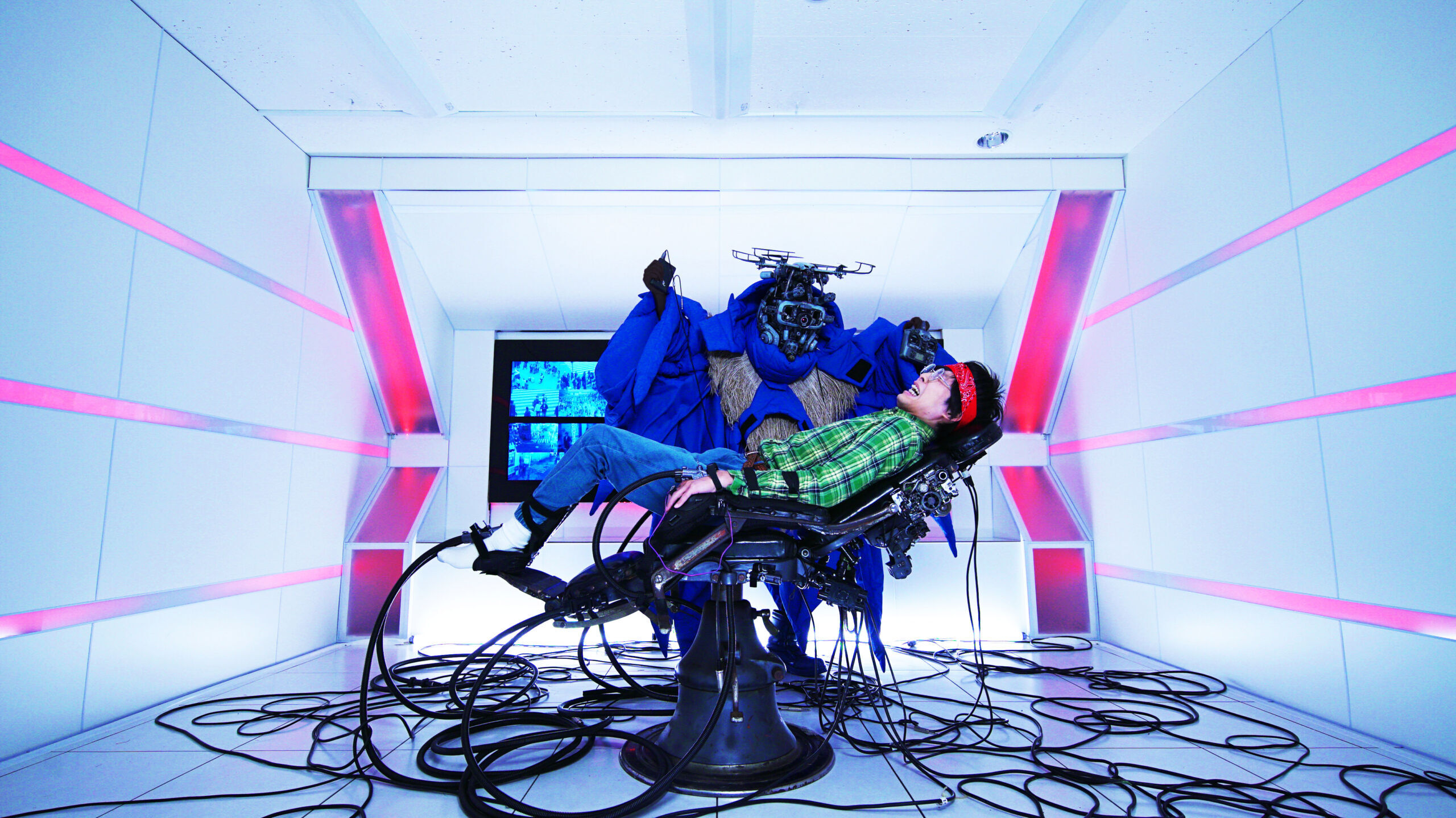
It raises the issue that we’re not resistant enough to just not use the tool when we know that a techno-fascist has created it. I’m not exempt; I’m also part of this problem myself. And we see it in everyday people’s behavior.
Is the technology something good or something bad or whatever? Can we even use these labels? It’s a very hard question because sometimes it looks like the only way out would be if you exempt yourself completely from society. But then you’re also not participating. At that point you can go and live on a mountain.
But I would like to encourage people to think critically about the use of these technologies and where they take us.
We also try to contextualize the whole thing. To bring in, through this lens of spirituality and ritual, the full scope of what these technologies mean and the ways they’ve changed human behavior.
It’s not necessarily to say this is good or this is bad but just to try to see what is actually happening. Why is it happening? What are the correlations between these things?
These systems don’t work the way they used to. With the new technologies, you can’t rely on the old assumption that someone else will make a better version and people can choose. Some can go for this more ecological one or they can opt out entirely.
But it seems we live in such a black-and-white society that it’s this solution or nothing at all. There’s no opposition, no reaction. A lot of examples seem to work like this. We no longer societally sense something is wrong and try to fix it or at least we try to speak up.
We went through this in the twentieth century with various struggles for human rights. And did we learn from it? No, completely not.
Sometimes it feels like we’re going back in the evolution of humanity. I think this has a lot to do with how these technologies have evolved and the societal changes they bring.
Peter Bauman: This sense that we’re actually regressing thanks to technology directly counters the early tech optimism of thinkers like Stewart Brand and Roy Ascott. They had clear visions of what technology could be and were very optimistic. Fast forward to 2026, wah-wah.
In the mid-90s Ascott was calling on artists to be the ones to show us the way with tech. In 2026, should artists be showing us the way or leading us away?
Marlene Wenger: I think it’s not so much about protecting or warning. I’m not into very moralized positions in art.
I’m super interested in when an artwork shows alternatives, in the sense that you could also look at this thing this way or you could also approach it in another sense.
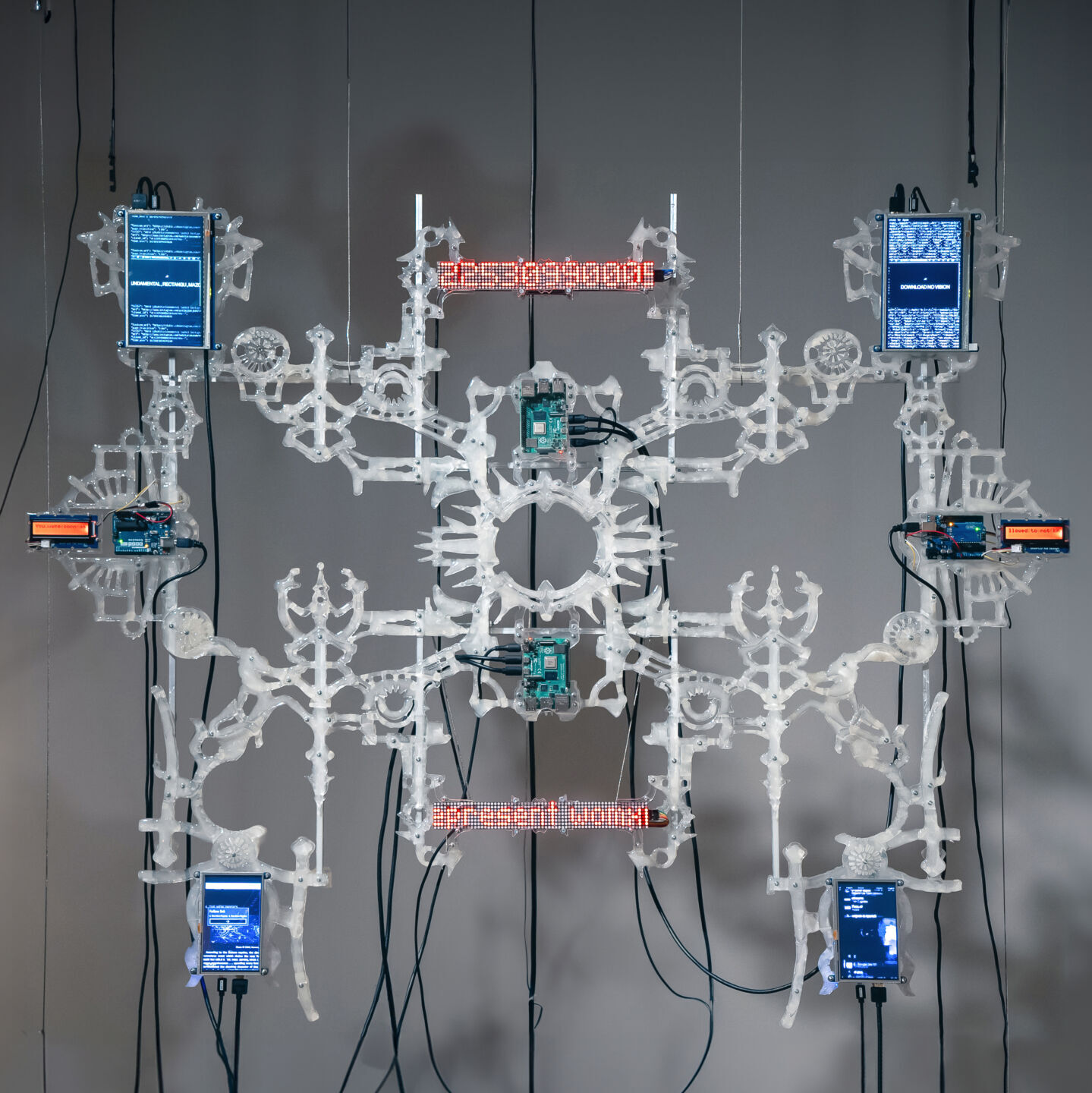
You could have another technology or you could use this technology in a way it was never meant to be used. The misuse of technology has happened since at least Nam June Paik.
It’s about coming up with not only compelling aesthetic experience but also critical thinking about the use of these technologies.
When you misuse a TV and make an aesthetic work about it with a magnet, as Paik did in 1965 with Magnet TV, it’s also saying something about the fixations of television technology.
These things still work in a similar way, hopefully. Take the example of people using Snapchat filters or Instagram face filters as a platform for artworks. Not only creating stupid bunny ears but a very critical, very creative body of work within the framework of the platform.
I think that speaks to what I think the role of art probably is for me: finding the loopholes, finding the alternatives. Especially within this dualism, this hopelessness that I described before, where you think, there are no alternatives, there’s just this one way that the world is now. And it’s very f— —d up and confused.
But you still have people saying, “No, wait. There was this ancient people who had this fascinating ritual that would be very effective for this or that treatment.” They bring it up in artistic research, in a work, and it’s fascinating. I didn’t know about this culture; I didn’t know this existed. It opens up your whole worldview and you think, okay, I have an alternative way of thinking about things, of thinking about solutions.
That said, I don’t want to position the artist as someone who has to solve the problem because humanity failed. That’s not fair either.
Even people who are not super fond of contemporary art and don’t go to museums regularly still listen to music. They have some form of culture, even when it’s only entertainment. More so when it’s community-based. People sing in choirs. People have cultural pursuits.
Things like the pandemic showed in a very accurate, pressing way that culture is not something that you tack onto a society and think, “Oh, this is nice to have.”
Culture forms you; it’s in the DNA. For me at least, it’s in the psychological survival of how you perceive the world. What are my options? What are the senses that become part of one’s overall health?
Health in the sense of being connected to something, having an input, having beauty, having a conversation, having richness, having an impulse that something in your life is so important. Art gives you that and gives you the relationships and the community that come with it.
------
Marlene Wenger is a curator, researcher and Head of Programme at HEK. Her work examines how digital technologies shape the production, perception and distribution of contemporary art.
Peter Bauman (Monk Antony) is Le Random's editor in chief.