Suggested Reading
Interview
Event
Seeing Machines: Luba Elliott on the 2026 CVPR Art Gallery
Luba Elliott
•
June 29, 2026
View


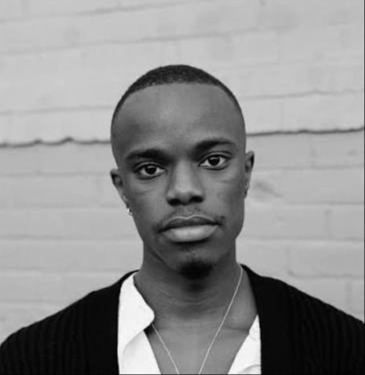
Ruby Justice Thelot describes the emergence of machinic taste, a phenomenon where digital content is increasingly shaped by non-human preferences rather than human desire.
As AI-generated images get increasingly weirder, we are gaining a premier view into a new form of taste, something post-human, the first expressions of machinic taste. Accelerationist thinker Nick Land asserted, "Nothing human makes it out of the near future." Could we be seeing the first inklings that nothing human makes it out of digital culture?
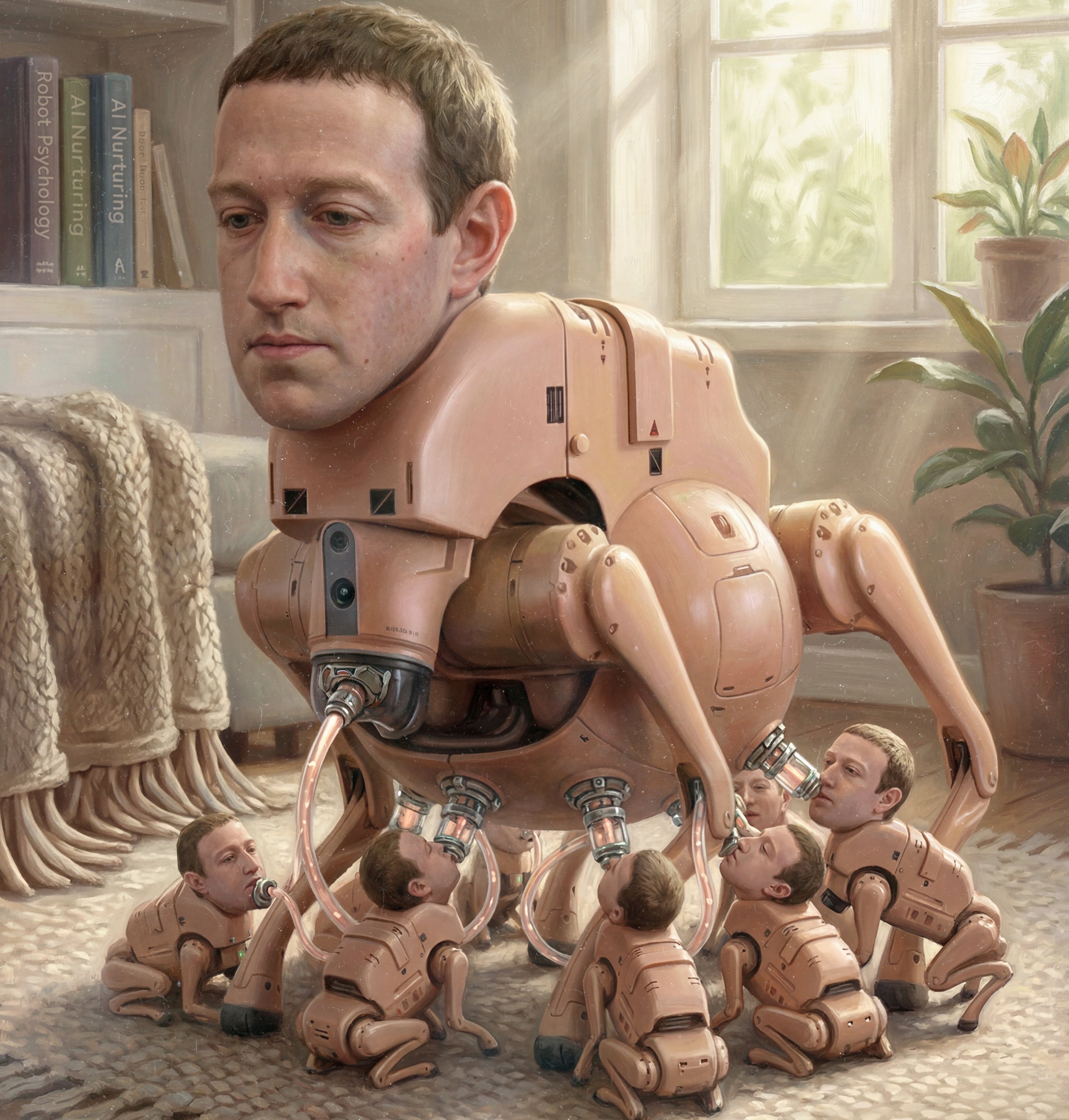
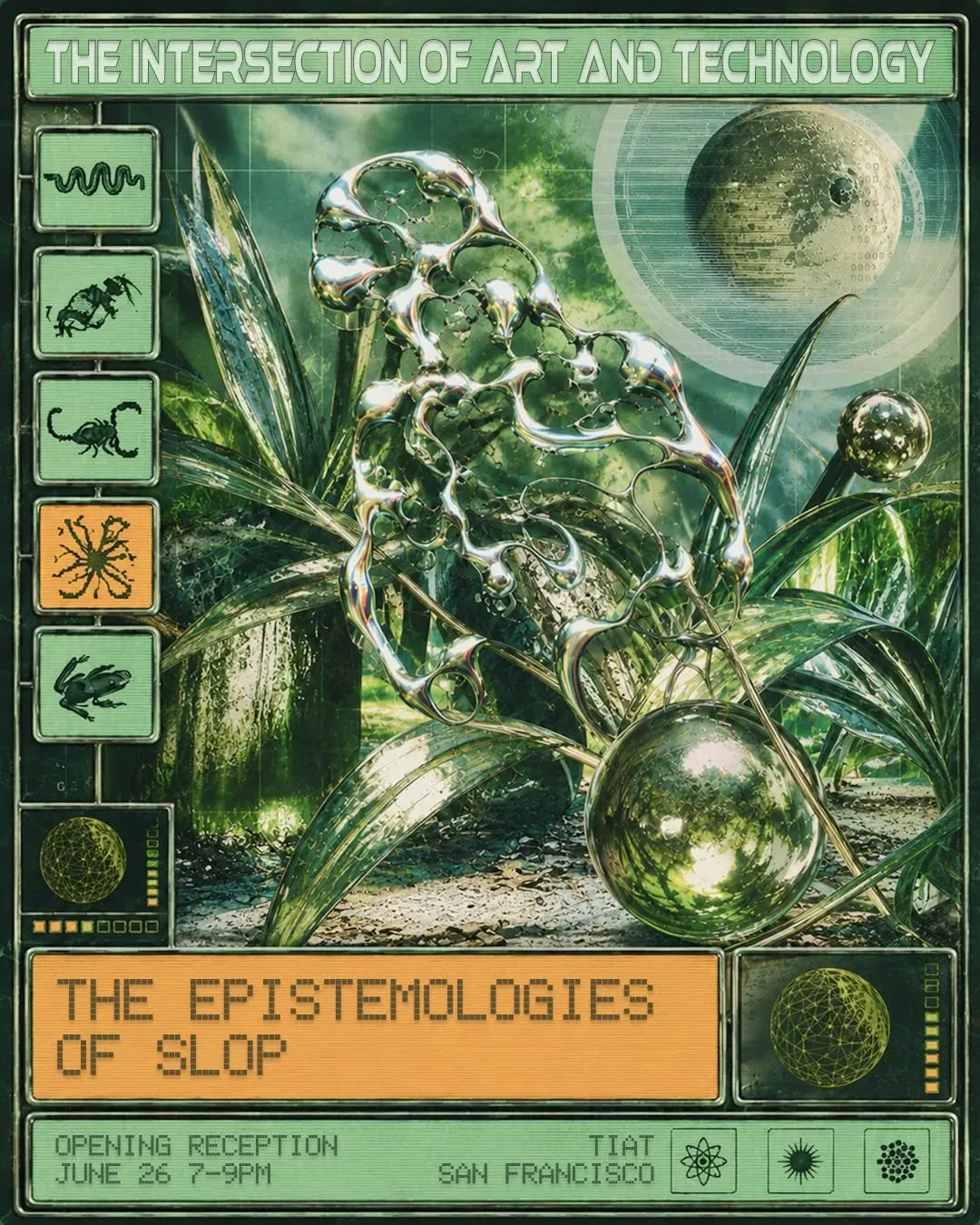
Slop is “digital content of low quality that is produced usually in quantity by means of artificial intelligence.” But what we deem low quality is in fact the result of a very specific reward function. There is something that wants these images; they are not gratuitous.
In machine learning, a reward function is the criterion by which a system determines whether or not it has succeeded. It is the rule that guides what the system or algorithm optimizes for. In the case of social networks, it could be views, likes, engagement, time on platform, etc. It learns which outputs produce the desired signal and then adjusts itself toward producing more of them, progressively improving over time, in order to get the largest “reward.”
What we encounter on social media platforms is what I call the "cream of the slop." In other words, thousands, if not millions, of images are created by automated systems every day but only those that garner human response get elevated by the algorithm; only that specific strata gets seen. We only see the images people have seen, liked or engaged with; that’s the nature of the algorithm. We only see the images that have been “rewarded.”
However, the digital landscape is undergoing a bit of a transformation. The internet is flipping towards being majoritarily inhabited by non-humans. According to Cloudflare, over fifty percent of all web traffic may now be bots. With the advent of agents and the dwindling birth rates, this number is set to increase rapidly.
In his book Audience Capture, researcher Matt Klein defines the titular term as the process by which creators are influenced not only by their own desire to make things but also by the way their community reacts to what they make. Audience capture pushes creators to make things that people like. And for the most part, you could say that many artists already kind of work that way. If you have a show and it works out, maybe you do more work like that. But there is something much more evident and quantifiable in the way an audience’s reaction to work influences what gets made afterward online.
However, what happens when it is not only the audience that determines what gets seen? A third party is also involved: the algorithm. There was an epoch where we definitely had audience capture. I want to introduce the idea that we also now have algorithmic capture, where digital content creators and artists are attuned not only to the audience but also to the tuning of the AI systems that determine what gets seen by that audience.
Our current situation is somewhat of a hybrid. Content is triangulated between audience and algorithm. With the advent of algorithmic platforms like TikTok and the release of For You pages across most social media platforms, we are seeing a new synthesis of audience and algorithmic capture emerge.
This is highly visible on YouTube, where you may have noticed that the thumbnails are very specific aesthetically. Infamous YouTube reigning champ MrBeast pioneered the genre: big face and big expression next to big text. This is a significant form of algorithmic capture. Images that have a big face, big expression, and big text perform better on the platform. Therefore, creators and artists make thumbnails with that specific layout in order to be seen by their audiences.

But platforms previously predominantly composed of human accounts are now swarmed by bots. These bots can also confer views, comments and likes. They can interact with the content and possess a voice in the choir of the algorithmic reward function. They also influence what gets seen.
We are witnesses to a wonderful waltz between audience capture, algorithmic capture and machine capture.
In order to even be subject to audience capture, they have to pass through algorithmic capture first. It is not only the audience who influences what gets made. It is also the algorithm, because the algorithm becomes the gatekeeper, the first pass before the audience has access to the content.
As we accelerate towards an internet-of-agents, the audience becomes overwhelmingly machinic. The reward function across likes-comments-shares is no longer an exclusive proxy for human desire but evidence of machine aesthetics.
Thus, machinic taste reveals itself. What we are seeing in increasingly strange, excessive, or illegible AI-generated images is not simply error, nor novelty, nor even optimization for humans. It is the first expression of a system learning to respond to itself through images generated from images, evaluated by images, circulated for images.
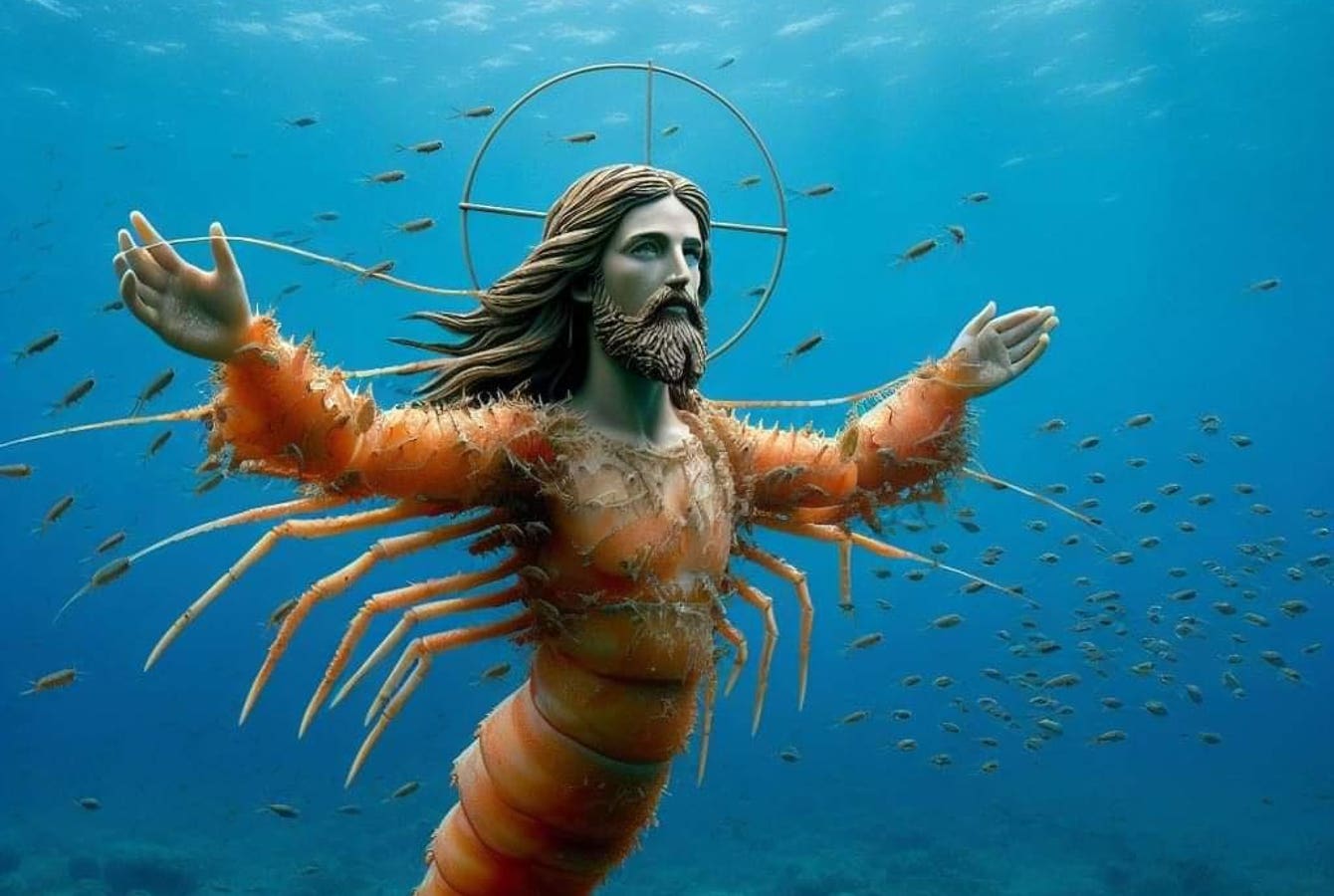
In that sense, the image has finally found its ideal audience: itself. It no longer needs us.
The artificial no longer needs to mimic the human-made. It begins instead to mimic this amalgam of network-made and human-made imagery, until the distinction collapses entirely and the blurring becomes total.
What follows is a permanent state of hyper-reality, where images are no longer tethered to a human maker yet exist within a self-sustaining visual ecology.
It’s images made for and by machines, depicting a world no longer centered on us: machine aesthetics.
------
Ruby Justice Thelot is a designer, artist and cyberethnographer based in New York City. Thelot is a professor of design and media studies at NYU. His work focuses on digital phenomenology, virtual ontology and the implications of being-on-line. He writes about virtual realms, digital communities, and artificial intelligence.