.png)
Suggested Reading
Interview
Evergreen
Beeple on Infinite Creation Machines
Peter Bauman
•
December 12, 2025
View


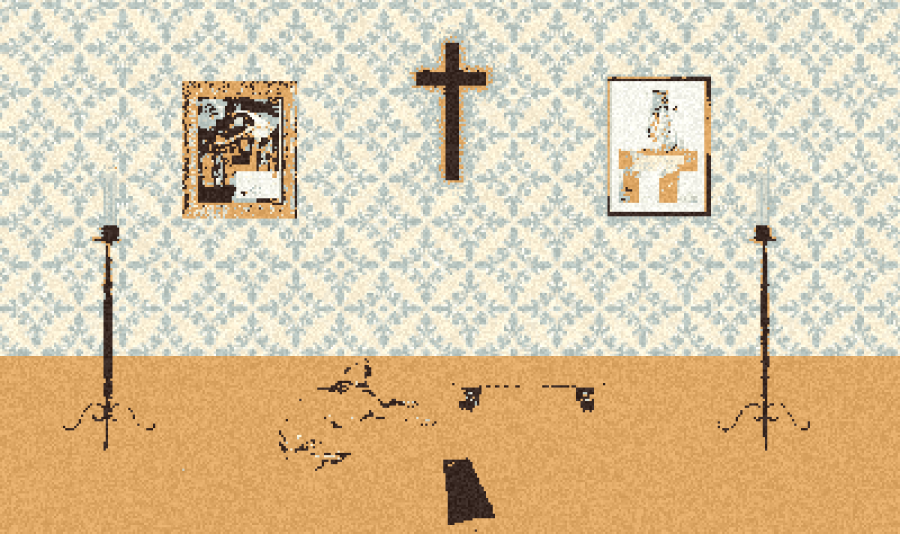
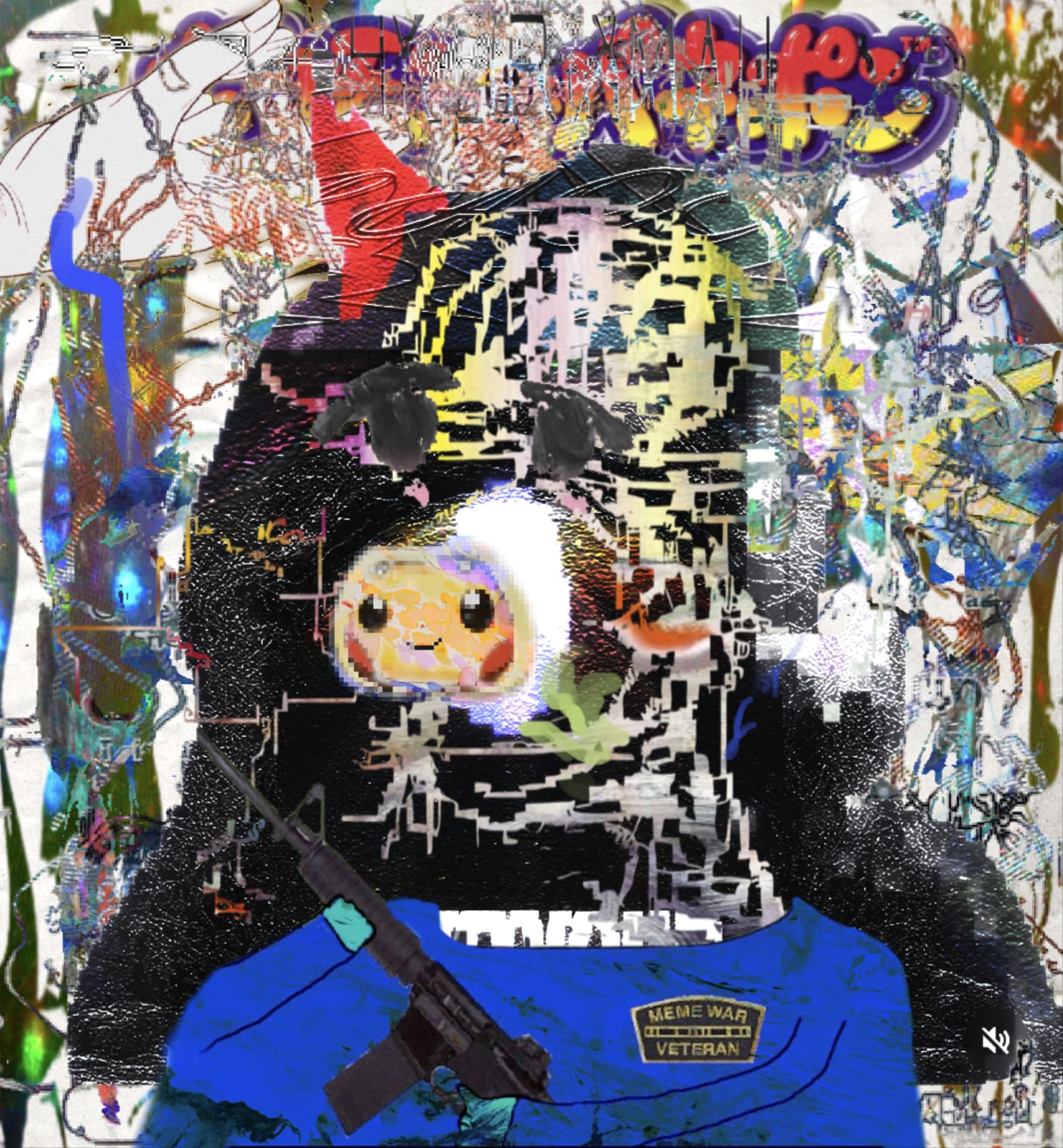
Multidisciplinary artist-couple Mika Ben Amar and Brennan Wojtyla have been quietly creating works that span much of the current discourse surrounding the internet and technology as we know it. Their work is presented across a multitude of mediums, with Mika working primarily in digital and sculpture. Brennan stages interventions in games as well as installations.
In conversation through email, a medium that felt fitting given the artists' use of email domains as art, the duo tell artist and writer Lowbie what they’ve been up to online and IRL recently.
Lowbie: Could you begin by introducing yourselves to those who may be unfamiliar with your work?
Brennan Wojtyla: Sure, I'm Brennan; I'm 24 and a half and my work typically revolves around exploring concepts of context, industry and definitions in an artistic setting. It breaches a lot of different mediums but all have a unifying theme of humor and play.
Mika Ben Amar: I'm Mika and I am 21. I work across both digital and physical mediums while trying to explore the infrastructures of contemporary internet culture and what it means to be chronically online.
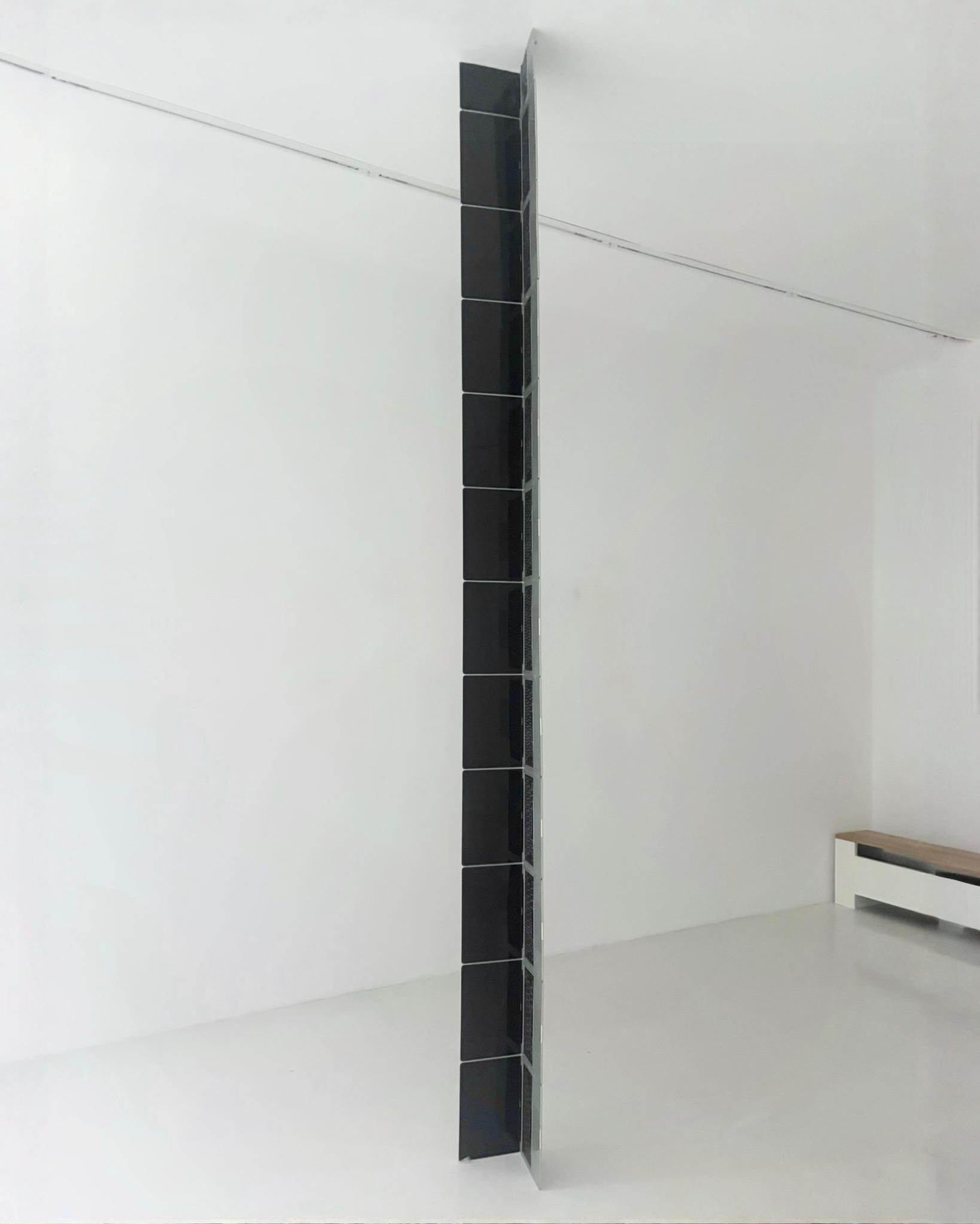
Lowbie: You both work extensively with sculpture and it seems to be the key to both of your recent shows, where the internet becomes a place or an object. Mika, you just showed a giant 11.5-foot-tall MacBook sculpture piece at Art on Tezos. Brennan, you recently turned the whole of TICK TACK gallery (Antwerp) into a working LAN party.
What is drawing you both towards making internet art physical?
Brennan Wojtyla & Mika Ben Amar: We both grew up in a world where the internet was so ingrained into everyday life and function; we genuinely don't know anything else.
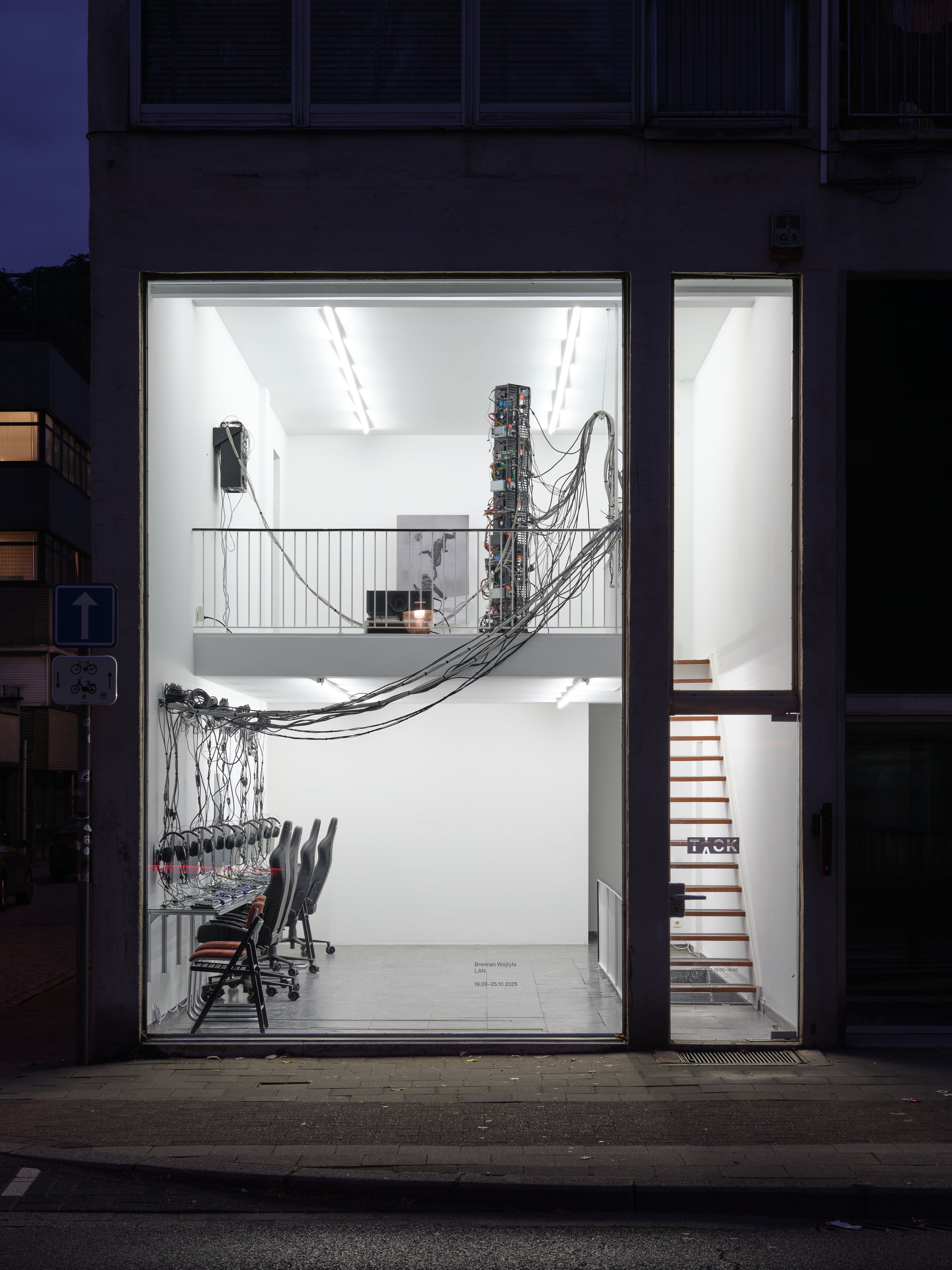
Brennan Wojtyla: I think we have very similar ideas when it comes to producing work but we come at it from very different angles. I am more interested in the physical infrastructure and industrial side of what the internet can look like. It is really interesting to me that we use this thing all day, every day, and have no idea how it works.
I enjoy exploring the functionality of the internet/network and showing it off in its rawest form.
Mika Ben Amar: I am also very interested in the infrastructure but more in the conceptual mindset of how we perceive the internet. How people talk to each other, how we use it societally and how it shows itself to the public.
I enjoy exploring the conceptual and aesthetic presented on the contemporary internet space.
Lowbie: You've both had your work go viral, Mika with your rock USBs and MacBook sword piece, and Brennan with your MoMA Speedrun, of which you are still the world record holder, I believe? I was wondering if you could talk us through those pieces and also touch on what it means for you when your work goes viral or how it affects your understanding of it?
Mika Ben Amar: I dunno, I feel like I do make my work with a purpose to go viral. I have been exploring the concept of ragebaiting—in this context, usually destroying MacBooks. I enjoy when my work goes viral, but it's not the end of the piece. It is really nice when your work becomes a piece of internet canon, and that to me is kind of testing myself to see how much I understand how the "internet algorithm machine" functions.
Brennan Wojtyla: Haha, yes, I'm still the world record holder. For me, it's an accident, but I felt that for the speedrun it really helped the whole project solidify itself. I have spent a lot of screen time looking at Instagram Reels—and YouTube shorts—and I enjoy making videos that I would love to see on my explore page.
Super maximalist, heart-attack-inducing, visual goon sesh is something I enjoy doing to my brain from time to time.
I also really enjoyed opening Instagram and seeing Cole Sprouse liked my Instagram Reel, lol.
Lowbie: There's also an element of performance in both of your works but it comes in many different forms. Obviously, Brennan, making a LAN party installation complete with an opening ceremony esports tournament opens a lot of questions about the art of gaming and servers as art. This is also seen in works of yours such as Shoot (2024), which uses various video game engines to re-create Chris Burden’s legendary 'Shoot' performance. You even have an ongoing project simply titled digital performance, an overarching title for a series of works set in the Garry's Mod video game where you do performance pieces.
How does performance play into your work and could you walk us through some of these projects?
Brennan Wojtyla: It's funny, I rarely think of myself as a performance artist until you listed off a couple, lol. But I think I like performance because it grants a massive amount of freedom. A huge aspect of my practice is questioning where the line of "fine art" is and seeing how far I can go in one direction with it still being considered art.
LAN was a great example because it was my biggest exhibition and the team at TICK TACK gave me pretty much full control of how the show was going to happen. It was interesting to me because I spent around 6-8 months working on the show, banging my head against my keyboard—with a big smile on my face—but it was impossible for me to plan how the actual esports portion was going to be. It was an incredibly public-dependent show, and I was amazed by the crowds that did activate the exhibition.
The "digital performance" is just another name for "machinima," which are performances acted out in video game engines. These machinimas are very dear to me because I grew up watching a lot of them on YouTube. I wanted to use the medium in a fine art context because I feel like it deserves it. Artists like Phil Solomon helped a lot with realizing these ideas for me and inspired me to continue with the project.

Lowbie: What is it about machinima that excites you? It recalls to me an antiquated mode of early YouTube but it was also at a time when video games as art felt like an exciting prospect. I was super into Call of Duty editing, not in the montage sense but through actual cinematic “editing,” with artists like onlyoneeon and delineate, as well as teams like Utopia Artistry and Relative Minds pushing past ‘kill streaks’ to turn these games into theatre sets for experimental film works.
Brennan Wojtyla: These are some of the best examples, actually. Call of Duty cinematic montages were a huge inspiration to me growing up on CoD MW2 and watching YouTube.
Machinima as a medium introduces really fun, creative and technical solutions. Theoretically, it is a limitless medium, and depending on the engine, it is. However, in practice, it involves a lot of work around the technical constraints of game engines. With this, a lot of creative decisions need to change in order to fit the constraints that any particular game is built around.
I feel like total freedom in the studio for me is terrifying. In my sculptural projects, I have studio regulations that I have to follow, and that makes creating works easier for me because I can creatively work around my arbitrary rules. In digital gaming works, similar things are followed depending on the engine and the game.
Some other great examples that I can remember are “Star Wars Gangsta Rap” by Kingdom Hearts and "In The Virtual End (Linkin Park HL2 music video)” by Ray Koefoed.
Both of these, I think, embody creativity in a time before the sterilization of the common internet. They both have a feeling that these were projects created by "non-artist" creatives. People who are excited about certain topics and want to combine the things they love to make a masterpiece, and I definitely feel a relation to this way of creating work.
Lowbie: The MoMA speed run is easily one of the funniest projects I've seen in a while. There is a lot of humor in your work, which contrasts with the seemingly painstaking amount of time and effort going into the production of these pieces physically and through the coding you have to do for them.
Brennan Wojtyla: Hahaha, thank you. It was a super fun project to work on. It just got bigger and bigger when I was working on it and the whole time I was just trying to come up with ways to make it more ridiculous.
I love using humor in my practice. I feel like a lot of the time in contemporary art, things are aggressively serious, and I'm really tired of this.
I like laughing too much. Half of the joke of my practice is how technically well executed the stupidest ideas are. Spending a few months planning to end up with a concrete pillar that has a humping dog attached to it was so worth it. Or again, spending months recreating TICK TACK and the surrounding areas in Garry's Mod just to have Peter Griffin do donuts on a motorcycle was incredibly satisfying.
Lowbie: Mika, you work a lot in the crypto art space, having been onboarded to ETH via Zora, I believe. I was interested in your thoughts on the space and what it's enabled for you. It's especially interesting to me as Brennan, you are yet to release there.
Do you have plans to work within the crypto space, somewhere that can lend itself to performance work, as well as obviously digital work, or do you have strong feelings against it as a way of releasing work?
Brennan Wojtyla: I'm actually pretty confused and ignorant of the whole crypto situation. Mika has introduced me to the idea a lot and explained it to me, but I feel like, at least for my current work, it doesn't make a lot of sense to dip my toes into the crypto sphere at the moment. If I have an idea that utilizes the blockchain or whatever as a medium, I will, but right now, I am more focused on the physicality of exploring ideas.
Mika Ben Amar: I work a lot in a purely digital format, such as websites, so utilizing the blockchain for me makes a lot of sense. While I do use crypto to explore ideas, I try to have it separate from my physical sculptural works. Crypto also introduced me to the art market and I think it's a pretty accessible realm for artists who don't necessarily have formal academic training. Something I'm really thankful for #girlboss
Lowbie: Mika, it seems like you use performance more personally, where it is being used within the internet, locally. This seems apparent in pieces such as your browser extension that removes all content except the ads or your https://internet.flowers project, which scraped hundreds of images of flowers from the entirety of your browser history and arranged them into digital bouquets. I was wondering if you could tell us about these pieces.
Mika Ben Amar: I never actually thought of those as performances but it makes a lot of sense, honestly. I like exploring the topics of personalized ads on the internet and data as currency; in both works I am exploring the idea of leaking and/or selling my own personal data online.
I think you can learn so much about a person just from the ads that they are getting, which is a bit scary to think about :,) especially knowing how our personal data is being processed by AI for personalized advertisements.
Even though the Chrome extensions are not publicly available, I want them to be soon. I think them being available to everyone, where everyone can create their personalized "data gardens" or just focus only on the ads that they are getting, might help easily understand the systems behind personalized advertising but in a beautiful, personalized way instead of scary and confusing.

Lowbie: What sort of ads have you been getting recently?
Mika Ben Amar: I am working on new work using a custom Chrome extension that removes all website content besides ads. I am collecting those “ad compositions,” which are just me documenting all sorts of websites but only their ad content. I am just trying to find all sorts of different websites and it kind of destroyed my well-curated, low-key, extremely targeted personalized ads. Now I just see all kinds of weird, different things that are so irrelevant to me lol. Can’t wait to share everything soon.
Lowbie: Browser history is often seen as a kind of seedy thing, something you're always supposed to be deleting in case someone dares to find out that terrible thing you searched a few weeks ago. Instead, with internet flowers, you've made it into a beautiful thing, while completely removing the subject matter from the context of the webpages from which they were originally sourced. It seems like an interesting way of reclaiming your personal data while also obfuscating the actual origin of it. Could you tell us about your interest in the “digital footprint.”
Mika Ben Amar: I feel like lately everything we post online can suddenly be used against us as some sort of surveillance thing, especially with cancel culture and just how normalized state surveillance has become. I don't know if it's just me but I am always so worried I am posting something wrong or doing something wrong online and everyone sees it.
So the act of turning my browser history, which I don't think I would want to share in its original form, into something beautiful like flowers, and the act of "picking flowers from your trip online" and sharing it with the public is kind of weird. And selling it myself, as our browsing history is very valuable data for advertising purposes, kind of felt like reclaiming myself lol.
Lowbie: How did you make internet flowers? Was it a vibe-coded project or do you have code experience? If it was vibe coded, tell us about the possibilities you see in our ability to creatively code without the barrier to entry of actually knowing how to code.
Mika Ben Amar: The extension itself is vibe coded. But the object detection model running alongside it that is looking for flowers I had to train myself using a mix of various datasets to make sure it can detect all sorts of flowers, especially ones hiding in the back of random pictures you find online. It was a bit challenging but surprisingly I somehow managed to do it properly lol.
I like vibe coding; I think it’s a really great tool that gives me more time to focus on my ideas rather than spending a bunch of time on the coding itself. My works are not meant to be technically impressive but more about the ideas behind them so it makes more sense to me.
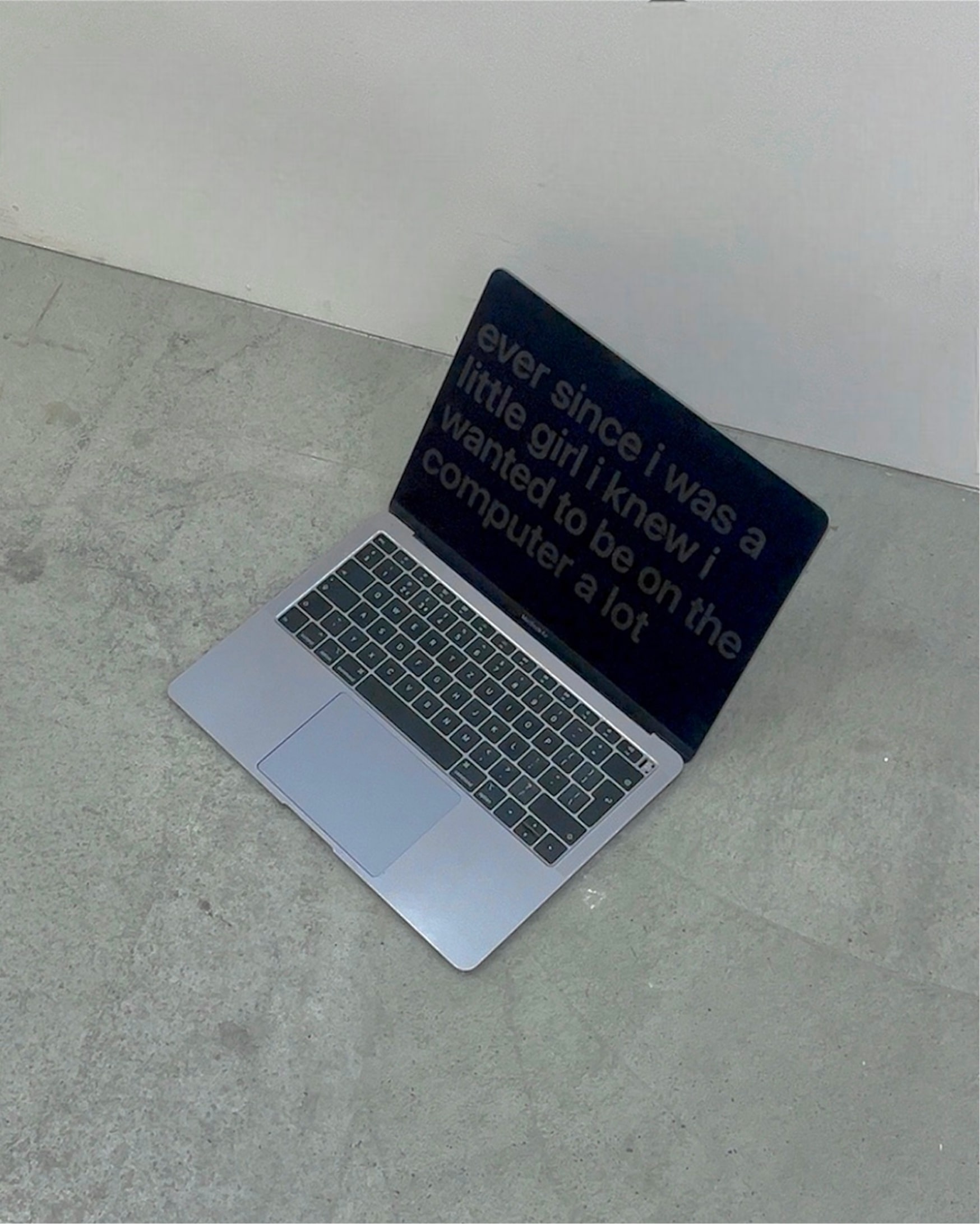
Lowbie: Mika, you have a piece, which is a Macbook engraved with “ever since i was a little girl i knew i wanted to be on the computer a lot.” I know this is obviously tongue-in-cheek but do either of you have any memory or moment when you realized the internet was this place you could make art on and about?
Mika Ben Amar: I don't want to sound annoying.
But I was always on my computer; I don't remember a time before.
I was exposed to the internet at such a young age and it's always been present for me. From the internet, I found a lot of art, so the two have been synonymous in my mind. I don't remember when I made my first work on the internet but I distinctly remember it clicking for me more than painting ever did. It was also a logistical problem solver. I moved a lot and it was easier to pack my studio in my bag than to completely relocate a room full of supplies.
Brennan Wojtyla: It's similar for me. There hasn't been a time when I remember not having internet or art. I remember playing Kid Pix 3D in the school computer lab. While Mika is completely right about how much easier it is to pack up and move when you work solely on the internet, I still have kept a physical studio in most places I've lived.
Lowbie: The internet has vastly changed from the one we grew up with. What do you think of the internet as it stands right now in its monopolized, algorithm-driven state?
Brennan Wojtyla & Mika Ben Amar: When Facebook or YouTube were in their early stages, it felt like honest participation. It was a more symbiotic, transparent experience between people and the internet. You actually interacted with it and it didn't feel like you were being squeezed or censored.
Now it is so incredibly monolithic and sterile. I feel like the groups of artists who work primarily with the internet reflect this. It has gone from people using it as a tool, a blank canvas, to now observing and recording what is going on.
Lowbie: How does the artist-partner relationship work for you two, especially as you are both working with similar concepts and mediums? Do you have plans to release work together?
Brennan Wojtyla & Mika Ben Amar: It's really great having two heads working on projects at the same time.
Brennan Wojtyla: I have picked up the role of production manager for Mika and she has picked up the role of social media consultant for my practice.
Mika Ben Amar: While we often explore similar concepts, we come at it from very different angles, I think. Brennan is more focused on the production and sculptural side of working. I am more in the realm of thinking and observing how things are happening.
Lowbie: What, or who, is inspiring you currently?
Brennan Wojtyla & Mika Ben Amar: It's really a bit cheesy but we do inspire each other quite a bit.
Mika Ben Amar: Instagram Reels and TikTok influencer videos also really inspire me.
Brennan Wojtyla: And my friends who are really talented and amazing inspire me and help me develop ideas.
Lowbie: Could you share some Reel and TikTok trends that have recently got you? I hate to say it but I’m obsessed with “6-7” and see it everywhere I go now. My mum sends me photos of “6-7” when she sees it appear in the street. It’s like this mass psychosis event that I’m really enjoying.
Mika Ben Amar: I am really into this AI baby apple with its tongue out. I still am a bit confused about the whole “6-7” thing. Please don't make fun of me. I am really excited about the fast-paced joke economy of AI slop. These videos that are formatted like "Which bed are you sleeping in, cheesy bed, water bed, slime bed, etc." I LOVE those.
Lowbie: I’d also love to know of any of your talented friends that you would recommend for us to check out.
Brennan Wojtyla: Bryce Williams has a brain that goes 1 million miles per hour and is full of great ideas. He has one leg. Lukas Esser is a super genius engineer-electronics-friend. He is very tall. Maxim Tur always comes at things with fresh eyes; he is a very great metalworker and concept guy who can do a backflip. There are so so many others but I'll try to stop at 3 because I'll get carried away with so many sweet and brilliant people.
-----
Mika Ben Amar is an artist based in Berlin. She has had a solo show at Glitch Marfa (Texas), multiple NFT releases via SOLOS Gallery (London), and group shows across Europe and Australia.
Brennan Wojtyla is an American artist based in Berlin. He has had solo shows at TICK TACK (Antwerp), SomoS (Berlin), and MOCA (Florida), as well as being in numerous group shows across Europe and Florida.
Lowbie is an artist and writer based in England. He hosts the weekly interview series ‘WORLD RECEIVER’ for VVV.so, as well as the web3 art talk show ‘ONE HOUR WITH LOWBIE’ for Verse Works.