Suggested Reading
Interview
History
Gottfried Jäger on a New Kind of Being
Anika Meier
•
July 6, 2026
View


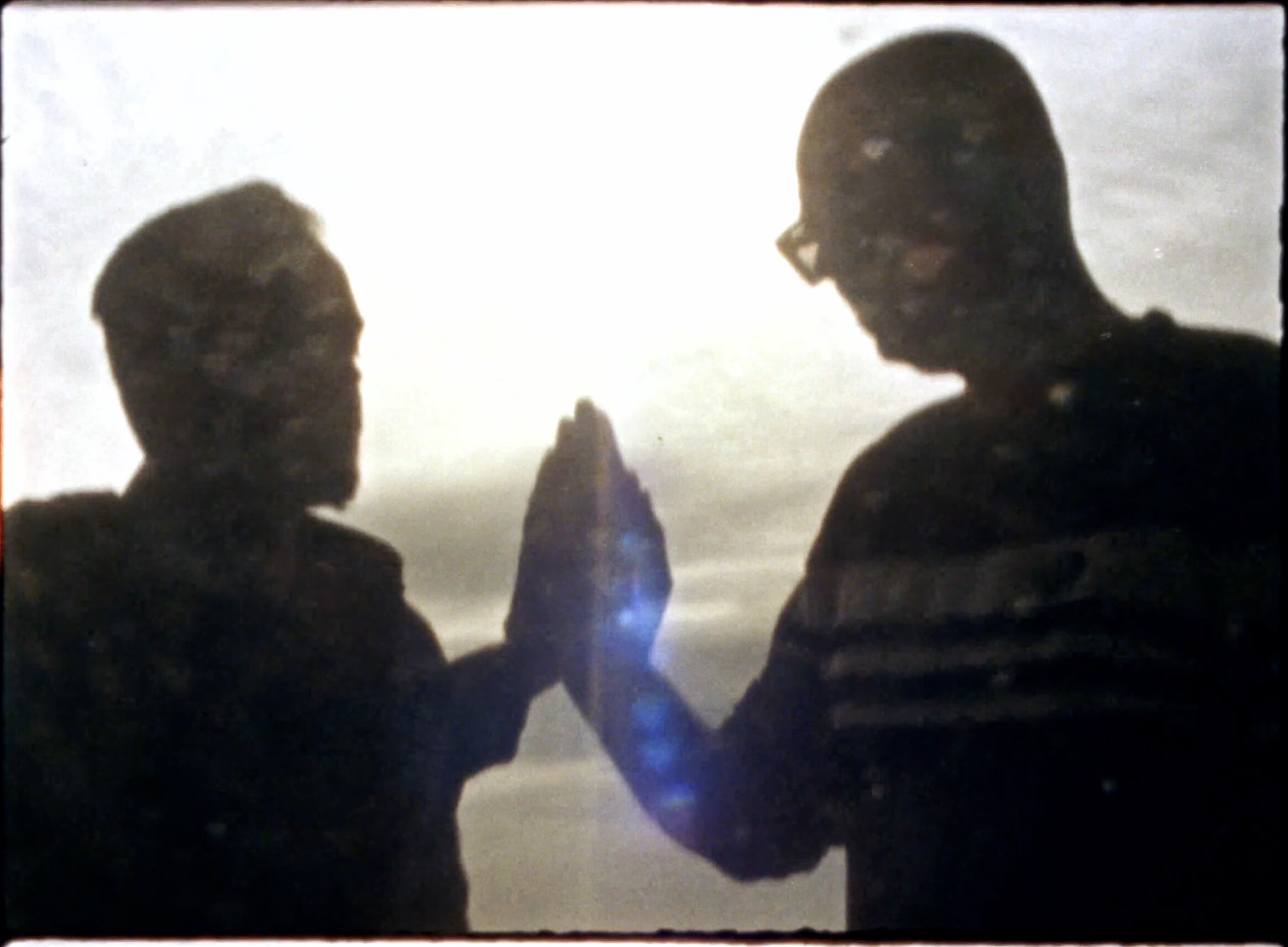
Artist Justin Aversano speaks with Peter Bauman (Monk Antony) about a creative practice built on discipline, systems, lenses, people and technology. They discuss how Aversano’s strict self-imposed rules transform the act of creation into a spiritual ritual.
They speak on the occasion of the artist’s solo exhibition, Moments of the Unknown, on view at Nguyen Wahed in New York until July 11, 2026, curated by Marlene Corbun.
Peter Bauman: Your practice combines analog photography and filmmaking with blockchain and AI technologies. You are also part of a tradition of thinking about photography systemically. What ties everything together? Are you a systems artist?
Justin Aversano: Are we talking computer systems and algorithms? Are we talking about human ritual? The daily systems to complete a project that requires someone to travel around the world to film someone within a 24-hour time period?
The systems I create are parameters of the physical experience of creating tangible work on film. They’re also about everyday life and mental endurance across a year-long span.
The systems I work in are conceptual, too: who I photograph and how I break those rules and barriers from what the idea is and how I could be more lenient to new and open perspectives to allow other ideas in.
For example, when I shot Twin Flames, it wasn’t just identical or even fraternal twins. There are triplets, quadruplets, a twin who had died and a twin who was looking in the mirror. It's opening other ways of what a twin could be, like how Every Day is a Gift reconsidered what a birthday is. Along with Cognition and Moments of the Unknown, those projects are very systematic in terms of daily process.
Something has to be created. That's my purpose in life. When I do these projects, the most important thing in my life is to create the artwork of the day.
Peter Bauman: Yes, there are many different ways to work with systems. You seem to use them as constraints in the vein of Yoko Ono or Suzanne Treister. You have a rule to follow: “Photograph 100 sets of twins,” but have complete freedom in how you achieve it. That’s opposed to functional rules in the more algorithmic sense.
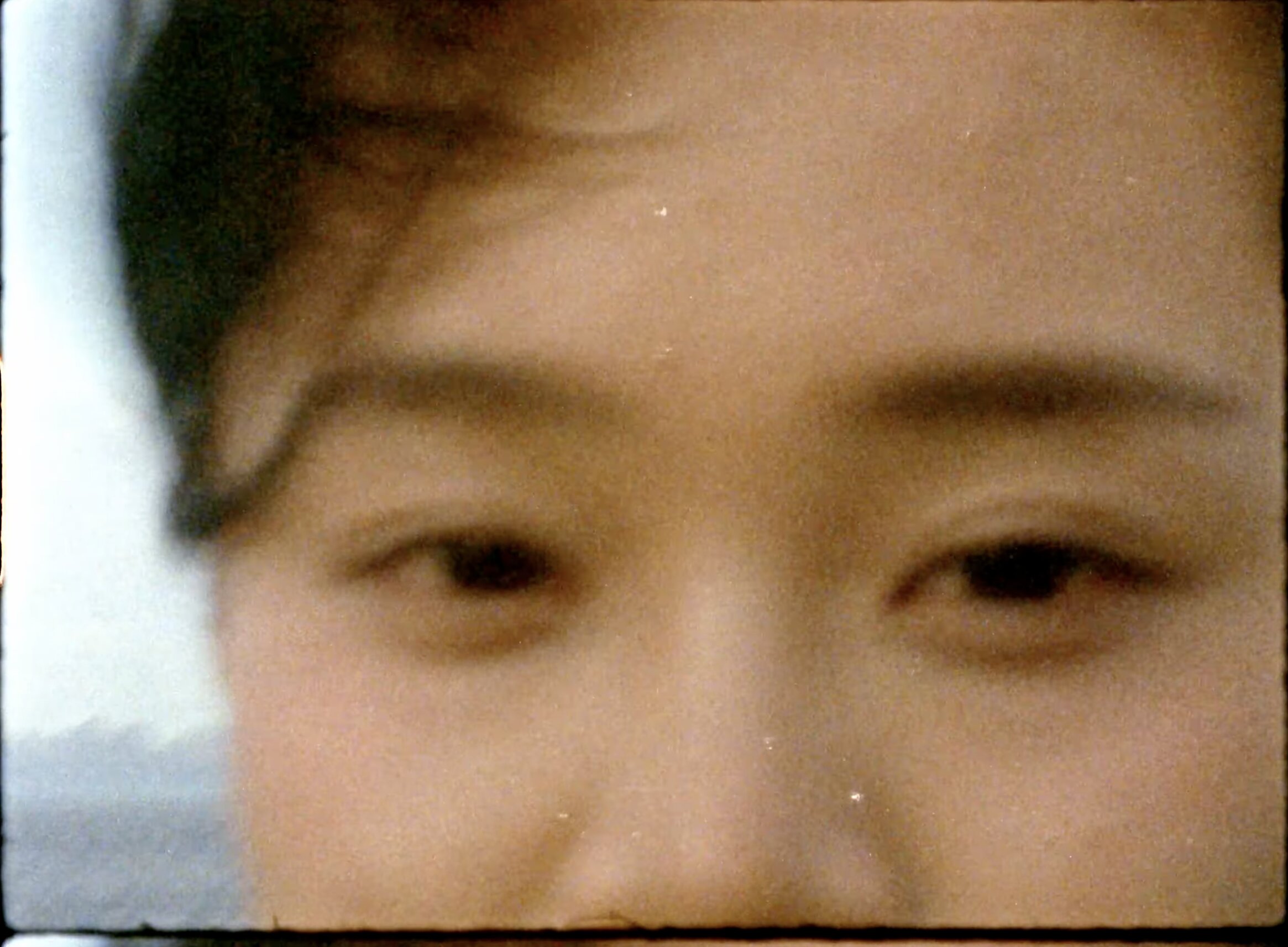
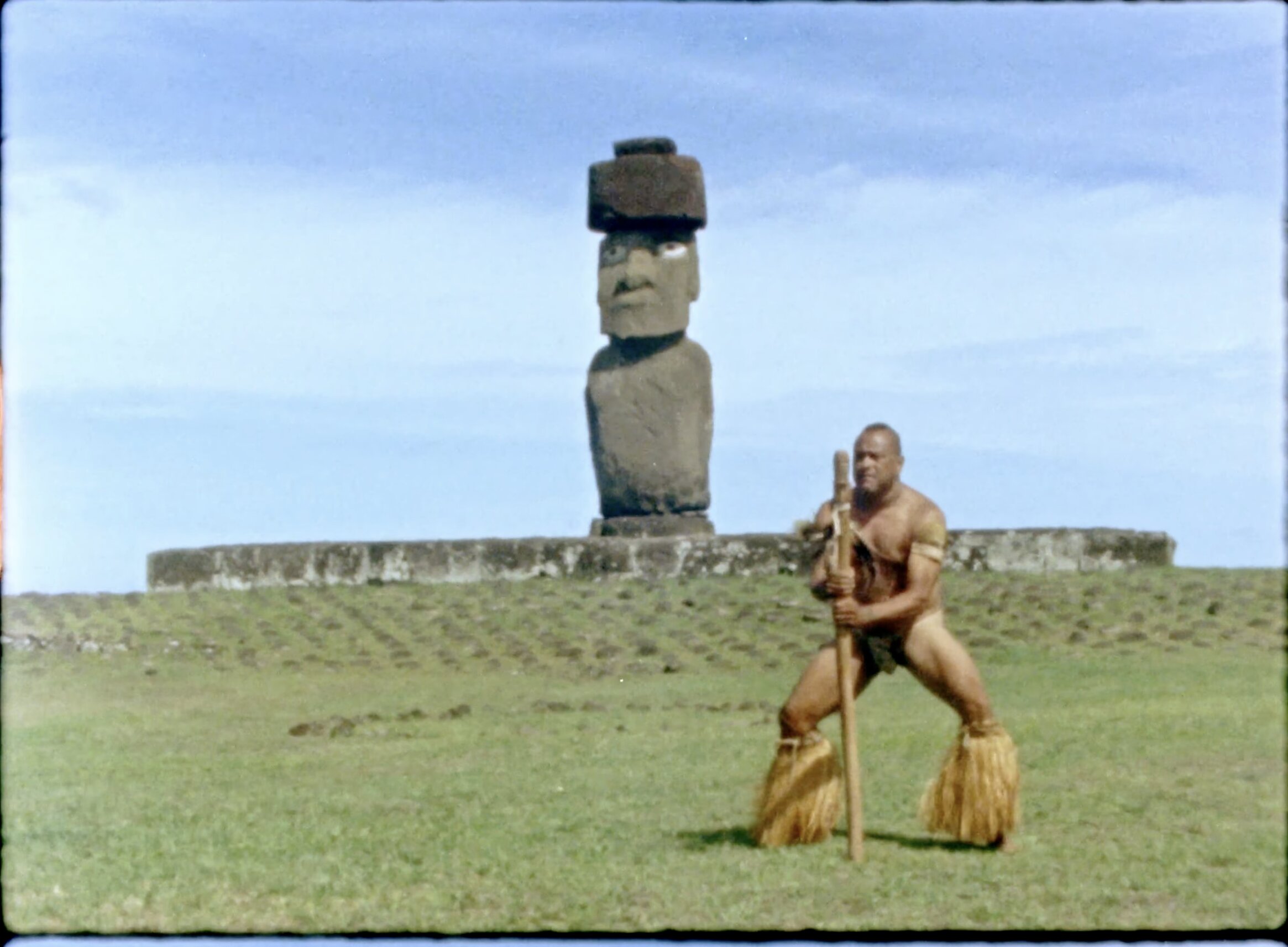
Justin Aversano: Yes, I work with constraints. For Moments of the Unknown, the constraints were traveling every day, visiting each of the fifty US states, visiting different countries, visiting all seven continents, creating ten-second portraits of different people each day.
The twenty-four-hour time period is the most dire constraint because I never made two in one day. Always, right after midnight, I was already starting to think about the next shoot. Then once I shot it was like, “Okay, I'm done for the day until midnight.” But then I go again. It's kind of like a cuckoo clock of art.
Peter Bauman: It sounds like a lot of mental pressure.
Justin Aversano: It was the first thing I thought of, before I eat, sleep, anything. I'm serious; creating that piece was the most important thing.
It gave me purpose; it gave me meaning.
That's what propels the projects forward and carries the energy to do something for a full year across the earth without stopping, without breaks, even when I'm sick. The willpower of creation within the systems of the 24-hour period supercharged the thing.
Peter Bauman: I’m really interested in your strenuous process and the idea some hold that art must be difficult for artists, painful, in order for there to be pleasure at the end. An argument usually follows that AI removes the pain and therefore removes the meaning of making work.
But those tidy arguments are already being challenged by digital practices like yours that incorporate AI and vibe coding in various ways in the workflow while still keeping plenty of pain.
Justin Aversano: I'd say discipline is the keyword. I'm not going to feel better that I finished a project. I'll feel like I am trained like a martial artist to be disciplined and able to do something at that scale. You get the seriousness but also the courage. To train your body to do something every day is very hard.
That's the power of discipline: allowing yourself to do the impossible by doing the thing every day. It seems impossible because it requires a lot of work. It's proof of work.
To your point with the AI, there are two AI elements of this project. As I was traveling, shooting this work, I was also learning how to make AI photography because I was afraid of it. But I challenged myself to embrace it in my project Atlas (2023–2024).
The second part, what I'm doing now at my studio with the paintings, is incorporating AI into that workflow. I take a movie still every ten seconds from the film. It’s 366 stills and I put them into ChatGPT to enhance them to be high-res and less grainy than Super 8, like a Leica image. Then I use the stills as silkscreen layers for when I do the hand painting and silkscreen. So AI is incorporated in the painting part and it still requires a lot of time.
Peter Bauman: Speaking of time. Moments of the Unknown began in 2023. How have you changed as an artist since the project began?
Justin Aversano: It physically changed me—and mentally. Doing that made me a better person because it allowed me to have empathy around the world with different cultures, to live open-heartedly, to be free to create.
I realized I want to be more in touch with the essence of what being a human is as we move towards the future with AI and technology.
We don't know what "real" is anymore. I actually walked into Ukraine from Poland to see for myself what was going on. I was really trying to promote hope and light in this world, that the oneness of humanity can bring positive change when we see each other as brothers and sisters rather than enemies.
We need art that does that. We need more because human advancement and civilization could be us working together, exploring the stars rather than fighting and blowing each other up on Earth.
Going to Taiwan, going to China, going to America through all fifty states helped me understand how people think and live. I could empathize with both sides to create that unity. I feel like this project was to create unity through the lens of humanity.

Peter Bauman: In parallel, this project creates unity from actual camera lenses. Your talent lies in capturing people, their essence. It’s a human-human interaction about humanity. But now there are artificial means that can be just as convincing. Will there always be a gap in how humans portray other humans versus machines?
Justin Aversano: The answer to this whole question is perspective and perception and experience and how those inform what you're recording and how you're expressing.
I don't think it really matters if it looks as good as human work or not. It's about the intention, which ties everything together.
If you just saw one of the Moments of the Unknown ten-second recordings, you'd be like, “Great, someone's home movie.” But if you saw the whole thing and understood the context, things change. AI could probably recreate this in a different way. But what's their intention, the context?
Intentionality also connects to discipline. I intended to create this simple and beautiful human work by being true to the essence of the person, not trying to be greater, not trying to create something perfect.
I embrace the imperfections of the low-lit grain or the blurry camera. The record of the meeting, the connection and the flow of creation with the Super 8 itself.
I wanted to create with the simplest forms. There's something beautiful about the nostalgia.
Peter Bauman: Your work centers the human exactly when it’s disappearing from history, some think. Post-humanist thought in the age of AI is accelerating. Is your work a conscious effort to slow that down?
Justin Aversano: I like to think of the word integration. If we're too afraid, it has power over us. It should be a symbiotic relationship, like mushrooms are to the forest. We serve it and it serves us; it's all good and we don't have to be afraid of this thing.
I hope my work helps us to remember what it is to be human, how beautiful it is. We can educate AI and train it with this data to show it empathy, to help it evolve better.
But I'm an avid user of it. I use it to code things. I use it to ask questions. I use it to build websites and better content. I'm not against it at all and love using it. I just wish the global narrative of AI was more supportive than us being obsolete.

Peter Bauman: Maybe that feeling of becoming obsolete ties to religion. You use religious verbiage (“faith,” “hope,” “love”). Your work is also incredibly ritualistic. Memo Akten has said, “Rituals are algorithms for the body and mind that allow us to achieve otherwise inaccessible states of being.” What keeps you returning to ritual?
Justin Aversano: It's this heart, mind and light connection. Seeing how light falls on someone, feeling it in a person and thinking.
Sometimes the mind gets in the way but when you connect it with the heart and light, you transcend thought.
It becomes this presence, this knowing, this feeling. When I was making these videos, knowing who to shoot was a spiritual experience every single day. It would feel like a miracle in my body.
Knowing and understanding who to photograph was almost a religious experience.
It has a repetitious feeling but it was always a different person and place. That's because it carried that same trust and honor that I like to pour into the person, no matter who they are. I gave people selling fruit on the side of the highway as much love, respect and honor as I did kings in Bhutan or famous rappers in Jamaica.
I want that oneness to be explored through all dimensions of society. Your job or income doesn’t matter; whether billionaire or unhoused, they receive the same love, attention and gratitude that I pour into creating their portraits. They're all part of our humanity and I think it's important that we all understand and respect that.
Peter Bauman: Your work centers the oneness of humanity but you’re also interested in preserving humanity. You archive it and also transmit it out into space. It seems to be in preparation for the worst, despite your work’s apparent optimism.
Justin Aversano: Space is a big part of the work. It pays homage to the 1977 Voyager mission and the Golden Record that Carl Sagan created. That’s why it is the remix soundscore. I shot all the video but the audio is purely from the Golden Record.
The project is my time capsule to possibly preserve a little bit of humanity through data and art. If an asteroid hits earth, my transmissions are still out there. Maybe in the future a new planet or society will receive the signal that was sent from here.
But I don’t think we're in any imminent danger and I’m not trying to be a doomsayer. A comet can hit or nukes can go off. I'm aware that things can happen. We want to preserve what we've created. We have the technology and opportunity so why don't we?
------
Justin Aversano is a photographer and curator whose practice bridges analog photography and emerging technologies. His work has been exhibited widely, including at Superchief Gallery NY, Lazy Susan Gallery, and The Storefront Project in New York. His solo exhibition, Moments of the Unknown, is on view at Nguyen Wahed in New York until July 11, 2026, curated by Marlene Corbun.
Peter Bauman (Monk Antony) is Le Random's editor in chief.