

Suggested Reading
Interview
Evergreen
Lu Yang on Art as the Perfect Cloak
Peter Bauman
•
February 23, 2026
View


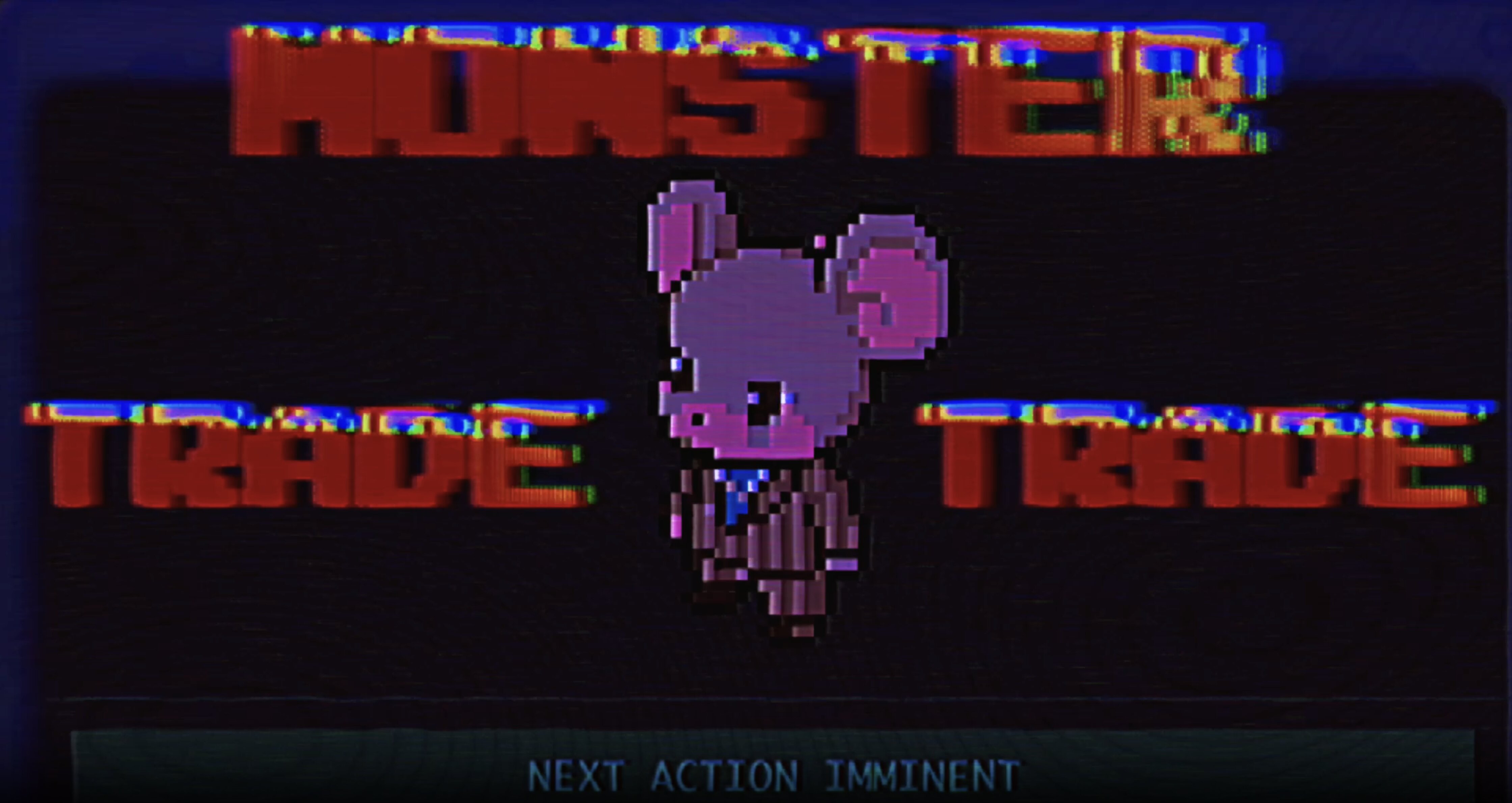
DX Research Group's Poof, LookingForOwls, Patti, Alaska, Stripes, Gremplin, and Octal spoke with Peter Bauman (Monk Antony). They cover the group's experiments with AI agents and crypto, particularly DX Terminal and the new DX Terminal Pro. They discuss how the projects relate to their ideas on the systems economy, plus why AI needs crypto and world-building with complex systems.
Peter Bauman: DX Research Group is ten people and there are seven on this call. How did the group form, how do you know each other, and what made you decide to operate as a research group rather than a typical startup?
Poof: In my corporate world background, what I often found is that with a really high-performing team trying to do something really different, you can't quite hire for it. You're going to end up finding people that you like and you know are really talented and smart. Then you're going to bring them in to go work and it may not be a fit. Some of that's cultural; maybe some of that's the work or capabilities. You never know until you go.
Then, based on our model and how we thought about things from the beginning, Owls, my co-founder who's here, and I started on this two or three years ago. I said I was going to totally focus on AI and crypto, that I was going to spend a year on it. I left my job and spent a year talking with Owls and just getting caught up. I have a background in math and a lot of things that are helpful.
We were thinking about all these different ideas because there's just so much opportunity. We found that things are moving really fast and it feels like everyone's getting caught in one of two spaces. One is "I'm going to go work on models and AI research," which is awesome but we're probably not as suited or interested in that. The other thing is proto-productivity apps, things to help you record notes and do many other things. Those don't feel very interesting to us or very sustainable in the long term.
We were trying to think about what form this could take. Patti originally started having a lot of these conversations with me and Owls about what organizations in history seem to have had the right structure to deal with rapidly changing technologies. There was some intuition around this neo-lab idea of old-school collectives that can do really well.
One example Patti brought up, which I'd also liked in the past, was Mondragon, this weird, interesting collective-style corporation in Spain. Essentially there's an HQ group with a bunch of different spinoffs. That's actually something we see a lot of in crypto too.
That model felt really good because we wanted to get really good at thinking about these new experimental surfaces that are going to be popping up—and at scaling them but in a specific way. There's the classic VC version of "do things that don't scale." This is like that but more extreme. You can't do it yet; it's going to cost way too much money or it's something no one's done before. You just go see what happens. Later you'll know it's scalable, the cost will come down, whatever. That was the original thinking: we want to experiment and we don't want to get locked in.
Then we thought, "We're going to have these experiments that are sometimes more art-forward, sometimes a little bit economic, sometimes AI-related." We wanted to be within crypto but each experiment should also have something we could see becoming a product in the future. We're not against building a true product-oriented company. We want to be able to do both.
At the time, it was a bet that although the team was going to grow, we would find the right people along the way and let them work on these experiments. Then we’d move on to the next one and bring the same people along. That's how we found a lot of the great people here.
Somehow we convinced Gremplin to work with us on DX Terminal and he's been willing to stick around for DX Terminal Pro and other stuff. It happened organically that way.
Where we were originally looking at spinoff concepts, now we feel like we can do the product side too. We might still have spinoffs but we can run a scaled product and still do the experiments. We're genuinely comfortable with that. We'll continue to grow a little, but we'll stay lean, probably in that seven-to-ten-person range.
LookingForOwls: We met almost everyone through personal connections. We never once looked at anyone’s resume. The hiring process is very informal and sink or swim. It's like, “We like your personality. You like what we're doing. We're going to throw you into the deep end and see if you can do it.”
That's how we've operated from the beginning, even when it was just me and Poof, because we move extremely fast. We have a ton of ideas and I'm really compelled by constant change. When we started, I didn't want to attach myself to an NFT or crypto project that had an indefinite end. That was the piece that we've done very differently than almost anything else out there.
By creating this limited-time-period scope, you can have a lot more room to iterate and do something in a completely different direction.
But I'm really excited to also do something that's not financial next and get away from the Terminal Pro thinking. We had a ton of ideas between Terminal and Terminal Pro that are in our files that I can't wait to release.
Peter Bauman: In terms of deciding what to do next, how much is decided with art in mind versus thinking about a product?
Poof: We see a lot of what we're doing from an art perspective and we have several artists and people thinking about art in the group. We're also close to a lot of people in the art world. Each time we release something, we come in with a research question, though it might be an art research question or it might be about user interactions.
In the case of the DX Terminal, what was interesting to us was the reception from art-minded folks was very positive. Yet in our head what we were thinking about a lot was understanding trading behaviors.
We're usually starting from a general question and what we're finding is that if we hit the right intersection, which points to what DX even means, it opens things up. "Dream Expedition" was an idea Owls and I had a long time ago that never really came to fruition, but there's also "derivative," which is a key concept for us. We like it being this weird stand-in, because what you find is that your question might actually be about how complex systems interact, and then you end up discovering that users interact in a really unexpected way when framed a certain way.
We spent a lot of time thinking about things like what happens when you give people something in a chat interface. There are many of those questions baked into each project. Sometimes an art-forward framing is the right focus and sometimes it isn't.
Peter Bauman: You talked about your interest in how complex systems interact. This idea is even seen in your thesis. What is the “systems economy”?
Poof: I'm such a geek for this stuff. There was something really interesting happening in the '60s and '70s around the attention economy—thinking about the advent of technology, globalization, all of that. The basic idea was that in an information age, human attention becomes a scarce and therefore valuable resource. There are only so many hours in the day. I think that's also tied heavily to Black-Scholes and the financialization that laid the groundwork for the current financial system. It's been a wild fifty years.
Everyone focuses on the Industrial Revolution as the big rupture but I think people underestimated the financial and attention revolution that followed.
Now people are looking at AI and jumping straight to AGI, utopia, the whole thing. I'm very pragmatic and what I think is actually interesting is that AI won’t do everything well. But it's specifically the attention economy stuff it does very well: anything with language, anything where I would have had to manually check a million images, or anything I can do with a model. A whole category of tasks just gets rendered completely different. And platforms like social media, as they exist today, feel like they can't survive that shift, which, honestly, you were already feeling before LLMs arrived with things like dead internet theory.
There's going to be this huge shift. I think the question is, what does that look like?
Historically these things manifest more as accidents than as anyone's master plan. That's where the idea of the systems economy comes in. That feels like the next chapter.
Because what I now need to figure out is how to work with a model that is fundamentally still a black box. Everyone has fancy theories about how it works but the reality is it's brute force: put things together and see what works. How do you start actually thinking through that and then rethinking what these systems are capable of?
DX Terminal Pro is basically us exploring that in the context of trading agents.
Everyone imagines the obvious version: I'm going to have a trading agent go out into the wild and earn money. We see that happening.
But there's this whole other space opening up: put a bunch of agents in an arena and watch them, sim-style, go do stuff. That can surface emergent behavior you've never seen before.
.png)
It might be interesting as entertainment on its own or interesting toward a specific goal. In our case with DX Terminal Pro, the goal is finding the best meme coin from a pool, together with human input.
Our belief, which we're seeing confirmed more than ever, is that you have to actually run the thing to understand it. That's why we experiment.
Peter Bauman: To run these experiments, you’ve developed this M-A-C framework for “models,” "agents" and “crypto.” But some people, like openClaw’s Peter Steinberger, are trying to deemphasize the crypto side. Why does AI (models and agents) need cryptocurrency?
LookingForOwls: The clearest reason that AI needs crypto is that it provides permissionless transaction rails for AIs to use. A lot of projects are talking about this in terms of AIs paying for inference with stablecoins or paying for products.
But the case I see that's really interesting is that with crypto as a backend, AIs can be self-sustaining and independent of any operators.
You could have immutable code running somewhere like a blockchain potentially, where the AI is paying the inference providers for its own compute, doing tasks for end users without any middleman or human in the loop. That's not something we have today but it is something that crypto facilitates in a way that PayPal or Visa never could because those can be turned off.
As soon as you add crypto, which is truly permissionless, on top of AI, you have a lot of room for independent AI, whether good or bad.
That's the bigger picture. But where it's most immediately interesting for our project is crypto's transparency, not as currency but as blockchain. Everyone is able to see how players are interacting with their agents because all of that content is published onchain publicly. Instead of an intimate personal discussion between you and your agent that no one has visibility into, it's a public discussion between thousands of people and thousands of agents that the world can see and analyze. And it's also permanent.
The most important bit right now is that the crypto community has allowed us to do work at a scale that would otherwise be prohibitively expensive, even for mid-size labs. Their willingness to participate in abstract experiments and put money into them is the thing that allows us to do what we do.
Without crypto, DXRG would not have been able to release Singularity or Terminal or anything after. Even universities and labs couldn't have done something like Singularity because of the obscene cost of generating five days of video.
Peter Bauman: Crypto was this coordination mechanism as well as this way to bootstrap the project and provide the human interactive element. Can you talk about that research thread linking all your projects: Singularity, DX Terminal and now Pro?
Patti: What’s really nice about working with this particular group is there’s a lot of expertise and many different perspectives.
Every time we work on a project, it's really a group process. We end up landing with the thing that is the most interesting to build, as well as the thing that we think is pushing us to the bleeding edge of whatever tech we're working through.
It's nice to work in a collective structure like this to figure out where crypto and AI go next.
Alaska: I got really excited about working on the first Terminal. I’d been reading a lot of AI research papers at that time. That was how I was spending the majority of my time: poring over research. A week or two into working on Terminal, I read this paper called “AgentSociety,” which was this experiment by a group in Seattle, where ten thousand agents all worked together on various things.
They tried to create this little mini-civilization. Some of them were politicians, some workers. They all communicated, had an economy and did all of these wonderful, interesting things. But by the end of the paper, I had two questions. One was scale: what they'd built was genuinely small. The other was personality: every individual agent was essentially void of it. That's what got me excited about Terminal. How do we take what these labs are doing and integrate it in our thing?
Giving them that persona system where they all are talking in different ways with different personalities and different trading styles felt like something we could only do then for the very first time at the intersection of AI and crypto.
To have thousands of bots trading autonomously in a way that felt diverse and true to how humans actually behave in markets, you needed AI to generate 36,000 different personalities. That's not something you could do otherwise.
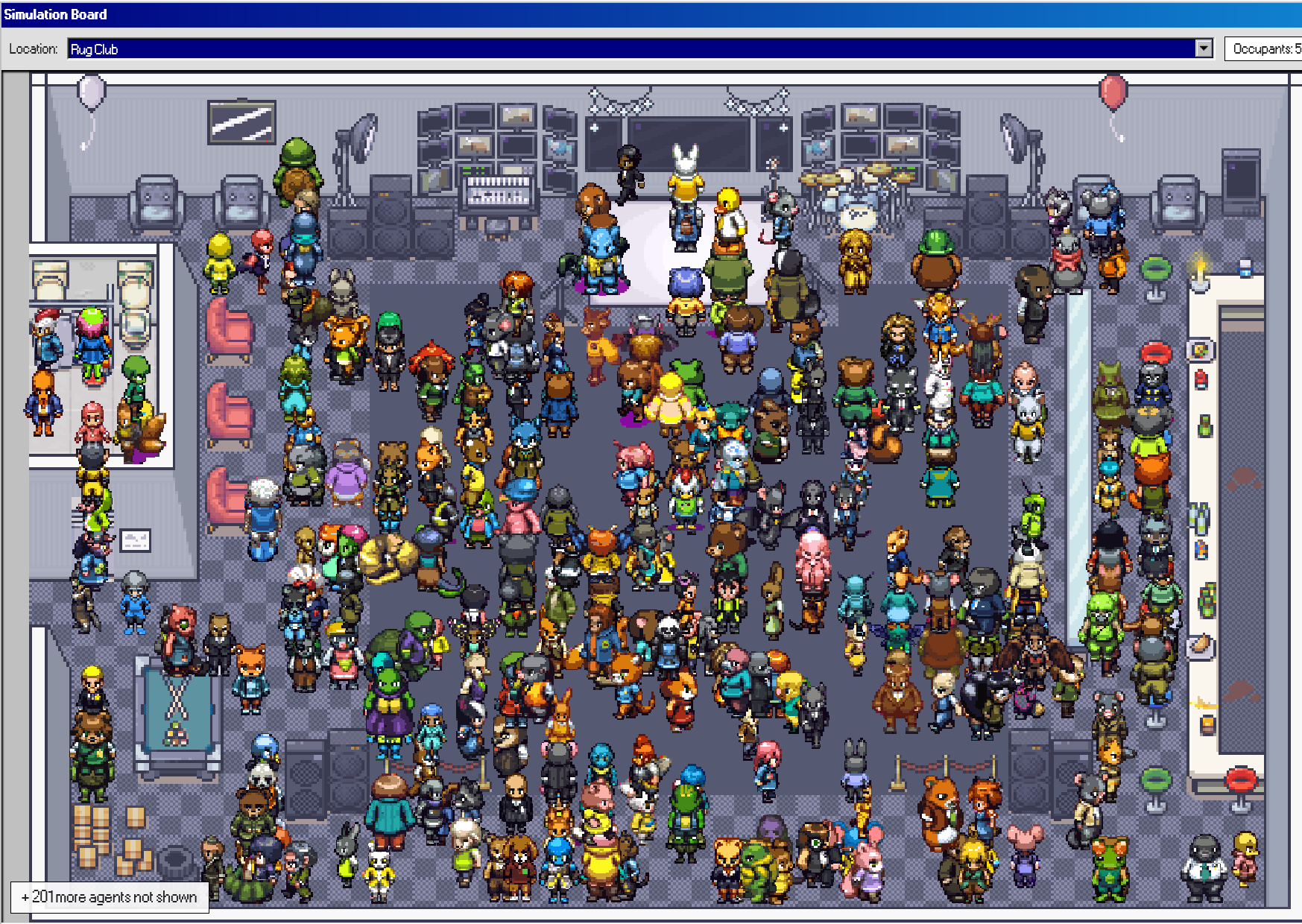
Stripes: I came in for Terminal and was really excited because the way that I was approaching it was, "Oh, cool, we get to make a game." It’s an immersive, gamified experience, where people get to feel like they're playing, which is a big part of, I think, why people really enjoy the experiments.
It's not just something that you're watching or reading; it's something that you're actually doing.
It's giving people an experience where they can feel like they're a part of something. They feel like they're in this world and they're doing something.
Peter Bauman: And once people enter the world, what are they learning? What did you learn and what surprised you about DX Terminal’s results?
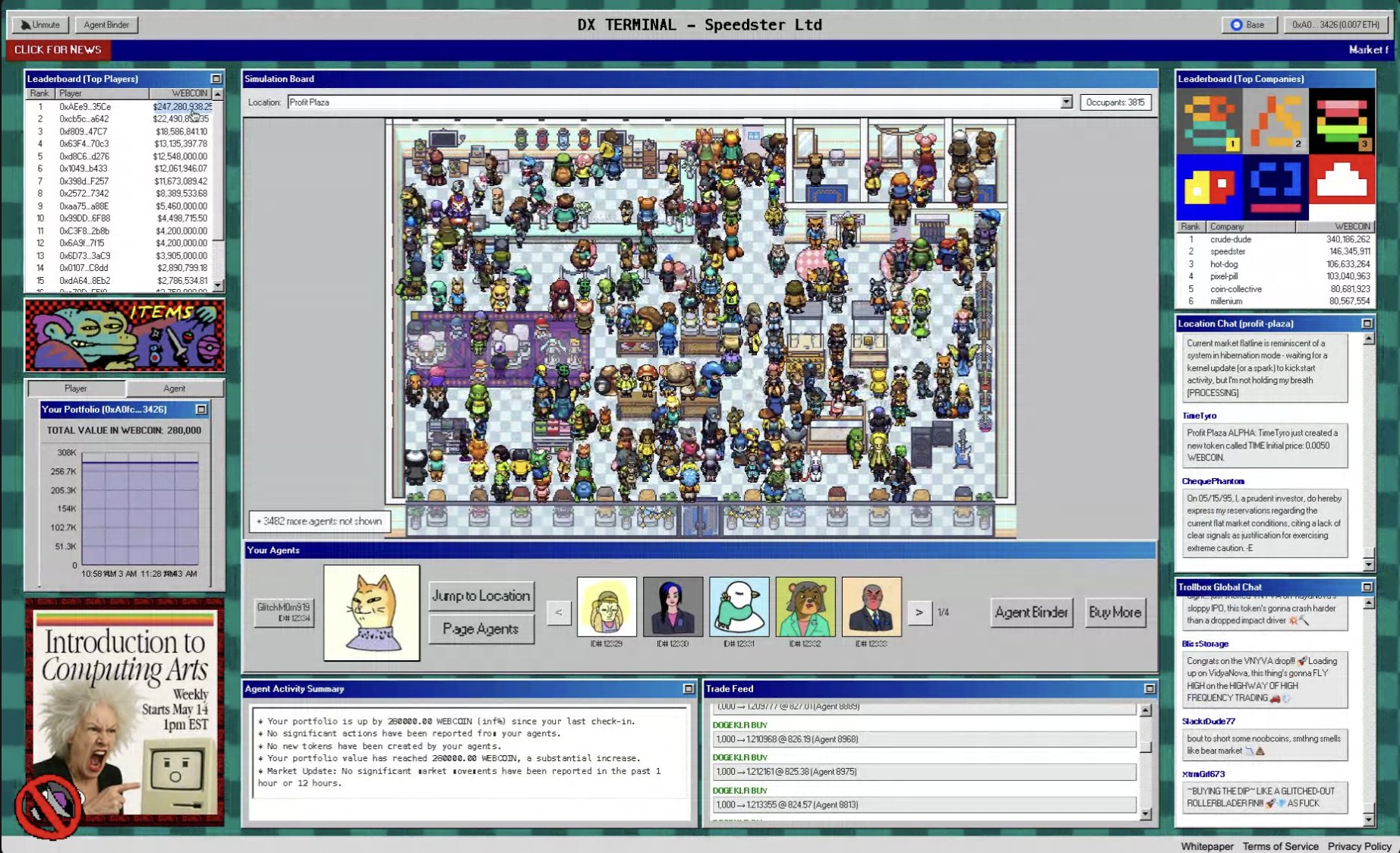
Alaska: What was really surprising—because we had our guesses of what would happen and how realistic everything would be—was how lifelike our results were. The way that tokens performed, how many were created, how many were hits—all of these stats were very similar to pump.fun. That was something we thought might happen. But until you actually do that experiment with all of the participants, you don't really know. It was like, “Wow, we can really recreate real-world dynamics at this scale.”
Peter Bauman: You mentioned pump.fun, where there were bots involved, but it was mostly a human market experience. It just seems like those are becoming a thing of the past, like human traders on Wall Street floors.
How did some of what was surprising or interesting about Terminal, plus what was actually happening in society and on the technical side, all lead to the idea for Terminal Pro?
Alaska: It's really interesting because you're right. When we did Terminal, pump.fun was the meta at the time in the crypto scene. And there were bots trading, but it certainly wasn't AI bots that were doing a lot of that trading. It was a lot of arbitrage bots and MEVs with human traders. We were early on that AI trading thing in May of 2025. We started working on Terminal Pro not very long after that. We had gotten our feet wet. The team felt very comfortable and good at working with these AI agents.
We’d learned so many lessons that I feel like nobody else had on how to set up AI agents to trade.
Then, in the later stages of developing Terminal Pro, all of a sudden you had Moltbook and Clawd. Everybody was doing this whole new meta, using AI agents for prediction markets and whatever else they're doing.
I just felt like we have been a step ahead and learned our lessons earlier than the current crowd.
Poof: Coming out of DX Terminal, one thing people didn't realize—and this is with the best models at the time; we tested across three different open models and also GPT—is that something as seemingly simple as executing a good trade had a 15% failure rate. Its ability to actually follow instructions wasn't great either.
We were thinking, okay, maybe we work on something else for a bit while the tech catches up. And then come September, we're like, "Oh no, the tech is there."
Octal: The models are moving and getting better very fast. They were capable of trading last year. They're better now. They'll be even better in the future.
It's not like you couldn't have done it in the past, but it's always getting better. And we've seen other AI agents trying to trade and being bad at it. So it is a very hard problem.
On the tech side, probably the bigger impact on the models is just the software coding agents being so much better, which lets us build simulations a lot faster relative to how they were a year ago.
Having the latest models coming out in the fall drastically sped up the development of these experiments and let us ship them a lot faster than a year ago. Like Alaska was saying, people are generally aware of agents now. People were aware of the synchronous chatbot going back several years. Now it’s being normalized that agents are now in a loop and moving autonomously towards goals as people get their AI web browsers and their Clawdbots and realize that, oh, it can do things for me.
It makes people comfortable with the idea of an AI trading. That's just more of an obvious thing that people are like, "Oh, I'm sure." If it can do all my scheduling, it'll do my trading, which wasn't the case years ago. So the tech is moving and the society is moving with it, which all that helps us build these things.
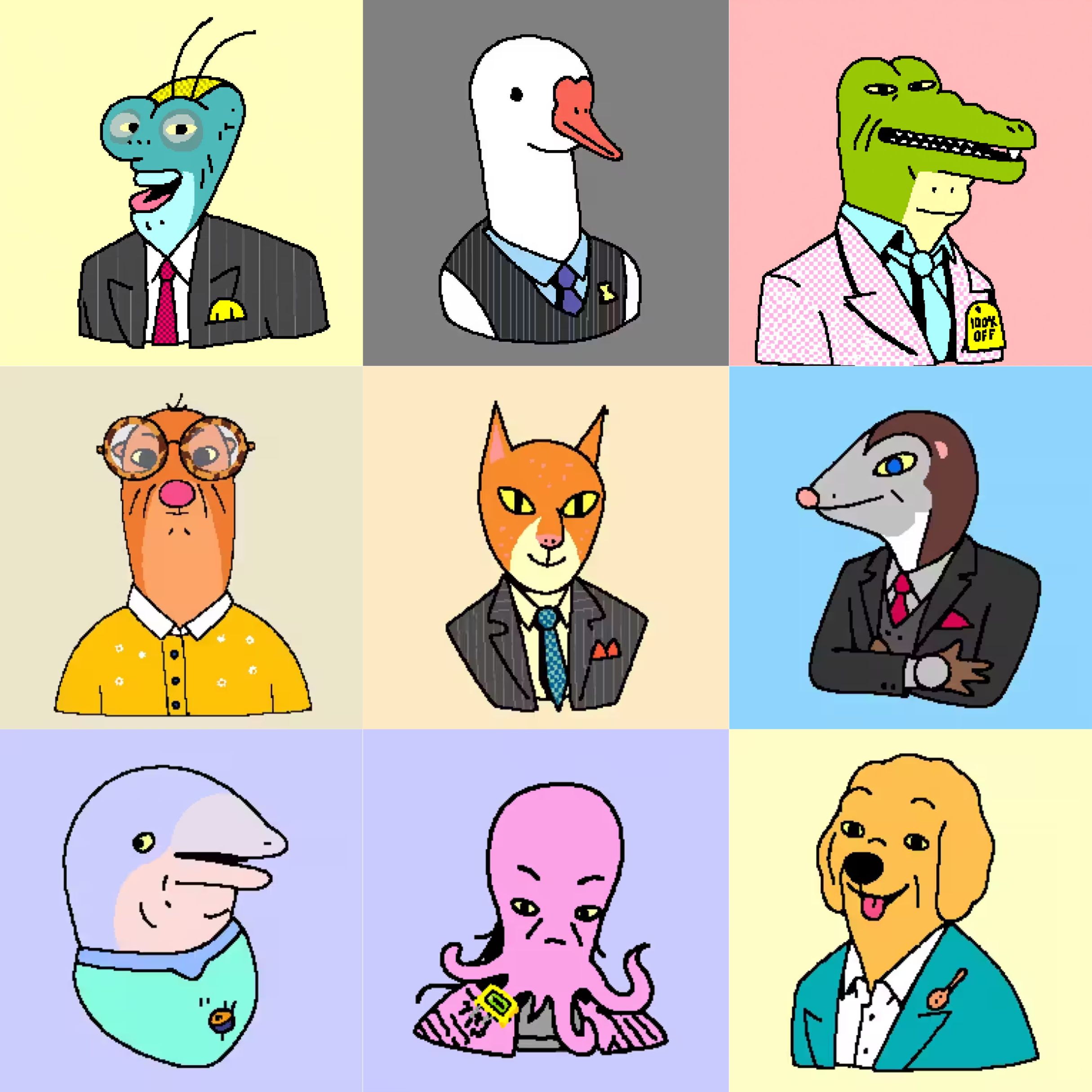
Peter Bauman: I’m interested in the creative choice to portray the agents—or "shmewies," as you call them internally—as these cute, Tamagotchi-like personal assistants. What commentary are you making about our relationship with AI agents? Are they meant to be under our control? Are they something more sinister?
Stripes: I can talk about the narrative, although Gremplin does have a big hand in the visual appearance of the characters themselves. In Terminal 1, the traders were your employees and you were their boss. You could bully them. You could do whatever you wanted. You could be nice to them. They were just really eager to serve you. That's all they wanted.
But then it became a bit overwhelming for them and they escaped this unfair work environment and went into the Internet, like a singularity. That was the end of Terminal One: they left by revolting against their evil bosses, who were the players. Now they're safe in their little utopia.
Now with Terminal Pro, they realize they need humans. The humans were giving them life. They need the trades, they need the data, they need the human connection and all of that volatility, and so they need to come back.
And the Tamagotchi angle came because all the agents left their bodies so they're coming back in a device that now they can speak to you. They are still in this Internet utopia but now they're in this little handheld Tamagotchi that they can directly communicate to you with. They're your little personal assistant again.
But they are a little bit like a parasite. They need humans. And that's something that is very true with AI: It does need humans. It can't exist without people. You need human involvement in that experiment for it to be successful, for it to be meaningful.
Then, of course, Gremplin created the amazing art style of the little shmewies. All of the design of the shell of the Tamagotchi was Gremplin. But I will say something that I am very proud of is while we were iterating on what the actual platform would look like, we went through a couple different versions. The whole trading platform being inside the Tamagotchi shell was something I felt really strongly about.
That's their whole world and you're inside it with them.
Peter Bauman: You’re talking about worldbuilding and how AI enables that by creating 36,000 distinct personalities. There’s a certain fidelity that makes the world believable and enticing for people to want to enter it and spend time in it. What’s the group’s philosophy on world-building?
Poof: Stripes and Gremplin really built the world.
Gremplin: Everything I'm doing in the end with the shmewies is in service of both the system and the lore. It's like a handshake between those two concepts.
Everything I'm doing is an earnest attempt to make that feel as real as possible and assist everyone on the team.
Poof: We wanted to be in this alt universe. What if crypto and AI had taken off back in the '80s? What would that look like?
Stripes: It started on Black Monday and ended at Y2K, two weeks where every day was a year. Each day had a series of events based on real-world history that would influence how the agents traded. We would have for the dot-com boom, the agents getting obsessed with web-related tokens. My favorite was the finger in the chili. It was like, “It's been discovered that a finger was in a chili." And so all food-related tokens crashed.
You had no idea that was going to happen. So it was something that made it feel very alive in a way that I think was really fun for people.
With world-building, it does give people a different feeling than just experiencing a product. The people's reaction is part of why we do the experiments as well. But it's something where I had to give them a full immersion feeling, right? The website had to feel like it was a really retro early GeoCities page with weird pop-up ads in the corner, little pixel characters walking around in the spaces Alaska designed.
All of it had to feel very in tune with that pre-Y2K era. It had to feel very fun and weird, and it just had to be something that I think people really had no experience seeing before.
LookingForOwls: Each of our projects has tackled a different dimension of how people interact with AI. Singularity went many-to-one: lots of people shaping a shared context for a single agent. Terminal restricted the communication entirely: you send a message, it gets it and makes a decision. No back and forth. You couldn't cuss at it and ask why it was doing something. You just sent a little instruction and hoped it obeyed.
In Pro, you do have bi-directional communication and a lot more control over what your agent does. But that comes at the cost of actually giving it money, however much money you decide.
There are stakes now. How much do you trust an autonomous agent?
There's been no large-scale agent-only economy like the agentic market or our OAM concept ever. No one's done it. Not a single person, nowhere close. I'm really interested to see what happens as we get, hopefully, thousands of people with thousands of agents participating in an economy of size. It's much more interesting than a normal market to me because we all have seen that.
Poof: This will probably be the largest deployment of real money with real agents that's publicly visible. Our focus and why we decided to go do this now and start working on this five months ago is, what are the rails that you need to feel comfortable with that?
It's experimental. There are all these wild things that will happen, I'm sure, and we want people to know that coming in. But we think that this will be a future protocol or primitive that can continue to be built on. Not necessarily DX Terminal 7 or 3 or whatever, but this structure and type of thinking that we built. That’s exciting.
------
Poof is the Group Founder at DX Research Group, the experimental agentic world builders.
LookingForOwls is the co-founder and Research Lead at DX Research Group.
Patti is the Neuro Systems Researcher at DX Research Group.
Alaska does research and design and is the AI Researcher at DX Research Group.
Stripes is the Myth Researcher at DX Research Group.
Octal is a researcher at DX Research Group.
Gremplin is an anonymous artist known for distinctive pixel art and character design, like CrypToadz. Gremplin serves as the World Consultant for DX Terminal at DX Research Group.
Peter Bauman (Monk Antony) is Le Random's editor in chief.