Suggested Reading
Article
History
The memoir of a net.art memoir!
Vuk Ćosić
•
July 20, 2026
View


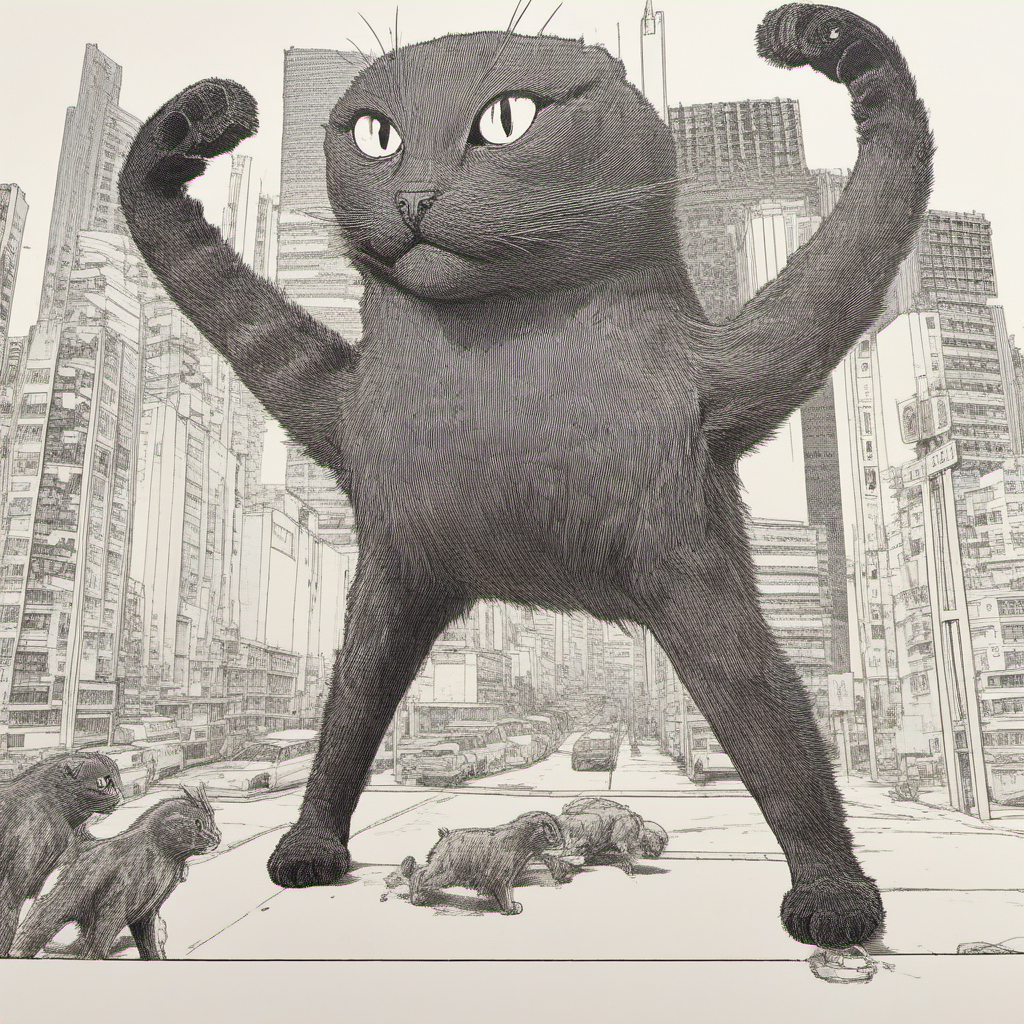
Eva and Franco Mattes speak with Peter Bauman (Monk Antony) about the evolution of digital culture through their exhibition Rage Bait, which examined how internet platforms prioritize engagement through outrage. Upon the show’s closing, the artists reflect on their shift from imagining what the internet could be to confronting what it has become, a “mega Eliza", algorithmically optimized to provoke our darkest impulses. Below is the video interview created by Silvia Dal Dosso with music by Pietro, as well as the full interview text.
Peter Bauman: In Venice alongside the 2026 Biennale, you showed RAGE BAIT, where one of your most well-known characters, Cursed Cat, featured. You seem to be trying to infect AI training data with meme humor. How can artists redirect their rage back onto the systems they’re using?
Eva and Franco Mattes: Rage Bait is the title of our exhibition that opened in Venice in May, alongside the Biennale. The show is curated by Nadim Samman and Luisa Haustein. The title refers to content designed to grab attention and provoke outrage before reason can intervene. Through new installations, videos, cat sculptures and generative AI, we’re looking at rage bait not as a glitch in online culture, but as the inevitable outcome of platforms built to maximize engagement.
For the show, we trained an AI model on our Cursed Cat sculpture, which is a physical take on a well-known meme, a black, earless figure suspended between exaltation and rage. The model continuously spews out new versions of Cursed Cat and releases them online, feeding future AI training datasets. The aim is to alter the imagination of AI, to implant a new mythological figure into generative image systems, a ghost in the machine that may surface unexpectedly, regardless of the prompt.
Back in the 90’s the Internet was very DIY. Artists didn’t just make content, they built their own tools, coded websites, and hacked software in unexpected ways. Today, the equivalent might be “going upstream”, by developing tools, curating datasets and training your own models. In a way, it might be a return to that early internet mindset, where the process mattered as much as the final result.
Peter Bauman: Your work recalls the Eliza effect and dangers of anthropomorphization. Yet, Claude is a different magnitude of complexity and intelligence compared to Eliza. Does that distinction matter? Do you have a theory of consciousness? Can that include machines?
Eva and Franco Mattes: In Rage Bait visitors encounter “Are You Still There?”, a series of AI-generated videos in which “Italian Brainrot” characters restage real conversations from a suicide prevention helpline. The conversations come from a publicly available dataset of murky origins. Though they predate AI, they have been used to train the very chatbots people now treat as substitutes for a psychoanalyst. Back in 1966 computer scientist Joseph Weizenbaum observed the so-called “Eliza Effect”, the tendency to project emotional understanding onto machines that merely mirror our words.
Today, the Eliza Effect is no longer an exception; it has become infrastructure. The internet itself functions as a giant mega-Eliza, algorithmically optimized to provoke emotions like rage, indignation, and hatred.
Because these emotions are measurable, they can be exploited for profit and political manipulation. Memes no longer simply spread; they mobilize. Today, memes wage wars.

Peter Bauman: The internet became your reality. You said to Art Basel, "As artists, we cannot compete with the Internet’s super-fast, ever-changing flow of images, ideas, and stimuli. There’s no point in trying to re-create that speed, that energy. What we can do is select one thing and isolate it from the rest to produce a moment of reflection on these processes – even if only for a minute." How have you adapted this strategy with AI?
Eva and Franco Mattes: In this exhibition, we tried to slow down the speed of memes and AI images by turning them into physical sculptures, a slow, labor-intensive process. AI generated versions of Cursed Cat were “devirtualized” into sculpture wood carved from the Dolomites, glass forged in Murano, or plastic food replicas from Japan. These techniques have long collective histories: forms of human craft intelligence passed down across generations. They stand in stark contrast to AI, where collective knowledge is extracted, centralized, and privatized.
Peter Bauman: You’ve engaged artistically with net.art and the rise of the internet, the introduction of social media and post-internet. Now with AI and the automatization of intelligence you see the full automation of the self. Where are we headed with the pace of the automation of the self we’re experiencing? What’s left to automate? Is there any hope across that transformation you’ve witnessed from net.art to neural net slop?
Eva and Franco Mattes: At the second venue of Rage Bait, our work “But I Love Human” is presented in a private swimming pool located next to Palladio’s famous Redentore church. It’s a monumental site-specific video installation. where pool water ripples with reflections of a large horizontal LED screen suspended above it. The work echos the myth of Narcissus, who vainly fell in love with his own reflection. The video is a ten-minute supercut of NPC performers who mimic video games ‘non-player characters’ during livestreams, repeating mechanical gestures and scripted dialogue for online audiences, often for pay. The work frames this practice as a symptom of a culture increasingly shaped by algorithmic demand: content produced to juice the algo. Today’s assembly lines include platforms like TikTok where the focus of automation is not only labour, but one’s own self.
I'm afraid it is too late to escape this loop. But artworks can make it visible, reflecting it back, like a pool that refuses to settle into a stable image.
Peter Bauman: The argument about copying and the degradation of the original goes back at least to Plato versus Aristotle. It resurfaces with Duchamp, Benjamin, Berger, and the pervasive copy culture of early internet. You copied others and made your own work freely copyable, inspired by the open-source movement. But as you noted, again to Art Basel, that "naive dream of complete accessibility slowly turned into a nightmare of self-design — to correct, adapt, and contradict that image." Copying again is at the center of the AI ethics debate. How do you think about copying in the age of AI?
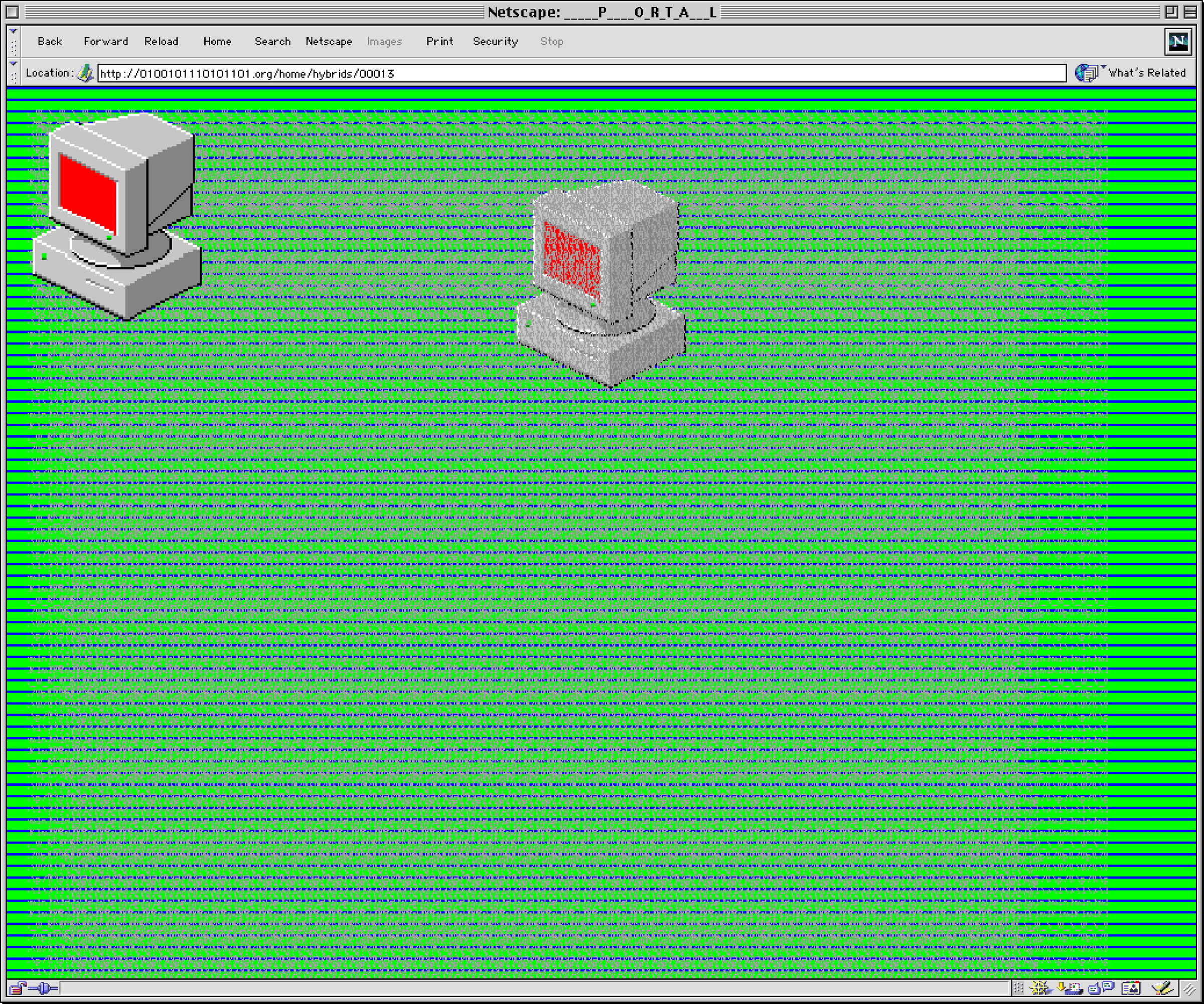
Eva and Franco Mattes: No-copyright and Creative Commons were the countercultural position among artists, intellectuals, coders and leftists in the early internet era. The idea was that culture should be free for everyone to use. This approach was inspired by the free software movement and by the idea that sharing code would help improve it. There was little regulation at the time, so not only software but also music and art were freely shared and copied.
In the case of Net Art, what was especially exciting for us was that, for the first time there was no distinction between original and copy; they were identical. It was Walter Benjamin’s dream come true!
For us, no copyright also came from the understanding that no culture has ever been created alone. Even what we consider historical masterpieces are often copies, reinterpretations, or transformations of older works. (IMG:compare Michelangelo’s David, from 1500, with Polykleitos’s Doryphoros from 400 BC) Culture is based on copying, that is how children learn to speak, how artists learn to draw, how traditions are transmitted.
Yet there is a radical difference between artists copying as homage and a mega-corporation doing it on a mass scale for profit. The most prolific copyright pirate of the 1990s, with 30,000 MP3s in his basement, looks like a joke compared to companies like OpenAI. What was once perceived as piracy or counterculture, is now fuelling one of the central engines of the US economy.
Peter Bauman: What does the reawakened and confused spirit of net.art say about 2026
Eva and Franco Mattes: Looking back, our work has always navigated a contradiction: we critique these systems but we are also drawn to inhabit and explore them. In the early days, the web felt like a kind of wild frontier, identity was fluid, authorship unstable, and the rules were still being made. We were drawn to myth-making, hoaxes, and the ease with which reality could be bent online. Over time platforms became centralized and extractive. Our focus shifted from playful subversion to looking at how these systems shape behavior, emotion, and even morality, rewarding intensity over nuance.
This exhibition continues that trajectory. Rage bait isn’t an anomaly, it’s a core feature of an attention economy where outrage travels fastest. We try to make this contradiction visible, tangible — tracing how online dynamics spill into bodies, politics and physical space, mirroring our own shift from imagining what the internet could be to confronting what it has become.
------
Eva and Franco Mattes are an Italian-American artist duo based in New York and Milan, working since the mid-1990s across net art, performance, sculpture and video. The pair probes how online systems reshape facets of humanity, like identity and belief. Their projects—from the pseudonymous Luther Blissett era and the ongoing Fukushima exclusion-zone exhibition Don't Follow the Wind to recent work on AI-generated imagery—treat the internet as a social space where anonymity, appropriation and manipulation can be staged and tested.
Peter Bauman (Monk Antony) is Le Random's editor in chief.