.png)

-p-500.png)


-p-800.jpg)
Artcontinuing
Jeff Koons Is Selling $100 Million of His Personal Art Collection
Much of the trove, offered this fall at Christie’s, comes from a buying spree in the late 2000s and includes Dutch Golden Age art and paintings by Picasso and Manet.


Artist and engineer Ryan Murdock authored BigSleep, the foundational open-source notebook that paired BigGAN with OpenAI's CLIP. Less than a day after CLIP's release in January 2021, he posted a white clock that opened text-to-image generation to anyone with a browser. Murdock spoke with Peter Bauman (Monk Antony) about the lasting significance of one of the first widely available, open-source text-to-image techniques. They discuss the hacker ethos and story behind BigSleep's origins, Murdock’s own roots in Processing, glitch art and CPPN GANs, plus what the latent space reveals about ourselves.
Peter Bauman (Monk Antony) previews the autumn 2026 art and technology season, from Armory week in New York to ISEA Dubai. As the platforms close and the museums assess, Bauman lays out the highlights month by month, a full event calendar and picks from leaders in the field, including Corinna Gardner, Michael Spalter, Leyla Fakhr, Erick Calderon (Snowfro), Sofia Garcia, Lowbie and quasimatt.
Multidisciplinary artificial life artist Agnieszka Kurant recently participated in two shows alongside the Venice Biennale, Rhizome’s Seven on Seven in New York and Zero 10 in Basel during Art Basel. The artist spoke with Peter Bauman (Monk Antony). They discuss how the shows align with her radically experimental and collaborative views on systems of collective intelligence, including alien thoughts and wordless conversations.
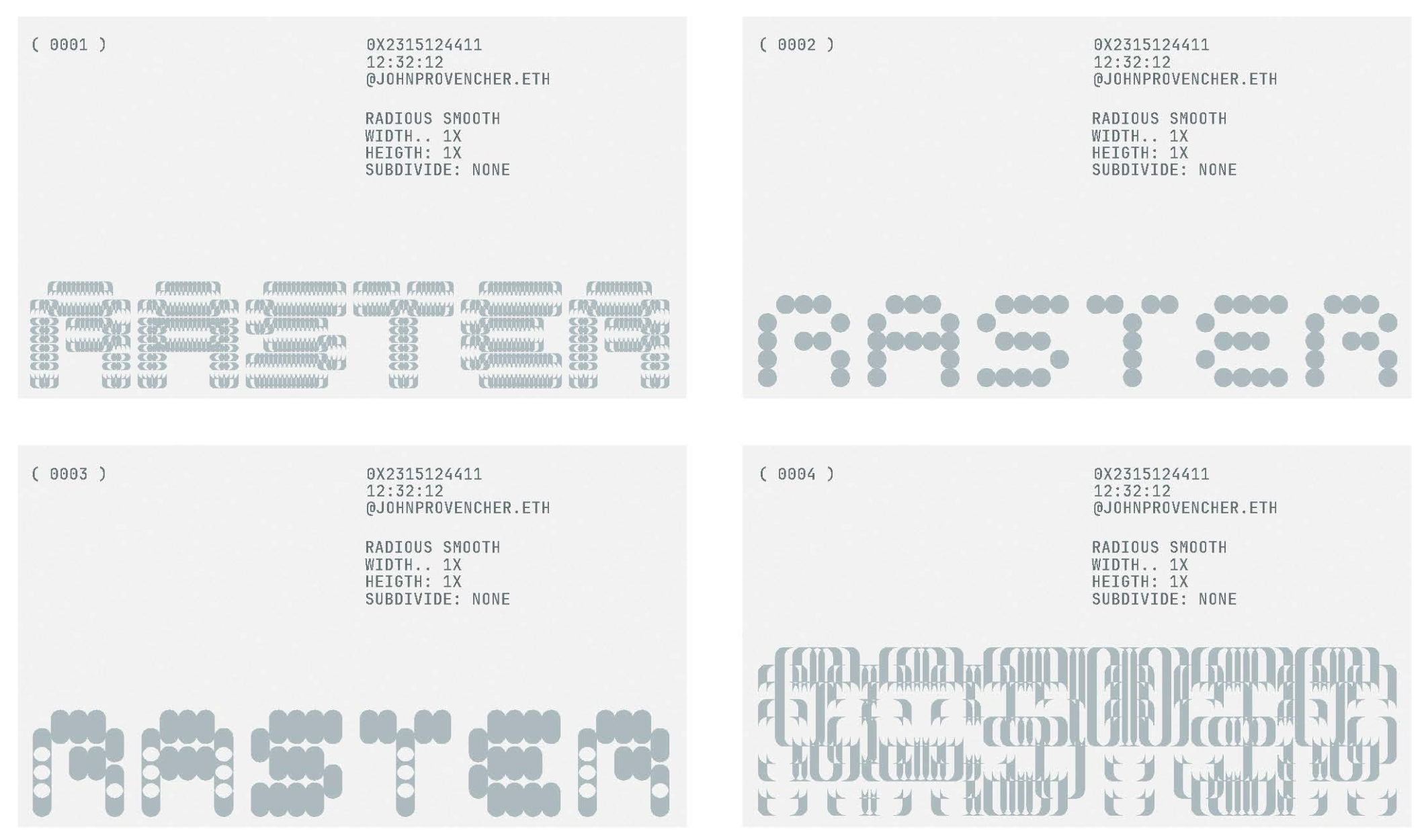
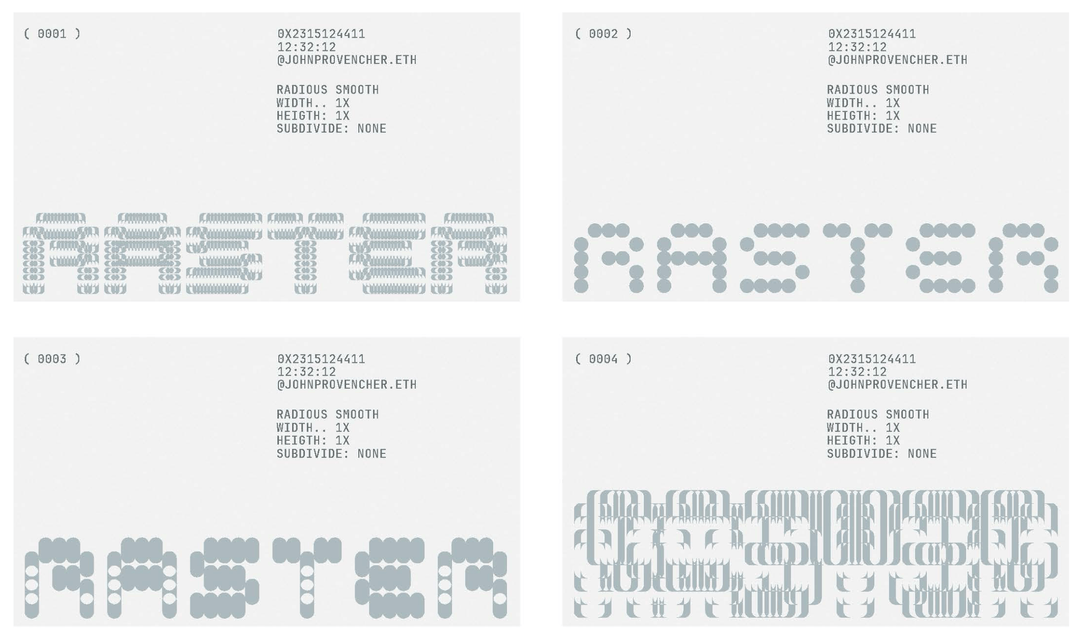
Artist John Provencher joins Raster’s founders, thefunnyguys and Michael Elsdoerfer, to discuss collaborating on the generative system, Raster Logo. With Peter Bauman (Monk Antony), they cover the bitmap wordmark at the system's core, the inspiration for a generative logo and what Raster's founders make of the platform's first year.
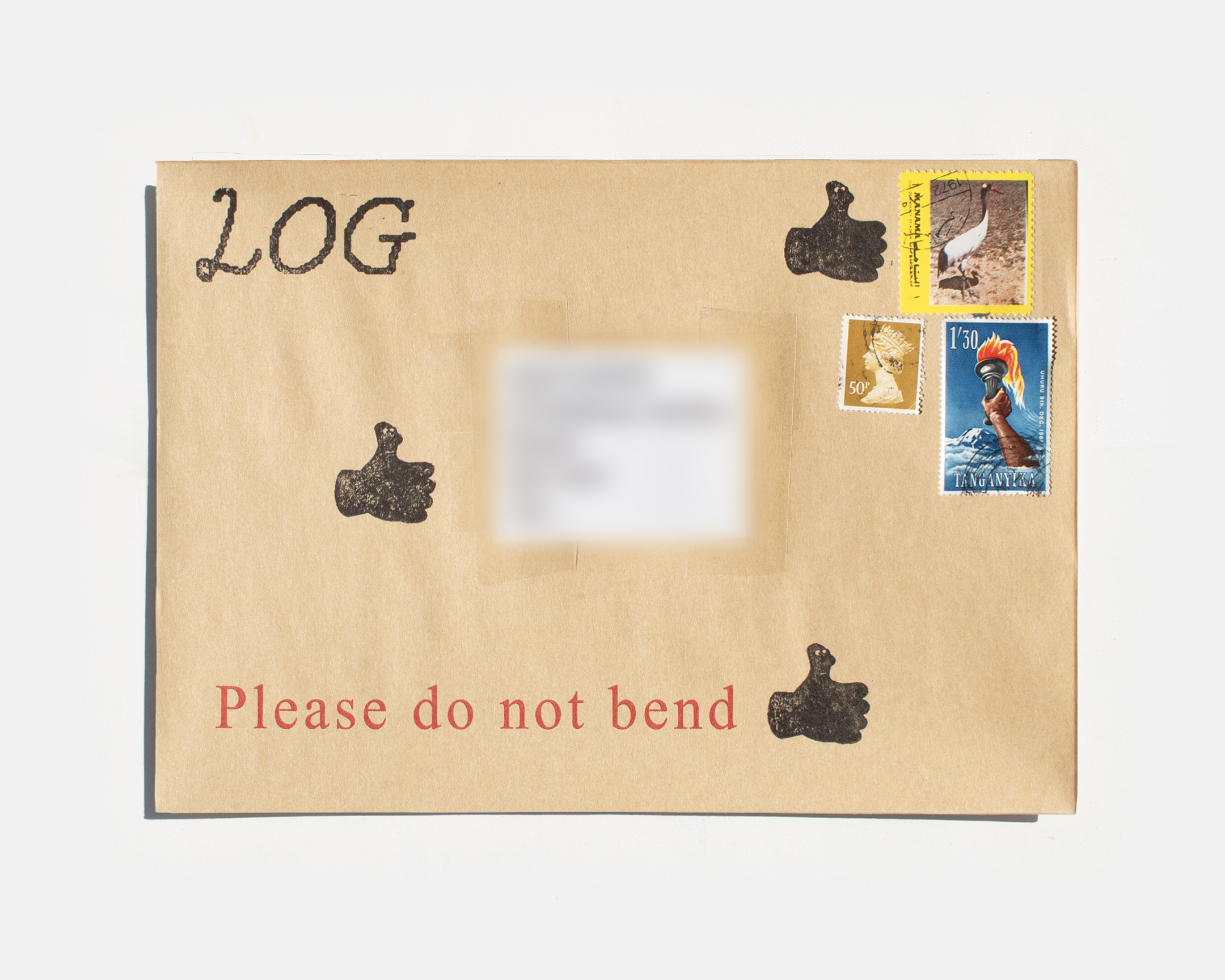
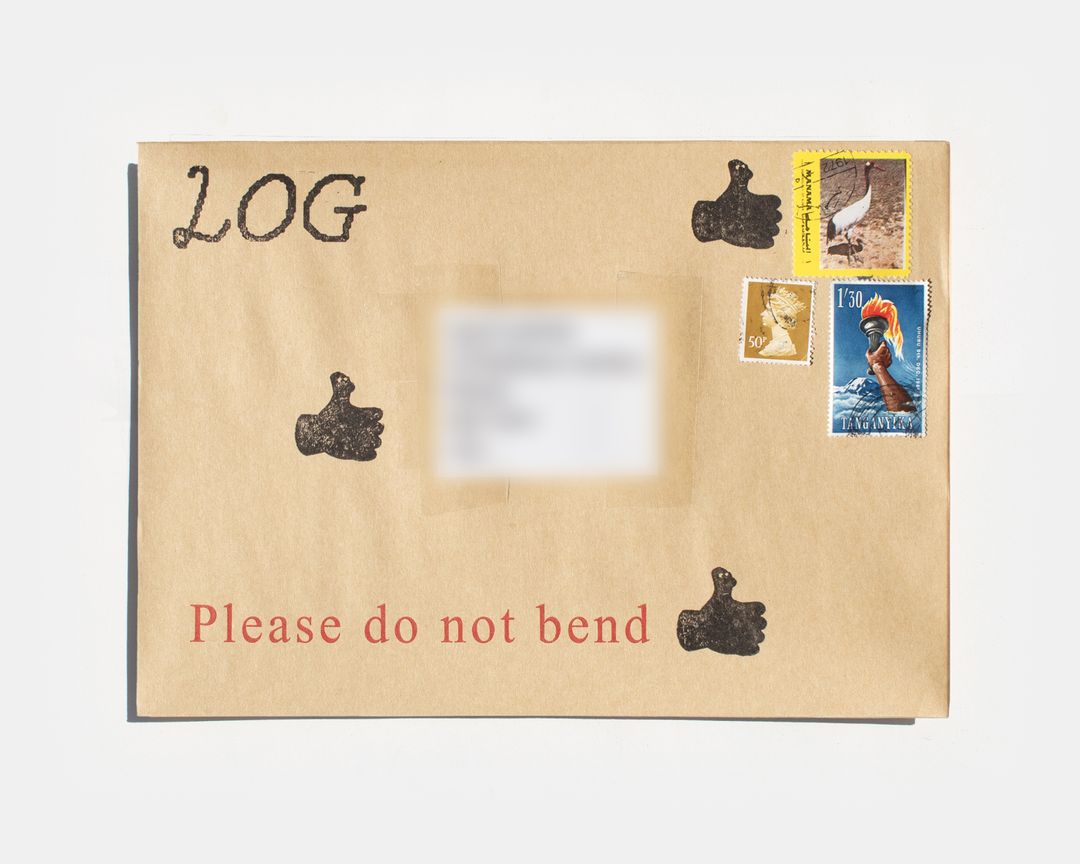
Artists Lowbie and Duc de Berry discuss the origins of LOG, their small-batch art zine, with VVV. They cover the zine tradition, the NFT-to-zine pipeline, curating a scene and why two artists who live online turned to print.
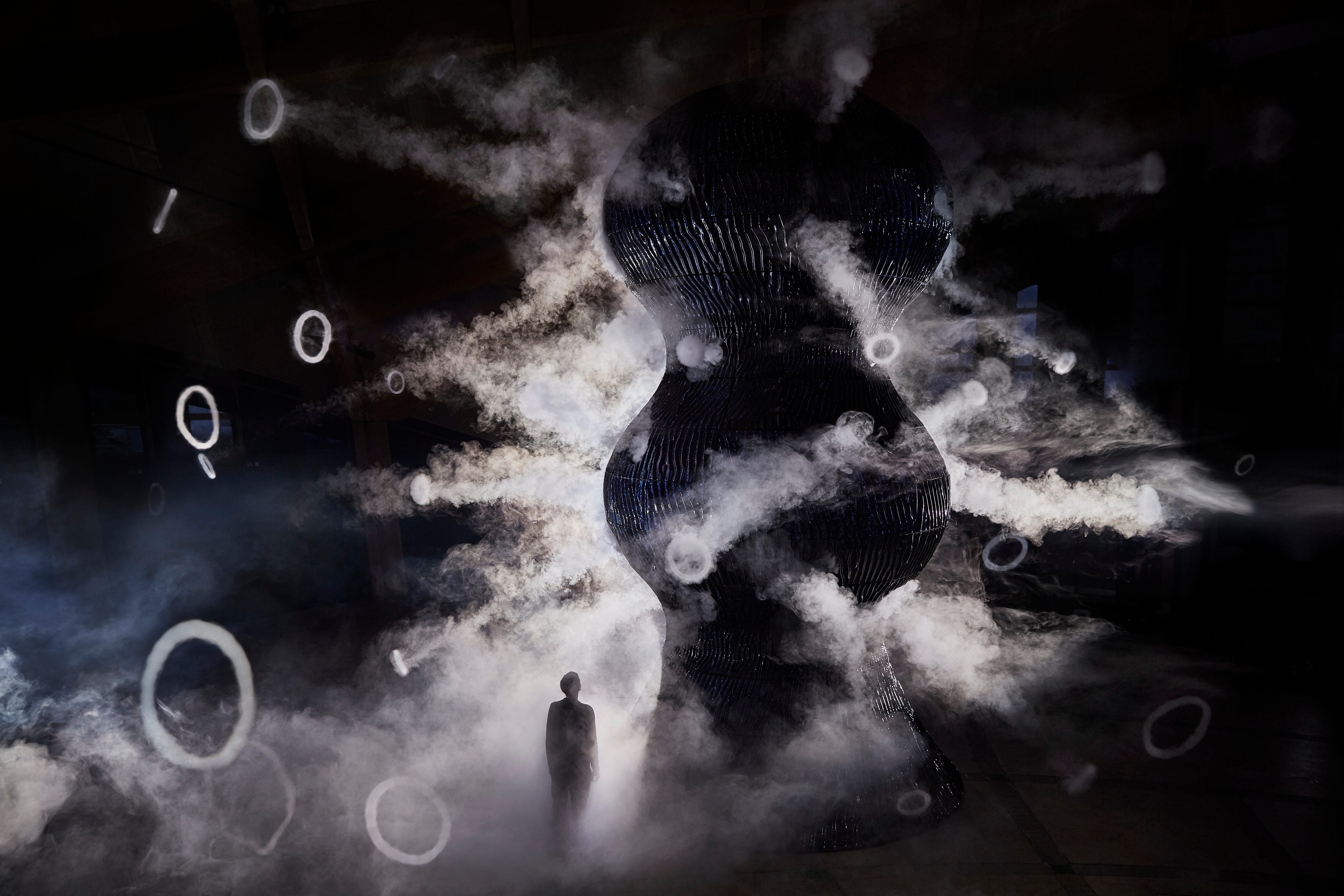
Artist duo A.A.Murakami spoke with Peter Bauman (Monk Antony) about creating screenless immersive art and technology installations, where existence itself is the medium. Their solo exhibition New Nature opens September 1, 2026 at Paradise City Art Gallery, Seoul.

It's so complicated that people are ascribing otherness to it. But it's still a computer running it, guys.
Matt Hall · Larva Labs on Computation’s StrangenessPodcast · Episode 21“There are some of them whose motors are really held together with rubber bands and hope.
Val Ravaglia · Digital Curators Series 03—Val Ravaglia on Displaying the DigitalTimeline · 1933“This important development in the twentieth-century attempt to measure aesthetics described aesthetic effectiveness by its degree of complexity and order.
George David Birkhoff Proposes the “Aesthetic Measure”In this written form of the conversation, deep learning engineer and generative adversarial network (GAN) inventor Ian Goodfellow speaks with Peter Bauman (Monk Antony) in depth about the legendary origins of GANs, their unexpected success and indelible impact on both twenty-first-century image making and AI research.
 Peter BaumanLe Random’s editor in chief, writing as Monk Antony.
Read & listen →
Peter BaumanLe Random’s editor in chief, writing as Monk Antony.
Read & listen →

Brian Droitcour reviews K. Allado-McDowell’s The Known Lost at the Swiss Institute, on view through September 7, and Pierre Huyghe’s In Imaginal at Marian Goodman Gallery, which closed in June.
In the hands of thoughtful artists, much-derided AI systems can become an instrument for seeing the world differently. They invite us to imagine other kinds of intelligence and to reconsider how we understand our own powers of perception.
Two exhibitions in New York this summer, K. Allado-McDowell’s The Known Lost at the Swiss Institute and Pierre Huyghe’s In Imaginal at Marian Goodman Gallery, take up this challenge, using generative AI and robotics as collaborative, active agents in the work’s creation. They remind us that “AI art” is an imprecise umbrella term encompassing several technologies which can be used by artists to achieve powerful emotional and conceptual effects.
The Known Lost is K. Allado-McDowell’s proposal for a monument to all Earth’s extinct species that paleobiologists have been able to identify. A lectern at the center of the Swiss Institute’s basement gallery has a stack of seven volumes bound in black leather in its base; the pages inside list the scientific Latin names of bygone flora and fauna. Around the gallery’s perimeter hang seven sheets of thin fabric printed with images of a monument in the mountains. The Latin species names appear in these images, too, as carvings in sheer faces of rock. Some of the images show hooded, monklike figures walking the smooth stone paths to give a sense of the dramatic scale.
Keep reading →Four parts, published between July 2023 and December 2024, building a way to look at generative art.
Peter Bauman (Monk Antony) develops a framework for appreciating and analyzing generative art, art using autonomous systems in the vein of Sol LeWitt or Yoko Ono, through an investigation of the movement’s locus of artistic intent.
005July 20, 2023 · Read part I →A closer look at one of the five framework components, Results, the outputs of a generative system. With Tyler Hobbs, Kim Asendorf, Andreas Gysin, Leander Herzog, Erick Calderon, William Mapan, Lauren Lee McCarthy, Sougwen Chung, Christiane Paul, Patricio González Vivo, Linda Dounia and Golan Levin.
037March 21, 2024 · Read part II →Bauman investigates another layer of the Framework, systems themselves. He spoke to Frieder Nake, Casey Reas, Emily Xie, DEAFBEEF, Matt DesLauriers, Jen Lowe and Patricio González Vivo for the piece.
049June 20, 2024 · Read part III →Bauman investigates another framework component, autonomy, control within generative systems. The essay includes discussions with Christiane Paul, Matt DesLauriers, Sougwen Chung and Zach Lieberman.
070December 12, 2024 · Read part IV →Famed investors and art collectors Micky Malka and Becky Kleiner speak with Peter Bauman (Monk Antony), sharing the story of their love for art.
Interviews, essays and histories from the generative art canon. One editorial, every Monday.
Subscribe now →11 editorials, 2024 to 2026.
029Christiane Paul on Curating Cohen’s AARON031Linda Dounia on Memory Machines039The memoir of a net.art memoir!058Casey Reas, Lauren Lee McCarthy & Chandler McWilliams on Expanding Software069Lawrence Lek on AI Reinventing Place072Rafaël Rozendaal on a Liquid Canvas073Kim Asendorf on Elegant SymbiosisAnd 5 more in the Archive13 editorials, 2023 to 2026.
013DEAFBEEF on (Im)permanence057Gendering Systems069Lawrence Lek on AI Reinventing Place104AA Cavia on Summoning Worlds118Ian Cheng on Composing with Systems121Lu Yang on Art as the Perfect Cloak124DX Research Group on the Agent ArenaAnd 7 more in the Archive7 editorials, 2023 to 2025.
011Timeline Chapter 1: Ten Top Moments012Maya Man on Generative Meaning027Maya Lin on Systematic Naturalism052Frieder Nake on “Machinic” Miracles055Can Art Replace Religion?088Julia Kaganskiy on Generativity’s Deeper Consideration092Infinite Images, Finite ControlAnd 1 more in the Archive14 editorials, 2023 to 2026.
005Demystifying Generative Art018William Mapan on Breaking the Medium040Matt DesLauriers on Challenging the Image050THEN AND NOW070Demystifying Generative Autonomy077THE PEOPLE ARE IN THE COMPUTER—PART I078A. Michael Noll on When It All StartedAnd 8 more in the Archive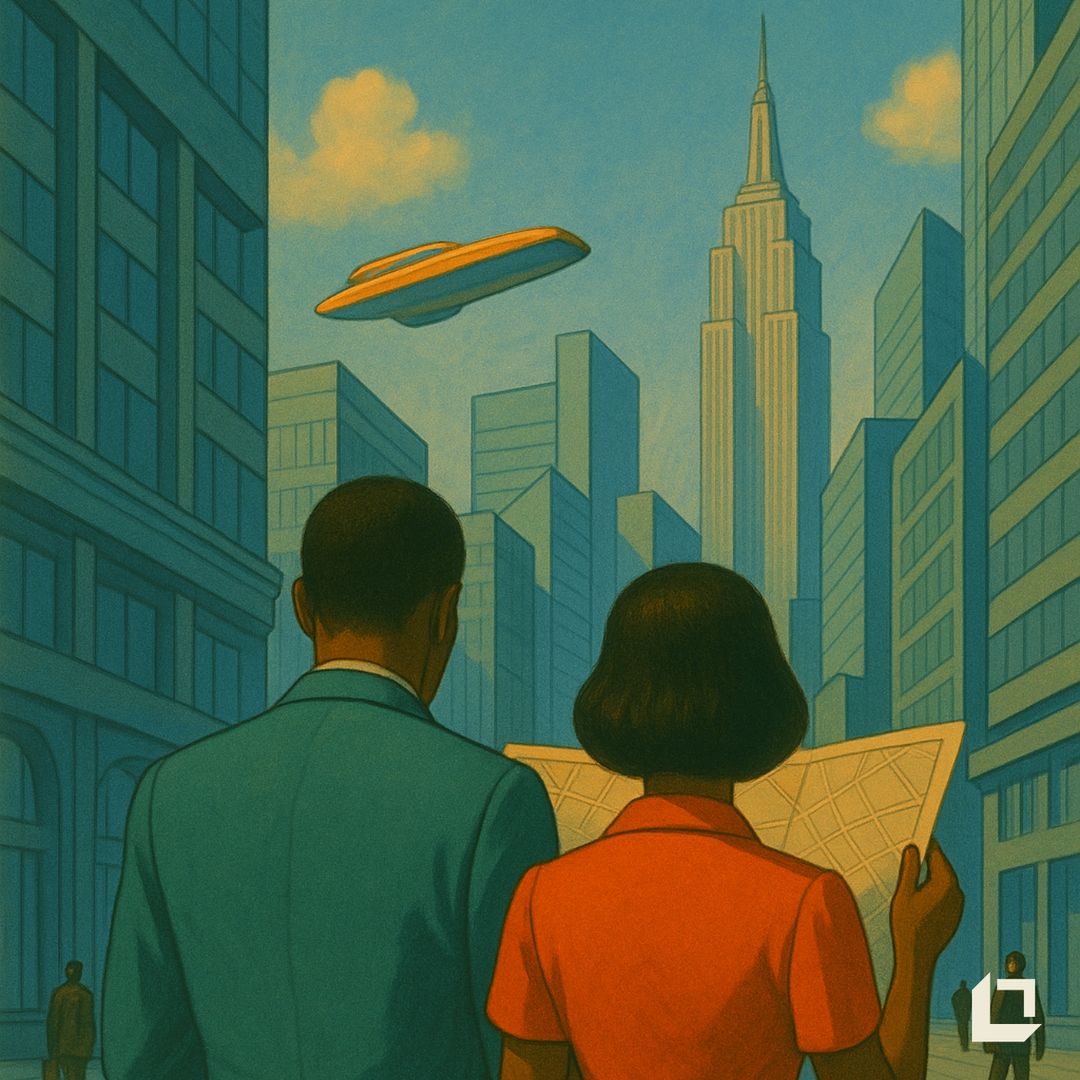 Art Walk
A curated guide to New York for digital art lovers, featuring an Art Walk map and highlighting must-see galleries, neighborhoods and artists that define the city’s vibrant digital art scene.
-p-1600.jpg) Art Walk
Art WalkA curated guide to London’s digital art and culture, featuring an Art Walk map and highlighting must-see galleries, neighborhoods and artists that shape the city’s versatile scene.
Featuring Copper Giloth, Sasha Stiles and Martha Joseph and Hans Ulrich Obrist; plus “The Ultraintelligent Machine and Gaberbocchus Common Room”.
100Copper Giloth on Video Games to Video ArtSeptember 22, 2025099The Ultraintelligent Machine and Gaberbocchus Common RoomSeptember 15, 2025098Sasha Stiles and Martha Joseph on Language as TechnologySeptember 10, 2025097Hans Ulrich Obrist on Exhibitions as Living OrganismsSeptember 1, 2025Curated by pioneer, Sonia Landy Sheridan who also wrote the show catalog, this exhibition at the Museum of Science and Industry does not have much existing information about it. Anymore would be greatly appreciated.
Explore the Timeline →Le Random’s editor in chief, writing as Monk Antony.
123 editorials →
A curator and researcher specialising in creative AI.
5 editorials →
An independent critic, filmmaker and design strategist.
4 editorials →
A critic and curator specialising in digital art.
2 editorials →
Creative engineer and formerly Le Random Collection Lead.
2 editorials →
A poet exploring patterns of randomness.
2 editorials →
Art critic, editor and curator of Cybernetic Serendipity (1968).
2 editorials →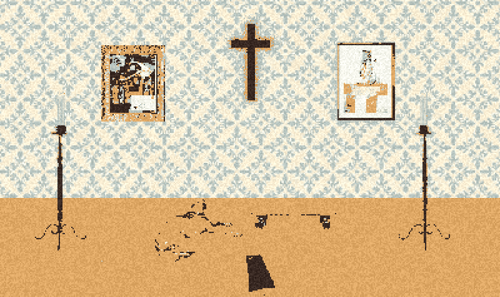
An artist and writer based in England.
2 editorials →
A generative art dealer, curator and founder of ARTXCODE.
2 editorials →
Co-founder of Le Random and Raster.
2 editorials →-modified.jpg)
Artist and a founder of computer and digital art.
1 editorial →
A digital art curator and art historian at Avant art.
1 editorial →
Research strategist affiliated with Serpentine’s Creative AI Lab.
1 editorial →
Editor in chief of Right Click Save; research fellow at Goldsmiths.
1 editorial →
Ana María Caballero is a first-generation Colombian-American poet and artist.
1 editorial →
A Berlin-based writer and curator specialising in digital art.
1 editorial →
A London-based curator and arts writer from Singapore; founded NFT Asia.
1 editorial →
A new media artist whose practice spans drawing, animation and video.
1 editorial →
An artist, collector, writer and curator in Western Massachusetts.
1 editorial →
An artist and designer based in New York City.
1 editorial →
A UK-based curator and producer with two decades in museum management.
1 editorial →
A cultural host focused on art at Tribute Labs, based in New York.
1 editorial →
An artist and creative technologist working across installation and video.
1 editorial →
A conceptual artist and writer.
1 editorial →
The artist duo of Tali Hinkis and Kyle Lapidus.
1 editorial →
A teacher, writer and artist working with custom-made software.
1 editorial →
An artist integrating hardware and software in geometric forms.
1 editorial →
An artist and writer on art and technology for over two decades.
1 editorial →
Ania Catherine and Dejha Ti, an experiential artist duo in Madrid.
1 editorial →
Primavera De Filippi is an artist, legal scholar and researcher focused on the legal challenges raised by decentralized technologies.
1 editorial →
An artist and author investigating blockchains and their histories.
1 editorial →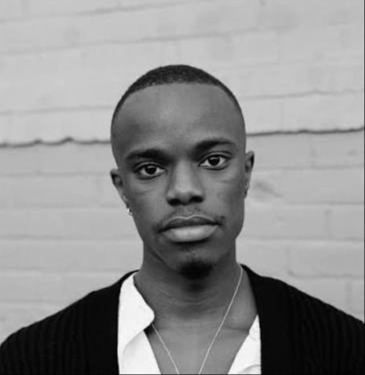
A designer, artist and cyberethnographer based in New York City.
1 editorial →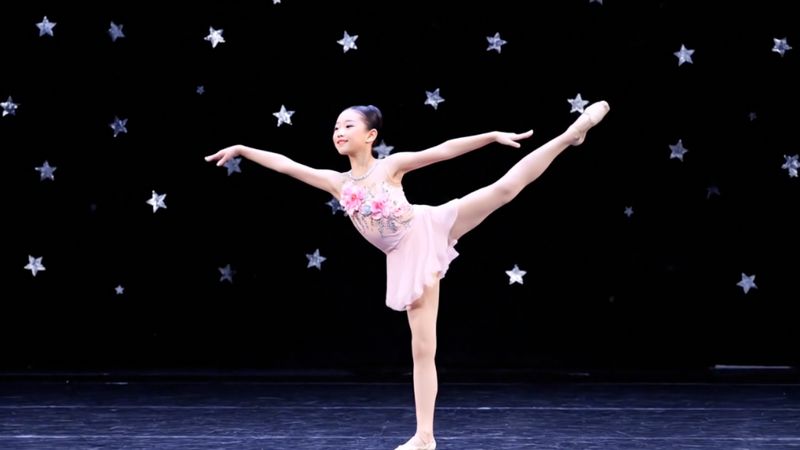
Poet and artist; contributor to Standout Artwork of 2025.
1 editorial →-p-500.png)
Artist and educator making generative image systems.
1 editorial →
A writer, curator and Artistic Manager at Artpoint.
1 editorial →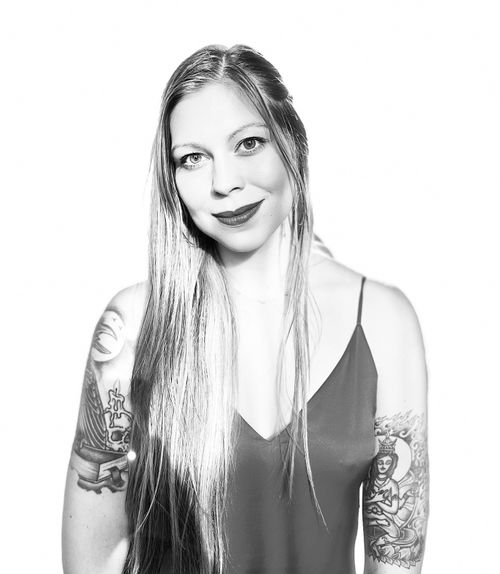
A poet, fiction writer and journalist; Head of Comms at Mint Gold Dust.
1 editorial →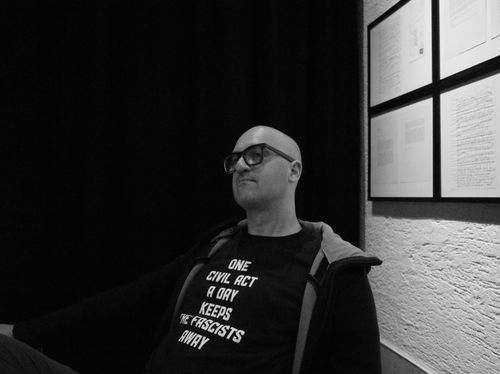
-p-500.jpg)
VVV is a digital art and minting platform built on the Solana blockchain.
1 editorial →
An artist, writer and technologist using CGI to simulate alternative science.
1 editorial →Discover articles, episodes and histories connected to the artists in your collection.
Want to pitch an article, correct the record or get in touch? Email gm@lerandom.art, attention Peter.
Le Random · Miami, Florida