
Suggested Reading
•
October 12, 2026
View


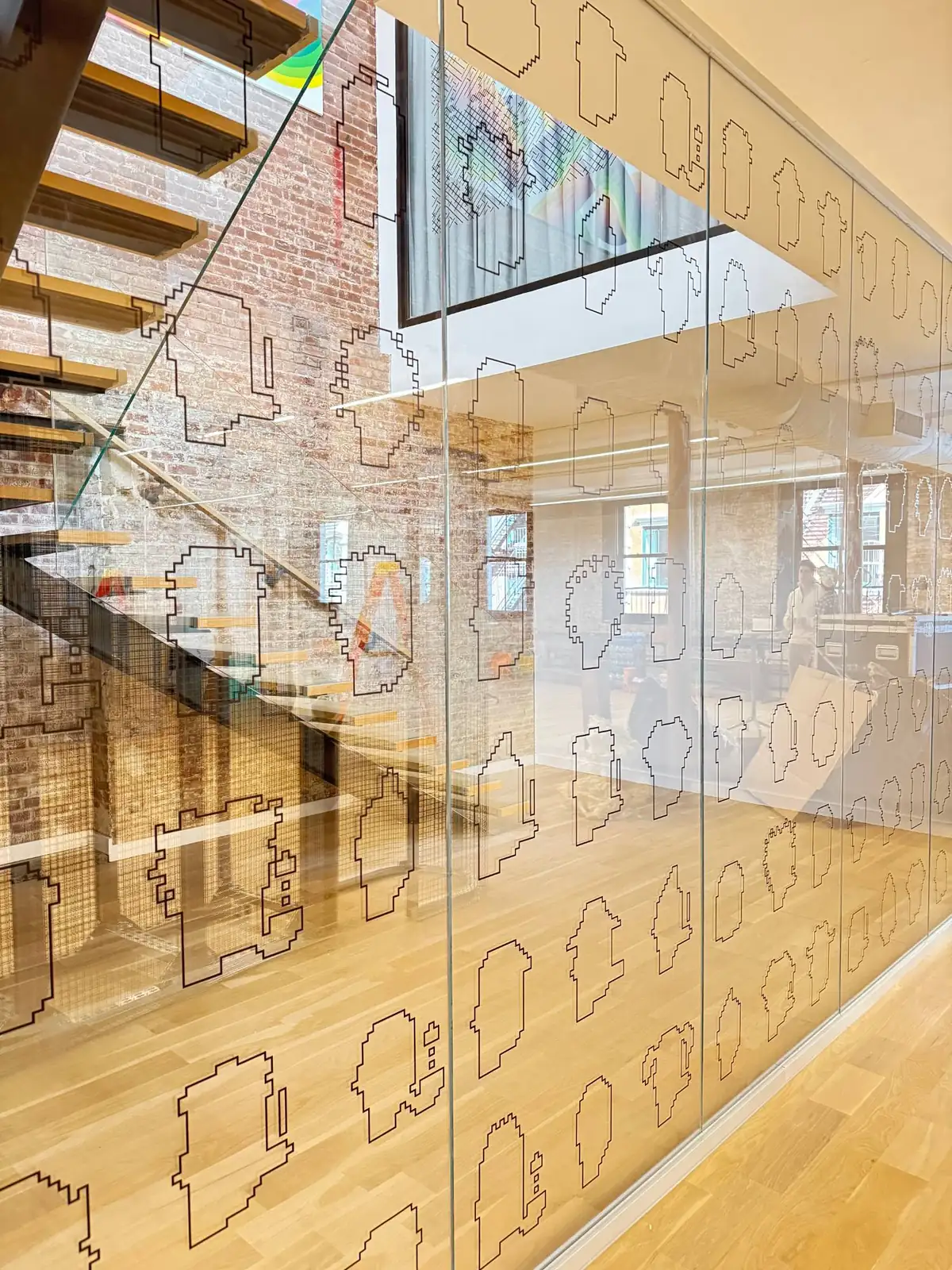
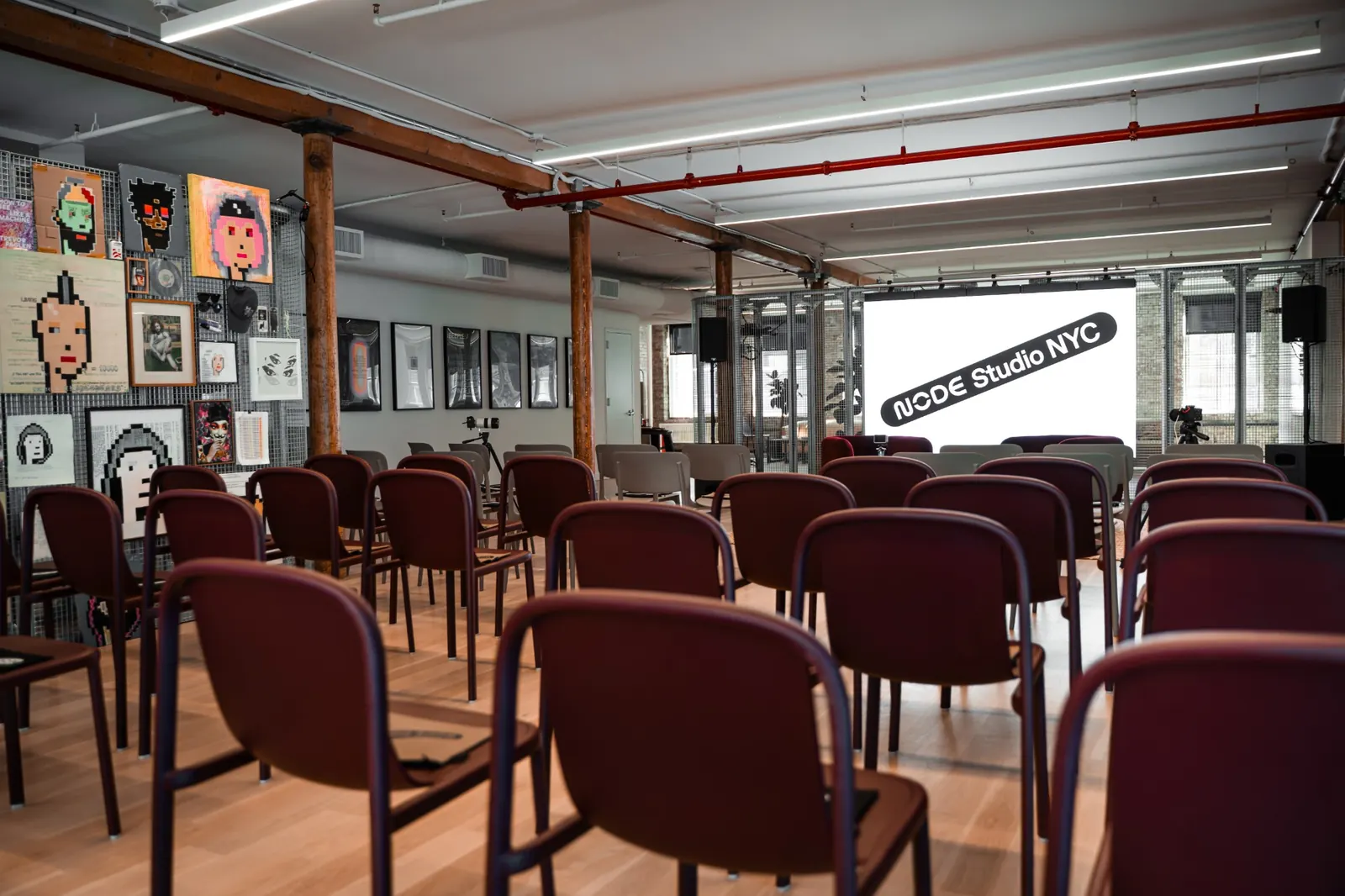
NODE Foundation Executive Director Phil Mohun opened NODE Studio NYC, the foundation’s second space and a 4,500-square-foot studio on Greene Street in SoHo, on October 11 with a weekend of talks and an open house. Mohun spoke with Peter Bauman (Monk Antony). They discuss why NODE chose a studio rather than another exhibition space, how the New York and Palo Alto spaces will work together as a network, and what NODE’s first ten months and four shows taught it.
Peter Bauman: Let’s start with some of the foundational decisions like the name. The new space is called NODE Studio NYC. Why “studio”? What distinguishes the space from its Palo Alto sibling? How did it come about?
Phil Mohun: The reason we chose the name “studio” is very particular and we discuss this a lot internally. We’re based in Palo Alto as an organization and that’s where a lot of our DNA is.
To open a studio in Palo Alto is an unusual move. In New York, it’s somewhat common. An artist studio is one of the main reasons that artists live here but obviously studio rent is difficult. So we’re excited to be able to give artists space.
But we debated a lot about this name. What is the purpose of a studio? Well, it’s a place where the work gets done. And often it’s a place where the work is shared prior to what I would call a more formal presentation or exhibition.
We have now been open in Palo Alto for about ten months and we’ve learned a lot of lessons there and I’m happy to talk about those. One of the main lessons is that there’s a lot of lead time required for an artist to be able to come into our 12,000-square-foot space in Palo Alto and hit the ground running.
Understanding the space and what’s possible all takes time. So does learning how to work with our team and the capabilities that we provide that are outside the normal palette of production design.
Our shows in Palo Alto tend to last a season; we wanted to be able to have a running start at those. The studio is a place for us to be able to do that, to work with not only artists but the community around the art as well, to give ourselves enough time to make sure that concepts can develop.
It happened somewhat organically. The space is on 50 Greene Street in SoHo and it’s about 4,500 square feet. Like many of these spaces in New York, it’s not a ground-floor, open-to-the-public gallery.
We expect to be able to give artists a space there for a longer period, whether that’s three or four months, where they can work uninterrupted.
At the end of the day, they can leave their tools out and come back the next day and not have to worry about whether or not someone’s touched them.
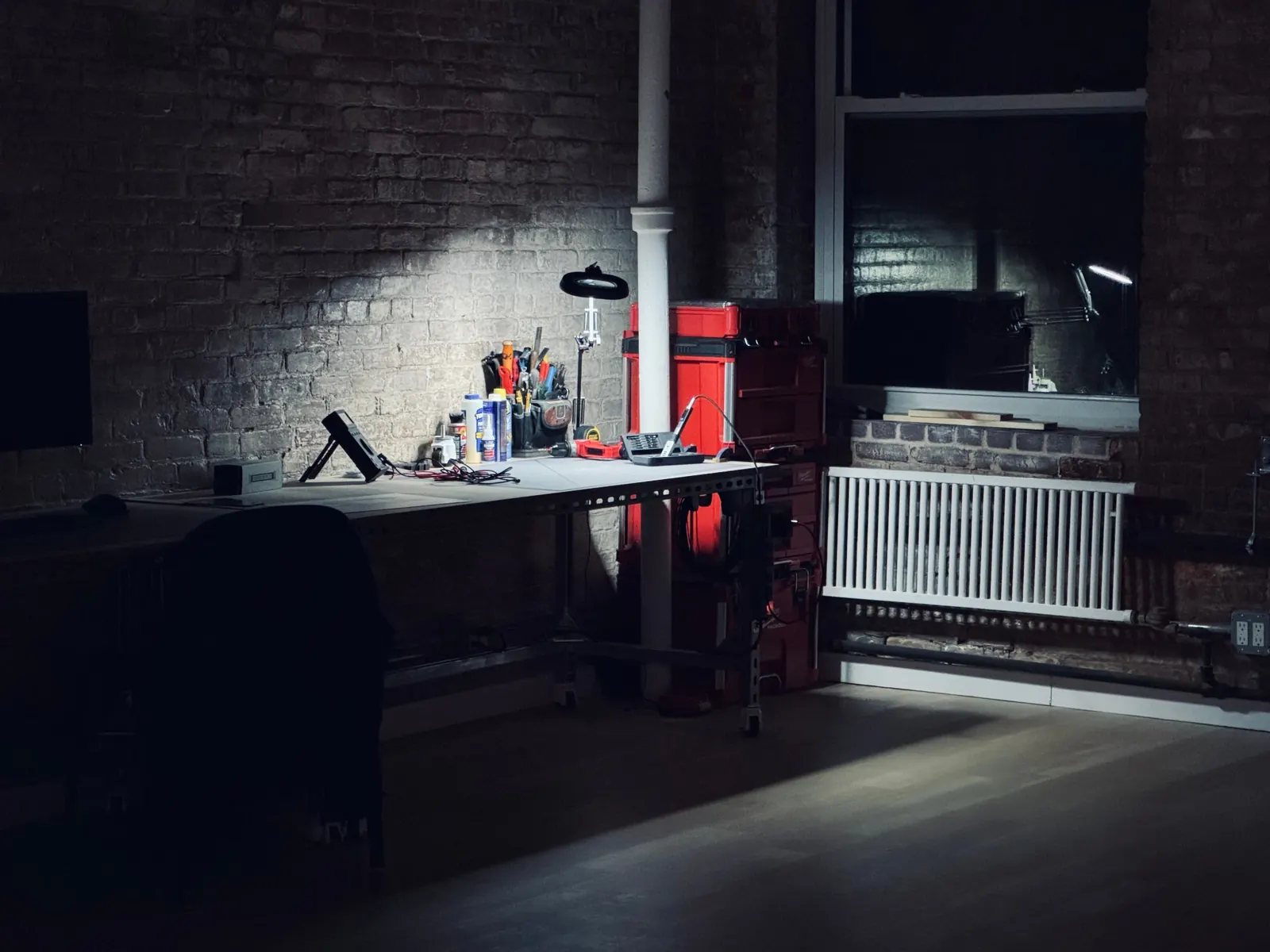
Palo Alto is open to the public, which means that at the end of every day, we need to reset and prepare for a new group of people to come in. It’s a place where the work gets shown but it’s difficult for the work to get done unless it’s in the period between shows.
Peter Bauman: So New York will be a studio space and Palo Alto will remain the presentation and event space?
Phil Mohun: We want to give artists the tools and space to help them in their practice and that may mean occasionally staging exhibitions or shows. One of the reasons we opened October 11, 2026, with a series of talks and an open house rather than an exhibition is to make that distinction between Palo Alto and New York.
If Palo Alto were a verb, it would probably be to experience; New York is to share.
Peter Bauman: New York is the staging and Palo Alto is more of the production?
Phil Mohun: Yes. I see New York as being a place for discovery and experimentation.
Peter Bauman: How many artists do you plan on supporting at a time?
Phil Mohun: We will have more information about the program soon. We’re not quite there yet. But we’ll have a number of spots available for artists to work and then have that run a few times a year.
Peter Bauman: Will spots be by application or invitation?
Phil Mohun: There are two parts. One is I’m not sure that just artists is the right criterion for the NODE Studio space. Increasingly, it’s becoming clear that you need the ecosystem around the artist. You need to consider the presentation. You need writers. You need software engineers, videographers and photographers to build a healthy ecosystem.
Sometimes people need space to try things that are not guaranteed to work. We want to be a space for that sort of experimentation. In a given cohort, you may have a few visual artists working but you also may have someone trying something experimental. You may have someone writing. You may have someone exploring a new idea or a new software framework or experimenting with something strange on-chain.
Our hope is that this creative intermixing across different disciplines proves to be fertile ground for new ideas.
Peter Bauman: That’s a famous Silicon Valley tradition but interdisciplinary mixing also comes from places like Bell Labs. It’s something A. Michael Noll spoke to me about as the reason he was able to make his computer art there in the early 1960s.
When NODE opened, you spoke about how it was a network more so than a gallery or museum. How will the two spaces work together as a network?
Phil Mohun: Obviously a single location does not a network make and it’s unclear if two is meeting the minimum criteria for a network but it’s a start. If the studio is the second node, the points in a network are really connected by people and ideas moving back and forth.
I do hope that it’s movement in both directions. I hope that ideas and people in New York can expand to our space in Palo Alto. Similarly, I hope the work we’re doing in Palo Alto, including some of the technology and infrastructure that we’re developing to support digital art, can be shown in New York.
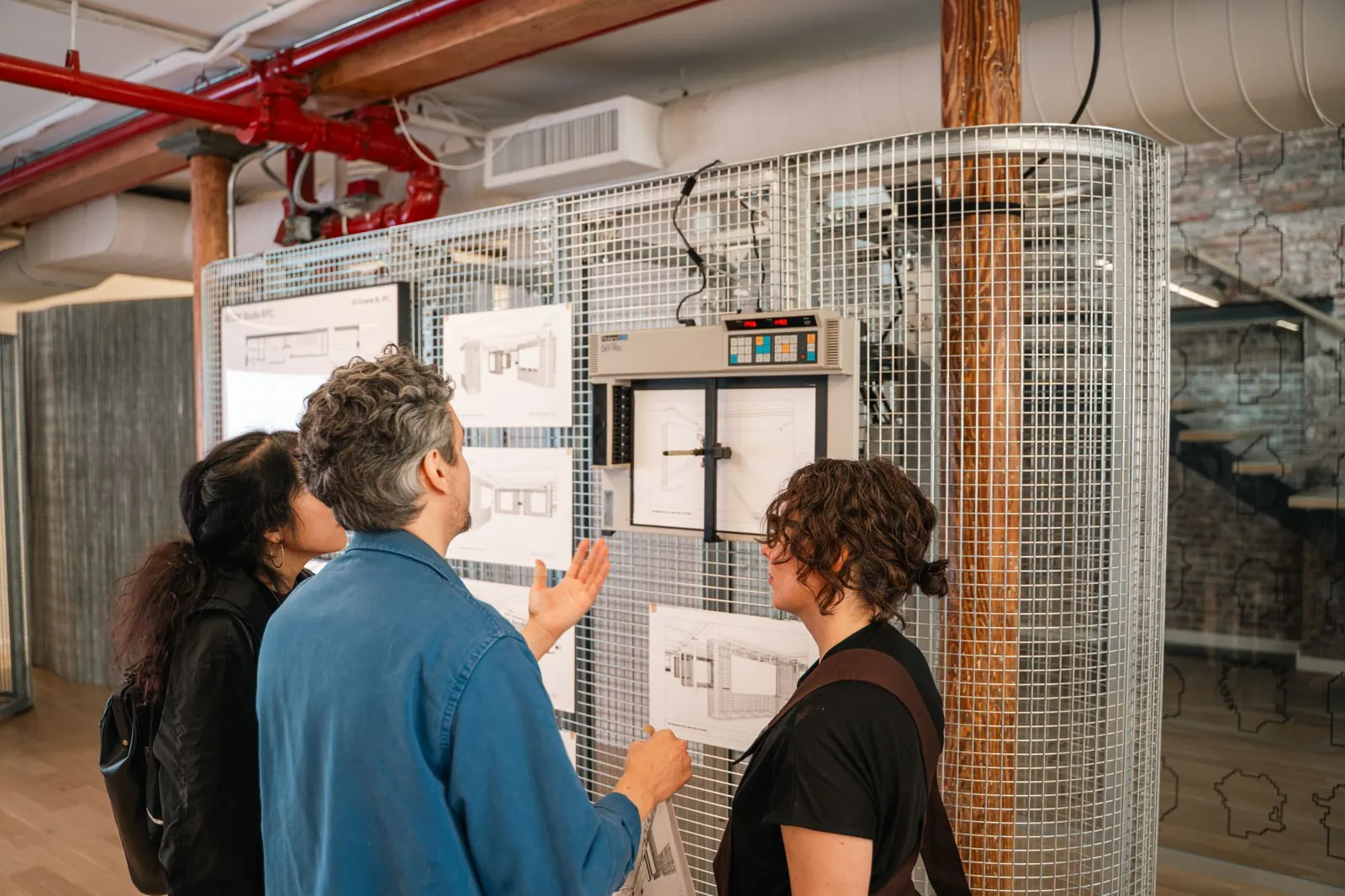
One of the major ideas that we’re trying to bring to the New York space is modularity. In Palo Alto, we have the ceiling grid that’s been very instrumental in our being able to stage our exhibitions.
We’ve created what I would call almost an industrial design product, which is a type of wall that is based on the lessons learned from our ceiling grid system that can be assembled very cheaply and easily from parts that are available generally off the shelf.
It solves a lot of the problems that I see around displaying digital art, which are mostly that you’re trying to drill a screen into drywall and then hide an electrical cord. It’s just this very simple, sort of prosaic problem that really mars what I consider to be the beauty of a digital art exhibition.
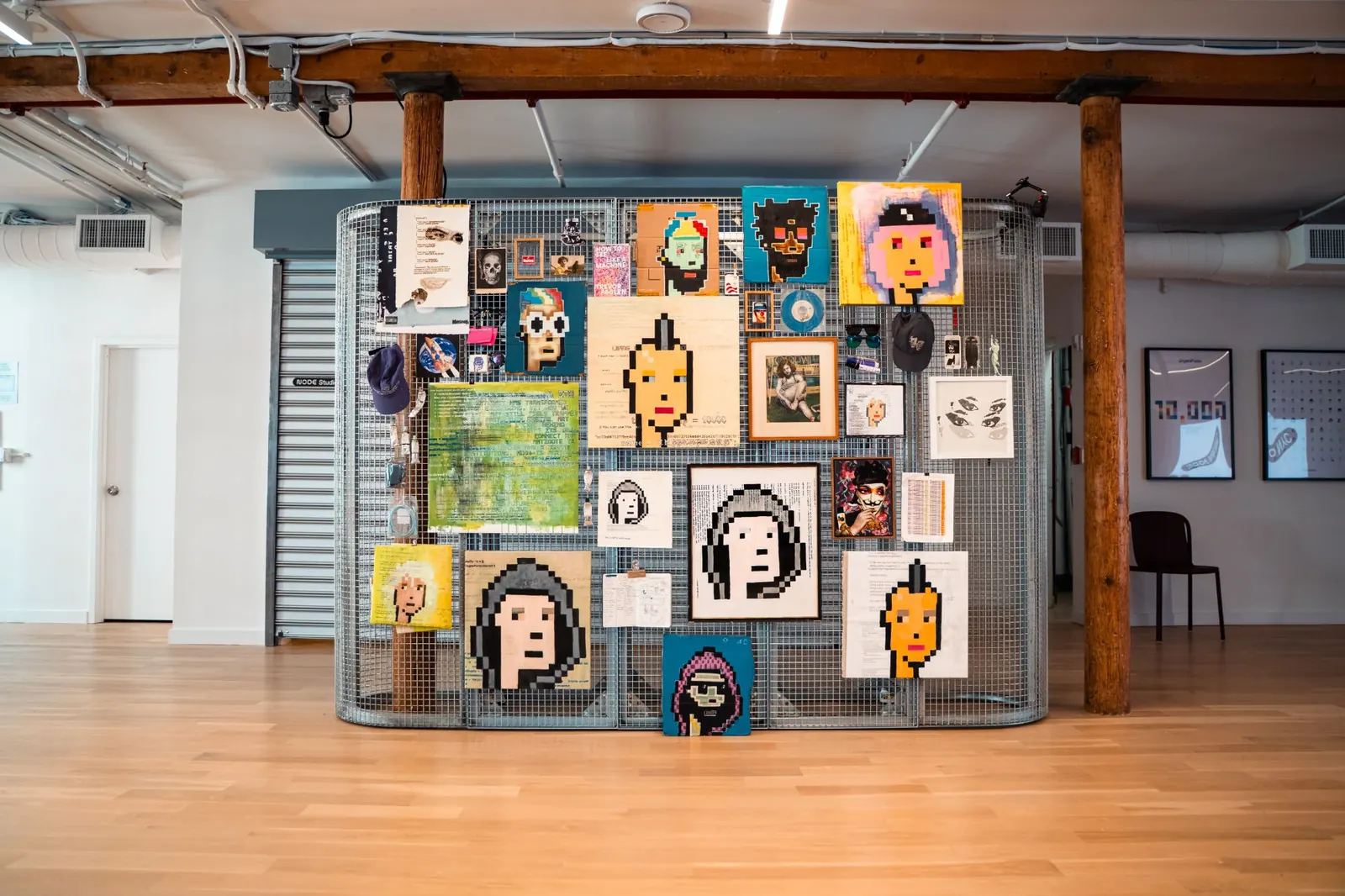
One of the main observations from our CryptoPunks show was how we exposed the inner workings of the displays. You could see the back of the LED screens. You could see the wiring. That forced us to make it beautiful. Because we weren’t trying to hide the substrate of the screen, it became a design element and part of the design language.
Something that we’re going to be unveiling here in New York is this system we’ve developed that we’ll make available for others to use in terms of how to display digital art. It doesn’t require you to totally retrofit an existing space. You can build one of these walls, which have many affordances for engineers and production teams. For example, you can mount a rack inside of it and the cable management is very easy.
By focusing on these details, I want artists to have more freedom creatively because they won’t be told, “No, sorry, you can’t do that here.”
Peter Bauman: What about the choice of New York? I’m sure there’d be advantages to having a studio closer, like SF or LA, maybe a second country like London. But why was New York the right choice for NODE?
Phil Mohun: There’s only one New York. The fact is a large amount of the digital art community is here or spends time here. So we wanted to have a presence in a space where you need to open yourself up to have these chance connections. This is the best place to do it.
Peter Bauman: What gap do you see yourselves filling in New York? What specialty are you bringing to the city?
Phil Mohun: We can help share the lessons from the technology that we’ve produced in Silicon Valley and give artists space to experiment in a way that’s opinionated to the technology stack and presentation that we’re developing.
We want to be able to give technical resources, specifically, to experiment with things where you can have a hands-on practitioner helping you. That can be fabricating, 3D printing or metalworking. None are strictly software-based but they’re part of making a great digital art exhibition. Those are areas we’re interested in supporting.
Peter Bauman: Can you talk about what your Bright Moments experience and minting in cities around the world has taught you about expanding NODE?
Phil Mohun: There’s an incredible benefit to having physical spaces in multiple cities. You have the ability to both receive and transmit information in things that are not obvious through the internet alone. There are many cultural imprints that come from having to be in a specific city, having to work with the community in that place.
There are cities that are net cultural producers and net cultural consumers. New York is one of the few places where it’s very high in both domains. We want to be both contributing back to the New York scene and working directly with the many artists who are here and have their practices here.
One of the main lessons from Bright Moments is that as you expand, there are certain parts of an organization that, especially with multiple locations, you need to rethink in terms of how communication works, in terms of how programming works.
That was a key input to the decision to not make the studio an ongoing exhibition space. We really want to focus our exhibition programming on Palo Alto, keeping that our main focus rather than needing to have simultaneous ongoing programming in New York.
The idea that New York is open to a group of artists who can self-organize talks, who can host workshops, who can work out of the space, but who can then expand their ideas to Palo Alto is a key part of it.
New York has such an incredible and vibrant digital art scene where there are exhibitions and shows happening all the time and we want to be able to support those in whatever way possible. That can be as a place where artists can come work or if there’s fabrication that we can help with.
There’s a lot that we want to be able to contribute back to the existing New York community here and the organizations that have been doing it for so long.
Peter Bauman: You’ve mentioned a couple of times already how much you’ve learned in NODE’s first ten months. But looking back, what are your main takeaways from almost a year in operation and four seasonal shows? How do you look back on what you’ve done so far?
Phil Mohun: Each show has taught us something different. Together they show there’s an incredible appetite for the work and the conversations that are a part of our community within the Bay Area and within society more broadly.
When I think about the first ten months and the lessons that we’ve learned, a big one is that you need to do the work. And the work really speaks for itself. Giving artists the time to work with our team, who can help them achieve things they couldn’t do otherwise, is the reason for the Palo Alto space to exist.
We have found that it’s not worth doing things that could be done elsewhere.
With the CryptoPunks show, we learned that people are willing to engage with this idea of digital property rights, especially in a place where people take the internet seriously. The first thing you saw when you walked into 10,000 was Solidity. You saw the code of the CryptoPunks contract on the wall.
Only in Silicon Valley are more people going to read the Solidity code than the English wall text. People would stand in front of those signs and deeply engage with the work by understanding the smart contract code that defines the marketplace function. Taking the audience’s intelligence and willingness to engage seriously was a big lesson from that show, especially when it’s in the native language of engineers.
With Beeple, there’s a depth to the consistency of the twenty years of Everydays that he’s produced. We learned what it’s like to watch people explore that collection. I sat in the exhibition and watched people play with the Everydays and always saw new reactions.
It was that sense of discovery of being able to engage with the works, to touch them, to explore them. You realize that everyone came to it with something different. Everyone would look at something different.
This was all ages, too; we would have families or groups of teenagers come in. There would be people who said, “I’ve never felt comfortable inside of an art space,” but something about being able to put your hands on it and touch it, I think, made people feel comfortable.
With Kim Asendorf, I think we really experimented with ownership. Giving people the chance to mint PXL and to deeply understand what it meant to be a part of that transaction rather than just a witness to it was really important.
That was also the first time that we developed wallet technology that anyone could come in off the street and use. That was a big access goal for us, given how historically difficult it has been to get people to own crypto and hold it, especially in a self-custody capacity with a wallet on your phone.
Then with Luke Shannon and Maya Man, which is our current show, it was our first time working with two artists. There were many lessons that we drew from that. The subject material that they engaged with is primarily around what it’s like to grow up online, which in many ways mirrors what Silicon Valley has been building for the past twenty years.
I thought the conversations that have come out of that have been fascinating, whether it’s people engaging with Maya’s websites or exploring their collaborative piece, which is staged inside of Fortnite, or interacting with Luke’s work, which is aptly titled Attention Is All You Need. That is also, of course, the name of Google’s seminal 2017 Transformer paper. I watch people gasp when they see the name. It’s so funny.
Every show has taught us something different and we hope that that continues to be the case.
A big goal for our opening weekend with the studio is to make sure that artists who have a big idea and who are interested but maybe need some time to explore it know that there’s a place for them to work some of those things out.
We’ve been really fortunate to be able to work so far in the first ten months with a group of artists who have a very developed sense of their practice and what they want to do with the space. We also recognize that sometimes that adaptation process is more circuitous and you can’t just dive right in and you need some time to be able to explore.
Peter Bauman: Will programming be starting right away in the new space?
Phil Mohun: We wanted to host the open house for the October 11 weekend to let people in the space explore. I expect in the beginning of 2027, we’ll be expanding more broadly, including access for people, programming, talks, things like that.
We absolutely want to have programming that helps artists inform their creative process and we want to be able to give artists a space to host their friends, peers and guests to show them things that are still malleable rather than having this expectation that it’s fully completed.
I would expect a lot of the programming in this space to be artist-driven.
Peter Bauman: Finally, Micky Malka and Becky Kleiner and I spoke before the Palo Alto space even opened. Now, ten months and two spaces later, what does NODE’s network look like moving forward? Are more nodes already in the works?
Phil Mohun: Right now we’re fully focused on opening our New York space and making it a success. I don’t think our ambition ends here but our way of doing things is to make sure we’re giving one-hundred percent of our attention to the task at hand.
We’re so inspired by other places around the world. It would be such a dream to be able to work with and have nodes that can take advantage of the unique cultures of other places.
But for right now, we’re really eager to have a footprint in the New York community. Ten months in two locations feels like a pretty good trajectory; I’m excited to see what the next few years bring.
------
Phil Mohun is the executive director of NODE Foundation, which runs NODE in Palo Alto and NODE Studio NYC in SoHo. He previously helped establish Bright Moments, the IRL minting gallery that toured ten cities from 2021 to 2024.
Peter Bauman (Monk Antony) is Le Random's editor in chief.