

Suggested Reading
Interview
Event
Parker Ito and Evil Biscuit on Possessed Spirits
Peter Bauman
•
November 4, 2026
View


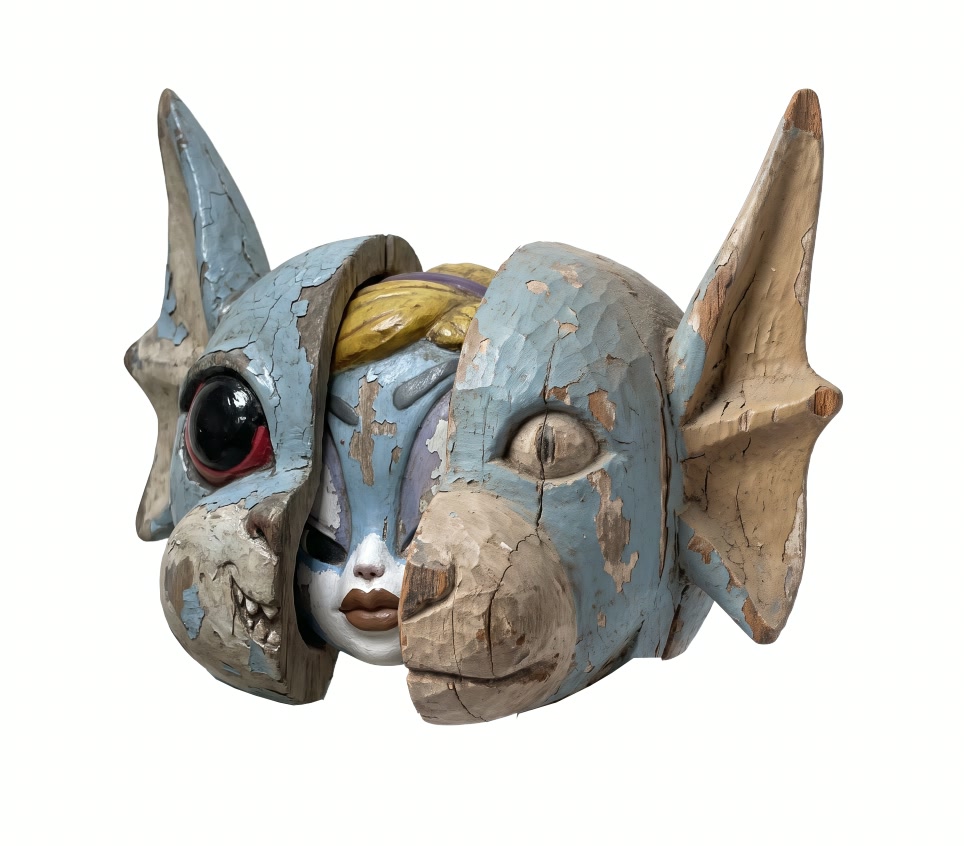
Parker Ito and Evil Biscuit are collaborating on 111k, the first ETH project on VVV. They speak with Peter Bauman (Monk Antony), discussing the galaxy they’re building instead of a world, how AI agents helped them make more than 100,000 images and why the project is on ETH rather than Solana.
Peter Bauman: Can you walk us through where the idea came about for your new collaboration, 111k. When did you start thinking about it?
Parker Ito: It’s hard for me to even remember what the very first iteration of the idea was. I remember Biscuit pitching that he wanted to do this collection based on these older model GANs that were trained on Drilady and Drifella imagery. He also wanted to do it on 11/11; that the date was already fixed.
Evil Biscuit: I think it was July or August when I reached out to Parker because we wanted to make something pretty large, right before Basel and everything. That was around the time we got accepted into Zero 10 Art Basel Miami Beach.
But the original idea for it was planted around 2023. I had the idea but I just don’t think the technology or the image variety that we could make was there yet.
This was before Mifella 2 as well, which was headed by one of the guys in the scene. They got as many artists as they could that wanted to collaborate and started making assets for it and mixing it in the larger pool. And I thought that would be really interesting to do.
Just to be funny, I was like, let’s do a one million mint or something. But it seems like 100k is a better bite size. And the 111k, 111,111 on 11/11 was just serendipitous, like numerology, mysticism or whatever.
Peter Bauman: Parker, you told me about how insanely ambitious the project is. What is driving that ambition? What are you guys trying to demonstrate with this project?
Parker Ito: Well, I think it’s actually quite easy to make 100,000 images now but I think making compelling images over that large of a size is a huge challenge.
There’s always talk of world building and all this sh––t. I feel like that’s a term that people always use.
We’re building a galaxy. It’s like a multiverse.
The way that our collections have been structured before, they’re typically absorbed into the next collection. Horses?7 was not only just Horses World, it was Drilady World and had characters from my Living Room collection. I also made Marelady, which was a combination of all that again in another format.
At some point, we had started working on this single massive NFT; it’s 20,000 by 30,000 pixels and we never released it but it was based on Hieronymus Bosch’s Garden of Earthly Delights. We’re in some ways doing a version of that spread out over this massive collection.
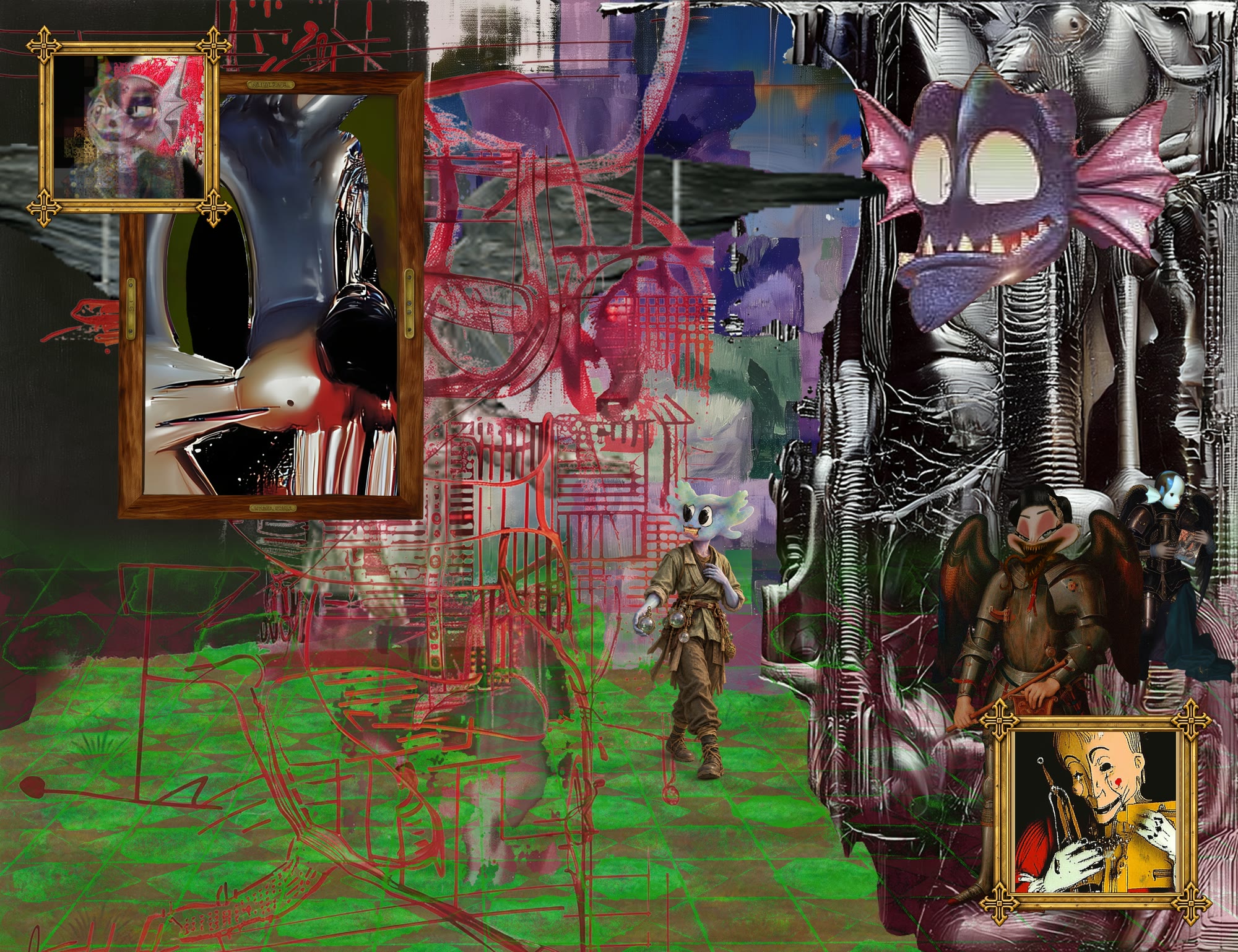
Evil Biscuit: In the lore of this that we’re building, there’s this particle collider in a warehouse. It has accidentally opened this main portal to other dimensions where these characters are getting sucked from. And if you could imagine each stylization is getting sucked from a different universe.
There’s a basic profile picture, like Drifella. There’s a 3D rugcore project called DriFriends and a Drilady version of that. There’s Parker’s giant paintings he’s making, collecting every single character and putting it in. There’s Little Swag World mixed with Drifella guys, with these little chibi versions. There’s pixel variations.
I was just thinking back to when I got into NFTs, what I was working on, what was I seeing. It was all these different stylizations and formats of how to make an image, like with StyleGAN. That’s what I first started making stuff and then you have the HashLips and the PFP generating after that.
I was thinking, let’s touch upon each of these within the larger collection. And we were thinking about it as like each one would be a sub-block of the collection. That’s how you would get the massive variety that you need for this many tokens. Then eventually they would start bleeding together because what if they’re coming out of the portal and getting fused on accident, and then like smashing onto a canvas that is like this painting,
And in the lore that connects it all, when you mint, you’re going to be getting a crate you can bust open with twenty paintings. There’ll be 5,555 crates but some have a few extra mints. It will be this Easter egg, like lottery sculpture.
We thought of this idea that the warehouse itself can be purchasable and you’d get eleven crates that you decide whether to open. So it is this Russian doll sort of thing.
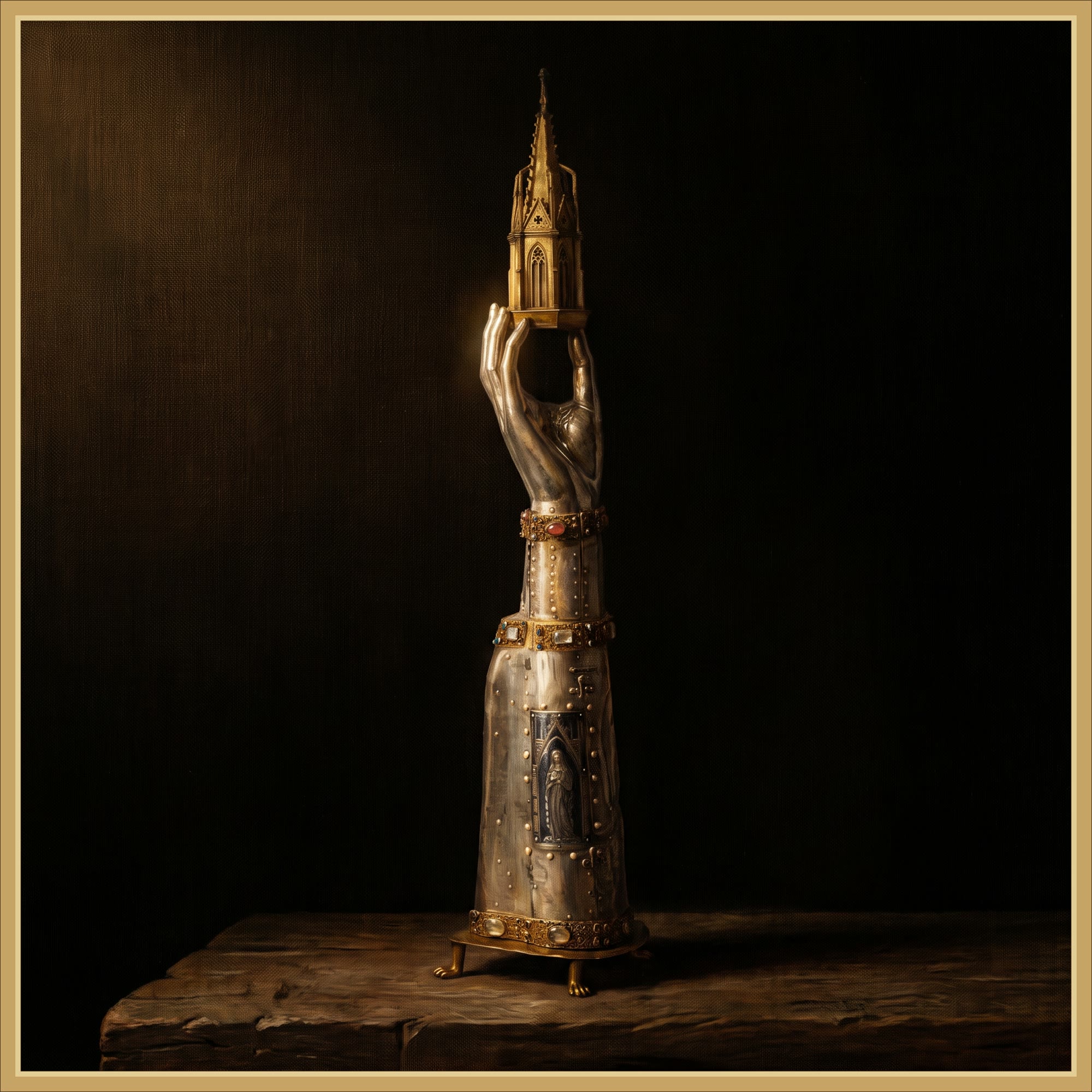
There’s also another tier, the reliquary tier, which is the ultra-rare containers. There’s only eighteen of those.
Peter Bauman: It will be a mix of static and moving images?
Evil Biscuit: Some are videos, some are GIFs, which we’ve just started making with Tojiba Brand Manager. We have a whole Discord of seven or eight guys and we’re all collaborating, throwing ideas out there.
Peter Bauman: You mentioned Toji and Bosch. Who are the other collaborators?
Evil Biscuit: It’s Parker, myself, meinong, Gremlins, my brother Turtle, Dido, Toji, Bosch, Cupid, cherub. Luhfella. Then New Art Program is making some paintings.
It’s just so funny to do this at the same time as everyone has AI agents like Codex or Claude. They’re whipping up ideas within fifteen minutes. It’s like, holy sh––t, that looks like you spent days and days collaborating and refining this idea. But if you come with this pure creative mind, you could make something within that short amount of time.
And Toji’s making these knife 3D models that have the textures overlaid from pieces within the collection. He’s making gun 3D models as well that have textures and stickers on them and little keychains that reference the different characters. It plays with that idea of the crates and the loot boxes of video games and things like this.
Parker Ito: There’s a lot of people, and we’re collaborating with VVV. Then Biscuit’s programmer as well, Ivan, who’s worked on mons.shop and has built this incredible redemption flow system.
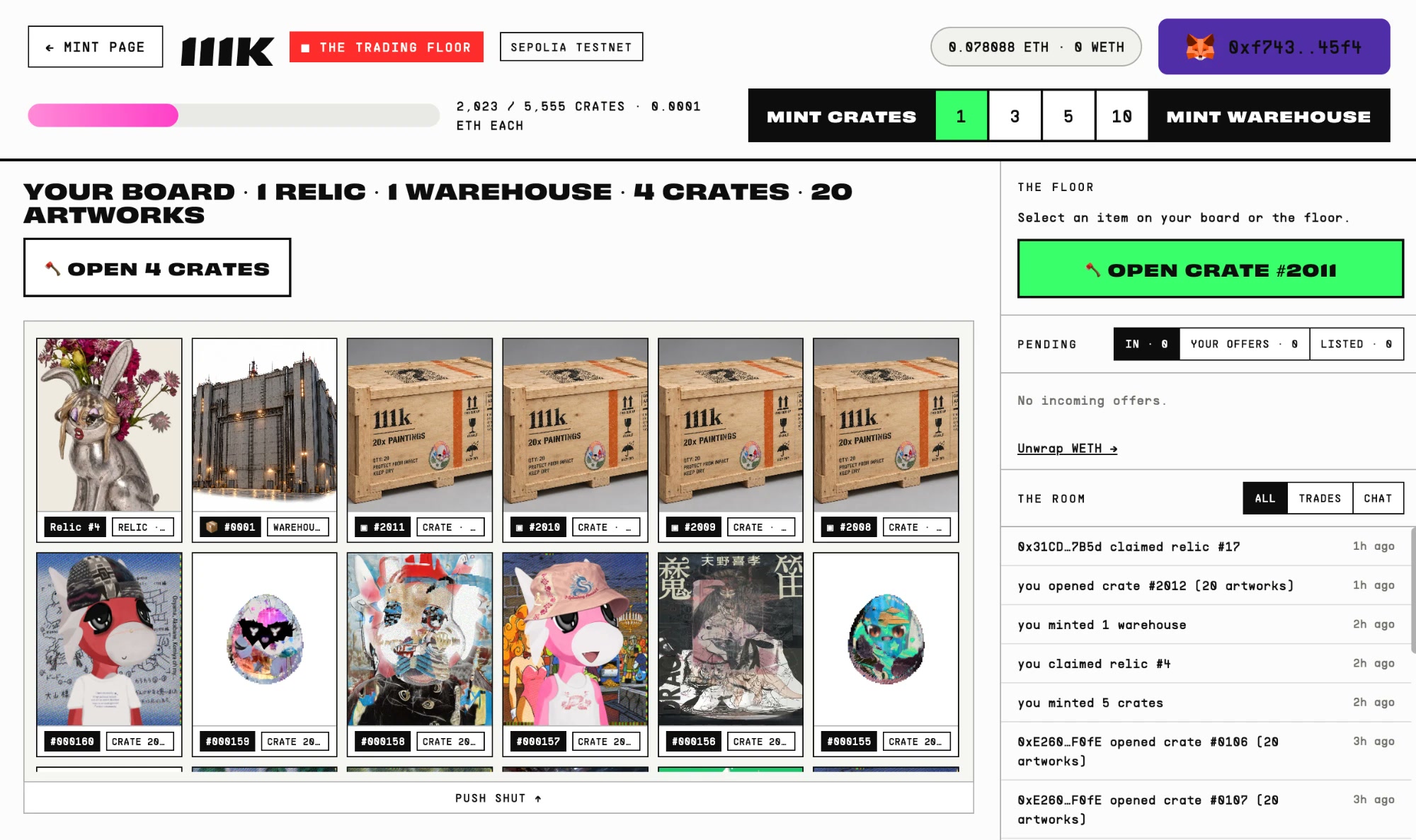
Peter Bauman: So it’s pretty complex in terms of the coordination. You mentioned the crates and, I guess, quick math: 5,555 times 20 is 111,100.
Evil Biscuit: Well, there’s one that’s 21, which is like the god pack. That also has a custom crate for it. So the reliquaries and the rare pack, the containers themselves will be different because it’s two separate NFTs.
We wanted to make sure the quality of all 111k images is there for us; we didn’t want to rush making the images and have a large amount done. We don’t want to just slap some stuff in there.
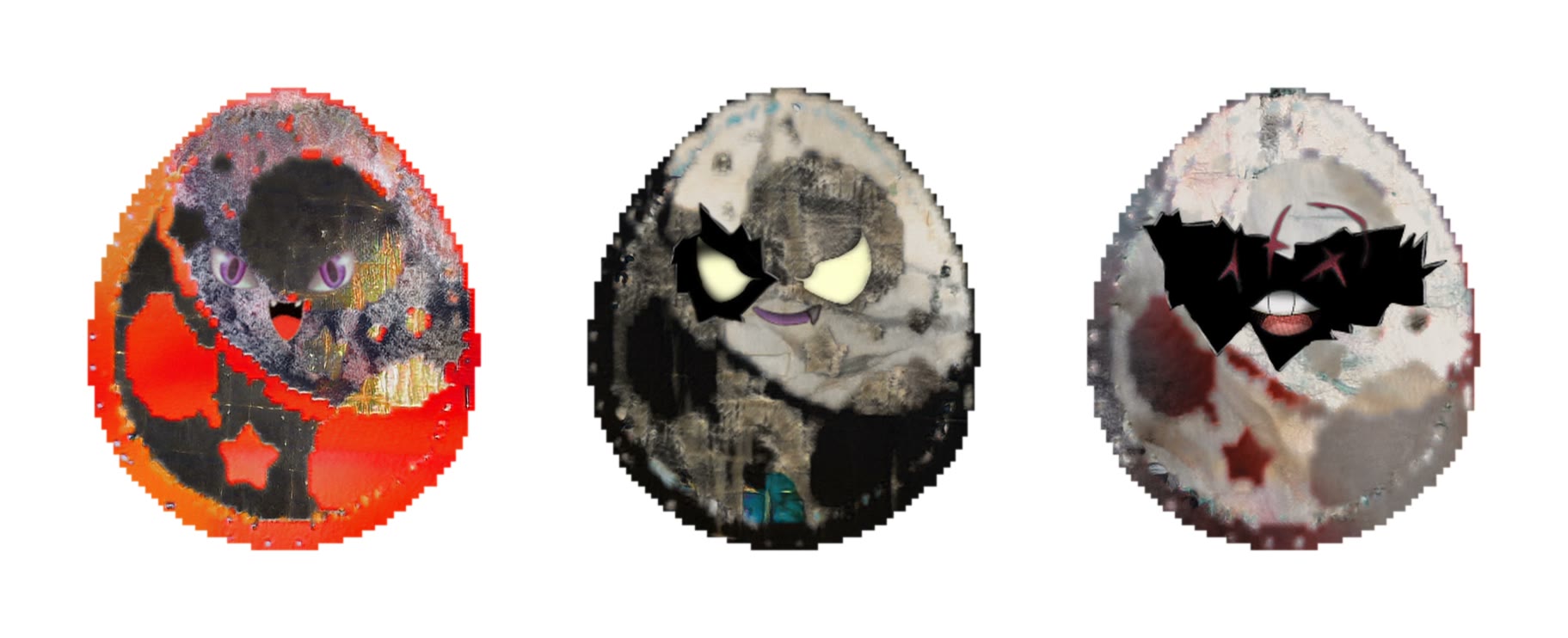
Then over the time between 11/11 to January 1st, these eggs that you get in the packs will start to reveal. As we add new sub-collections and more NFTs into the pool, the eggs will start to open.
Peter Bauman: Oh, you’ll keep adding things even after the mint or will that just be for the eggs?
Evil Biscuit: Going back to the lore of opening this portal up, basically, the machine that acts as the portal on 11/11 is being turned on and stays open until 1/1. It’s also really nice because it’s six ones, the whole collection, and then it’s 11/11 and 1/1. So it worked out well.
To say more about the variety, each egg is going to be uniquely generated with this GAN collage system. Just with the Codex and GPT image generation and style transferring, honing in on making images has been really interesting. We have this motif of the crucifix again but now it’s Little Swag World instead of Drifella and Drilady.
Peter Bauman: One thing we’ve talked about with your other projects and collaborations is you have to source a lot of these images. What was that process like for such a large project?
Evil Biscuit: It’s a similar process as we usually do. You try to use some of these agent tools to do it. It’s not as good at that or you get blocked from websites if you’re trying to scrape certain things. There’s a giant amount of things that we purely generated ourselves.
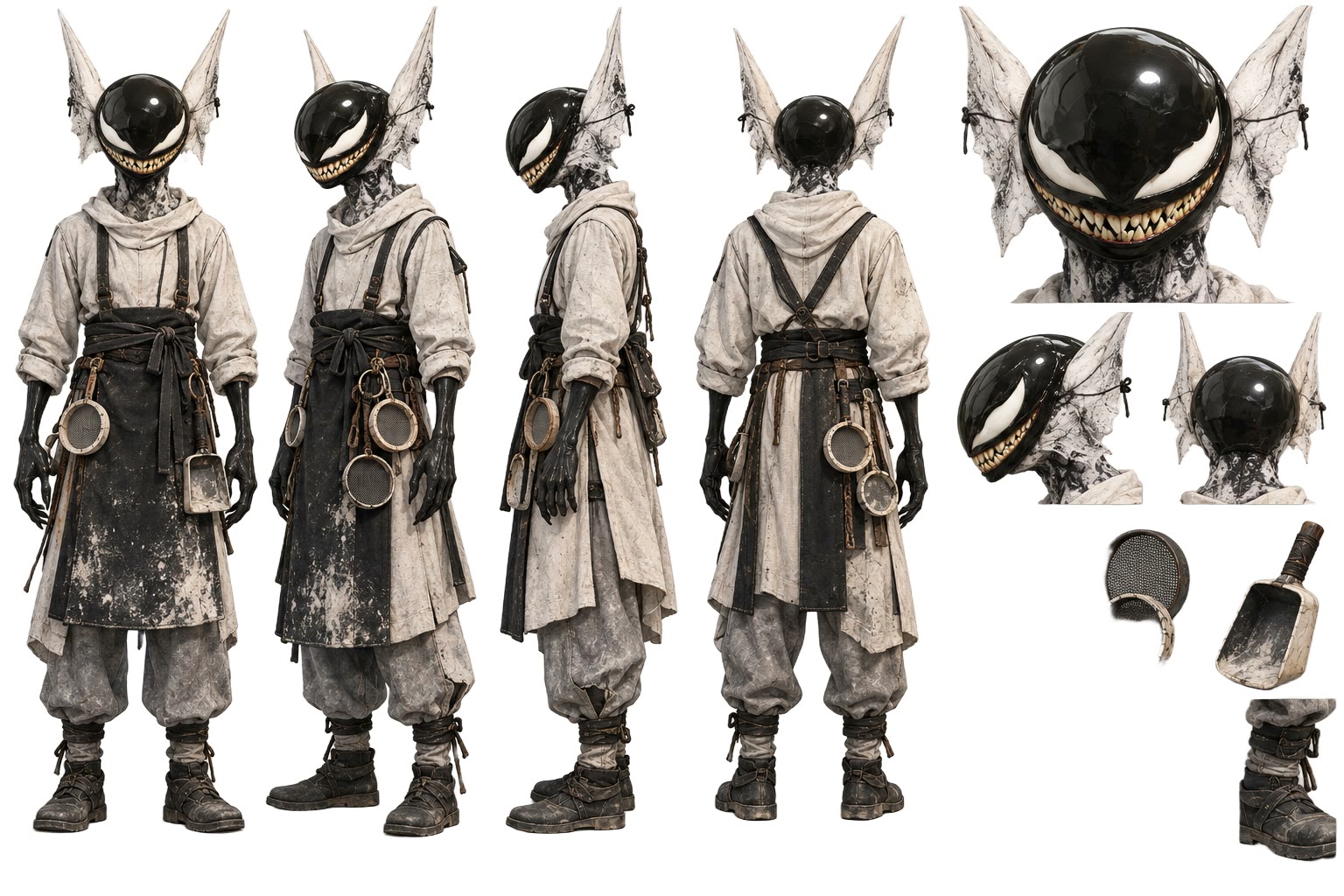
For certain bodies, you source a material or some fabric or fashion. Then you can give this silhouette of a Drilady and be like, “Okay, can you make it this rotten fabric?” Then you put a folder of images as a material reference and you put a folder of images as the silhouettes. And you’re like, okay, make a hundred of these for me and pick random ones that are new each time.
Peter Bauman: How do you both think about supply versus distribution and balancing that? Did you get feedback from collectors about supply?
Evil Biscuit: Somewhat. We try not to be influenced too much by other people or things. I know Parker can speak to this because he really convinced me on the idea that we need to do it.
When you get an idea like this, as an artist, and it’s this huge spark and drive, there’s a fire that happens that you need to do it. You can’t really let other people dim that.
Jared [Madere] from VVV had a huge hand in too, of just telling me to follow that because the idea of this existing is much more interesting. If we were more subtle about it and wanted it to be softer, like if we just wanted to make a thousand images. It wouldn’t become that interesting of an idea anymore. And it bastardizes the original intention.
Parker Ito: I think there’s some conceptual parallels to the way that the Solana scene started to use HashLips, versus the way that it was initially intended for. If we had done a hundred-thousand collection on Solana, it would have been very different from this project on ETH.
I’m not even sure how OpenSea is going to index something that large. This is a collection that, in its scale, is going to push every kind of indexing type of system or any way of even understanding rarity metrics within the collection.
I think also it’s just the most contemporary art in a way.
When I tell people that 10,000 was the standard size for an NFT collection for some years, I think for trad world people, wrapping their heads around that many things is a challenge. For most artists, that’s more than their whole career. Vermeer made, what, thirty paintings or whatever?
So bumping that up to 100,000, it was a challenge for us to see if we could even do it and if we could execute on it well. Luckily, there was already this infrastructure for these worlds that we had created.
Peter Bauman: You mentioned this will actually be an ETH project. How is the project different that it’s on ETH rather than Solana?
Parker Ito: Just the different culture is the big thing. I think the ETH ecosystem feels a lot closer to the trad art world in terms of how it understands scarcity and supply.
I feel like more people that I heard pushback from were from the ETH space than from the Solana space.
One of the things that I enjoy about NFTs is the radical spirit of the whole thing, which is completely missing from the trad art world. This project is a big question of what an NFT collection can be.
We’re also not making something that, I mean, it’s sophisticated in its approach but at the end of the day, it’s some images and some video and some GIFs. We’re not making complex on-chain art, that it’s so medium-specific to NFTs. But I think there’s something really compelling about just trying to make something that’s a lot of really interesting images.
Peter Bauman: I think this project shows how the radical use of agents can impact contemporary art. What were you able to do with AI tools that you wouldn’t have been able to do even last year, when we spoke about Heavy Liquid Graphic?
Parker Ito: I’ve been building these more complicated systems. They’ve been progressively more and more complex in HashLips. That’s because of the AI tools and Cursor and Codex and all this stuff, because I was never a programmer.
I developed this whole system where all these characters that Biscuit and I have designed exist in this room, but they basically move around.
When I made Living Room Crucifixion, I had to individually place all of the characters. They were fixed. For my current system, the characters scale; they’ve been programmed to move around the room.
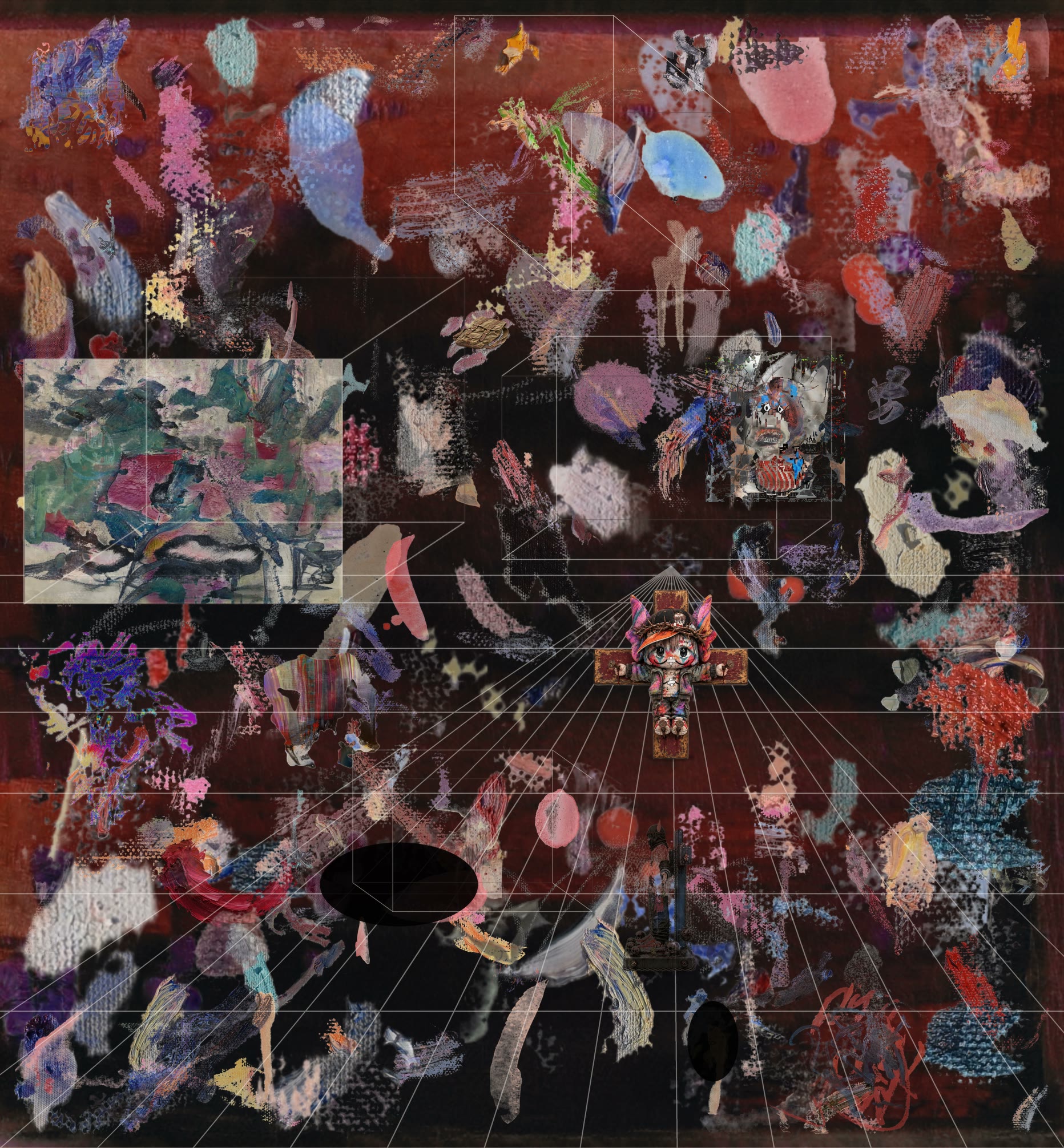
It’s even difficult to explain because it is so complicated that I don’t even really understand it. I’m just talking to the agent for hours, putting all these rules and probabilities and systems into this thing. At the end, I’m like, “Oh, actually, the way this interacts, I don’t even completely understand what’s happening because there’s so many variables.”
It’s kind of beyond my capabilities because it’s so many possibilities. And so that feels really like something I’ve discovered in the last year with the technology.
Evil Biscuit: Curatorially it’s become more time-consuming. With card nft 2, we made this system where, since we scanned all the cards and we needed one unique design per one, we showed six images. Then we curated our favorite one.
It’s just leveled up from there where, if you have a batch of 10,000 images that you made and you want to scroll through and pick your favorite, it might take you four or five hours.
Peter Bauman: So curation is a human-only process?
Evil Biscuit: Yeah, I select everything and don’t give it any permissions. But to have an infinite scroll of images that it’s generating, and you’re going back and forth, vibe coding, like, “Hey, tweak this setting, add this function,” and then you’ll go back and keep infinitely scrolling.
At the end of the day, it doesn’t have an eye for art. It doesn’t have an eye for what makes a good composition.
Peter Bauman: Does the difference matter to you right now between something that’s hand-coded and AI or vibe-coded? Is that distinction important?
People tend to think of AI art as only AI-generated images rather than art using AI processes.
Parker Ito: AI is just a tool. I don’t know if it’s important for me to make a distinction. It’s like I was saying that this was the most contemporary art in a way. It’s like a paintbrush.
Evil Biscuit: I don’t really distinguish it as anything.
I really enjoy making with the newest and greatest possibilities.
If it’s AI, it’s AI. I don’t really give a sh––t. There’s a lot of people on Instagram who will say sh––t about work they think is AI or it won’t get as much traction. I post some trading cards, and everyone loves it, they’re gung-ho about it.
Then I post a video that you can clearly see has AI generation but it’s obviously made by the same craft and the artist process, and it has this hand touch to it. I’m editing and adding music and cues and things but it only gets twenty likes. No one gives a sh––t. What does that say about it? I don’t know.
Peter Bauman: That seems to mirror public sentiment right now. But I think this kind of work is what’s needed to show what’s interesting about these tools and how these tools can enhance creativity.
You two are also collaborating for Art Basel Miami Beach’s Zero 10. Is there any connection between the two projects?
Parker Ito: Oh, that’s a whole other thing. We’re working on three or four projects right now. Even though this collection is massively ambitious, this is just one part of what we’re unveiling over the next couple of months. That was also one of the reasons I think is going to work in our favor for extending it, having this open portal period.
First, we drop the collection, but then we do a show in New York at Mimi’s space, where we’re turning the gallery into a comic book shop.
Peter Bauman: Oh, so that’s going to happen independently of Art Basel?
Parker Ito: It happens a couple days before we go. We’ll be in New York and then we go from New York straight to Miami.
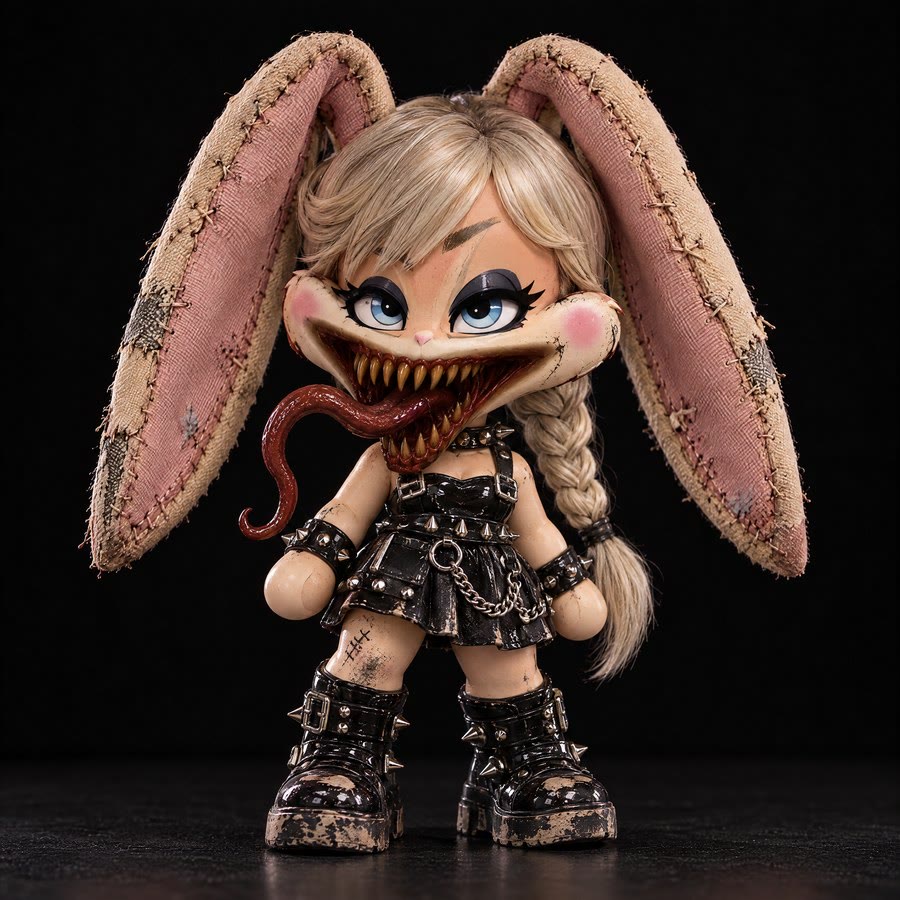
Then in Miami, we’re showing in a group booth with Mimi’s gallery but we’re making our own little installation. It will consist of a Drilady plushie. There’s also a stainless steel cast Drifella character on a crucifix that holds a bowl of yen that can be purchased and put into this vintage card vending machine. It will spit out these custom cards that will have NFC chips in them that will connect to NFTs.
And I’m showing some horse paintings. It will be our little world represented in this mini installation.
------
Parker Ito is a multidisciplinary artist, associated with the later net art, Post Internet and now the Solana avant scenes. His practice, which spans painting, sculpture, video, installation, drawing, websites, NFTs and books, is as much about the lines that exist between disparate media and forms, as it is about discrete pieces.
Evil Biscuit is a pseudonymous artist known for the Drifella series, card nft, Constant Fella, Milady Aura2 After Death, Heavy Liquid Graphic (with Parker Ito) and blessing/curse.
Peter Bauman (Monk Antony) is Le Random’s editor in chief.