

Suggested Reading
Interview
Evergreen
Julia Kaganskiy on Generativity’s Deeper Consideration
Peter Bauman
•
November 11, 2026
View


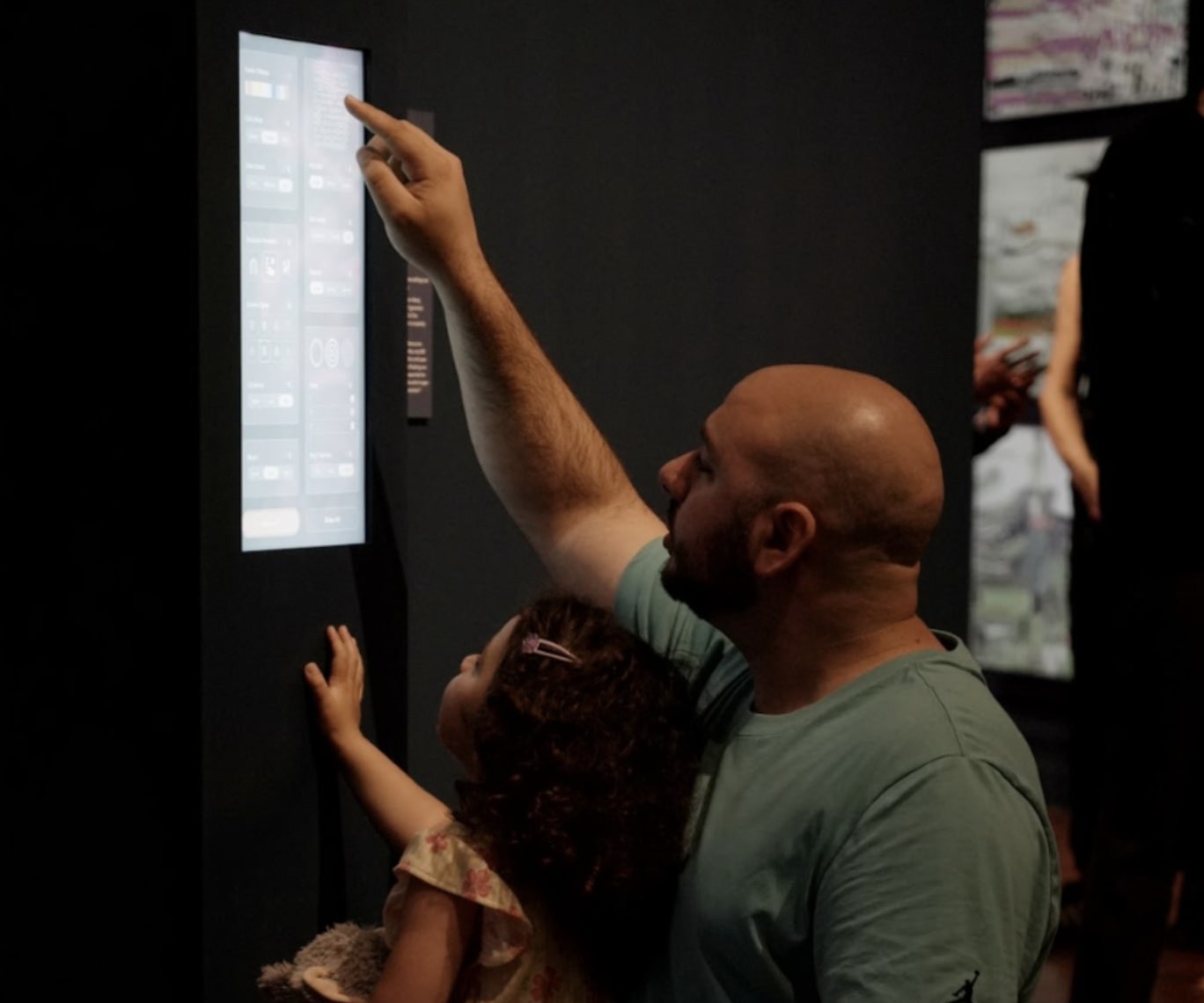
Adam Levine, director of the Toledo Museum of Art, and Ian Charles Stewart, director of TMA Labs and a cofounder of Wired, talk to Peter Bauman about reinstalling a museum for the next 40 years, why the machine doesn’t have intuition and what the Byzantine icon says about copies.
Peter Bauman: You both direct an ambitious North American digital program. I mostly want to understand how you see art today and where it’s headed. How did your backgrounds inform that view?
Adam Levine: My PhD in art history and a bio that reads museological and academic can flatten a life narrative to a straight line. But I also spent time in everything from startups to investment banking and consulting. It was actually in the latter of those, through a mutual friend, that Ian and I were connected, first as commentators on a site focused on art world critique called Artworld Salon.
And it’s true that Ian’s background certainly indexes towards technology, venture, finance and startups. But he is also a very accomplished photographer, who grew up in an art-collecting household. We both actually complement each other.
Ian Charles Stewart: I grew up going to auction houses and museums because my mother was a gallerist and a collector, small scale. When she passed, we had eight hundred pieces, which my brother and I had to split up.
In terms of historical context, I’ve always been interested in cycles that affect or change or add something to that feeling, the enjoyment of the work.
Having been through a couple of cycles, everything that starts the cycle tends to be fairly ordinary. We’re still dealing with visual images for the most part, a little bit of video, a little bit of interaction. Sam Spratt’s work in involving the audience is one thing. People are starting to have interaction with software that means that the artwork itself continually moves, the work that Emily Xie showed last year, where you’re in the image and it’s moving as you do it. So it’s not a still image. It’s not a video. It’s a live interaction, which is the art itself.

We’re really still at the early stages. I remember, Peter, you did an interview last year with Erick [Calderon], Sofia [Crespo] and Tyler [Hobbs] for our Infinite Images show. They were talking about the degree to which being part of the creation of the software, which drove the image, was as important to them as the final image. And in that way, the creative product is in fact the algorithm, not the art that gets created by it. And I think that’s interesting.
If I would provide a single contextual image for where I think we are now and where I think we might go, it would be to look back at the beginning of the World Wide Web in January of 1993 when Mosaic first launched its public browser version. Much of what we saw for the next ten years was recreations of the offline world: corporate brochures selling online. But that was basically catalog selling, repeats of business models from the real world. It really wasn’t until about eleven years later with Facebook, and then even later with Airbnb and Uber, where you ended up with business models which could not have existed without an international network of computers.
My view is that the art is going the same way. I think that the functionality of the technology we’re using is going to create arts experiences that we can’t currently do without it. And I don’t think we’re there yet. I think we’re at stage one of the digital impact on art. I would argue that a lot of what we showed at Infinite Images last year, with the history of the impact of technology on art, is leading up to what is still stage one, because we’re still looking at sculptures, we’re looking at images, we’re looking at video.
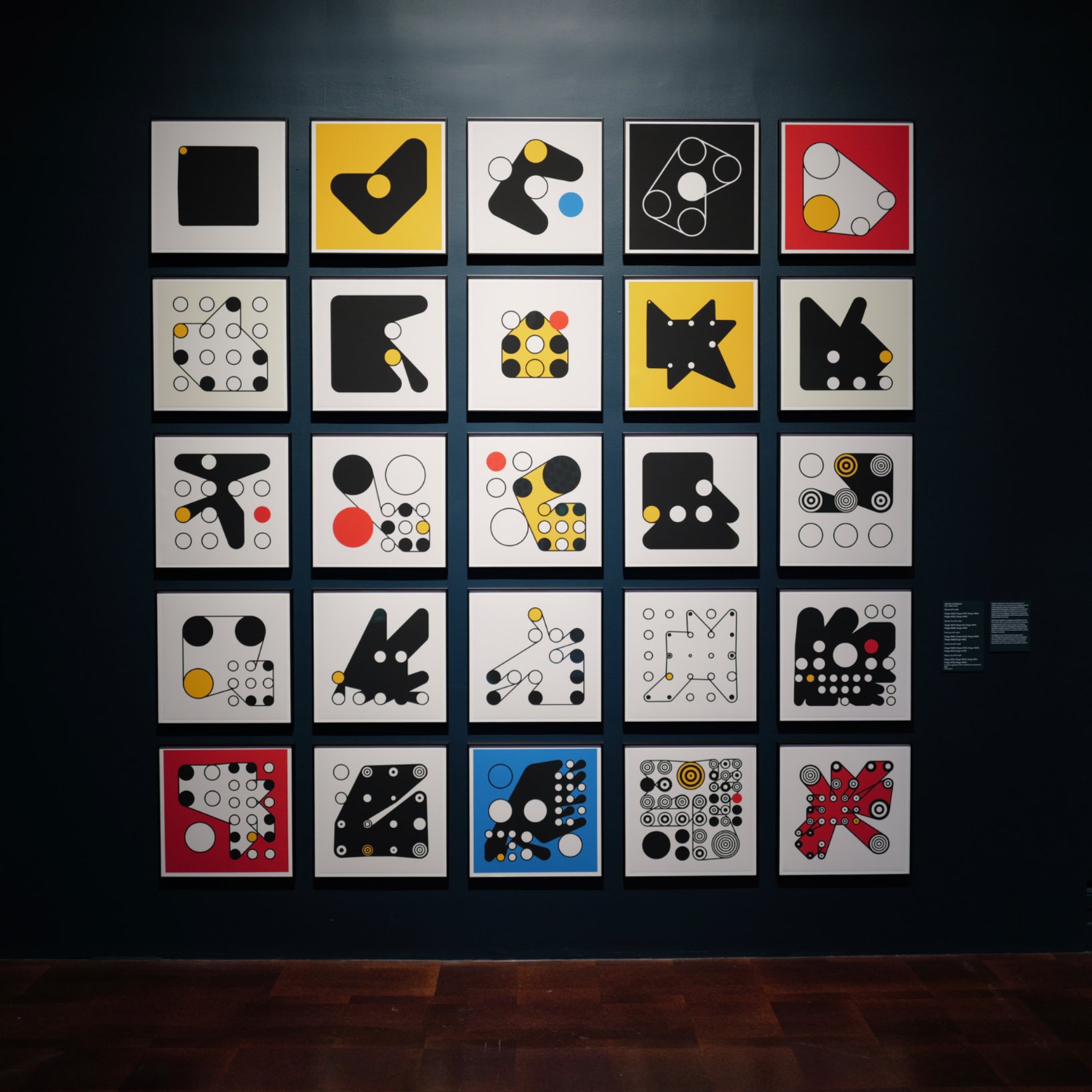
Mike [Beeple] does a little bit more of that. In some of the sculptural work he has, you’ve got real-time feeds of information which then affect what people see and you can interact with it. Again, I don’t know how much of the interaction is just gimmick and entertainment, how much of it is genuine, deep-in-the-stomach feelings about art but I think that’s where we’re going. I think there’s going to be more interesting technology interaction with what we’re talking about.
Adam Levine: My view is that technology is a tool and that the tool serves the discourse of the time, the zeitgeist. Interactive or experiential artworks using technology are building off of a notion of relational aesthetics that has been part of artistic practice formally for three decades and informally for decades before that.
The OG immersive experience is called liturgy.
When we say experiential, I actually mean multisensory or kinesthetic. If you really zoom out, the point is technology introduces new means of making and Ian’s exactly right. We’re still in the infancy of understanding how technology can abet the zeitgeist and the artistic discourse that undergirds it or emerges from it.
The move towards multisensory and kinesthetic is somewhat responsive to technology, sure, but is also sort of part of a much longer history.
From a museum perspective, what that means is that we will continue to engage with all things digital because they’re tools. But the core thing that we don’t believe will be replicated anytime soon, if ever, is the actual physical experience, including the physical experience of digital artwork.
Even if you can see the CryptoPunk that we now own online, you can’t see the way that we’re going to install it next to something else and the points that makes.
Ian Charles Stewart: I love that notion of liturgy, and you mentioned both liturgy and choreography, Adam. I see coding in that continuum. We’re looking at the outputs rather than what people do in the first stage of the creation process. And that’s true for the general public today because most people can’t code and therefore can’t read the code and can’t see if it’s elegant or not.
Peter Bauman: It’s the same humanity coming through or wanting to be expressed, but we just have these different surfaces and affordances to explore them with. When you deal with artists that are engaging with those surfaces, you also have to contend with the sociological side of those tools. And one of them, I think that’s really interesting, especially this year, in 2026, is this AI pushback. And it almost seems to be a broader anti-technology pushback. There’s a lot of talk of frictionmaxxing and cottagecore. As builders of this aggressive digital art program, how concerned are you about the pitchforks coming out?
Adam Levine: It’s something that Ian and our team talk all the time about. The Toledo Museum of Art is a comprehensive collection. We don’t aspire to encyclopedism but we have six thousand years of human history across six continents. We’ve acquired more than 1,300 works in my tenure. Two of them are AI-generated. We also buy alabaster figures from South Arabia. We’re collecting all of art history.
So anyone who thinks that AI is not part of that history is also not living through this moment. But it’s also, I think, important to have perspective. We have been a bit ambitious in the way that we’ve integrated this into our program but we’ve done one exhibition.
We also did the Ethiopia at the Crossroads exhibition and a Caravaggio exhibition and Rachel Ruysch’s first retrospective. And contemporary ceramicists from Ohio, Matt Wedel. We’ve done a lot of other things.
Technology is also fast moving, so we’re doing our best. We need to acknowledge that museums and libraries are among the most trusted institutions in this country; we have to retain that trust. And part of retaining that trust is not making mistakes but another part is making good-faith efforts and being as transparent as you can about them.
I have yet to meet someone, even an antagonist to artificial intelligence, who thinks there will be less AI in the world in twenty years than there is today.
While folks may want to create a policy framework that limits that, I think people are generally aware that there are macro factors, whether it’s the push to move data centers to space, whether it’s geopolitics or economics. And I think those are all good reasons to be really frustrated in society. But it’s hard to imagine the cat going back into the bag, especially with open-source, open-weight models, with advances in compute, advances in energy efficiency, things that are going to drive mid-range solutions to some of the issues.
We also have an obligation as an institution that just celebrated our 125th anniversary, looking forward another 125 years to figure out how we want to grapple with AI. Not if we want to grapple, how we want to grapple.
I’ll give you an example of a no-regrets move, and I’ll give you an example of a very tactical policy that Ian and I spoke a lot about before we discussed it as a full leadership team at the museum.
So a no-regrets move is we’re reinstalling our whole museum for the first time in forty years. We’re installing the museum chronologically. When we’re done, it’ll be the most comprehensive such installation in the United States. We’re updating the display, but we’re also running fiber everywhere even though we are not going to have digital art in the early modern galleries, and we may not have a need for fiber, but we’re going to the proverbial studs right now.
In forty years when someone needs to reinstall the museum again because the HVAC needs to be replaced, they may want to put a whole gallery of digital art in that space. We don’t know what this is going to look like.

The other side of it is we will encourage AI usage at varying levels of the organization, subject to the environmental impact and subject to our relationship with artists. We’re in the creative industry and we want to support creators. So image generation is something that would be off-limits from a policy perspective for us, because those are our people. We’re not always going to get it right but we’re really earnestly trying to think through these issues.
Ian Charles Stewart: On the question of the pushback on technology, we’ve been here before, of course. These are just neo-Luddites. It’s worth looking back to understand why people were walking into new factories and breaking machines in the early days of the Industrial Revolution. It’s because they thought that the machines would replace them.
The same sort of feeling is happening now, as people are worried that AI will replace some jobs. And the point of focus for that is the data centers.
And I think that times like this are great for artists, whether it’s for or against, whether it’s dealing with societal impacts or frustrations. I think it’s a great time to be looking for artists who work through this period and express themselves in clever ways with the technology that everybody can relate to.
The role of Labs, the role that I play at the museum, has three strands to it. The obvious one is working with digital artists and displays. But there are two other strands, one of which is how does the museum use technology itself in its processes? Technology allows institutions to relate to people beyond their geographic physical environment. I remember Adam and I had a discussion very early on, three years ago, maybe, where we talked about the fact that a fourteen-year-old art student living a mile and a half away from the Toledo Museum of Art, doing an essay or a study on a particular artist, the first thing she’s going to do when she has to do some research is not get out of her front door, go across the road and walk into the TMA. It’s going to be open her phone, click and get answers on a screen in front of her.
That means the TMA competes with every source of interesting things about art globally.
If we’re not relevant to the people who live a mile and a half away, how can we be relevant to people who live 10,000 miles away?
Those are the three strands that we play with at the moment: art and artists, internal processes and then how we might be seen and work with the outside world.
Peter Bauman: You’ve both mentioned Infinite Images and Vera Molnár. That line from Vera, that machine randomness is what can replace human intuition, is also the line that Le Random is named after. She was talking about randomness replacing human intuition, but now there are these more powerful tools that are replacing intuition and more and more of it.
Do you think it’s possible for artists to give too much of their intuition to machines? Or is the human part always moving higher upstream?
Ian Charles Stewart: Tyler, Erick and others have talked about their love of the randomness in the outcomes of the algorithms that they create. I think the cool thing is the algorithm rather than the random outcomes, although they may be pretty.
I did computer science at university so I do follow this stuff and look at it quite closely. For the time being, what’s interesting is the use of this technology as tools and a medium in itself to a degree, to explore the edges of things, explore the edges of how we see things, how we display things, how we interact with people, how we generate emotions.
I remember when we did Artworld Salon way back in the day with Marc Spiegler and András Szántó, we had this argument between us. András and Marc were perfectly happy for the work to express any emotion that would elicit a response in people. And I just want to be uplifted. I’m an old-fashioned guy.
Everything I’ve seen so far is derivative. The outputs that we’re getting out of algorithms and machines, unless they’re heavily directed by people, just aren’t that interesting so far. Randomness is not art for me, not yet. Maybe it will be one day.
When it gets to the point where you have genuine thought behind a process which comes up to a result, even then we’re going to question the value of the input and where it came from. But we’re not there yet so we don’t have to worry about this yet. People are overworried about it for the time being.
Adam Levine: So the headline is: the machine doesn’t have intuition.
Ian Charles Stewart: Not yet.
Adam Levine: That is different from an artist making the decision to allow a machine logic to replace his or her intuition as a matter of process, which can still yield really interesting outcomes, some of which we own in the collection. And I don’t see the ceding of their intuition as a step in the process, as a diminution of the artwork. I see it as an aesthetic choice but that is different than whether the machine itself has intuition.
Then it’s really important, I think, to depersonalize, de-anthropomorphize some of these really clever decisions, like ChatGPT launching with the clicking cursor. I mean, it’s brilliant. From a design perspective, it’s like there’s someone else on the other side of the screen. So we have to “untrain” ourselves around that. And this brings me to the overall point about intuition.
My understanding of intuition as an art historian, not a neuroscientist, is that sort of gut instinct is a somatosensory response. The idea that you can feel butterflies in your stomach, that’s a feeling, like an actual feeling. So I sort of resist the notion that AI is conscious. Consciousness, at least as I understand it, requires physical feeling, like actual touch, taste.
Peter Bauman: I’m curious how that cession of intuition now occurring on the more abstract vibe coding level is impacting art.
Adam Levine: I think that there are two paths for success. One is, as we discussed, doing something different with a process experimentally that results in an interesting output for the artist.
The other is, as you just said, like the studio assistant function. Like, I don’t know that you would say it that way, Peter, but it’s kind of a little bit what you’re alluding to, right? You can create some scale, right, you can think about a process, a part of the process, or discovery, right, or exploring, learning in a new medium more easily. You know, if you want to do glass, you want to make glass, you got to come to the Toledo Museum of Art and our glass artists have to work with you. If you want to experiment with digital, right, the marginal costs of doing that have gone way down.
Peter Bauman: How are you thinking about these fast-approaching futures with your reinstall?
Ian Charles Stewart: I’m supposed to be a futurist and I can’t tell you what’s happening in three years, never mind forty. So, all we’re trying to do with the technology side of the reinstall is to give ourselves options. We know we’re going to need more bandwidth and we’re going to need more compute.
Adam Levine: We’re also introducing a black-box theater for the first time in the museum’s history. You’ve been to NODE, I think, Peter. Micky [Malka] and Becky [Kleiner] and Phil [Mohun] did a remarkable job rethinking the black box for a digital space.
We are also thinking about technology integration into the interpretive and educational experience throughout. And that’s something that digital artists can leverage.
Our reinstallation in our Beaux-Arts building will have a thousand more objects on view than it did before we closed. Some of that has to do with recapturing some linear footage and square footage. Some of that has to do with glass integration. The net of that is that the Glass Pavilion, this remarkable building, is now opened up to be flexible. And certainly the architecture of that building suggests a twenty-first-century museology.
We’re also hiring a new position called the creative director for the Glass Pavilion. The whole point of the position is to experiment with the museum experience. And digital is expressly listed as one of the domains. So the idea is then the Glass Pavilion becomes like an R&D lab, and the things that work then get moved to integration across the street.

Ian Charles Stewart: A lot of people say today, why do you need a museum? I can see the work online. And yet, the moment you put someone in front of, for me, it’s things like a Henry Moore sculpture.
When you’re able to interact with your own eyes, with the physicality of the space, I think that’s the magic of something like a really good museum.
Peter Bauman: Museums have this big technological challenge, but then they kind of lucked out because it seems like younger generations seem to have this preference for experience and presence and embodiment, almost as a reaction to growing up raised by an iPad or various screens.
So Adam, you have this really interesting background in Byzantine iconography and its emphasis on copies. Suddenly copying has become incredibly relevant to contemporary art discourse again, especially when talking about technology. As these ideas change and objects become less centered in art, how do you, as a museum, respond?
Adam Levine: My research focused specifically on the image of Christ in late antiquity. What sort of animated my interest was thinking about this moment when the Roman Empire was converting to Christianity. And we know that there were families that were mixed. I’m Jewish. My wife didn’t convert. We go to family dinners together.
In antiquity, you’d have moments of rapid conversion. Christians who were married to non-Christians. So I was really interested in things like going to a person’s funeral and they have like a Christian sarcophagus and you’re not Christian. What do you think? I was also very interested in reception theory.
That maps pretty interestingly onto museum display and interpretation.
One of the lines I try to guard against is presenting things in a way that only our colleagues at other museums will understand. But what’s our audience going to think?
How do we display things so that you don’t have to read a label and you get the point?
The theory of the icon is in Neoplatonic philosophy. And fundamentally, the copy is the less relevant thing. The verisimilitude is the relevant thing. It is actually the verisimilitude that allows the icon to serve its intercessory function.
And the reason that’s relevant is because it means that it’s not just a copy, it’s a copy that is oriented around an ideology that is actually trying to be true to something.
Xeroxing over and over, you lose something along the way. So there’s an interesting question about what the core essence is that could be interrogated there. But at least as far as the icon is concerned, the idea is not change, nor is it stasis.
The idea is access. And the copy provides access.
So I’m not terribly interested in artists just copying things. I’m really interested in artists who do new things.
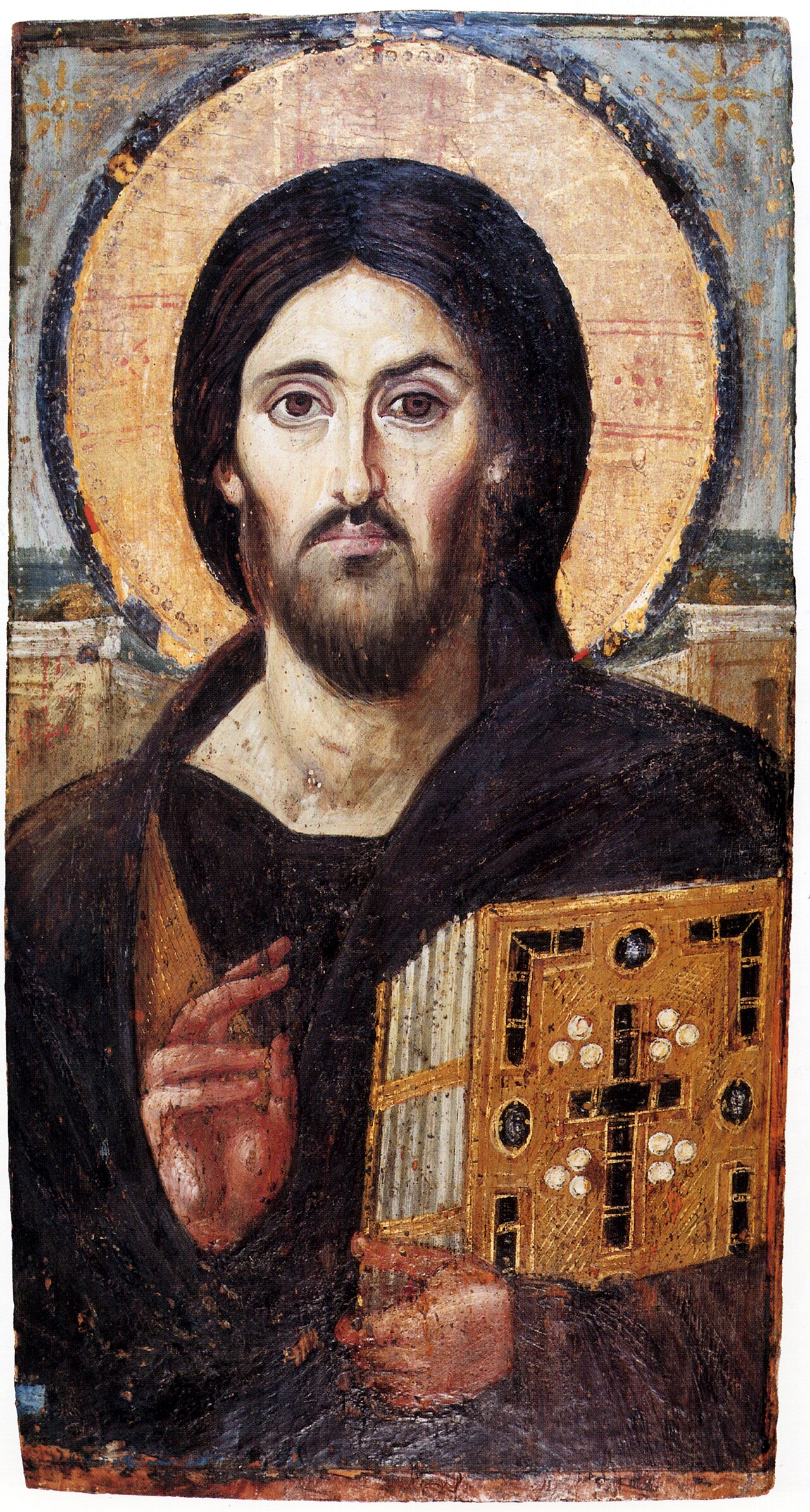
I am very interested in how images create a sense of access. Not just access to knowledge but access to a higher state. Not necessarily religious, but specifically, I want sort of the constellation of images to provide access to some emotional benefit.
That’s sort of how I think about museums. And while before your question, I hadn’t necessarily thought of it in terms of icon theory, I do want people to visit the museum and leave wanting to come back. And I think that requires them to at the very least have an enjoyable experience, hopefully learn something and broaden their perspectives.
Byzantine paintings were still copied by hand. I have fear that the ease with which things can be copied and modified does divorce people from the original intent of the image. However images get replicated in this era, I hope that people retain an interest in understanding the original context because there was purpose to that original context.
Ian Charles Stewart: The volume problem dilutes the message. So I’m going to try to finish on a positive note.
My parallel is before telephony, electricity and the automobile, all of which happened in a thirty-year period between 1890 and 1920. People forget that before the change happened, the streets stunk of horse dung. Candles in the home lit the room. So everything was smoky. And communication was pigeon and people on horseback. In thirty years, we had electricity, horses were eliminated from streets in Europe and the US and we had the beginnings of communication by wire.
The difference in the way the world looked at that time and smelt at that time between before and after is unimaginable unless you were in both. I think we’re in a similar period now.
Adam Levine: So you will walk through human history when you visit the Toledo Museum of Art in 2027. We even have a painting by Marie-Victoire Jaquotot, which is copying a Titian painting. But she does it on Sèvres porcelain, not on canvas, which is sort of mind-blowing. So in 2075 or 2065, if you were to add another sleeve to the building of the past forty years of work, I don’t believe you’re going to see copying. Even though there could be more copying in the world, I think artists will continue to produce remarkable things using the technology of today and the future.
------
Adam Levine is the Edward Drummond and Florence Scott Libbey President, Director and CEO of the Toledo Museum of Art, and has been its director since 2020. He is a scholar of ancient art.
Ian Charles Stewart is director of TMA Labs, the Toledo Museum of Art’s hub for digital innovation, launched in 2024, and a cofounder of Wired.