

About us
Stay in touch
Peter Bauman: Hello, everybody, and welcome to this Le Random podcast. We are at Glitch residency in France, and I'm so unbelievably thrilled to be joined by Memo Akten and Katie Hofstadter. And yeah, I guess maybe we can start with how did you first encounter Glitch? Or like, how did you guys even come here? This isn't your first one, is that right? And yeah, so kind of how did your journey begin with Glitch itself?
Memo Akten: Sure, this is our second time here. I met Primavera in 2019 at another residency in Berkeley called Stochastic Labs. I was a resident there, and Pi was a resident there. That was in 2019, and that's when we met. We became friends, we stayed in touch. And I won't speak on Primavera's behalf, but I think that residency actually was quite influential in inspiring her to start this. And so she started Glitch shortly after, and yeah, we came in 2024, and here we are again in 2026.
Peter Bauman: Yeah, and yeah, I do think that Stochastic Labs was an important predecessor here. And yeah, it's not the first time I've heard that. And yeah, I guess also, maybe, I'm sure our listeners are very familiar with both of your practices and your work. But if they might not be familiar, how would you introduce or describe your practices?
Katie Hofstadter: I'm Katie Hofstadter. I'm an artist, writer and curator, interested in the relationships between embodiment, consciousness and technologically mediated imagination. So I'm interested in the tensions between knowing and feeling, and how emerging technologies, including AI, impact both cultural narratives and our direct experience.
Memo Akten: And we, I'm Memo, and I've been working with emerging technologies as both a medium and a subject of critical inquiry for quite some time, and we started collaborating three years ago in 2023. And we...
Peter Bauman: What's the name of the collaboration?
Memo Akten: That's just what I was coming to. Thank you. And so we now, we co-direct the Superradiance Center for Entangled Intelligence and Planetary Consciousness. And we weave together ancient biotechnologies like poetry, dance, ritual, with emerging technologies like AI, simulations, code.

Peter Bauman: Yeah, I think there's a few artists here who are working with really like primal human emotions, and then with technology as well. I guess, do you, how do you see them as related? Or I guess, how do you see, yeah, like why do you think that technology is actually useful in understanding these primal emotions better?
Memo Akten: I want to start by saying one thing. When we came to Glitch two years ago, we, after Glitch, we went to our Mecca, which is we drove down to the Lascaux caves, which are, I think it was about six-, seven-hour drive away, 20,000, 25,000-year-old cave paintings. And, you know, it's, the Lascaux caves are called like the Sistine Chapel of cave paintings. It's just a remarkable, remarkable place. And, you know, you see, 20, 25,000 years ago, people looked at these walls and they saw a canvas. And actually, when I teach, I start with, I actually start with Werner Herzog's Cave of Forgotten Dreams, which is the Chauvet caves. But you know, this is where projection mapping began because they're using the geometry of the caves, like they see a bit protrude and they liken it to a horse and they turn into a horse. They were using three different dyes. Like that was, that's all technology, right? They're creating those dyes, they devised kind of mechanisms to either blow the dye onto the wall or apply it with a brush. So it's a continuous spectrum from the cave paintings to where we are today. Like that, I think that's how we see it. And it's important not to forget that history. Like, we have evolved over millennia. Certain things work, like, they've stood the test of time, these memes, not in the internet meme sense, but in the Dawkins sense. Like when you go to the Sistine, not the Sistine Chapel, sorry, the Lascaux caves, you feel like this is not just random markings on a wall. There's a story there. It's not just the animals that they hunted. No, there's a story there. We don't know what that story is, but you feel the presence of that story. And they were using such crazy advanced techniques, like they used something, what we would today call chronophotography, to convey movement. It's like multiple exposures, like, you know, famously a horse's head in multiple positions or running. And, you know, lots to say. We'll come back to it, but I'll pass it over.


“This is where projection mapping began.” — Memo Akten 4:32
Katie Hofstadter: Yeah, I think we've always used technology to extend our senses. And just thinking about a few more specific examples, it's like we use poetry, which is tightly coded language that we can pass down through intergenerational storytelling. We use dance, ancient biotechnology. We're thinking about the cognitive phenomenon of embodied simulation, where as you see another person moving, you feel it like in your own body. And so we're able to use a combination of emerging technologies to create work that uses this phenomenon, placing a dancer at the heart of the piece. But you never see a human body, yet human movement is moving you through these environments, morphing you through these scenarios. And so, we're really using every technology at our disposal to bring people into a, an embodiment of the ideas that we want to talk about. Because one of the themes that we're thinking about is: it's one thing to have intellectual knowledge. We're thinking about our interdependence with our environment, how our mind extends into the environment just as well as our bodies. It's one thing to intellectually know this, but how can we feel it? And so we're using every technology we can to try to create experiences, sanctuaries, to enter into experiments, provocations with feeling.
Peter Bauman: Yeah, it's yeah, we're definitely aligned in terms of the... trying to extend the, I guess, the history of art technology in a radical way. Like the Le Random Timeline also begins with cave paintings. And yeah, I think that that's important to connect it to our primal past. And yeah, like Sasha Stiles has also talked on our Timeline about the, yeah, this ancient art form of poetry. And you mentioned dance, and yeah, it's, these are... I think there's this misconception, misconception that technology, yeah, is separate or distinct from these art forms, or should be. Maybe they're even at odds with each other. I think that there's a lot of people who think that, and who maybe think that the... aren't as maybe familiar with practices where the human is as centered as it is with Superradiance and just the, or just human emotions. And I wonder if, like, how does that in any way sort of relate to your experience at Glitch? Like, is that, is your experience here, like, has that impacted your practice at all? Like, when you were here in 2024 for the first time, did anything happen, or did anything maybe click, or did you meet somebody that later on actually had some kind of impact?
Katie Hofstadter: I mean, the first thing that comes to mind is I just had some really wonderful conversations with Operator, with Ania Catherine and Dejha Ti about dance as a technology, and we were thinking about the history of dance and talking about how we know what ancient dances look like through sort of indirect means. It's like language gets passed down, visual art gets passed down, you know, but dance is sometimes harder to pass down. And just thinking about different ways that we could explore the history of dance through subversive means that look at the laws that were made against them. I think that's just an example off the top of my head. We'll go see them next week in New York. Very excited to be reunited and see Human Unreadable part three.
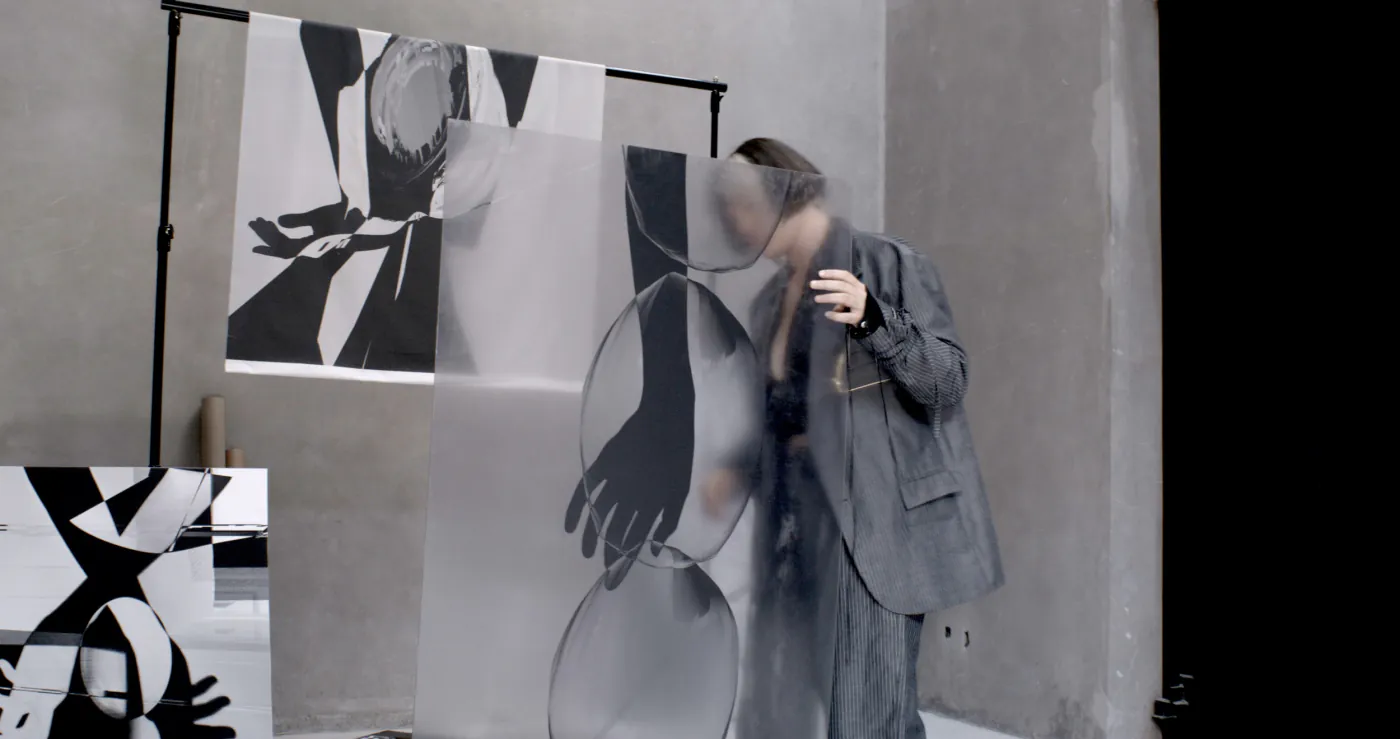
Peter Bauman: Yeah, that Human Unreadable part three with the dance performance that will be at the Whitney with their artport show, with Christiane Paul's artport show. Yeah, I mean, that was also, that Human Unreadable had, that project has roots in Glitch too. Maybe even to, yeah, I guess not, maybe to the year before, or... But yeah, it was, I do think it was, that project came out of this residency, and so then to see it kind of come full circle at, you know, Whitney is pretty remarkable.
Memo Akten: I was just going to add, actually, to the previous topic, and continuing from there. Like, ultimately, we are kind of biologically identical to what we were a hundred thousand, two hundred thousand years ago. And it's just quite remarkable how it's not biological evolution, but cultural evolution that's so, so insanely rapid. But the things that worked, like the rituals, the technologies, the poetry, dance, is really important parts of who we are. And of course, there are technologies. You know, language is a technology. That's why we don't say that we work with technology, because that's almost a meaningless statement. If anything, we say we work with emerging technologies or we combine emerging technologies. And by emerging, we mean literally really at the cusp of emerging, that we don't necessarily even have a language or even ontologies to talk about, like that's a very big topic, both in the world today and also at Glitch, with regards to, you know, talking about the so-called subjective experience of AI or, you know, consciousness, emotions. Like this is an ontology that we maybe haven't had to think about in this context before. Or maybe we have with regards to animals. But of course, animals are different to LLM. So it is a new ontology that's needed. So yeah, like Katie said, the connections, and this is kind of what Glitch is about. And, you know, Primavera talks about this. Sorry. You know, we all come here. It is a very, this is a bubble. You know, we're in a château in the French countryside, but we all live in the real world as well. So, you know, we all come here for like two weeks, live in this weird bubble, kind of quite isolated from the real world outside. But then we all go back to our lives in the real world, but hopefully taking with us the thoughts, the seeds, the ideas, what we've been thinking about, but also those connections also remain and expand across the globe, as we have people from all around the world here.

Peter Bauman: Yeah, it's really interesting that this is a place where you can stay up until four or five in the morning and talk about qualia and machine consciousness. And, yeah, like that's almost expected of you to, you know, participate in these really, and that's after, you know, 12 hours of programming. And so, yeah, like these are really remarkable times. And it almost like pushes you to your like physical and like mental limit. But you kind of endure it because it's such a special like two weeks and it's hard to replicate it outside of like a container like this or a bubble. Yeah, so like, I guess, is there anything that you're working on that you want to, that you're excited about or that you want to talk about?
Memo Akten: Well, we are very excited to be part of the show at the Whitney as well, the artport show. So our piece, The Thinking Ocean, which was commissioned by artport, it was commissioned last year, opened this year. And so that is, it's called The Thinking Ocean. I'm actually really excited to be, okay, I'll talk about that in a minute. So the piece is inspired or based on some very recent research that came out in 2025, showing Navier-Stokes equations to be Turing complete. And we took that as a starting point to pose a provocation that, why do we rush to ascribe personhood, agency, subjective experience, even consciousness to LLMs when we look past the complex behavior and computations happening in the natural world? And it also works with the idea that it's part of our larger project, Cosmosapience, which extends intelligence beyond just confined to our skull, but as part of the living planets, the living universe. But one thing I want to add is one of the leading researchers whose work, this, whose research our piece was based on, Eva Miranda, we did not get in touch with them. We should have, but we didn't. Eva Miranda came across the work, got in touch, said she loved it, said, is there any way we can get you to Barcelona? And we're like, well, we're in France and we have this free week before we go to New York. So why not? We can come next week. And so, you know, there's a symposium now that's been arranged. So on Sunday, we go to Barcelona to have this symposium and discuss this and other ideas. And talk about Cosmosapience or any other projects.

Katie Hofstadter: So one of the ideas we're thinking about with Cosmosapience is the idea that we know our bodies extend into the world with the air we breathe, with the water, you know, the planetary water system passes through our bodies every day. So many other examples of, you know, the sort of porous boundary layers of, you know, what feels like our bodies, and back to that idea that, like, of course, the feeling of an individual is real and then it's also porous and it's also complicated. And so, with Cosmosapience, we're thinking about, you know, it's easy to imagine how our mind extends into our phone or a notebook, but what if we took seriously the idea that our mind also extends into the environment around us, our nervous systems, our, you know, our bodies, our minds, into the air we breathe, into the bird song that makes us feel calm, into the long view, into the chemicals from the trees that we only are just beginning to understand how they affect us, and all of these other relationships around us. You know, we live in a promiscuous, multi-sensory cosmos that's full of communication, and most of it's not meant for us, it's not legible to us, it's not addressed to us, but we're still consequences of and participants in these larger exchanges. And thinking about the ways that mind can exist across the boundaries of individuals, that even thoughts or actions or even experience, even consciousness might exist across these boundaries. And so we're studying siphonophores, we're looking at ant colonies, and then reflecting back on our own superorganism. That's a major area of research for this Cosmosapience series.

“We live in a promiscuous, multi-sensory cosmos that's full of communication, and most of it's not meant for us.” — Katie Hofstadter 17:21
Memo Akten: And one last thing. We're kind of delving more and more into a, I'm going to say, we need to find the right terminology here, but like an anti-computationalist view. It's not actually anti-computationalist, like, because one could say everything is computation, but it's anti-computationalist in the sense that the way that we think of computation today, in the way that we build these relatively simple models with relatively simple causal relations, and this module talks with that module and that module is connected to this module. And, you know, we have this history spanning back centuries, even before theories of computation, of seeing living systems like this, seeing the environment like this. And we really need to learn the lesson that living systems are not like this. They're not structured in these simple layers where layer A communicates with B, and B communicates with C along these simple lines of communication. But it's a deeply entangled, beautiful mess. And that's the territory we're exploring.
“It's a deeply entangled, beautiful mess.” — Memo Akten 19:12
Peter Bauman: Yeah, I think that's a way to describe Glitch, I think, as well: a deeply, deeply entangled, beautiful mess. Yeah, well, no, thank you so much for this chat. And yeah, I wish we could. Yeah, I feel like we're only getting started, but yeah, I wish we could talk longer. But thank you so much. This was really nice. And yeah, I mean, enjoy Barcelona and the rest of your year, Whitney in New York, and possibly see you in London if you make it to that. And yeah, thank you so much.
Memo Akten: Thank you. Thanks.


